The Making of a Black Role Model
The rise, fall, and redemption of a Black woman who broke new ground as a national public figure.
By Gerald Early
August 1, 2026
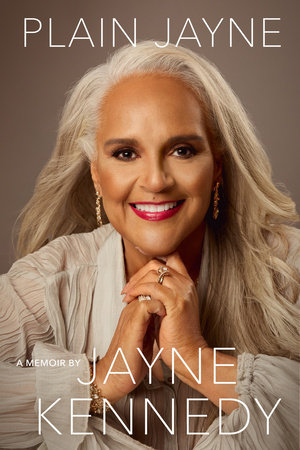
Plain Jayne: A Memoir
1. Knock, and it shall be opened unto you
Black baby boomers, born, say, between 1945 and 1955, remember Jayne Kennedy well. She was the crossover Black beauty of the age. Before Vanessa Williams won the Miss America title in 1984, there was Jayne Kennedy. She was the first Black woman to win a state beauty pageant when she was crowned Miss Ohio in 1970. As she writes in Plain Jayne:
“We were a big family, and my sister was already attending Cleveland Community College, and there wasn’t enough money for two daughters in college at the same time. I had to figure a way to be creative, a way to find money to further my education, but I didn’t have the slightest idea how. My mom actually came up with a plan. She had seen an ad in the newspaper called for applicants to the Miss Ohio pageant, and Mom thought it would be a good idea for both me and my sister to apply.
“I had watched pageants all my life, in awe of the girls, the gowns, the crowns, and the money, but that was totally different from actually entering a beauty pageant. It didn’t seem possible that there was ever a chance, ever even a remote possibility, to be a part of all that, but Mom always taught us to believe we could do anything, and she thought it would be fun. I thought: What the heck, it’s an adventure.” (66, emphasis Jayne Kennedy)
Kennedy, then a 19-year-old high school graduate known by her maiden name of Harrison, discovered that to compete at the state level she had to win a city beauty title. She entered and won Miss Cleveland. Perhaps it was not so surprising, as Cleveland had a Black mayor at the time, Carl Stokes, who, in 1967, became the first Black elected as mayor of a major American city. “We loved Mayor Stokes; it seemed everybody loved Mayor Stokes, and I was lucky enough to live in Cleveland under his leadership.” (68) Stokes was the most famous Black politician in America at the time except for Harlem Congressman Adam Clayton Powell; the latter met the end of his political career in 1971 and his life in 1972. There was even talk about some Black activists of Stokes running for president. It was a moment: the Black beauty queen coming out of the city with a Black mayor. It felt, for those who experienced it, like a renaissance.
Many commonly think that the late 1960s and the early 1970s were a despairing time to be Black in America—the murders of Dr. King, Robert Kennedy (highly regarded by most Blacks), the race rebellions in many American cities from 1964 through 1968, the agony of the Vietnam War that caused the underfunding of the War on Poverty, the rise of violent, revolutionary groups and the radical chic of the criminal, and intense urban street violence that made life in some neighborhoods seem like rage, mixed poverty and chaos and put the American city itself in peril. But it was also the age of “Black is Beautiful,” huge naturals, later called Afros, and ubiquitous hair braiding; the opening entries of a Black movie craze dubbed “Blaxploitation”, cheap Black urban film parables that would save Hollywood and give Black audiences their first set of cinematic heroes; a vibrant Black popular music often characterized by socially-conscious lyrics like Marvin Gaye’s 1971 album What’s Going On, or Les McCann’s 1969 hit jazz single “Compared to What” with lyrics by Gene McDaniels. There was a sense of Black solidarity, as if being Black made one a member of some divine, cosmic church, the holy jazz of John Coltrane, Alice Coltrane, Pharoah Sanders, and McCoy Tyner, and a sort of homemade, eastern-tinged spirituality as books about Sufism, yoga, the Kawaida (the philosophy of a Black value system from which the holiday Kwanzaa emerged), the Black Aesthetic, Black redemption through clean living (the Nation of Islam and Muhammad Ali, our dissident hero), and vegetarianism circulated among the young. Being Black was not merely a fate but something with a future. Kennedy heard Shirley Chisholm, the first Black woman elected to Congress in 1968, while doing a fashion show in high school and was smitten: “She was so impressive, so committed. She was a Black woman doing something I had thought was reserved only for white men. And here she was. . . a woman. . . a Black woman . . . talking about change and equality in the turbulent 1960s. Not equality just for race, but for gender as well. And then she outlined what it was going to take to achieve our dreams. Not just her dreams but our dreams. And I believed her. She became my idol. She was the perfect role model. Meeting her backstage was a highlight of my life.” (52, emphasis Jayne Kennedy) In 1972, Chisholm became the first Black person to run for the presidential nomination of a major party. If nothing else, that gambit was a bet on a Black future. That is why this was, for many of us, the age of miracles.
It was a moment: the Black beauty queen coming out of the city with a Black mayor. It felt, for those who experienced it, like a renaissance.
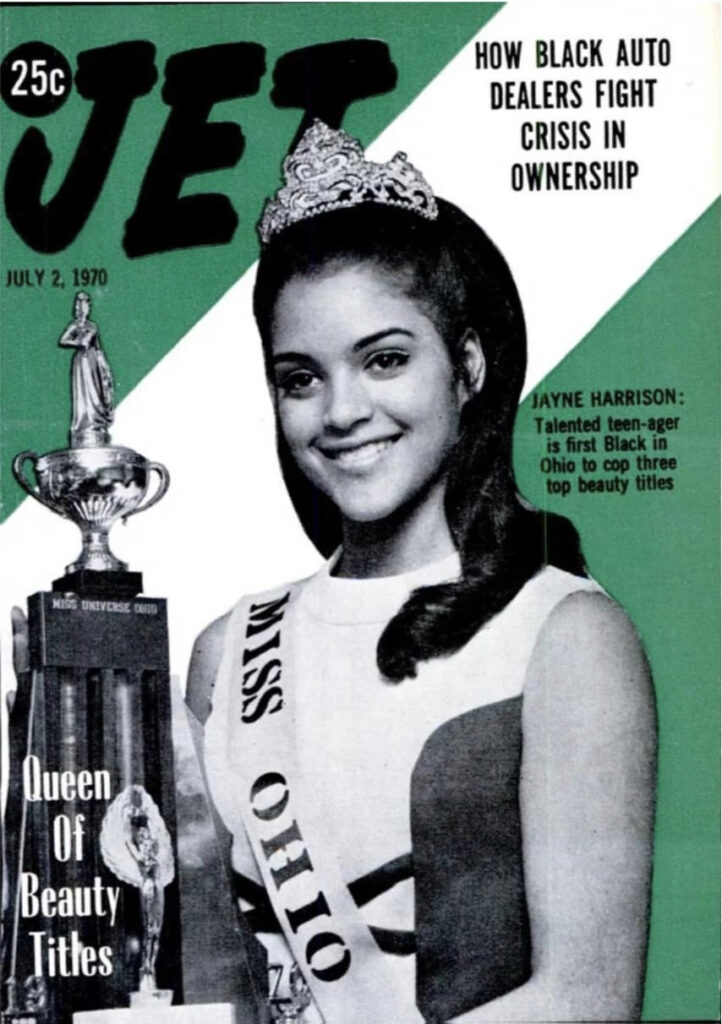
I am the same age as Kennedy, and her memoir does a wonderful job of recreating how exciting a time it was if—to paraphrase singer and pianist Nina Simone—one were young, ambitious, and Black. Ours was the first generation to go to school with Whites, to socialize with them, do projects with them as equals. Kennedy was selected to go to Girls Nation National Conference and was elected vice president by her White conferees. This period might have been the best of times and the worst of times to be Black in America but, on the whole, far better than worse for a rising generation. For many young Blacks, it was as if knocking on the door was not unusual; we did not hope or pray that it might be opened. We expected it to open. We had the air of being swashbucklers, not supplicants. For us, in our hope and faith, America was neither a tragedy, nor misery. Kennedy was right: it was an adventure. In tenth grade, she changed the spelling of her first name when she read about the death of actress Jayne Mansfield. A first small step in redefinition. As a college freshman, when I saw her picture on the cover of the July 2, 1970, issue of the Black news-and-gossip weekly, Jet, I thought, well, this is America and anything can happen, even for a Black kid. You cannot relive the past but you can expect a future.
2. The first shall be last
Jayne Harrison never went to college, as she had hoped and expected, after meeting Shirley Chisholm. Instead, she married Leon Isaac Kennedy on June 26, 1971, at the age of nineteen. Leon was just twenty-two. The marriage lasted ten unsteady years and produced no children. (“Telling no one, I had quietly undergone an emotionally devastating abortion in the name of my career,” Jayne writes of her time with Leon. [197]) Leon was a hustler, an operator, an entrepreneur, a personality. He was a handsome, young Black man who wanted fame and fortune in the realm of popular culture and saw no reason why he could not get what he wanted—on his terms. As Jayne writes, “Leon was exciting and so different from anyone I had known. I think that was a major part of falling in love with him. Being with him was a fulfillment of so many of the things I had always dreamed about—dating and romance, music, showbiz, and travel. I’m not saying that I married him to get all of those things, but I am saying that he was all of those things, and that was part of what I loved about him.” (87, emphasis Jayne Kennedy) Leon started out as a disc jockey at fifteen, parlayed that into a syndicated radio program and then into a teen dance television show, the sort of thing that was the rage in the 1960s and 1970s. Jayne was regularly featured on Leon’s syndicated television show. She was telegenic, with a nice speaking voice and a pleasing personality. She was the type of Black person, like Diana Ross who was a major star at this time, who could be sold to White audiences. As she writes toward the end of her memoir, “I do understand the fact that I was ‘fair-skinned’ with so-called ‘good hair’ made my prominence, especially to White America, more palatable.” (339) She spent a good part of her career trying to convince Whites that she was not mixed race, which they all, wrongly, swore she was.
By July 1971, Leon and Jayne had moved to Los Angeles, as they both were determined to make it in Hollywood as its first Black power couple. (Perhaps a younger, more influential version of Ossie Davis and Ruby Dee.) Leon thought that with his business derring-do and Jayne’s good looks, they could achieve their dream. With the help of Lamonte McLemore, singer in the then-popular group the Fifth Dimension, who seemingly knew everyone in Hollywood, especially Black Hollywood, Leon and Jayne got their foot in the door.
Although she never had a dance lesson in her life, Jayne became a dancer on NBC’s popular comedy show, Rowan and Martin’s Laugh-In. From there, in 1972, she joined the Ding-A-Ling Sisters (with two White women and an Asian woman) as back-up performers on The Dean Martin Show. She toured with the group for two years on the road, where she discovered even in this post-1964 Civil Rights Act era, there were still some restaurants and cafes that would not serve her because of her race. But all of them shared the gender problem of being women on the road: “And truck stops were not too keen on serving a bunch of women in stage makeup either. Once, when we tried to get served, the customers got out of hand, calling us prostitutes, and began to get rowdy. We left promptly without even getting our order.” (119)
Her biggest break came in 1978, when she followed former Miss Texas and former Miss America Phyllis George as the female anchor for CBS’s The NFL Today. It is for this, more than anything else, that Jayne is remembered. If you want to become a household name, do a weekly television show.
She toured military bases with Bob Hope, got small roles in a few films, did a television pilot called “Cover Girls” (an imitation of the then-popular TV show Charlie’s Angels, sexy young women in action roles), where she played one of the leads, but the pilot never sold. (If the series had been picked up, Jayne would have become only the second Black woman with a lead role in a dramatic television show; the first was Teresa Graves in Get Christie Love! which aired in 1974-1975. Graves was another role model for young Jayne.)
Her biggest break came in 1978, when she followed former Miss Texas and former Miss America Phyllis George as the female anchor for CBS’s The NFL Today. It is for this, more than anything else, that Jayne is remembered. If you want to become a household name, do a weekly television show. That is why Angie Dickinson decided to do Police Woman from 1974 to 1978, despite the backbreaking work of being the lead in the show. Jayne Kennedy became a household name. She was the first Black woman broadcaster “on the first live nationally broadcast pregame show.” (166) “It was initially only a six-week contract. [The network heads] were extremely concerned that the Southern television affiliates would pull out of the show because it was another Black person (as well as a Black woman) on the desk, and they already had a Black person on the set with [former football star] Irv Cross. At that time, having two Black people on at once was considered a huge risk, even though Brent Musburger (who was white) was on the team as well. I knew immediately that I had to prove I was worthy.” (166, emphasis Jayne Kennedy) She lasted for two controversial years: she was criticized, as George had been, for being a woman, which meant she was empty-headed about sports, particularly something as masculine as football. She was further criticized for being a Black woman, which meant that she was hired solely because of her race and was obviously incompetent. She had her occasional struggles on the show, but she was able to do better interviews with many of the Black players than any of the Whites could do, at a time when the NFL’s Black player presence was growing exponentially. They felt she understood them better. Also, they tended to be more cooperative with her because they wanted “to help a sister out,” as the saying goes. She attracted Black viewers as well. “It is only in retrospect that I realized the significance of my profile and the impact it had on Black communities all across America, and even abroad as African American troops cheered me on while they fought in a war for a country that hadn’t fulfilled its promises to them. There, on American television, was this poised, intelligent, confident Black woman who gave them all hope and something to aspire to.” (187) She was the ultimate role model, which explains her deep disappointment when Michelle Obama refused to give her the time of day when she wanted to participate in one of the First Lady’s projects. Mrs. Obama had no idea who Jayne Kennedy was. That was wounding.
She worked hard with her show prep and spoke knowledgeably, but she felt inadequately supported. “I wanted to be successful as a co-anchor, and I begged CBS for an instructor to properly train me for this process. The network said no.” (176) Jayne was fired when George, who was preferred by viewers, announced she wanted to return. Her dismissal was complicated, and she remained for years both mystified and bitter about it as she felt she was fired unfairly. Jayne felt that the network wanted George back because the bosses felt George was better. For Jayne, they felt that George was better because George was White. She hired a then-little-known lawyer named Gloria Allred and sued. She settled out of court for an undisclosed amount.
She was the ultimate role model, which explains her deep disappointment when Michelle Obama refused to give her the time of day when she wanted to participate in one of First Lady’s projects. Mrs. Obama had no idea who Jayne Kennedy was. That was wounding.
Leon opened nightclubs, hobnobbed with Hollywood royalty, and starred in Penitentiary (1979), Penitentiary II (1982), and Penitentiary III (1987), all commercially successful Blaxploitation-type films. He also starred with Jayne in Body and Soul (1981), an interesting but inferior remake of the famous 1947 boxing movie of the same name that starred John Garfield. This Body and Soul seemed more influenced by Sylvester Stallone’s Rocky (1976) and Rocky II (1979), than by its source material. Jayne launched her highly successful exercise video series—Love Your Body—which rivaled Jane Fonda’s aerobics videos. Her success in this market led to her becoming a spokesperson for Coca-Cola and Revlon.
All of this fell apart for her either in 1990 (274) or 1992 (3) when she learned from Leon, then her ex-husband, that a sex tape they had made to celebrate their fifth anniversary in 1976 had been stolen from his home and had gone public. “Overnight, the tape became a huge seller on the black market. Bootleggers sold it at major events and on street corners. The press fed the furor with sensational headlines.” (277) Of course, she lost her deals with Coke and Revlon. Any hope for acting jobs evaporated. Her phone stopped ringing. It is likely that today such a tape would not be so career-damaging for a public figure. After all, they were a married couple at the time. They had not done anything immoral in making a film of their lovemaking. The video camera was a new device at the time. They probably thought it was fun. (It was the time when hardcore porn films like Deep Throat had become mainstream.) What exacerbated this was that Jayne had an image of being, well, a good girl, a good, bourgeois Black girl, something that meant a great deal to her Black supporters, such as Johnson publications, which had put her on the cover of Ebony and Jet countless times since 1970. For instance, her lovemaking scenes with Leon in Body and Soul are shot tastefully without any nudity, whereas Leon’s earlier sex scenes with groupies and prostitutes have a great deal of female nudity, much in the vein of softcore porn. Jayne was the good Black girl for the prudish Black bourgeoisie who have always felt conflicted about representations of Black female sexuality.
It may be embarrassing to have such a sex tape released publicly, but she had done nothing wrong in making it as a private memento. She did not release it herself. She should have fought back. She poses the question several times in the book: why did I not aggressively defend myself?
The last 100 pages of Plain Jayne are devoted to her afterlife: What happened to Jayne Kennedy since the sex-tape debacle? This is where the book, engaging and even in some measure, important, juggles a number of occurrences in a way that is sometimes confusing: the collapse of her career, her withdrawal from public life, her inability to accept what has happened to her, the birth of her four daughters (the last born when she was forty-four years old) when she remarries, her triumphs as a mother, the writing of this book, her attempt to reenter public life, her status as a pioneer that has not been recognized as much as she would like (she names all the Black actresses of her time on pages 356 and 357), the death of her father and a severe injury to her brother are discussed in the aftermath of the sex-tape scandal, but all of this did not all occur after the scandal. For instance, she had her first child in 1982, while her career was still flourishing and before she married her second husband in 1985. (It is his child.) Indeed, three of her four children were born before the scandal, but the narrative is constructed in a way that it seems as if they were born after, because most of the parental stuff is in the last 100 pages. (The birth years of her children are provided on page 302.) She divides her life story as before and after the scandal, which is why the narrative seems orderly and more repetitive in the closing chapters, particularly because she seems to be looking not only for peace and to find herself, as she says over and over, but for a certain kind of validation for what she has achieved. Perhaps as a Black pioneer, she feels in some way that as a first she has become last. She wants to be acknowledged as a role model. She probably deserves that. As a Black baby boomer, I remember her well; indeed, she is one of the landmarks of my life.
This is surely a worthy book, a good and important book, but it could have been structured a bit better.