Are Saint Louis University’s Jesuits Spinning in Their Graves?
November 12, 2026
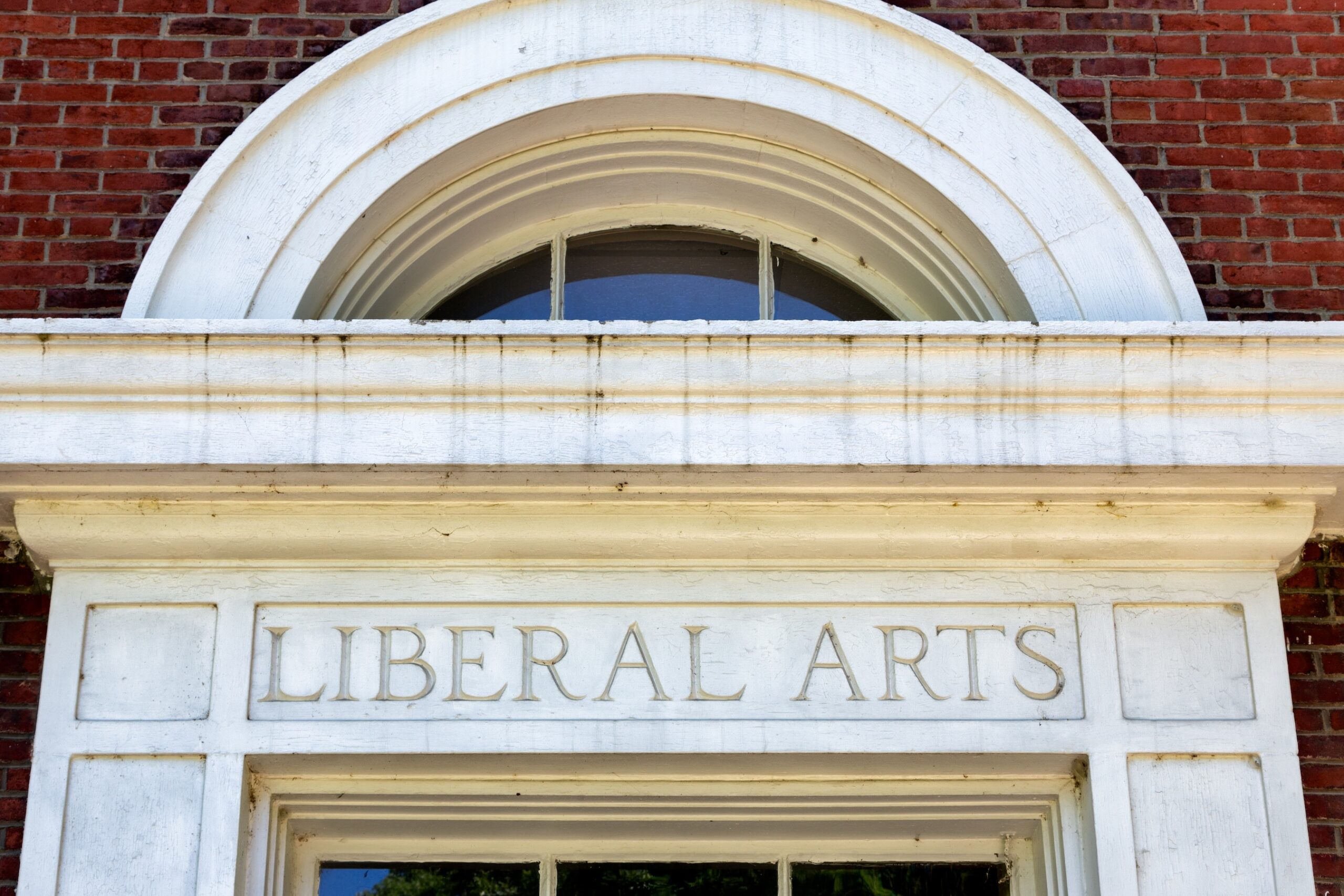
One college closes its history department. Another wipes out philosophy. The death reports are coming so fast, I feel like my grandmother scanning the obits for her friends’ names. Academe has always been my favorite world, the liberal arts my favorite playground. Now they are a battleground.
Here at WashU, the threats have thus far been batted away or minimized. But at my alma mater, Saint Louis University, twenty-nine programs are “under deep review,” including undergraduate majors in Spanish, French, art history, theater, music, African American studies, women’s and gender studies, sociology, and my own home in grad school, American studies. So much for all the rhetoric about the arts deepening our understanding of the human condition. So much for exposure to other cultures—and analysis of one’s own—making us citizens of the world. Are there no Jesuits left who will protest?
I do understand the pragmatic argument. Tech wiping out jobs. Alumni in debt. Students scared and cynical. The “demographic cliff” that is about to decrease the traditional college-age population. The Trump Administration has driven away international students, cut off research grants, and insisted that college graduates must make a certain amount of money or their degree is worthless. I went to college with a blithe indifference that today would be a luxury. I studied what sparked my interest, figuring I could always get some sort of job.
Now, though, even crap jobs are vanishing, and I cannot blame students for wanting some sort of assurance about their future. My solution would be to double up, combining a liberal arts major with one that was more strategic, and weaving an awareness of technology through every discipline. But SLU’s solution—and that of many other colleges and universities—seems to be reinventing the categories altogether.
Dr. Donna LaVoie, dean of the College of Arts & Sciences, kindly agrees to help me understand not only SLU’s plans but the landscape emerging nationwide. She is more hopeful than I. Liberal arts are excellent preparation for a world in flux, she agrees. But they need to clarify their value.
“We have to think about doing things differently,” she says. “Academics haven’t been forced to do that. We have been sheltered within our own disciplines. We have to change—maybe not change what we are doing but change how we tell people what we are doing. Make the argument more concrete, less philosophical.”
Ah, but the point is that philosophy is valuable in its own right, I mutter to myself. Still, I know what she means. Humanities profs, especially, are often so in love with their own subject, they forget to tell us why. It took me years to realize that my philosophy major, which was all about the questions, was wonderful preparation for journalism. Today, you might need to explain that to my worried little self ahead of time—assuming we thought there would be any jobs in journalism.
This seems to be the root of the problem, though no one is admitting it. Not even the smartest people in the ivory tower—or anywhere else—can make solid predictions about future employment at a time when AI is beginning to train itself. All that is clear is that the humanities, the arts, foreign languages, and the softer social sciences that once anchored liberal arts have fallen out of favor.
“We are looking into a skills transcript,” the dean says. “That’s what employers need to see, not a list of courses.”
I ask what landscape she envisions, say, twenty years from now.
“The organizational structures are going to look different,” she replies. “Some of it may be around marketing and packaging. The history department just changed the names of their courses—not the content—to make them sound more twenty-first-century sexy, and they are holding steady on majors.”
For departments without as many majors, like those currently under review? She offers some speculation, purely theoretical, she notes, though it echoes much I have already read about higher ed’s likely shifts: “We will see structures that reflect faculty expertise within different buckets. The conversations will become more interdisciplinary, so your curriculum will start to look a little different.” She mentions organizing around large questions and themes, “to show the world we are looking at what’s going on in the world.”
Oh, dear. Relevance. You let your audience set the agenda, and it changes every year. “If you organize around questions and societal concerns, won’t there be a million questions, constantly changing?”
“Schools doing this are trying to make the questions as big as possible,” she says. “There’s a danger in going completely thematic—the themes can disappear tomorrow. But, say you have a division of Society, Social Justice, and Political Engagement. Many disciplines come in. Do you need to maintain the departments?” She answers herself with a small “Maybe”—which she is about to contradict.
But first, thinking back to that demographic cliff, the loss of international students, and the nation’s disillusionment with higher ed, I ask how this is going to save money.
“I don’t think it’s necessarily about saving money,” she says. “It’s about appealing to students.”
Who then pay money.
“Nobody’s going to be immune from having to reduce their academic portfolios,” she says a few minutes later. “With the financial realities, you need to save money and stop doing things that are not of value, and you also have to do new things that will bring in new revenue.” She tries a garden analogy in which the new blooms of science and tech warrant investment and cultivation, while the humanities seem to be groundcover that does not need much water.
On paper, all you actually save by closing departments, she concedes, is the chair’s stipend and the support-staff salary, and SLU is already sharing support staff among departments. But, she adds, “there are hidden costs of a department, like the time and attention of administrative oversight, assessment….” She has about 235 meetings a year with department chairs, for example. “If I had one less department—ooohh! It’d be that much less exhausting. I jokingly said to a chair, ‘Yeah, I wouldn’t have to talk to you.’” Then she assured the chair that she was kidding; that department was not one that would go.
How much of this is political, too? Is the recoil from DEI part of the desire to slash African American and women’s and gender studies?
“We’re not going to be driven by the political winds,” she insists. I am reassured until she continues: “But at the same time, there’s a world outside that looks at what we do…. As long as the federal government is going to claim you are being woke and you have states not willing to fund things of that nature or labeling them bad, you are fighting a cultural narrative that has become political. Students are less willing to take these identity-based courses.”
Still, she says, such courses do fit the Jesuit mission. “Don’t erase it from your portfolio. It might have to be there in a slightly different way.” Does she mean absorbed into other disciplines? “No,” she says firmly. “That sounds like you’re trying to hide it. We have to reorganize and build out a new landscape where everything is still seen and looks distinctive. Instead of thinking of African American studies as this big disciplinary bucket, what are some issues it can help us understand?” A natural new home would be that School of Society, Social Justice and Political Engagement, she says. “There would still be a major in African American studies, just not a department.”
But then students would still have an identity-based major perceived as woke, right?
“Yes, but that’s why you build for them a skills transcript.”
It is a good and practical idea, but I am not convinced it will swing the difference. Students will have their major and their skills transcript, but no home department of likeminded students and faculty? There was such camaraderie in having your own department, the place where you belonged. You could watch the faculty argue about important ideas in your field. You could grab beers together after a seminar. You belonged there.
LaVoie wants to bring that sense of community up to the college level. Arts & Sciences printed up CAS t-shirts last year, with great results. Besides, “what’s the function of an academic department? My definition is that a department exists to offer degree programs. So if you eliminate a degree program, do you need a department that offers it? It could just be a program.”
By now I am dizzy. The reorganization would involve bigger divisions with cool names and fewer departments within them, but the same majors afloat in the larger space? “Majors become more of an infinite possibility,” the dean says. “And a major lasts as long as there is student interest in it.”
There goes American studies. Students love its lively, intriguing courses, but they prefer an American studies minor or graduate degree to a major. This makes perfect sense to me, and the department’s thought-provoking curriculum has long served students from other majors, deepening their understanding of their own country’s history, culture, and subcultures. Erase the major, though, and you pave the way (I learned cynicism in that department) to cut faculty, then cut graduate degrees, then eliminate the whole shebang. Even though it has been interdisciplinary from the start, and bringing together different kinds of expertise is a solid asset in this emerging landscape.
“Eliminating programs doesn’t necessarily save money,” LaVoie continues. “You are still stuck with the question of what to do with tenured faculty. Some schools are just terminating their tenure. SLU is not taking that approach. Now, will that happen in some cases? Maybe. But the university core is something every faculty member can contribute to.”
Mmm. The core. SLU has already reduced its core philosophy requirement from nine hours to three. Theology went from nine hours to three. There is some other blurred philosophy-and-theology course, and some intro course called Ignite. The history requirement went from six hours to zero, foreign language from nine hours to zero. In my old-fashioned mind, those were ways to understand the world, morality, belief, culture, human nature, the past, and the future. All gone. So in that sleek new core, what would an American studies scholar teach?
The dean has moved on. “Let’s say a major got closed,” she says. “You haven’t permanently removed the content from your catalog. Nobody should lose hope. But let’s not grieve the loss too long. How do you move to the next thing?”
Something tells me that all the outraged alums rushing to write letters are protesting a decision already made.
“How do we say we believe this content is essential at a Jesuit university?” the dean continues. “How do we make it more robust and connect it to what students want and what you think they need and what the world needs and stay true to our Jesuit mission and values?” I am thinking of the centuries of learning and wisdom that my humanities courses touched upon, the grounding the history and American studies courses gave me, the way studying Black literature of the Harlem Renaissance made a permanent impression…. We students did not know ahead of time what we wanted. We trusted the university to show us what mattered.
As for what students need now, there is a strong argument to be made for ethical reasoning, complex problem-solving, communication skills, insight into human relationships, and a grasp of cultural differences and societal issues, all housed in the disciplines that know them best. But the dean is still speaking, her tone a mix of enthusiasm and apology. “You can’t,” she reminds me, “wallow in the past.”