The Very Modern Fatalism of “You Can See Everything”
October 28, 2026
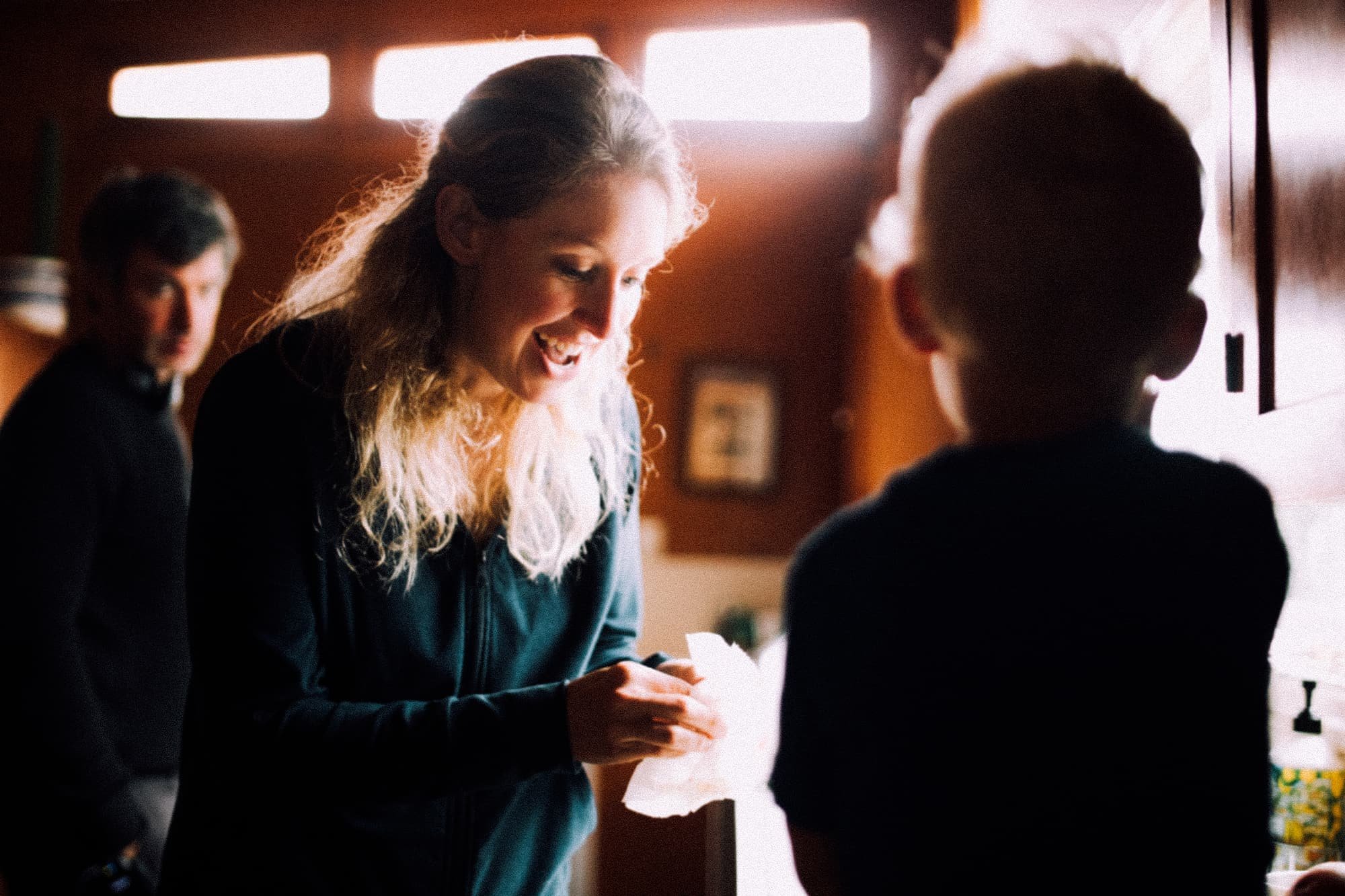
The new hit documentary You Can See Everything, featuring quadruple-felony fraudster Elizabeth Holmes of Theranos infamy, is so long that the evening showing I went to last week got out not long before midnight. This did not keep the theater from being packed, and no one got up for restroom breaks or complained about the hour as they were leaving. A trio of young women vigorously cussed “the patriarchy” on their way out, having settled on the idea that the film was about Holmes’ manipulation by two controlling boyfriends with whom she went into business. But most audience members seemed to suffer from a worsening case of not-knowing.
“What are we supposed to make of that?” one cried, causing others to laugh as they threw away popcorn tubs and soda cups. It is a fair question, perhaps especially given the length of the film, which might be expected to work toward new understanding.
In the trailer that everyone has seen, co-director Nathan Fielder, one of the documentary’s main onscreen figures, is literally slack-jawed with disbelief as he stares warily into the wide, seemingly sociopathic eyes of Holmes. Fielder’s stubbled, tired face in that moment is a visual metaphor for our time more generally: You’re being for real right now? he says. You don’t understand why you were convicted?
You mean I’ll get $5,000 if your party wins the elections?
You mean…this technology you’re creating with almost zero oversight might kill humankind?
You mean…all I need to do is shine the light inside? Okay… [foley in extra-wet tongue noises].
I had hopes a new hero had arisen from a generation raised in the hustles and cons of digital culture, some of whom surely, unlike many Boomer politicians, have a deep, native understanding of supposed genius tech “disruptors” like Holmes, who is a year younger than Fielder. I hoped Fielder and company might use his expertise in fakery to convict Holmes in a different, more artful, more public way than the courtroom trials. That, it turns out, is not the purpose of the film, though it is by turns funny, weird, tense, atmospheric, and sometimes fascinating. (Theranos’ problems are outlined here and here, if you need a refresher. Holmes was sentenced to 11 years in prison, which has been adjusted in her favor twice—the latest being an announcement of a transfer to a halfway house next year, with possible release in 2030, showing once again that justice does not always stick to even the merely temporarily-and-fraudulently very rich.)
As I watched Fielder embed in the household of Holmes, her partner, and their children in the month before she had to report to prison in May 2023—Fielder is promised he can “see everything” about their lives—I thought mostly of the similarities of his methods to those of Sacha Baron Cohen, who is also famous for putting himself into other peoples’ spaces and mindsets in order to provide them the chance to reveal some truth about who they are. (Fielder worked on Baron Cohen’s series Who Is America, after his own first series, Nathan for You, ended.) Both actor-writer-directors have used faux innocence, comedic stupidity, and social awkwardness to get subjects to say and do the darndest things. Both are physically and emotionally courageous and shameless enough to stick to their roles through fraught, even potentially violent, situations in filming.
But do investigations of bad faith “do” much now? Sacha Baron Cohen helped millions see, by his popular entertainments, what is hidden in plain sight in the UK and America, but what came of it? (His character Ali G emerged in 1998.) Is it even possible the airing of religio-gender-racial-cultural hatreds allows people to be defiantly and more fully who they are, without public shame?
In the case of You Can See Everything, Fielder says up front he does not intend to relitigate Holmes’ fraud. He goes further than that, however, by letting her say things that could have been fact-checked, it seems, and proved to be more lies. Above all, by not getting better answers and by showing Holmes in normal domestic tasks such as childcare, the film builds some sympathy for her, especially by implications she may be neurodivergent or was used/abused by men. Because she goes to prison halfway through the documentary and becomes incommunicado, the second part turns metafictional in a way that hoists Fielder with his own petard, implying he may not have been forthcoming in his filmmaking, out of sympathy for Holmes. (I see little equivalence between what Holmes did and whether or not Fielder correctly parses the intonation of something Holmes once told him off-camera.) And so, audiences might ask, what do those three hours “do”?
The answer may be: to portray the helpless, confused feeling of disbelief at our not-knowing in a world where enormous, supra-state power is wielded by gangsters, weirdos, grifters, criminals, and haters, whose choices weaken our societies and make our lives worse. We stare and stare, hoping to be allowed to understand why.