American Christianity’s War with Itself
How the believers have ceased to believe in a common triune God or any God or divine destiny of which they do not approve.
June 4, 2026

How can we live in harmony?
First we need to
know
we are all madly in love
with the same
God.
—Thomas Aquinas
“Aw, this isn’t gonna be about Jesus, is it?” Homer Simpson says, dismayed to find Reverend Lovejoy on his doorstep.
“All things are about Jesus, Homer.”
This nation’s future, for example. And the way those who want Christ to be at the center of American life also want to cast out the strangers and outcasts he drew close.
Jesus turned social norms upside down. Now Christian nationalists are turning Jesus upside down. How do they reconcile the opposition? There are days I feel like I will burst if I do not figure this out. It feels cartoonish in its inversion—yet they see no contradictions.
Pete Hegseth renamed himself Secretary of War and asked us to pray “in the name of Jesus Christ” for the troops raining “death and destruction from above” on the people of Iran. When Pope Leo XIV criticized that war, the president pronounced him “WEAK on crime” and posted an AI image of himself in Jesus mode, placing his hand on the forehead of a wounded man with bombs, eagles, and the U.S. flag overhead. Trump later insisted that he had only presented himself as a doctor. But he was draped in the white tunic and red mantle of biblical times and holding an orb that radiated miraculous light.
My doctors just wear white coats.
The question used to be “What would Jesus do?” but that acronym no longer trends. Maybe the answers were too uncomfortable?
What would Jesus say, I wonder, about Trump’s AI selfie, his teasing-not-teasing wish to be Pope, his promise to build a theocracy? I picture a small, amused smile, a gentle hand on his shoulder, a firm and quiet rejoinder. Could soft words soothe that panicked, angry ego? Christian nationalists say that soft words have damaged Christianity; that talk of empathy and compassion only weakens the warriors battling immorality and chaos.
The question used to be “What would Jesus do?” but that acronym no longer trends. Maybe the answers were too uncomfortable? As a child, I used to listen to the gospels in terror. No way was I brave enough to leave my family, and my widowed mother had better not quit her secretarial post, or we would starve. Beholding lilies in the field was fine for a lazy Saturday, utterly impractical in real life.
Christian nationalists agree—and they do not speak much about imitating Jesus at all. Instead, they have fashioned an American Christianity driven by market logic, with YouTubed sermons and podcasts and branding focused on individual salvation, moral certitude, a retraction of civil rights, and a divinely ordained nation empowered to dominate the world. Meshing neatly with ideals of individualism, self-reliance, strength, success, dominance, and pragmatism, their version feels, to me, more American than Christian.
Some recast the gospel in terms of prosperity, with success and wealth the real signs of God’s favor. Jesus can help you win, they insist. He was not actually poor; he became poor so his followers could become rich. Others emphasize Jesus as a warrior, fierce and strong and manly, riding the white horse of Revelation with a sword in one hand. This Jesus would not oppose war or deportation. In The Case for Christian Nationalism, Stephen Wolfe urges Christians to work toward political dominance. Loving one’s enemy and extending hospitality to the strangers among you? Again, impractical: “One ought to prefer and to love more those who are more similar to him.” Wolfe envisions an ethnically homogeneous nation ruled by a “Christian prince” with the power to suppress anything he considers blasphemy, heresy, and false religion. For now, we live in a pagan country, under a “gynocracy” in which women emasculate men. “The governing virtues of America are feminine vices, associated with certain feminine virtues, such as empathy, fairness, and equality.”
I had to read that sentence three times to sort out those mysteriously gendered virtues and vices. Women can only flourish, it seems, when men lead and protect. Pastor Doug Wilson says women should lose the right to vote, and homosexuality should be a crime. This is the theocracy he prayed for as guest pastor at the Pentagon’s new monthly Christian worship service. He wants to make sure little boys play with toy weapons, so they learn to do battle. “The peace that will be ushered in by our great Prince will be a peace purchased with blood.”
It is quite a trick, insisting that the nation be bound by a Christianity that is not bound by its own tradition.
• • •
After spending weeks sifting through sermons, books, podcasts, and conversations, I am forced to admit that what I see as contradictions, Christian nationalists call corrections. They sense chaos raging outside the church doors, and they crave order, shows of strength, and a bolstering of their heritage. In the White evangelical churches that dot the nation, prayers and sermons increasingly focus on protection and blessing, not peace or compassion for the outcast. Jesus is turning over tables in divine rage, not chatting with women or having his feet washed with scented oil. The old emphasis on “love your enemies” and “turn the other cheek” has been replaced by “stand against evil” and “speak truth boldly.” Compassion can slide into indulgence, these preachers warn, and what looks like mercy can be weakness. Inclusiveness is moral compromise. I hear sermons in which love does not open its arms wide, but must be ordered by boundaries and conditions. There is far less emphasis on a suffering and vulnerable Jesus, more on Christ as King, victorious.
Back when Vice President J.D. Vance, misinterpreting a Catholic teaching, spoke of concentric circles that placed the stranger and the marginalized far from our center of concern, Pope Francis swiftly contradicted him. That teaching was about “the dignified treatment that all people deserve, especially the poorest and most marginalized,” the Pope said, and “the love that builds a fraternity open to all, without exception.”
But there is a fierce protectiveness in Christian nationalism, a sense of family first and America first. It must be maddening to see the rest of us write this off as selfish hypocrisy, if you believe that there is a necessary moral order to one’s allegiances. That there is not enough for everyone. That strangers who might hate God must not be allowed to take resources from God’s people. That modern society is lost and chaotic because people have turned their ears from the truth.
Compassion can slide into indulgence, these preachers warn, and what looks like mercy can be weakness. Inclusiveness is moral compromise. I hear sermons in which love does not open its arms wide, but must be ordered by boundaries and conditions.
The Public Religion Research Institute’s 2025 American Values Atlas reports that one-third of all Americans either adhere to or sympathize with Christian nationalism. Closer to home, nearly half of all White Missourians either adhere or sympathize. The implications? Christian nationalists tend to deny systemic racism, oppose multicultural education, affirm patriarchal family structures, oppose women’s equality in leadership, and favor strongman rule. They are twice as likely as the public to support political violence. Eager to revoke birthright citizenship, they were the group most likely to support separating children from their undocumented parents.
I struggle to imagine Jesus separating children from their parents; vilifying people who are trans or love someone of the same sex; scolding women to be subservient to men; driving away people who risked their lives to come here, desperate for safety and a better future for their families.
Christian nationalists struggle to imagine Jesus condoning those who would end an unwanted pregnancy; encouraging sexual freedoms that abandon procreation for “deviant” pleasure; letting men be weakened and emasculated; risking the country’s future by allowing criminals and heathens and dark-skinned folk to yank money and standing away from Godfearing White Christians.
In the end, we are all guessing. Jesus left us no written guidelines, a canny guru trick that now presents a conundrum. We can only turn to the Gospels, written not by eyewitnesses but secondhand, far away, decades later, and filtered through a different language. This leaves each of us room to reconstruct Jesus in our own image.
And we wind up with radically different Jesuses.
• • •
Shifts in interpretation or emphasis can alter a religion so completely, it becomes unrecognizable to those who kept the original understanding. First, progressive ideas appalled traditional Christians. Now, Christian nationalism appalls—well, everybody else. It took shape when earlier shifts—changing ideas about gender and authority, changing demographics and economics—made U.S. society feel threatening to White Christians, unrecognizable and unsafe. With the ground wobbling underfoot, it became important to draw boundaries: “We are not them.” And then: “This country is ours.”
Christian nationalists see the United States as a Christian country intended all along to be a theocracy, with no need to separate church from state as long as the right church makes the laws. Agree or not, Christianity is woven through American history. Thomas Jefferson took a razor, literally, to the Bible, chopping out miraculous healings, Jesus walking on water, the loaves and fishes, Lazarus brought back to life, demons and exorcisms, cosmic signs and apocalyptic imagery, the Virgin Birth, the angels, the shepherds, the Wise Men, the empty tomb and reappearance after death. A century later, the Jesus Seminar was just as ruthless, accepting only one-fifth of Jesus’s words and acts as reliably recounted. Yet those words have been invoked at every legislative turn—abolition, civil rights, family values….
With religion braided into public policy, people must step toward Jesus, a carpenter with a radical and demanding vision, or Christ the King, Lord and Savior and Redeemer. And the social and political agendas suggested by the two versions are diametrically opposed. Christians focused on Christ the King find the others immoral, dissolute, and weak. Christians focused on Jesus cannot imagine him sanctioning the hatred of difference and eager warfare the others applaud. Neither group deems the other truly Christian.
We can only turn to the Gospels, written not by eyewitnesses but secondhand, far away, decades later, and filtered through a different language. This leaves each of us room to reconstruct Jesus in our own image.
These arguments are old. What is new is pronouncing the Beatitudes “woke,” peace weak, and empathy toxic.
In the Sermon on the Mount, Jesus pronounces blessed the poor and meek, the peacemakers and the persecuted. Today’s conservative interpretation is that he was referring only to the innermost self, not to an unjust society. Be poor in spirit; make peace with yourself. No need to carry any of that into public. Jesus might sound weak, and Christian nationalists, especially, refuse to give in to weakness. In The Sin of Empathy, Joe Rigney says that this “so-called virtue…is the greatest rhetorical tool of manipulation in the 21st century.” In Toxic Empathy: How Progressives Exploit Christian Compassion, Allie Beth Stuckey says left-wing activists have bullied people into certain political stances by urging compassion. “Empathy becomes toxic when it encourages you to affirm sin,” she writes.
But we have different definitions of sin, too.
• • •
Not all conservative evangelical Christians are Christian nationalists; far from it. “That’s not Christianity,” several people told me flatly.
“Just because you quote the Bible—they are not really representing Christianity,” the Rev. Dr. Robert Yarbrough, professor of New Testament at Covenant Theological Seminary, said with a sigh. “These are things that are very embarrassing to all of us.” He knows no one at his seminary who embraces the jingoist, chauvinist extreme. But while that extreme yells and exhorts, mainline clergy and theologians stay quiet, advocating “a prophetic distance” from politics.
This consoles me—until I remember that there are angry White Christian nationalists in the highest offices of the land. Why are the sensible evangelicals so silent? Because there is some overlap on social issues? Both groups miss the time when only two genders were recognized, heterosexual marriage was aspired to, and procreation was the norm. People have lost the ability to love selflessly, Yarbrough says, and are indulging instead in gambling, porn, and affairs. “If you don’t believe in a God of a certain character, then it makes more sense just to live a life according to your own whims and desires. And there are a lot of people with criminal whims and desires. There’s a lack of moral restraint because there’s no fear of God.”
Fear keeps cropping up, conversation after conversation. Fear of God versus fear of crime, vice, immorality, decadence, and above all, hell. How Jesus lived on Earth, conservative evangelical Christians imply, was not the point. Saving us from our sins and someday returning to judge us—that was the point. The social justice movements I have always equated with the gospel? Unbiblical and neo-Marxist, says evangelical preacher Voddie Baucham. The push for social justice turns people’s attention away from sin, repentance, and authority. Even moderate New Testament theologian Richard Bauckham writes that views of Jesus as a social reformer “focus in too modern and humanistic a way on how people should live. But what fired Jesus’ mission was his experience of God.”
I am not sure how you divide the two.
I tell an evangelical Christian friend that I have a hard time imagining Jesus giving a thumbs-up to masked ICE troops, mass deportations, and the war in Iran.
“But if you read the Old Testament, God was a very angry God,” she points out. “He said kill these people, don’t save anyone. And he did that repeatedly.” She has read the Bible twice, cover to cover, which is more than I have done. “You have to understand the Old Testament to comprehend the new,” she continues. “Sin is sin as far as God is concerned. Murder is not any worse than stealing.”
“So Pete Hegseth using Jesus to justify bombing the fuck—sorry—out of Iran is—?”
“I think it’s consistent,” she says calmly, quoting Matthew 22:21’s “Render unto Caesar….” “You have to abide by the government’s laws. Iran is about death to America, death to any Christian. They don’t believe in God. Our God does not believe in killing everybody, but if you are going to kill me because I love God, I’m going to kill you. That is what God is.”
My Jewish husband dryly marks the frequent invocation of the Old Testament by people who owe their faith to the New Testament. He quotes a standup routine about clergy who invoke the Old Testament without understanding it: “It’s not their fault,” Lewis Black says kindly. “It’s not their book.”
But an angry God comes in handy when the gentle God of the New Testament might disapprove.
That passage in Matthew 22 is about paying tribute: Caesar is owed some of your cash. But Matthew goes on to say that God is owed your fullest love, as is your neighbor. If you take the New Testament as a whole (subtracting the fever dream of Revelation), you will be hard-pressed to find Jesus urging bloodshed. Love your enemy, turn the other cheek, bend swords into ploughshares, set aside violence and be serene in your faith; God will see that you are safe. He is trying to calm the foment of violent rebellion among his people. He also brushes aside their scrupulous purity laws, their nervousness about sexual or physical contagion, and the lines they have drawn to exclude. He condemns corruption, hypocrisy, greed, pettiness, bigotry, and cruel ostracism. Those he draws to his side are strangers and outcasts, especially those who are malformed, mentally ill, reviled, or destitute.
How Jesus lived on Earth, conservative evangelical Christians imply, was not the point. Saving us from our sins and someday returning to judge us—that was the point.
Yet pastors regularly turn back to Romans 13, persuading church members that they are “revengers” mandated by God “to execute wrath upon him that doeth evil.” Those early martyrs who refused military service? They were only avoiding the pagan rituals of the Roman military. And Tertullian, who said, “The Lord, in disarming Peter, disarmed every soldier”? The early church was naïve, persecuted, and free of political responsibility. Once you are responsible for social order, you need force to consolidate power.
When religious beliefs could exist in one compartment and politics in another, the tension between Christians of different denominations did not have to be reckoned with. Today, we all want our own values legislated. Progressives in each of the main world religions now have more in common with one another, when it comes to social issues and worldview, than with members of their own faith. The same is true for conservatives. In One Faith No Longer: George Yancey and Ashlee Quosigk suggest that the core values of progressive and conservative Christians have diverged so dramatically, they ought to be thought of as two separate religions.
So what would it mean to live in a Christian nation?
• • •
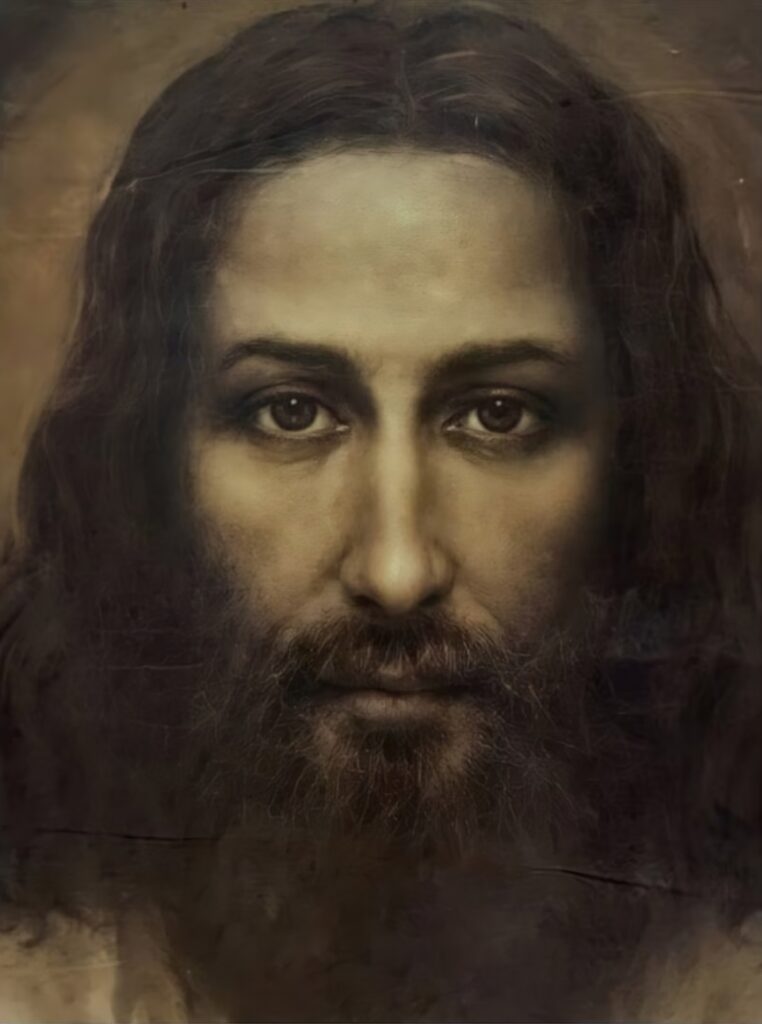
“Who do people say that I am?” Jesus asks, and everyone has a different answer. King, prophet, peasant, rebel, son, shepherd, rabbi, redeemer—to this day, Jesus is what each of us needs him to be. Different Jesuses show up in the Nag Hammadi codices, in Tacitus and Josephus, in the apocryphal gospel of Thomas, in religions that honor him only as a prophet. In the early twentieth-century U.S., when people were cast low by the Depression and war, Jesus was muscular and fierce. In the civil rights era, he was a gentle hippie in love with Mary Magdalene. Karen Armstrong, who has written intelligently about comparative religion for years, sees the essence of Jesus as self-emptying, a letting go of the ego and its fears.
Who do you see? My baby-loving mom saw Baby Jesus. There was a tenderness and trust in her relationship with that divine baby, to whom she turned whenever she felt anxious. I do not trust a baby to get me out of scrapes; I prefer the grown-up. The one my leftist friends see as a radical socialist woodworker, disgusted with commerce and pious cruelty. The one my evangelical friends see as God’s radiant son who died to give us eternal life.
An adroit psychologist, Jesus cut straight to our deepest fear (death) and deepest shame (being unworthy of love) and swept them both away. He also gave us himself as a person, a guy who told great stories, gave sage advice, and was cunning in argument. We could feel pity for his loneliness and pain and find his rage cathartic. No longer was God invisible, thundering from a cloud or lighting a bush aflame. Jesus bled and sweated and carried the earth’s dust in his sandals. If he hugged you, his skin would be warm.
A friend who grew up Catholic went through one rough time after another. When her marriage fell apart, she says, “the devil stepped in. A younger guy giving me what I needed, some attention.” Searching, she found a more personal relationship with Jesus, and when she attended a Pentecostal conference with a friend, she overcame her nervousness, went up front, and found herself speaking in tongues, swept up by the Holy Spirit.
“Jesus is very much real, and He still performs miracles,” she says in wonderment. “He still shows up in your life.” She adds in a low voice, “It’s an amazing feeling, to know that after everything I’ve gone through, and how badly I’ve screwed up, God has forgiven me.”
When religious beliefs could exist in one compartment and politics in another, the tension between Christians of different denominations did not have to be reckoned with. Today, we all want our own values legislated.
Someone who has felt such a personal grace, such relief and wholeness—how could they ever give it up? An evangelical biblical scholar tells me, “I realized when I was nine years old—I had a very unhappy childhood—that I needed a Savior.” Asked who Jesus is to them, people recite the formal creed in a numb singsong—but then their voices change. “I would rather die than live without him—I look forward to spending eternity with him,” one says. “He has walked beside me every day of my life,” another says. “I honestly don’t know how people who don’t believe get through life without Him.”
Unless you are cocky, loved without reservation from the start, sure you will always be forgiven, and well resourced to handle any adversity, this kind of faith has real power. Attach any political agenda you like: if social and political beliefs get tangled up with redemption, they will lock into place. Contradictions dissolve or are reinterpreted, because we all desperately need to feel forgiven, saved from hellfire. Especially if we are told we were broken and sinful from the start.
These beliefs form a closed circle. You can argue intelligently and live a holy life within its confines, confident that the rest of us will burn. But if you are kind and fervent, you want to save as many people as you can. And like it or not, that has political implications.
• • •
Another evangelical friend of mine, call her Carlene, asks me to use that pseudonym because “there is enormous pressure to conform, and it is really quite frightening sometimes, so I keep my mouth shut.” She thinks our trouble started because “we told God to get out of our culture, and so he did, and now our culture is falling down around us.” She points to the breakdown of the family, the way divorce was normalized in the 1930s and “free love” in the sixties, and the way the Pill and plastic surgery and Ozempic persuaded us that we were entirely in charge of our bodies and could have whatever we wanted.
Godlessness has other consequences, she continues, like “the fact that people worship politics now. We look to government the way we used to look to God. People identify themselves with their beliefs, talk about Trump Derangement Syndrome or MAGA as a cult….”
Well, yeah. I have a touch of TDS myself. Much in our government feels morally bankrupt. And how do you not obsess when so much that you value—education, science, a free press, compassion—is threatened? Change that list of values, though, and Carlene is asking that same question. So how do we get past the opposition?
“The pendulum swings,” she points out. “In the Old Testament, they would get so bad, and then God would let an enemy come in and smite them down, and finally they would cry out, and he would help them again. You’re starting to see a lot of people going to church, especially men.”
They are looking for a strength they feel has been stolen from them—another overlap of politics, social issues, and religion. Here is a third: someone Carlene loves deeply identifies as transgender. I ask if she thinks Jesus would condemn this person. “Yes,” she says, sorrow weighing her voice. “It’s a sin of a sexual nature.”
My jaw clenches; I am so very tired of the Christian obsession with any sexual behavior outside a narrow norm. Jesus gathered outcasts close!
“He wanted the Pharisees as well as the outcasts,” she points out. “This is a mistake that a lot of people make: ‘God loves you just the way you are.’ He does, but he loves you too much to let you stay that way.”
I ask how she reconciles the God of the Old Testament with the God of the New. “It’s the same God,” she says without hesitation. “If you don’t like the God of the Old Testament, you don’t understand the God of the New Testament.” Fair. But all that smiting unnerves me, as does a God who “destroys both the blameless and the wicked” and “will laugh at the trial of the innocent” (Job 9:22-23).
There was a difference of purpose, Carlene says. “In the Old Testament, God wanted them to be an example to everyone around them. Don’t let any of this sin stay, or it will turn into—well, what we have today. And that’s what happened. They didn’t root it out. And then God just stopped talking to them, and for four hundred years, they had no prophets. They had no communication with God at all.
“Jesus came to warn us and turn us to repentance,” she continues. “My United Church of Christ friend said, ‘Oh, Jesus isn’t gonna judge us.’ And I said, ‘Then what do you think is the point?’”
• • •

The hungry, the stranger, the sick, those in prison—“whatever you did not do for one of the least of these, you did not do for me,” Matthew (25:45) predicts Jesus will say on Judgment Day. I like quoting that part. But then he tells those who failed, “Depart from me, you who are cursed, into the eternal fire prepared for the devil and his angels.”
That threat has kept people riveted on their Savior for millennia, desperate for forgiveness, grace, and eternal salvation.
When Jesus talks about hell in the gospels, he often uses a place name, Gehenna, a valley outside Jerusalem where trash, sewage, and criminals’ corpses were burned. A metaphor of destruction, then, not every wicked soul’s literal destination for all time. As for Matthew’s eternal fire, the Koine Greek aiōnion can also mean “pertaining to the age” or “of the coming age.” Still, Matthew uses the same word for heaven, and whoever thought of that as temporary?
Most references to damnation come from Matthew—who was not the apostle, most scholars agree, but an anonymous source writing half a century after Jesus’s death, at a time when Christianity was gaining political hold and needed structure and fire. The writer is trying to help form a Christian community, and his emphasis is on judgment and punishment. Repeating a parable in Mark and Luke, he adds “weeping and gnashing of teeth.” For the banquet parable, in which Luke simply says those who refuse the invitation are excluded, Matthew has the king sending troops, destroying the murderers, and burning their city. He alone has Jesus say, “I came not to bring peace but a sword.” The separation of sheep and goats, where Matthew speaks of both hell and heaven as eternal, appears nowhere else.
When Jesus talks about hell in the gospels, he often uses a place name, Gehenna, a valley outside Jerusalem where trash, sewage, and criminals’ corpses were burned. A metaphor of destruction, then, not every wicked soul’s literal destination for all time.
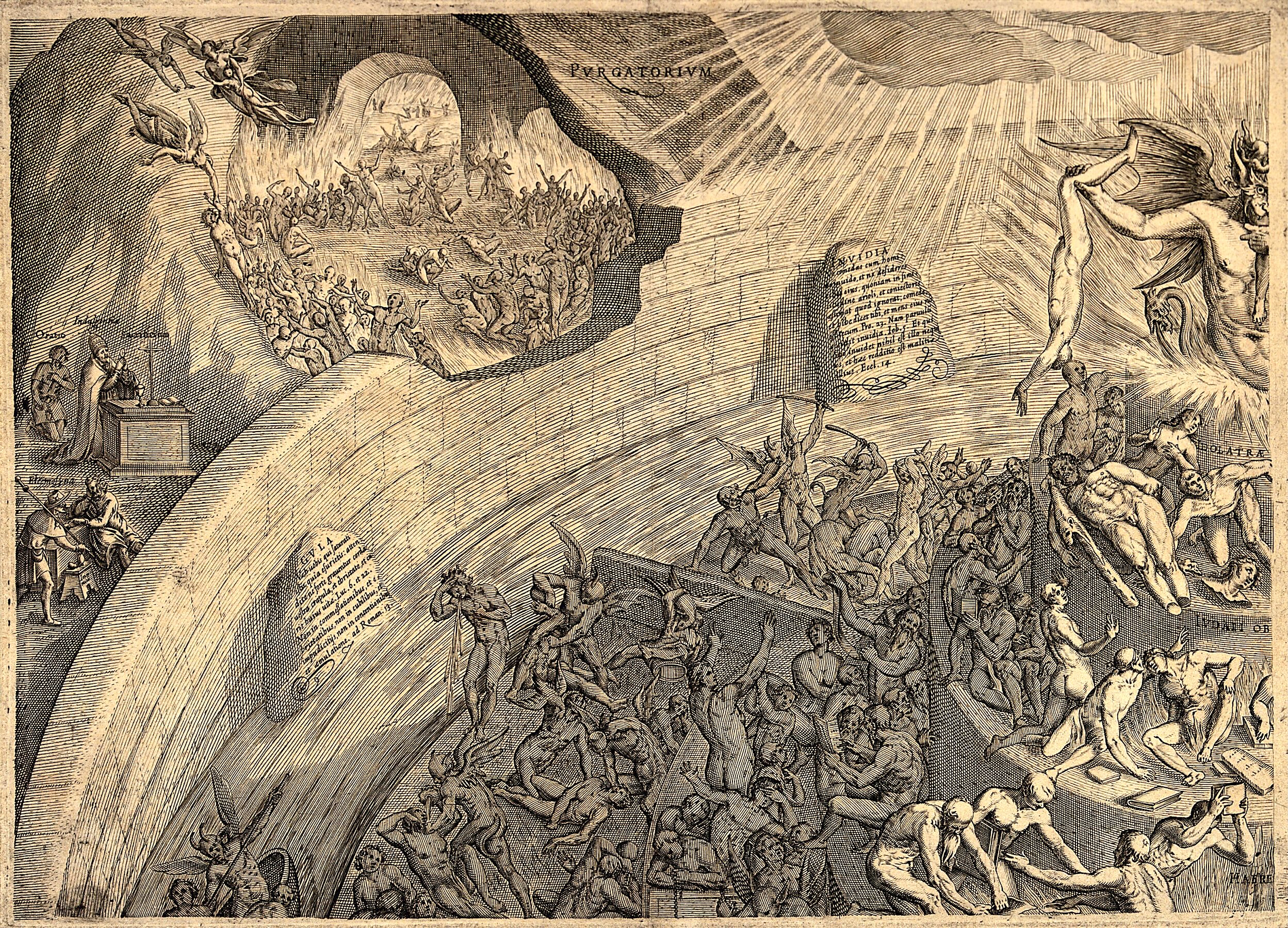
By the time we reach Augustine, Christianity has been systematized, with hell as an eternal, conscious torment. But what if hellfire was never meant to be eternal—does the Resurrection lose its power? If heaven were certain—or death complete—Jesus’s talk of life in God’s kingdom might only have meant there was a better way to live.
Instead, people speak of an eternal punishment of broken souls that feels like sadism, and I cannot imagine how Christians equate that with a loving God.
“At some point, they made a moral decision to believe something that all moral sanity told them was a vicious view of reality,” writes David Bentley Hart, an Eastern Orthodox scholar of religion. That decision persisted, he suspects, because “once the church ceased to be a sort of disreputable and seditious, loose affiliation of odd mystics and outcasts and members of a mystery religion, one that didn’t even have a doctrinal consensus yet, and became a pillar of imperial society, the institutional imperatives became paramount.” You had to have uniform teachings, and those teachings had to please those in power and keep the people in line.
Death threats are handy for that.
Subtract them, and the point of Christ’s life is how he lived. There is no need to triumph over death. We are loved from the start, not stained with sin that must be rinsed away with holy water or someone else’s blood.
Jesus never spoke a word about original sin. He simply said (according to Mark 7:21-23) that evil thoughts and deeds come from within. The doctrine of original sin developed later, with Paul—and of his thirteen letters, only seven are undisputed as authentic. The others differ in tone and vocabulary and have a more rigid, patriarchal, institutionalized thrust; Adam Gopnik dryly describes them as “later forgeries written to make Paul endorse more conservative positions in death than he did in life.”
Augustine reinforced and systematized this new doctrine of original sin. But by then, our sin was already said to be redeemed by the pain-wracked body of Christ. Surely that should free up the preaching to focus on love of others?
Except, Christians needed Jesus to return from the dead. Those who loved him just ached to have him back—that gentleness, that calm confidence and sly wit. The rest needed proof that they did not have to be afraid. That it was possible to triumph over evil. That love could be redemptive.
Today, we need a way to agree on what to fear, what is evil, and how to love.
• • •
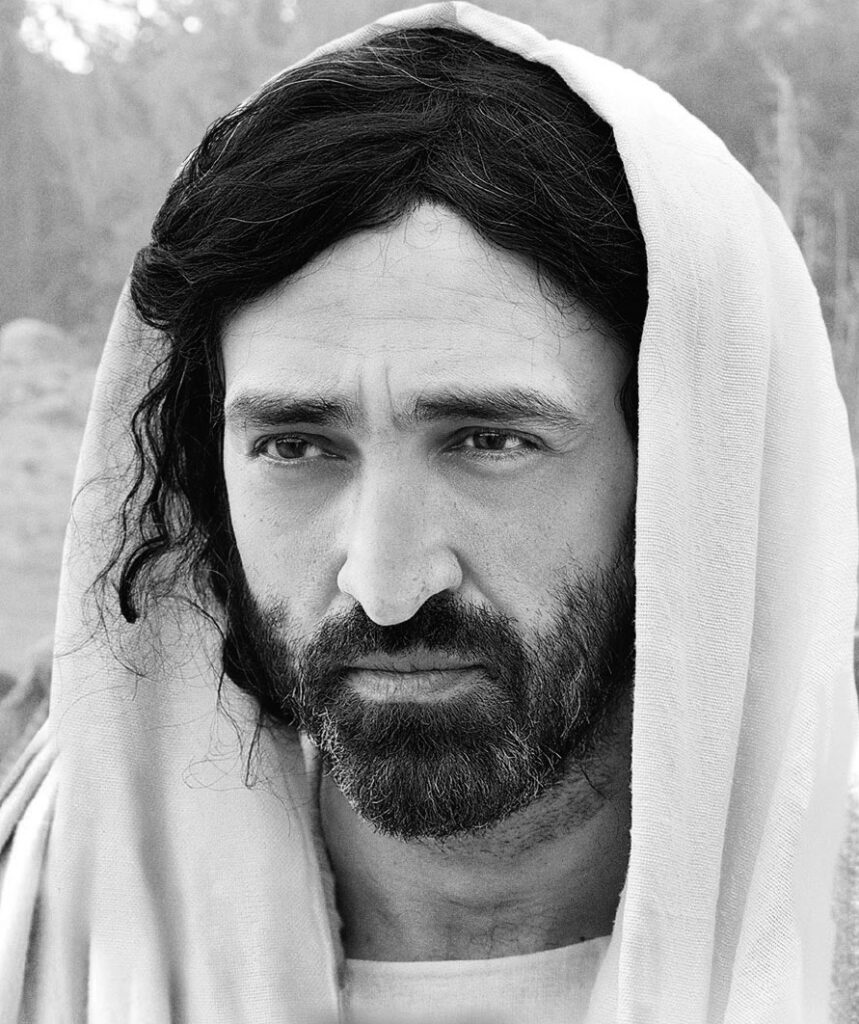
Midwestern spring thunderstorms reinforced my early faith: every Good Friday for many years in a row, the sky grew dark, and the heavens opened. What a naïve child I was, forgetting that the weather would have been different in the rest of the world. Catechism can narrow your focus.
I also grew up thinking that “Christ” was a unique title, not an honorific used even for military leaders, and crucifixion was an extraordinary torture, not a routine punishment. I had no idea that an empty tomb was a standard signifier of divinity long before Jesus, or that stories of resurrection were common, as were stories of divine impregnation. I did not realize that the virgin birth stories came relatively late, in Matthew and Luke, but did not show up at all in Mark or Paul. I thought of Jesus’s miracles as proof of divinity, not realizing that the landscape was rich with mystics and miracles, and those reported of Apollonius of Tyana were strikingly similar. What made Jesus different—his most profound miracle—was his willingness to touch contagious eruptions and welts; to dine with sinners; to befriend those vilified by everyone else. His was a new kind of healing.
That is my interpretation, at least. On what can we all agree? That Jesus was a Galilean peasant, the son of a carpenter. That at the age of thirty, he began to teach, using parables and aphorisms, as he traveled through an occupied land—one made politically and economically tense by increasing subjugation, indebtedness, and destitution. He gained followers and became known for healing, exorcising demons, and preaching a radical vision of the kingdom of God. It was laced with paradox and inversion: the last will be first; love your enemy; blessed are the poor; whoever wants to save their life will lose it. Alarmed, the authorities condemned him to death by crucifixion.
Augustine reinforced and systematized this new doctrine of original sin. But by then, our sin was already said to be redeemed by the pain-wracked body of Christ. Surely that should free up the preaching to focus on love of others?
He changed the course of human history. He made caring for the stranger, not just one’s own tribe, obligatory, which launched orphanages, hospitals, schools—an entire industry of compassion.
The rest, we are still piecing together. The gospel’s authors do not even describe Jesus’s face for us. He was probably born in Nazareth, not Bethlehem. Did he even intend to start a new religion? He seemed to expect the kingdom to come any minute. Did he say he was the Son of God, or simply a son of God, as any man would be? Did he think of himself as the Messiah, despite his cleverly evasive answers to the authorities? Theologian Marcus Borg points out that the gospels’ language becomes more exalted as they evolve, with Matthew throwing in “Son of the Living God” or “Truly you are the Son of God” when no such reference existed in his predecessor, Mark.
Over time, and with more information, much that seemed special and unique to me has dropped away—leaving what is truly extraordinary. A shocking love that reached outside the bounds of propriety and pulled in the filthy, the strange, the broken. Jesus’s sense that the poor were closer to God than the rich was already part of Jewish tradition, but applied to the deserving poor, the decent folk willing to conform, and thus easier to sympathize with. Boundless forgiveness had not even been held up as an ideal; Jesus made it an imperative.
An unlikely Messiah, he urged the Israelites away from the violence they felt necessary, challenging both the revolutionaries and the corrupt power they opposed. He also drew attention to the harsh injustices of the existing culture. “These things hung together,” points out conservative theologian N.T. Wright: “A society that insisted angrily on its own purity toward outsiders would also maintain sharp social distinctions, and perpetuate economic and other injustices, within itself.”
And today’s injustices—are they inequity and bigotry or sexual depravity and arrogant secularism? What is most urgent about Christianity, saving our soul or learning to love?
“There’s nothing in the New Testament that says if you live up to my standards, you will change the world,” Yarbrough maintains. “Having said that, I’m happy when people follow Jesus’s example. I mean, it’s great. But I doubt you can save your soul or be adequately touched by saying to him, ‘I’m going to live as well as you did.’”
Yarbrough’s fidelity is to words written in a different time that he believes are holy for all time. Reinterpretation feels like a betrayal.
“I feel like crying as I write this,” Carlene emails after our talk. “How did we get here? How did we get so angry and hateful? What good is it doing is, really?”
The gospel’s authors do not even describe Jesus’s face for us. He was probably born in Nazareth, not Bethlehem. Did he even intend to start a new religion? He seemed to expect the kingdom to come any minute.
“I guess the shared ideologies split open and fractured, and the values and ways of understanding are so different that now it’s hard to come together in any way,” I reply slowly, feeling my way. “It feels like a marriage falling apart—irreconcilable differences that somehow have to be navigated.”
I had hoped for a clean, hopeful conclusion. But I am honestly not sure how we get past this.