Even Our Corn Is Sweating
August 2, 2026
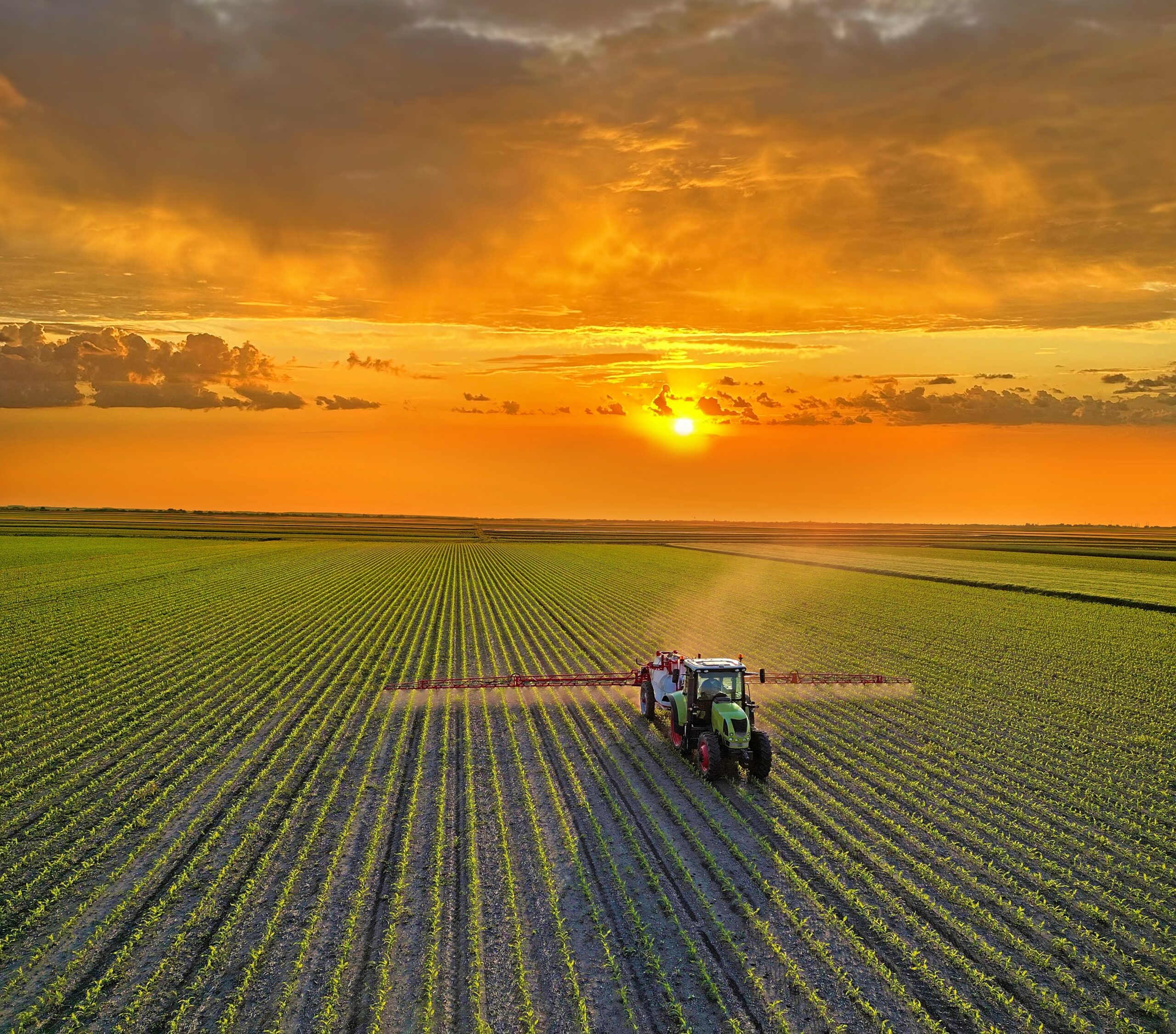
I have lived in the Midwest all my life, drooping and dragging my way through July and August, yet I never thought much about why. This summer, though, the gap between temperature and RealFeel is yawning wide. I am more miserable than ever, even when the actual temperature does not seem all that high. So I went digging to find out why. I know, we all know, the climate is warming. But the numbers are not that much higher, yet I might as well be hacking through a steamy jungle when I walk the dog at 91F—and by 99, I stop trying.
Turns out an increase of less than two degrees Fahrenheit can increase the humidity by as much as 7 percent. Warm the air, and you energize its little molecules, encouraging them to break free from whatever liquid contains them and rise into the air as vapor. That vapor then acts as a greenhouse gas itself, trapping heat and encouraging more evaporation. Now the air is thick, sticky, cloying—you know the adjectives. And it traps our bodies’ heat, too, because the more humid the air, the less able we are to cool ourselves by getting a little damp around the edges and letting the moisture vanish into the breeze. The air refuses to take it from us, because it is already dense with water of its own.
And where does some of that water come from? In this area, this time of year, from corn sweat.
Transpiration, to be precise. Evapotranspiration, to be fancy. In order to pump minerals up through its roots, cool its leaves, and open their pores to breathe in the carbon dioxide it needs to grow plump, sugary kernels, corn has to give off water vapor. Less in early summer while it shoots upward, callow and ambitious. But now, it is mature, sexualy active, tasseling and turning milky—and releasing as much as 4,000 gallons of water vapor per acre every day.
We perspire, corn transpires. So do other plants, but the corn is big and stalky, its fields packed in tight rows. That is the doing of modern agriculture: maximize yield, even if you drain nutrients from the soil and the produce, not to mention throwing extra water into the air and making an already hot summer extra.
I am trying to train myself not to look at the RealFeel numbers, denial being the only strategy available to me. But there is an even more miserable measure: the dew point.
My mother, who had always been game for any outdoor sport or picnic, was bothered by extreme weather in her later years. Fretting, she reported The Dew Point to me every time we talked. Neither my husband nor I knew wtf the dew point even was. We humored her and joked privately, rolling our eyes about this mysterious Dew Point….
Now, I get it. Turns out the dew point is the absolute measure of how much moisture is physically present in the air. And that is what determines whether our bodies’ natural cooling mechanism can even work, lifting the sweat from our brow and easing that internal, volcanic heat before it can stress us.
A dew point below 55 is described as “dry and comfortable.” As I write, ours is 78.
RealFeel 122.
St. Louis summers have always been hot; before air conditioning, families slept outside in Forest Park. Come June, warm air from the Gulf slides upward and, well, engulfs us. But originally our land was covered with tallgrass prairie, thirsty for our summer storms and thriving in the rich soil below. That soil proved so fertile, settlers cleared the prairie and planted crops instead. Corn now covers about 95 million acres of the U.S., and irrigation pumps water into those fields to make sure the plants grow tall, and ag scientists engineer them to stand up straight so more plants can be packed closer together. And they all sweat like they are playing the World Cup. And as a result, so do we—but it is futile sweat that cannot even cool us.
One more tiny misery hidden inside the wonders of technological progress. If you had warned the scientists that they would be adding to summer’s heat (thus increasing the costs and damages of air conditioning, the deaths of the elderly and foolhardy, the grumbling of the rest of us), they would have shrugged and pointed to increases in yield and profit.
Capitalism is odd that way. Ostensibly working to raise everyone’s standard of living and, by its formula, happiness, it winds up ignoring basic human needs—for relaxation, peace of mind, sociability, and even physical comfort. We work crazy-long hours because we are terrified that the same market forces will erase our jobs and the national debt will wipe out Social Security and pitting us all against each other will erase the real social security, which comes from tightly knit communities in which people look out for one another.
Slowly, the little irritations and inconveniences and trifling miseries accrue. The damage to climate and environment mounts. The data centers suck up the electricity. And the corporations ask us to fill out a survey every time they answer a question or mail a purchase to us—How are we doing? Are you happy? How many stars do we get? This is their customer service, their accountability. Behind the scenes, though, other changes are implemented with no one’s permission or feedback, because who, in the United States of America, could ever object to something that would increase efficiency and quantity and profit? Especially if nobody explained the collateral consequences.
Would we have voted to limit crop density if somebody explained corn sweat, though? I doubt it.
Besides, damage creates need. Think of all the cooling shirts and ice vests and chargeable fans now selling like hotcakes. Profit is what matters.