Līlā
How the art of play is what makes the liberal arts liberal, and important.
By Deepak Sarma
July 4, 2026
0. Introductory remarks
My entire academic life, from when I began as an undergraduate in 1987 until the present moment (2026), has been dominated by prognostications that a liberal arts education has become obsolete or will be eventually destroyed. Many, and now I am part of this (illustrious?) group, have argued that it must be kept alive, that the domination of vocational orientations in the academy must be thwarted, and that an educated public, electorate, and nation is desirable. In this connection, I contend here that līlā/ play is at the very center of a liberal arts education, that it enables humility, ethical awareness, and transformative communication. Defending a liberal arts education is equivalent to celebrating līlā/ play. Enabling and encouraging līlā is more than just desirable, it is necessary. My thesis is thus līlā/ play is the intellectual disposition that enables epistemic humility, which in turn is the central goal of a liberal arts education.
To unpack these ideas, I first characterize līlā and play, explaining how I use the terms interchangeably. I then situate the discussion in relation to the aims of Indian philosophy and connect it to Ludwig Wittgenstein, whose theory of language games provides a useful parallel. Next, I introduce a dichotomy between epistemic humility and epistemic arrogance, which mirrors openness or resistance to play. Finally, I examine how these concepts manifest in education, intellectual life, and liberal arts practice.
This essay thus argues that līlā/ play, provides a model for intellectual life and that cultivating such play is the central aim of a liberal arts education.
1. Līlā/ play
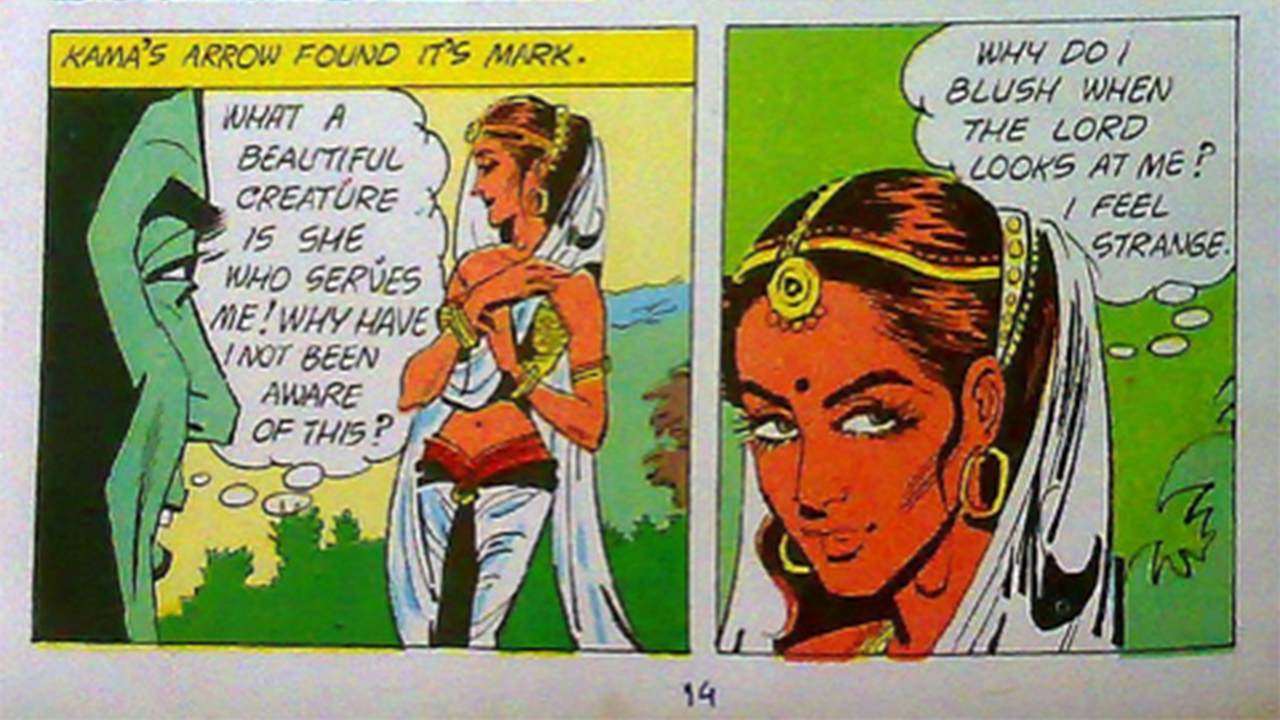
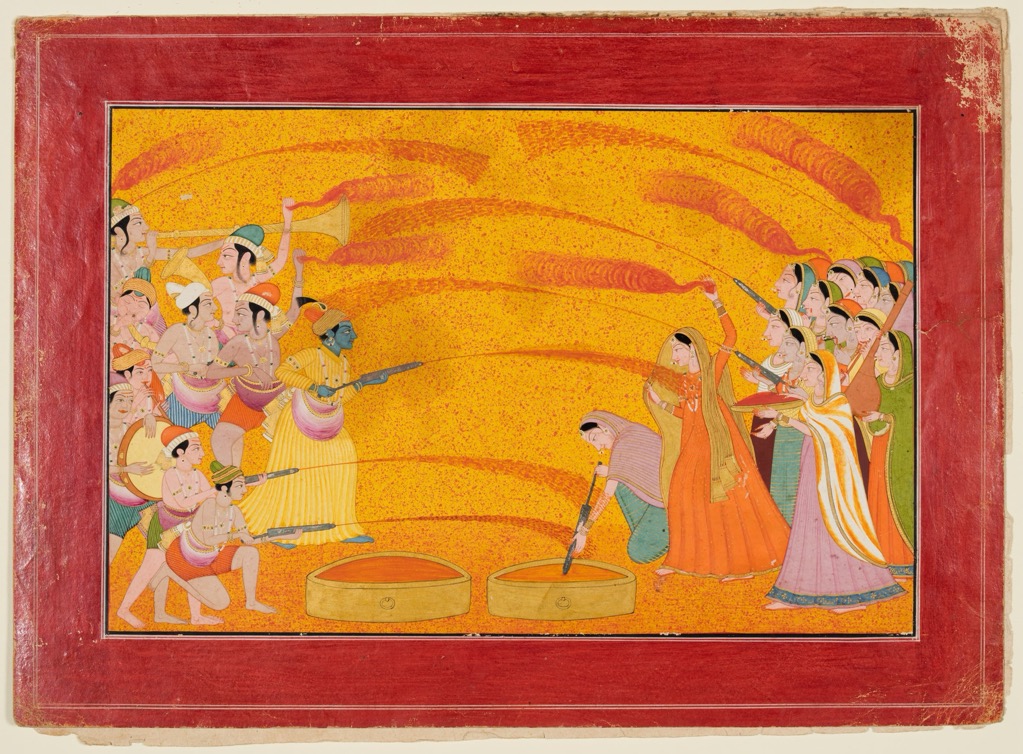
The semantic ranges of both līlā, a Sanskrit term used in Hindu philosophy, theology, and by practicing Hindus, and the English term “play” are very wide. In the Hindu context, the term has been of considerable importance to scholars of Vedānta, who have long debated about the meaning of līlā. Their debate centered on why a perfect God, being, or cosmic force would want—or need—to create anything at all. Why require anything beyond itself? The complexity ultimately comes down to motive, which a perfect being cannot have. Vedānta scholars Śaṅkarācārya, Rāmānujācārya, and Madhvācārya as well as Christian scholars like Aquinas have held that it is in God’s perfect nature to create and that God does not have a motive and does not need to do anything. It is for this reason that it is often translated by scholars of Hinduism as “divine play” with the idea that the play is spontaneous and creative.
So, what does it mean to “play”?
Vedānta scholars Śaṅkarācārya, Rāmānujācārya, and Madhvācārya as well as Christian scholars like Aquinas have held that it is in God’s perfect nature to create and that God does not have a motive and does not need to do anything. It is for this reason that it is often translated by scholars of Hinduism as “divine play” with the idea that the play is spontaneous and creative.
The semantic range of “play” is even wider.1 But the characterizations that I want to focus on are those that pertain to children, dogs, and even some types of musicians—that play is an activity oriented around enjoyment and recreation. The Oxford English Dictionary defines play as: “to engage in activity for enjoyment and recreation rather than a serious or practical purpose.”2 Observers of children may encourage play because of skills that will have an impact on the future (“playing with Legos increase gross motor skills” or “shape sorters and stacking toys will help with future Tupperware problems (mismatched lids, storage issues).” This reeks of functionalism and biological reductionism (and seems to mirror parents’ ideas about required classes and vocational aspirations). Surely children are observed playing without a motive and a desire to win, and sometimes their play does not even involve enjoyment or pleasure. (And by encouraging children to win, or to share with them an intended or optimal future outcome, are parents tarnishing, or conditioning?) And in its purest form, children live in the moment when in contemporary lingo, they are mindful.3
This form of play is a model for intellectual life.
Play is like līlā. And I will use them interchangeably moving forward here.
2. Indian philosophy and Līlā/ play
When I teach my Introduction to Indian Philosophy class to undergraduates, I must first teach them that their success in the class is a result of their willingness to suspend their disbelief and to accept the presuppositions and parameters of the schools that we are studying. Doing Indian philosophy has meant, among other things, learning the ontological and epistemic presuppositions of a rival school, and then looking for internal inconsistencies. Ontological claims, for example, must not conflict or be at odds with other ontological and epistemic claims and vice versa. The schools, moreover, did. In the western philosophical language game, this refers to the reductio ad absurdum, which, according to the Oxford English Dictionary is “a method of proving the falsity of a premise by showing that its logical consequence is absurd or contradictory.”4 In the Indian philosophical context this is known as pursuing a prasaṅga, perfected by the scholars of the Mādhyamika school of Buddhism.
Students trained in western philosophy often think that being philosophical is to communicate about what they believe to be true, and they worry about being right (and getting an “A”). This may or may not mean citing a philosopher that they are already familiar with, reducing things to social/ biological Darwinism/Ayn Rand, or just, well, waxing philosophical. Either way, the learning curve is steep for some when they perform poorly on the first paper or are asked not to use personal experience as evidence. And the challenge is even greater for students who have had little or no exposure to Indian ways of thinking, and are struggling with the very idea of karma, rebirth, the idea of breaking out of the cycle and obtaining nirvāṇa (in Buddhism and Jainism) or mokṣa (in the “Hindu” schools). Alas. They are not interested in playing.
Indian philosophy therefore requires philosophers to enter other systems provisionally, to test them from within. In this sense, Indian philosophy demands that philosophers learn how to play and to enact līlā.
For most, by the second paper (and after repeated reminders!), students usually can leave their epistemic certainty behind, suspend their disbelief, and learn to play in the language game of Indian philosophy. As I tell them frequently, they may not believe any of the presuppositions, but they will have more fun if they temporarily and stipulatively adopt them when they enter the classroom (or when they begin writing their papers in their dorm rooms). They would enjoy the semester more if they simply surrendered to the flow of the language games.
I teach them to enter philosophical systems as temporary games. They do not need to believe them—they only need to play them well.
Indian philosophy therefore requires philosophers to enter other systems provisionally, to test them from within. In this sense, Indian philosophy demands that philosophers learn how to play and to enact līlā.
3. Playing in Wittgenstein language games
While there are indeed problems with Wittgenstein’s theory of language, the so-called language games, it resembles the framework assumed by Indian philosophers outlined earlier, and I think it is useful in this context. To this end, Wittgenstein proposes that there are “forms of life,” cultural contexts and communities, that share a language, practice, rituals, and so on.5 These are not unregulated. Rather, they are enacted and produced according to the rules, a grammar as it were, and lexicon that is particular to a specific “form of life,” or to extend this metaphor, a “game.”6 Sentences produced in these language games must be evaluated and understood only in the designated and intended framework. To assess a sentence in one language game using the grammar/rules/lexicon of another does not make sense. In some cases, there may be an overlap but in many nothing is shared. Wittgenstein warns “When philosophers use a word—‘knowledge’, ‘being’, ‘object’, ‘I’, ‘proposition’, ‘name’—and try to grasp the essence of the thing, one must always ask oneself: is the word ever actually used in this way in the language-game which is its original home?”7
Communicating and playing with others then requires the players/ participants to know a multiplicity of language games. Knowing only one language is akin to being epistemically arrogant, as I will explain.
Education should make students “polyglots” in language games. Play becomes the ability to move between intellectual worlds. To communicate across forms of life, then, requires learning the rules of many language games. It requires, in other words, the ability to play.
4. Epistemic certainty/epistemic arrogance
As mentioned earlier, students who take my Indian philosophy class and who do not wish to learn another language game or invite or entertain the possibility that their presuppositions might be flawed, or that their language games might suffer from internal contradiction or inconsistency, enter the class conversation with epistemic certainty, bordering on epistemic arrogance. To be clear, epistemic arrogance is a belief that one is an indisputable epistemic authority and that one has a closed-mindedness that does not lend to fruitful conversations with others. My aim is to provoke students to doubt. It is indeed true that religious belief often involves unquestioning and unwavering certainty, but it is also the case that many religions encouraged practitioners to doubt and even to debate with others. Though religions may celebrate epistemic arrogance, they do so at the expense of play.
Oftentimes certainty is sought through the avoidance of anavasthā (infinite regress) in Western philosophy. For example, in Thomas Aquinas’s First Cause argument, he maintains that there must be an uncaused cause—namely God—who is eternal and the ultimate cause of all things. Aquinas posits this to avoid the infinite regress of causality.8 Certainty is thus based on an (arbitrary?) belief that an infinite series of causes is impossible. Descartes’s belief that positing a thinker avoids a regress of doubt, and that cogito (I think), is self-evident.9 For both Aquinas and Descartes, intellectual curiosity and, by default, play, is curbed. For their system/model, to work (at least according to the grammar of error in their language game), these had to be posited. One finds a similar issue in modern physics: The Higgs boson—often called the “God Particle”—was a necessary, yet theoretical, component of the Standard Model. Physicists were relieved when CERN’s Large Hadron Collider finally confirmed its existence in 2012.
Epistemic arrogance therefore brings play to an end. Systems that insist upon epistemic certainty ultimately bring inquiry to an end. Play, however, requires the willingness to entertain the possibility that one might be wrong.
5. Epistemic humility
A willingness to question one’s presuppositions, to be questioned by others, combined with a desire to become a “polyglot,” are indicators that one has epistemic humility and, of course, engages in play. My pedagogical goal is not tied to one system over others. Rather, my aim is to provoke students to entertain the possibility that epistemic certainty is a mere dream, and that there are no valid pramānas (epistemic foundations). My overall pedagogical goals are fourfold and hierarchically arranged: first, students must learn about the schools of Indian philosophy and the debates between them; second, they must learn how to make and write succinct arguments against (or in support of) the various positions using the prasanga (reductio ad absurdum) method. To achieve this, I assign ten short papers evaluating each school of philosophy with strict stylistic and organizational requirements. Third, and of paramount importance (and the goal in all my classes at Case Western Reserve University, no matter the subject), is for my student-interlocutors to recognize and problematize their presuppositions, epistemic, ontological, and otherwise—to become epistemically humble and to learn how, or to perfect (asymptotically, of course) their ability to play. And if they choose to, they should either get rid of those presuppositions that are flawed or indefensible and replace them with ones allegedly less flawed or, preferably, they should accept complete epistemic uncertainty. This is achieved in class by deploying the bhāṣya and samvāda methods and in the last short paper assignment which asks students to divulge their epistemic and ontological presuppositions, if they have not been already demolished. They are graded on how well they articulate these presuppositions and whether their system is internally consistent or inconsistent. Foundationalism is penalized and ridiculed. The fourth and final goal, then, is an extension of the third, that is to recognize that all taxonomies are humanly constructed, that they need not uphold or submit to them, and that by recognizing this they will become free, free from epistemic certainty and arrogance. They thus achieve cognitive freedom by playing.
Education cultivates this humility, and even humanity. Epistemic humility is thus not simply an intellectual virtue; it is the condition that makes play possible.
6. The big questions
A liberal arts education should prepare students to be able to have a conversation with anyone, no matter the language game they inhabit. Given the breadth and depth of the classes that students are required to take, a student who has been epistemically humble and learned the rudiments of other language games, ought to be able to have a meaningful conversation with anyone (who is also epistemically humble). They ought to be able to play with anyone who is also willing to play. Of course this includes other students, no matter their focus, and, more importantly, with others outside of their academic world. Should they be sitting next to a businessperson on a flight, they ought to be able to speak intelligently, curiously, and, of course, playfully, with that person, having taken a course on economics and the like. If they meet a chemist in line at the grocery store, they should be fluent enough in the chemistry language game to be able to play.
This makes them capable of meaningful dialogue across fields and communities. The educated person becomes someone who can play intellectually with anyone willing to play.
A liberal arts education therefore trains students to become intellectual players.
7. Simply playing
Hermann Hesse’s The Glass Bead Game (1943) presents an idealized vision of intellectual play in which players integrate music, mathematics, philosophy, and history into a creative, disciplined practice. The Game exemplifies many of the qualities central to līlā: mastery across multiple systems, the suspension of certainties, and the delight in imaginative connections that transcend practical outcomes. However, the Game has been criticized for its insularity and elitism; players live in a monastic order, removed from the concerns of ordinary life, and the practice risks becoming overly formalized, turning play into technical exercise. These critiques illuminate the stakes of applying the principle of līlā in real-world education. A liberal arts curriculum translates the spirit of the Game into an engaged, socially relevant context: students cultivate epistemic humility, explore multiple language games, and integrate knowledge across disciplines, all while remaining attentive to human concerns and improvisatory creativity. In this way, liberal arts play mirrors the Game’s intellectual rigor without its isolation or rigidity. By situating līlā in education, students learn to play imaginatively yet responsibly, developing cognitive freedom and the capacity to converse across domains—becoming real-world players in the spirit of Hesse’s vision, but without the Game’s potential detachment or elitism.
The educated person becomes someone who can play intellectually with anyone willing to play. A liberal arts education therefore trains students to become intellectual players.
8. “Playing, like a wave upon the sand”10
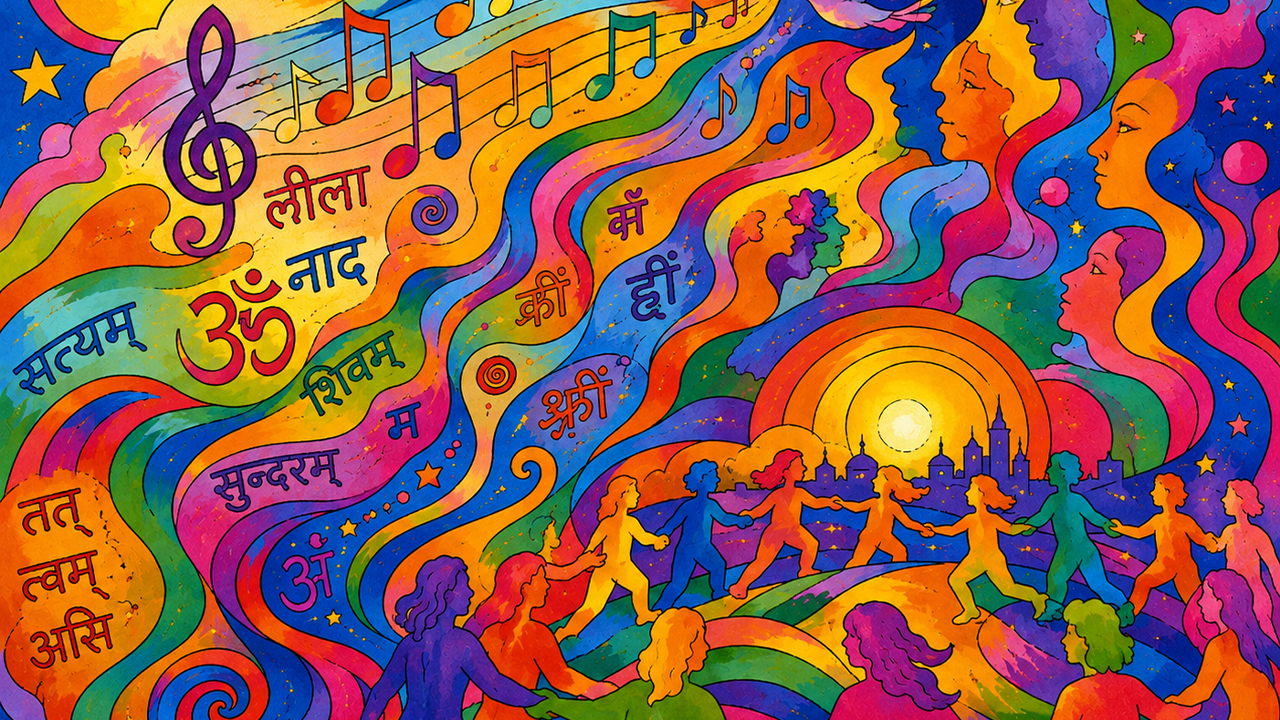
Līlā, intellectual play, is the heart of a liberal arts education. By cultivating epistemic humility, students learn to navigate multiple systems of thought, to converse across disciplines, and to integrate knowledge creatively. Like players of Hesse’s The Glass Bead Game, they explore patterns and connections across domains, yet unlike the Game’s monastic isolation, they (should) engage the world attentively and imaginatively. Like the Grateful Dead in “Playing in the Band,” they improvise, listen, and co-create, embodying epistemic humility, embracing uncertainty, mindful, and attending fully to the unfolding possibilities before them. In learning to play—philosophically, musically, and socially—they discover freedom: the freedom to think, to question, and to move across ideas and like a wave upon the sand, leaving patterns of understanding, creativity, and connection in their wake. In this play, knowledge and life merge, and the liberal arts fulfill their deepest purpose.
1 See Johan Huizinga, Homo Ludens: A Study of the Play-Element in Culture (Boston: Beacon Press, 1955)
2 Oxford English Dictionary, s.v. “play (n.),” accessed March 9, 2026, www.oed.com.
3 Thanks to the students in my Spring 2026 Indian philosophy class for this insight CWRU.
4 Oxford English Dictionary, s.v. “reductio ad absurdum (n.),” accessed March 9, 2026.
5 Ludwig Wittgenstein, Philosophical Investigations, trans. G. E. M. Anscombe, P. M. S. Hacker, and Joachim Schulte, rev. 4th ed. (Oxford: Wiley-Blackwell, 2009), §§ 19, 23.
6 Ibid, 7. “I shall also call the whole, consisting of language and the actions into which it is woven, the ‘language-game.
7 Ibid., 116.
8 Thomas Aquinas, Summa Theologica, trans. Fathers of the English Dominican Province (New York: Benziger Bros., 1947), I, q. 2, a. 3.
9 René Descartes, Meditations on First Philosophy, trans. Michael Moriarty (Oxford: Oxford University Press, 2008), 18 (AT VII 25).
10 Grateful Dead, “Playing in the Band,” by Robert Hunter, Bob Weir, and Mickey Hart, track 10 on Grateful Dead, Warner Bros. Records, 1971.