World Cup Tourists Gushing About the U.S. (Really?)
June 30, 2026
My poor friend. She sent me this nice article from the BBC about how travelers to the World Cup “are discovering little-known slices of Americana away from the host cities.” The word “triggered” would be apt. I had already seen the social media reels and posts—and in my deep cynicism, had wondered who put these people up to it. Such enthusiasm, for a country that had jacked up prices and barred quite a few furriners from even entering?
The BBC article was mild and sweet, a crowd pleaser had it been one of the BBQ sauces the tourists were raving about. Along with the ranch dressing. And the combined gas station-restaurant-souvenir shop-supermarkets. When I finished reading and slammed back a sarcastic retort, my friend, a little taken aback by my lack of charity, pointed out that people were “exploring national parks/outdoors, comparing regional culinary offerings, experiencing hospitality, etc.”
I got hold of myself.
All the enthusing had just reminded me, I explained, of the time my husband and I were in Newfoundland. We were the only Americans on an eco-tour to see caribou and whales. On the way out of town, everybody peered out the bus window eagerly to read the sign on the big construction site, the structure already rising into that clear, clean, pure air. “W…A…L….” they sang out, and we slunk down in our seats, because we could guess the next four letters. And how they would change this place.
The World Cup travelogues also reminded me of a report years ago that people in (primarily Buddhist, customarily serene) Thailand had lined up at dawn, rejoicing to finally get a U.S.-style mall. And how sad it seemed when massive crowds gathered in Moscow’s Pushkin Square for the opening of the first greasy-wrappered McDonald’s. And how, when Costco opened its first store in Shanghai, the consumer frenzy was so intense that the store had to shut down early just to keep everybody safe.
You can see why lines like “Some travellers were so struck by Costco and Walmart that they declared, ‘I’m in love with America’”—made me wince. Why their delight at the Big Gulps and giant waffles reminded me of our pharmaceutical industry and unaffordable health care. Why the Brit who exclaimed, “I’m in heaven…. I can get bread, milk, and an air rifle”—reminded me, darkly and no doubt unreasonably, of our mass shooters’ easy access to more deadly guns.
My reaction sounds snobbish, even to me. I do understand the appeal of friendly service, affordable food, and a big, clean, well-lit space packed with variety. But when this is done American-style, it is overdone. Too much stuff and too many choices, with psychologically canny displays designed to maximize profit by luring us into wanting something we do not need, and with chemicals and fat and sugar pumped into the food to make us crave more. To remain a growth economy, you have to push for growth at every turn. More stuff, more sales, more, more, more. And the way this happens is insidious. You show up, or pay for a membership, and at first the lower prices are thrilling, and you love that you need a map to the store, and you fill your cart or maybe two carts. In time, you realize the quantities are so big, half of what you buy rots or sits unused. Or you take a chance, because the price is low, and hate what you buy, and rush back to try again. Dopamine spikes with every purchase, and you soak in the rich satisfaction of having gotten a bargain or discovered some exotic wonder or supersized your favorite treat.
It takes years to realize that you buy way too much, and the choosing wears you out, and vast and varied abundance is not nearly as much fun as the bright lights and canned music suggest it should be.
In Russia, people who had grown up choosing between one or two brands were suddenly dizzied by long aisles crammed with thirty varieties of each item. They experienced what social scientists have finally proven to us that too much choice paralyzes, and that excess induces anxiety. What should have been delightful for stuff-starved Russians was instead overwhelming, especially for those on a fixed income who now had pricey luxuries dancing before their eyes. They became nostalgic—a political danger—for the simpler, more predictable past.
This is why China has developed so many AI online shopping curators, bots that narrow the choices for people as they shop online. And why I filter furiously and feel disgruntled if the AI does not heed my specifications. Excess wastes both time and sanity.
For decades, U.S. Americans rattled around big box stores like the little steel balls in a labyrinth game. Then we went online and spent hours sliding two-dimensional product pictures into electronic carts. We forget that our own country was built with mom-and-pop stores in small towns and barrios, and the shopping used to be a friendly experience that met real needs, rather than manufacturing new ones.
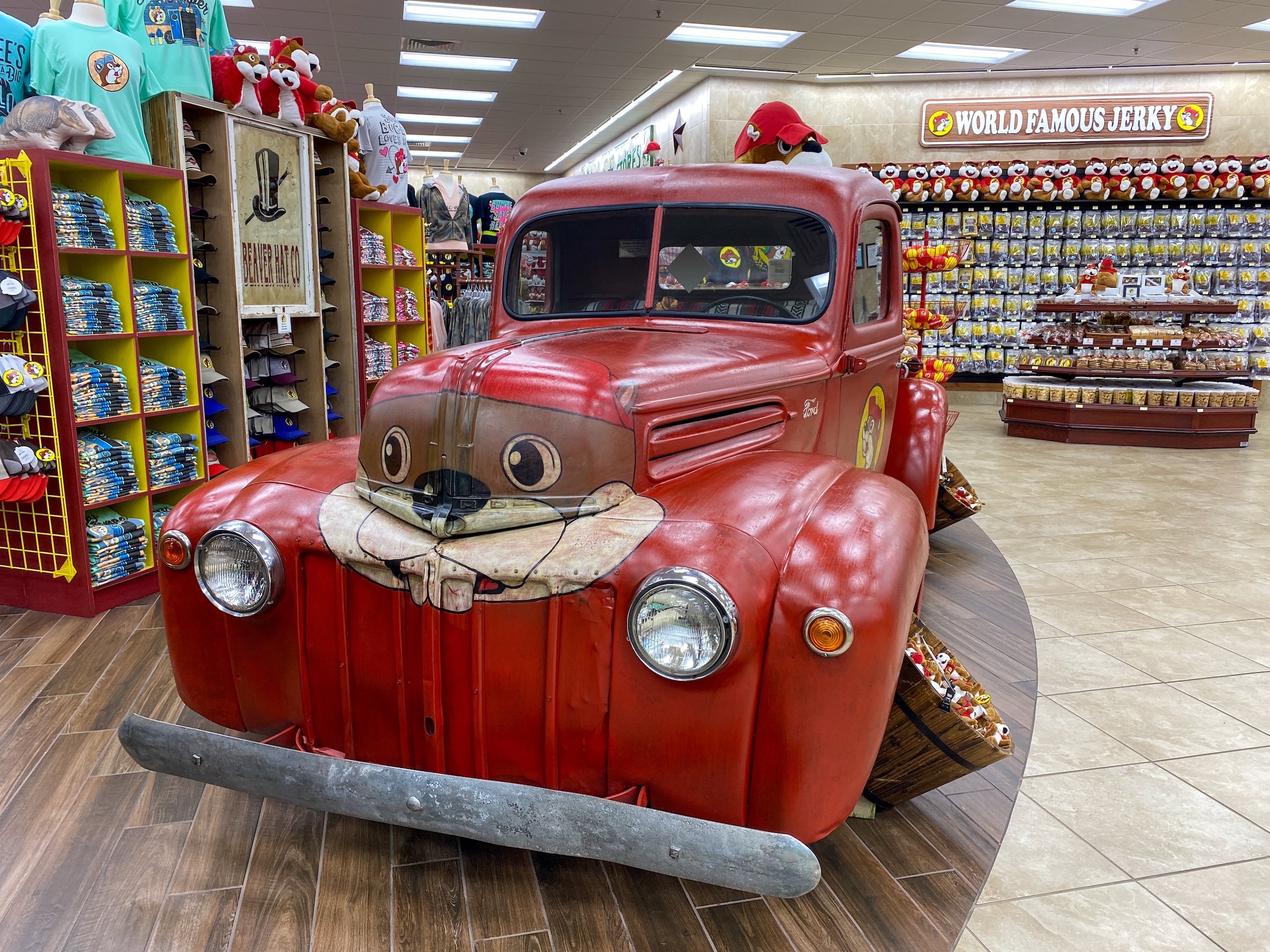
I love that visitors are driving Route 66 and relishing the kitsch; discovering Dunkin Donuts and tater tots and smuggling home ranch dressing. I love their awe at our wildlife, and at the beauty of the national parks endangered by our current administration. People here are kind, and welcoming, if not to one another. But Taco Bell is not “the holy land.” Freddie the German missed the fights that break out at Waffle House late at night. “The tourist awe for Walmart and Buc-ee’s? That should serve as a reminder of how lucky we are,” wrote Ingrid Jacques in USA Today—butI would rather people hear jazz and eat food homecooked by immigrants and visit tribal lands and art museums and universities, and yeah, now I am being snobbish, because consumable abundance is not the best we have to offer, and maybe it feels lucky but it is also addictive.
“Saw a guy look at a Buc-ee’s gas station the same way I’d look at Stonehenge,” an American marveled, and I sighed hard. Did someone pay these visitors (or fake their posts) to restore a little national pride? But no, the enthusiasm rings true. We do contain marvels—and multitudes—and like Walt Whitman (did they read him?) we contradict ourselves.
Visitors, do not confuse consumerist capitalism with an amusement park. Living here is exciting, but if you get locked inside and night falls, all those rides and treats loom, and you start to feel a wee bit scared.