Why I Fly a Tiny Polish Flag
By Chris King
July 14, 2026
By Chris King
The World Cup has sparked spontaneous and unpredictable allegiances between previously disconnected peoples and places. Boston fell so hard for Scotland that together they drank all the pubs of the city dry, and the governor of Massachusetts appeared, at one moment, ready to walk off into the sunset, arm-in-arm, both toting tallboy beers, with a tartaned Scottish bagpiper. Mexico fell for Norway so intensely that they were rowing like Vikings on an imaginary Rio Grande. At a time when the most powerful appear determined to divide and conquer us all, it was the deepest pleasure to see them so powerless to keep us from loving each other across every divide.
This feels like an opportune moment for me to explain why I have a small replica of a Polish flag that I fly proudly inside my home, although I have no Polish ancestors (my Ancestry.com chart revealed 0 percent Eastern European DNA) and my kinfolk have married Hungarians, Mexicans, Filipinos, Italians, and Africans, but no one from Poland. My hometown, Granite City, Illinois, is a steel town with holdover ethnic communities, including Polish, that have vestigial social clubs, including a Polish Hall. But none of my high school friends were Polish, and we only went to Polish Hall because they had live music, they served beer to minors, and you could pick up girls by polka dancing.
So, why do I fly a tiny Polish flag?
I was the travel editor of an influential magazine in New York when I was pitched on reporting a story about wine tourism in the state of Washington. This was around the turn of the present century, when wines from Washington state were little known outside of the Pacific Northwest. I told the tourism person pitching me that I did not even know wines were made in the state of Washington. She said, “We know. This is part of our first big push for national coverage. When you get back from your trip to Washington wine country, there will be a wine from Washington state on the endcap of every supermarket in New York,” which turned out to be more or less true.
I had an uncle living in Walla Walla, Washington, Skippy Sans Souci, who was a chef integral to the emergence of Walla Walla as something of a foodie destination. I learned that Walla Walla was one of the state’s wine regions, and my wine tour would take me to see my Uncle Skippy, so I assigned myself the story and signed on for a tour.
On the way inland from Seattle and Woodinville to Walla Walla lies the tiny wine region of Red Mountain. I tasted wines and had lunch at a gorgeous winery on Red Mountain that looked like a French chateau, Hedges Family Estate. The winemaker pulled me aside and said, “I have seen your itinerary, and I have talked to the tourism people and the people at the restaurant where you were scheduled to have dinner, and I have made new plans for you to come back and have dinner with us. By all means, visit the other wineries on your itinerary. I am not trying to have you all to myself, but come back to us for dinner. We are hosting a very special event, and I wouldn’t want you to miss it.” We would not tell me more than that about their evening event.
After a day of touring other wineries on Red Mountain, I returned to the beautiful, sprawling chateau, now crawling with people of every imaginable description. It turned out that my Washington state wine tour overlapped with a much more ambitious itinerary for the consuls to the United States of the entire world, who were touring all the state’s produce, including its wines, and Hedges Family Estate had them all over for dinner.
I was nibbling on free wines on a patio alongside a tall, broad, gregarious, grey-haired man wearing a bulky vest with many pockets. He was a consul from Poland based in Los Angeles. When he heard why I was on Red Mountain, he patted his many vest pockets. He said he also had been a journalist, a photojournalist, and when he stopped traveling with a bunch of lenses that needed their own pockets, he kept wearing his old jackets. You never know when you are going to need a lot of pockets.
As we continued to drink wine and chat about journalism, I told him that I had been a world music critic before I landed this travel editor job, and really loved a couple of obscure Polish bands I had written about. This was not, like, polka music but rather a very different kind of primal mountain Polish folk music. I had even heard my reviews had been translated into Polish and published in Poland because the band was on a German record label and not well known in their own country.
This all caught his interest. He eyed me closely and asked about this band.
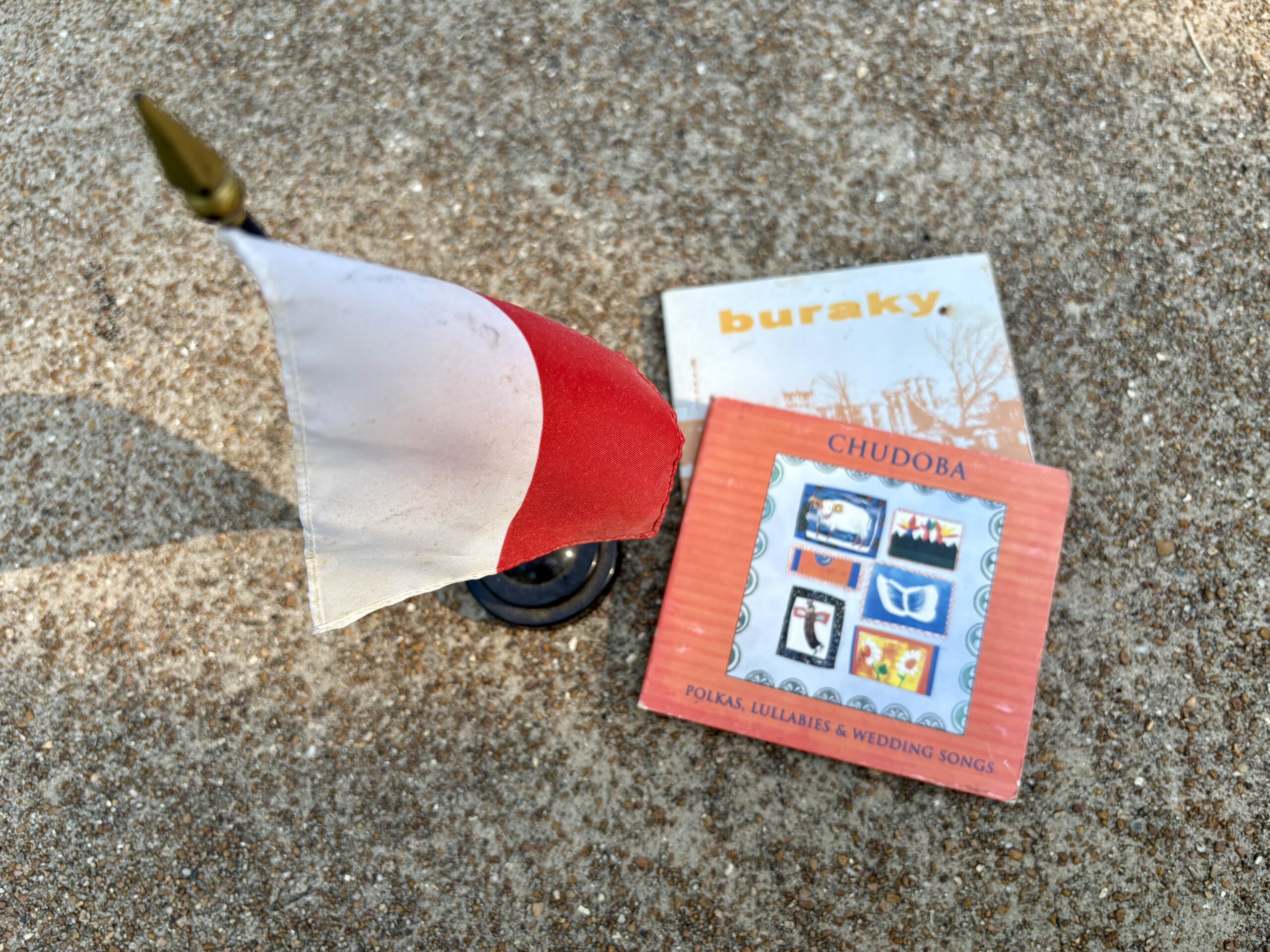
“Well,” I said, “they were called Chudoba, but the main guy left and is now in a band called Buraky. I love both bands and have written about them both.”
A very strange smile spread across his face. “You must sit with me and have dinner with my wife and me. My wife does not speak English, but you must tell her this story, just as you told me, and I will translate.” He would not explain further.
It appeared his wife had been in good company, having a jolly time, because she was at least as lit up from the free Red Mountain wine as the consul and me. After we were all seated but before the dinner service started, we reenacted our conversation about my reviews of Polish music for the benefit of the consul’s wife. When I got to the end and mentioned the band names, Chudoba and Buraky, his wife, who was sitting between us—I have never seen this literally happen, before or since—literally fell out of her chair onto the floor.
The consul leapt up and helped her, unharmed, back into her seat, laughing and looking at me. He said, “You have no idea how little known these people are in Poland. No one in our country has heard this music. This is the wild music of the mountains. My wife is from these mountains. My wife is from the same small village as these people in Chudoba and Buraky. She knows them. You have no idea how strange it is for us to be here in America in Washington state on Red Mountain and meet an American who has heard the music of Chudoba and Buraky.”
Throughout dinner, the consul’s wife would periodically mutter, “Chudoba. Buraky. America,” then shake her head in a daze that lasted as long as I was with them.
Each of the consuls of the wide world had found their seats in the large dining room by looking for a tiny replica of their national flag, raised on a small circular plastic stand. The Polish consul handed me the tiny Polish flag at our table seating as we were finishing dinner and asked me to take it and to keep it and to remember them.