The Man of Tomorrow, a Creation of Yesterday, Meets Us Today
A new book about the making of James Gunn’s “Superman.”
By Gerald Early
June 4, 2026
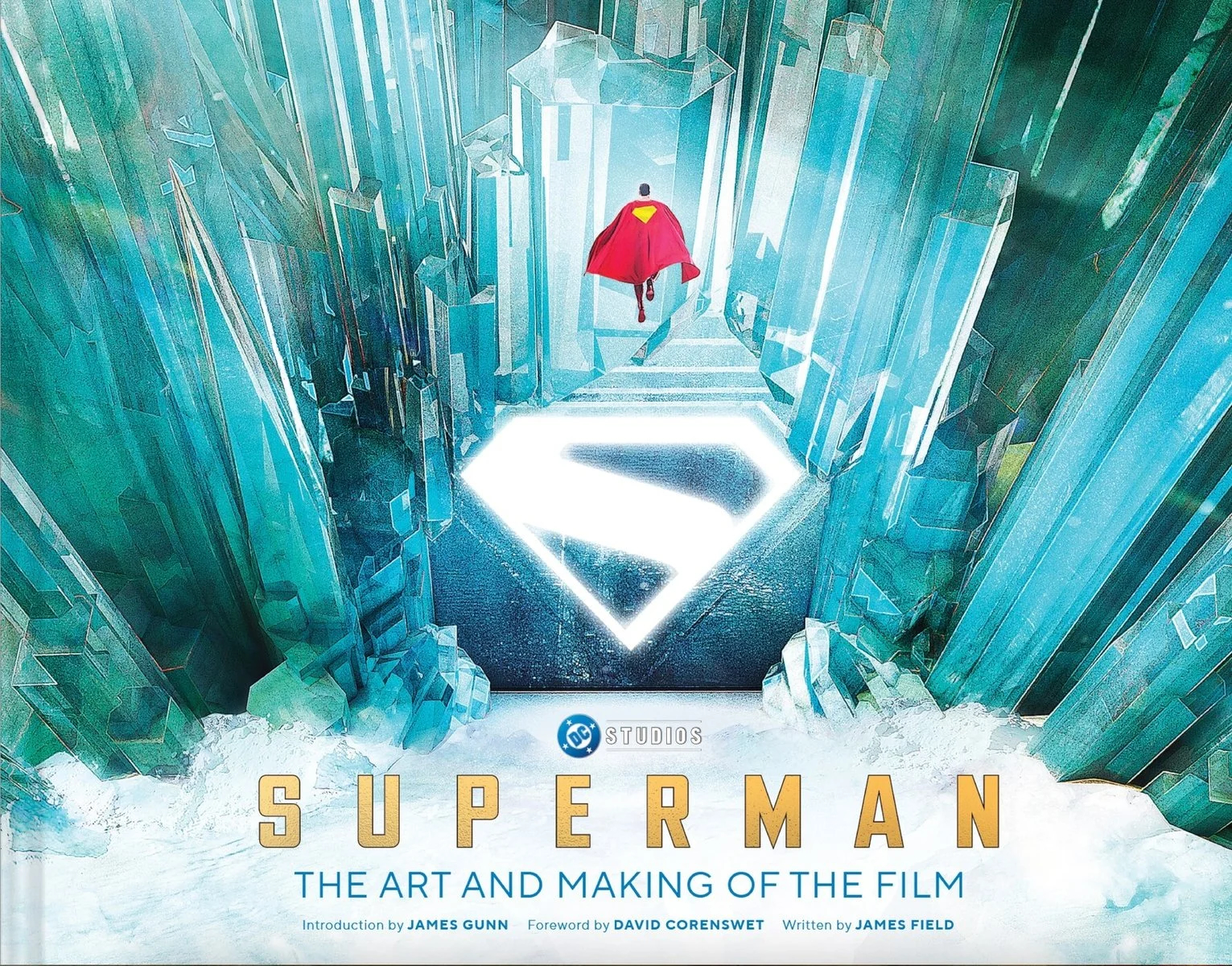
Superman: The Art and Making of the Film
The funny thing is, Jim Lee, who’s the famous artist and runs DC Comics, and I are both from St. Louis, Missouri. Jim’s a couple of years older than me, but we both saw [Richard Donner’s] Superman in the same theater in St. Louis, probably a day apart, maybe the same day. And we’re both these little kids from St. Louis, and now look what we’re doing.
—Filmmaker James Gunn in James Field’s Superman: The Art and Making of the Film, (17)
While Spiderman may be, by virtue of the success of his film universe, the most popular superhero character in the twenty-first century, Superman remains the most famous superhero in the history of popular culture, arguably the most famous American fictional hero period. The S on his chest (his shield) is one of the most recognized images in the world, as widely known as a Coca-Cola bottle, a Barbie doll, the number 007, or the loincloth and knife of Tarzan.

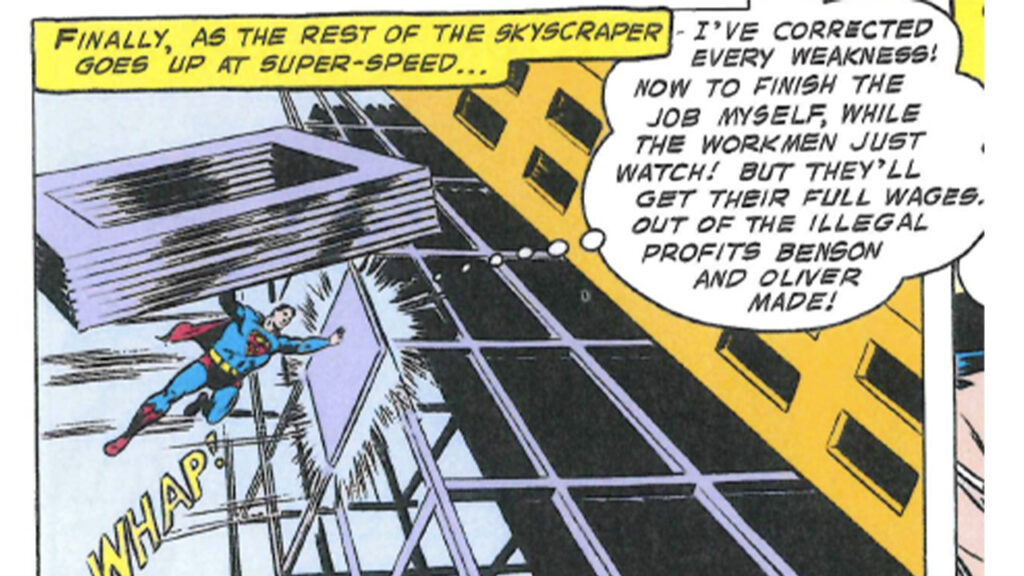
It can be argued that Superman is a fascist symbol, or that he is a reworking of Jesus Christ or the American tall-tale hero, that he embodies the myth of the American Century, the Age of the American, or that he symbolizes the hegemony of American overreach and dominance. He is the quintessential American and the ugly American in the world of the right and the left. He is, in the silver age comic books I read as a boy, an engineer extraordinaire, constantly making and building things with his superpowers, the can-do American (remember he built the Fortress of Solitude and robots,1 or he is, in his efforts to be liked through his garish, impractical costume, as filmmaker James Gunn suggested, an escapee from a pro-wrestling ring, an unserious figure. He is an utterly juvenile ideal of a naïve Boy Scout blended with a dutiful policeman, a knight-errant blended with a benevolent god; he is a suspect political representation of supremacy that has managed to endure.
There have been various pop culture iterations of Superman: comic books, of course, where the character originated from the imagination of two Jewish teenagers from Cleveland2; animation dating back to the seventeen Fleischer features of the early 1940s; movie serials; a radio program; many television series about both the teenaged and adult Superman; and blockbuster Hollywood films starting with Richard Donner’s 1978 Superman, starring Christopher Reeve, and featuring the “You’ll Believe a Man Can Fly” tagline. He is a drawing come to life. He is a pulp myth reinvented through the media that recycle pop slop as spectacle. Superman, to use a word, is a tentpole. He pushes merchandise such as the book under review here, an item for the fan and the collector of all things Superman. He is merchandise as well as an idea, a commodity, as the Marxists would say.
In the late fall of 2022, producer Peter Safran and director James Gunn “began developing a ten-year blueprint for the new DC Universe—known colloquially as DCU,” writes James Field in Superman: The Art and Making of the Film. (12) Their job was to reimagine DCU, as it seemed to have lost its way, particularly in comparison to the success of Marvel films or MCU (Marvel Cinematic Universe). DCU has had their successes with theatrical films and television series, but Marvel has had more. Gunn decided that the DCU’s relaunch would begin with a new film version of Superman, released in the summer of 2025. A restart with this character made sense because of his fame and because DCU films of the last twenty years or so that featured Superman have not propelled the character with the same force as, say, Spiderman. Gunn must think that the fate of DCU hinges on re-upping and revitalizing Superman. Superman 2025 grossed $618,723,803 million worldwide, which seems an astonishing amount of money for a film to make and a clear sign, taken superficially, that the DCU reboot with Superman was a success. But the film cost about $225 million or more to make. There were also additional costs for advertising and promoting the film, which ran into the many millions. And theater owners must get a cut of the grosses as well. To put this in perspective, Man of Steel, released in 2013, starring Henry Cavill as Superman, grossed $670,145,518, which means, accounting for inflation, it made more money than Gunn’s Superman despite having mediocre Rotten Tomatoes numbers, 56 percent favorable among critics, 75 percent among audiences. Gunn’s Superman had an 83/90 critical reception split.3
To consider this from another perspective, Jurassic World: Rebirth, also released in 2025, another special effects-laden, fantasy film with a pop culture legacy of more than 30 years dating back to the 1990 publication of Michael Crichton’s novel, Jurassic Park, grossed worldwide $869,146,189. Superman was not the highest-grossing mass-market film of its type that summer. It may very well have needed to be. But our most famous pop culture hero was beaten at the box office by rampaging dinosaurs. Jurassic World: Rebirth also garnered inferior Rotten Tomatoes scores, 50/70, compared to Gunn’s Superman. Seen in this way, it could be argued that Superman failed to be the blockbuster it needed to be.
Is Superman still a meaningful character for today’s audiences? As Field writes, “For both Safran and Gunn, it was important to work out how an almost century-old character can work with a modern audience, given changing times and attitudes. ‘It really is about a man who has kindness in a world that thinks of kindness as old-fashioned. How do you make truth and justice and the American way relevant in today’s world?’” (20) The introduction to the original Superman television series (1952-1958), starring George Reeves, concluded with: “Superman, who can change the course of mighty rivers, bend steel in his bare hands, and who, disguised as Clark Kent, mild-mannered reporter for a great metropolitan newspaper, fights a never-ending battle for truth, justice, and the American way.” An incredible number of people, legions born long after this series ended, can recite this line. But is that good or bad for updating this character? In an age where there is significant debate about the meaning of America, what does it mean to be an American hero, particularly an American hero like Superman? He was a hero for a different America, a wartime hero of the greatest generation, a Cold War hero for children of the 1950s like me. Where does Superman exist in the popular imagination these days, our last American Adam, to borrow a dated lit crit term? Is he someone who is loved because he was loved? Popular culture relies a lot on that.
Superman, to use a word, is a tentpole. He pushes merchandise such as the book under review here, an item for the fan and the collector of all things Superman. He is merchandise as well as an idea, a commodity, as the Marxists would say.
Superman has endured since his creation in 1939: his alter ego as Clark Kent has not change, that he is an alien from another world has not changed, that he was adopted and grew up in Smallville, the American pastoral, that he went to the big city, Metropolis, to become a reporter, that he works at the Daily Planet, that his girlfriend and co-worker is Lois Lane, that his boss is Perry White, that his best friend is cub reporter Jimmy Olsen, that he is vulnerable only to kryptonite. There is no version of Superman that does not have most, if not all, of these elements. Everyone knows this stuff, as they know the songs in the 1939 film version of The Wizard of Oz. The makers of the latest Superman decided not to return to the origin story. As James Field writes, “One of the most important decisions made was to ensure that this Superman movie was not another origin story. ‘I mean, I think people have seen Krypton exploding and a capsule landing in Kansas enough times. So, we didn’t want to tell that story again,’ said [producer Peter] Safran.” (20-21)
James Field’s Superman tells the story of the making of the Safran/Gunn film with lots of production photos (it is a picture book), descriptive prose, and snippets from interviews with many of the principals involved: the producer, the director, the production designer, the costume designer, the stunt coordinator, and the actors ranging from David Corenswet who played Superman and Rachel Brosnahan who played Lois Lane to Sara Sampaio who played Eve Teschmacher (a character introduced in Donner’s Superman) and Edi Gathegi who played Mr. Terrific. We learn about various sets used in the film, such as the Fortress of Solitude, the Daily Planet offices, Lois Lane’s apartment, Clark Kent’s apartment, among others. Krypto, the super dog, a prominent and entertaining presence in the film, was inspired by Gunn’s rescue dog, Ozu, a traumatized, mistreated animal that tore up Gunn’s house and forced him to write portions of the script sitting on a counter to prevent Ozu from biting his feet. What if a less troubled but still disobedient version of Ozu was Krypto? Exteriors for the Fortress of Solitude sequence were shot in “Svalbard, a Norwegian archipelago in the Arctic Ocean—about halfway between mainland Norway and the North Pole…” (53) A bit uncomfortable for Corenswet as Superman lying on the frozen ground in the opening scene, but impressive for the viewer. Among other tidbits: Metropolis is modeled not on New York but on Cleveland, where the creators of Superman, Jerry Siegel and Joe Shuster, grew up. The costume designer chose not to create a muscled suit for Corenswet to wear as Superman, but rather something less exaggerated and more flexible to better accommodate the stunt men and humanize the character.
In an age where there is significant debate about the meaning of America, what does it mean to be an American hero, particularly an American hero like Superman?
While Superman: The Art and Making of the Film is informative and enjoyable to read, it is also, not surprisingly for a picture book, not as incisive and comprehensive as it could have been and as the subject may have deserved. The book is not really meant to explain the making of the film as much as it is meant to sell the film, a sort of surface book, a memorabilia book. We are told, in the end, everyone got along well, and Gunn is a creative genius. And so it goes. This may all be true, but there seems to be a deeper story to be told about how and why this film was made. But I suppose that must await another and different sort of book.
Whether Superman 2025 and its companion film, Supergirl, to open in the summer 2026, will save DCU remains to be seen. In judging both critical reception and financial return, the jury still seems to be out on the return of the Kryptonians to the big screen.
1 Superman the builder, Superman comics, September 1958.
2 Mentioning that Superman’s creators were Jewish is no mere triviality. See Danny Fingeroth’s Disguised as Clark Kent: Jews, Comics, and the Creation of the Superhero (2007), Roy Schwartz’s Is Superman Circumcised? The Complete Jewish History of the World’s Greatest Superhero (2021), Harry Brod’s Superman is Jewish? How Comic Book Superheroes Came to Serve Truth, Justice, and the Jewish-American Way (2016), Arie Kaplan’s From Krakow to Krypton: Jews and Comic Books, and Simcha Weinstein’s Up, Up, and Oy Vey: How Jewish History, Culture, and Values Shaped the Comic Book Superhero (2009).
3 All box office figures are from Box Office Mojo.