The Endless Lament of Vegetarianism Gone Quiet
By Ben Fulton
October 30, 2026
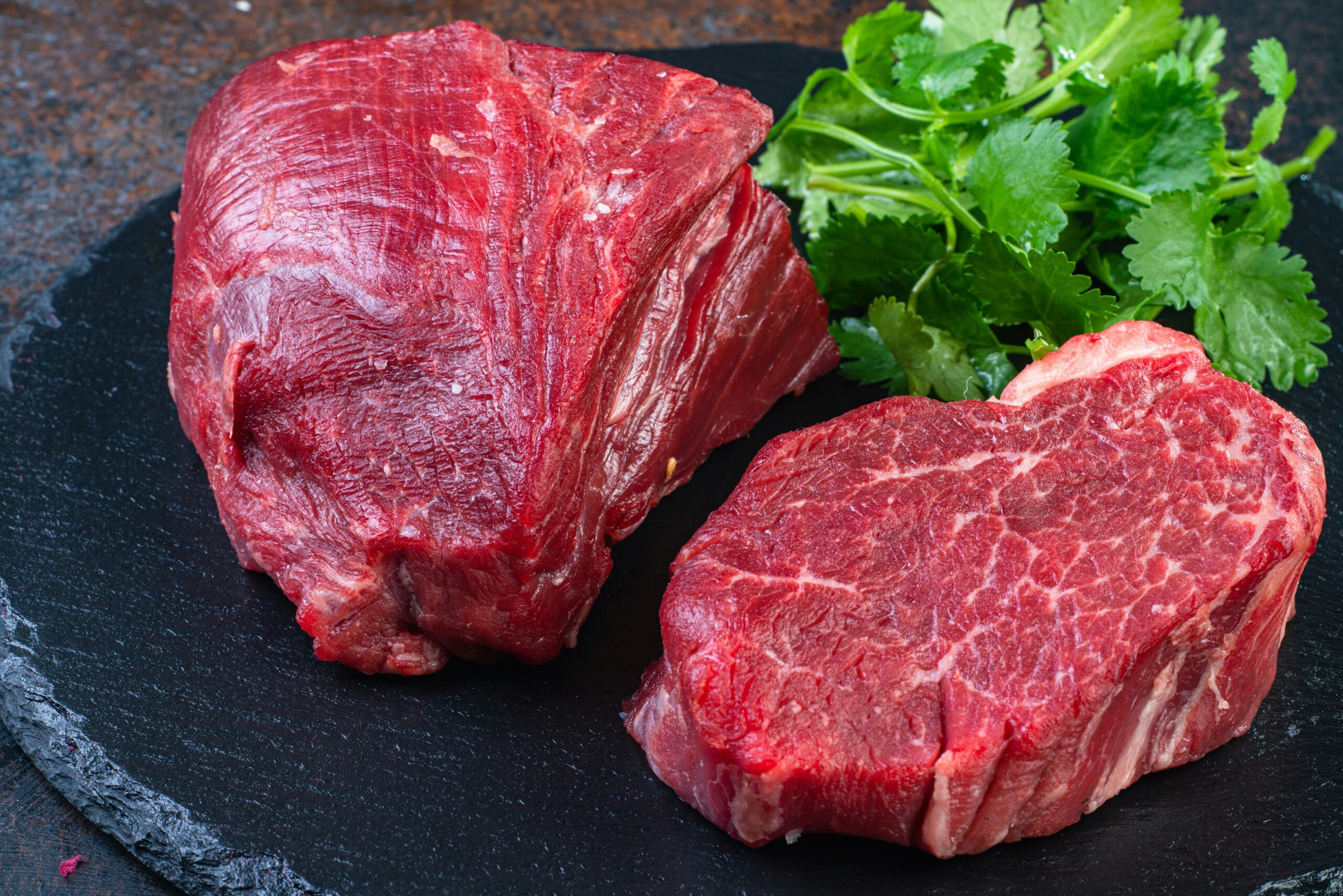
Carnivores tend to be loud. If you doubt that, try living in an apartment downstairs from a recreational deer hunter. Such was my living arrangement more than thirty years ago, when, not too long after extended bouts of an electric saw disrupted my sleep, a thick, gooey substance dripped from a corner of my apartment ceiling. It was not until my upstairs neighbor skipped rent that my landlord announced, to her surprise and mine, that the occupant had left two rendered deer carcasses. The saw, of course, was used to cut bone. The gooey substance dripping from my ceiling, it turned out, was fat and other viscous effluvia from the animals’ remains, left to melt on top of a radiator.
Motivated by an extended film sequence of a slaughterhouse that preceded a local punk rock concert, I became a vegetarian in my early twenties. That commitment rose several notches after waking up to my neighbor’s reckless hobby. I was now solidly vegan. As in, “No milk chocolate, and please pass the soy milk and nut-butter gravy boat,” stone cold Vegan.
My relatives verged on incredulous comic-anger during family meals, but my friends were cool. Thanks to a “vegan straight edge” music scene adjacent to The Smiths that blossomed for about twenty years starting in 1986, most of them had committed long before me, even razzing me about my failure to abstain from honey on occasion. I knew the creed, but could not confess that insects were tantamount to animals. With stalwart enthusiasm—but what was hopefully a minimum virtue signaling to co-workers and general society—this regimen endured for twenty years. Its chief virtue was that it saved me a boatload of cash, even if it cost me dearly in dietary boredom. Beans and rice can only rotate between spinach and lentils, followed by potato and onion, for so long. Then, in the final phase of capitulation, I tired of being the odd person out at social gatherings. Barbecue was still too ostentatious a leap, but I did not refuse the odd cheese plate, turkey taco, or chicken burrito at dinner invitations. Life found a way of banishing any guilt at contributing to the cruelty of sentient beings—at least during social functions—because, to this day, I still have not purchased any beef, pork, chicken, or lamb for home cooking.
Today, carnivores are louder than ever. From our current Secretary of Health and Human Services to the MAGA Republican Party, carnivores command both the public sphere and steer our dietary preferences. If James Talarico has managed to win his U.S. Senate seat for Texas by the time you read this, it is only because Texans have at last decided that eating meat, or not, has no bearing on gender, and that gender has no bearing on good policy. In other words, sanity and sound reasoning have prevailed.
But if good policy is what should prevail in the first place, it is worth asking why vegetarianism and veganism, despite their multitude of benefits—moral/ethical, health, and environmental—have not scored more points against team carnivore. Questions about vegetarian and vegan diets have been polled only since the late 1970s, but year after year the percentage of U.S. households eschewing meat has rarely budged above 6 percent. Why has it never budged higher, even as increasing numbers in foreign countries adopt vegetarian or vegan ways?
Framing that question sounds odd. It should not. Beef prices hover near all-time highs. Intensive animal farming poses perpetual risks to our water supplies at a time when those supplies have become increasingly unpredictable and unreliable. And short of proclaiming the truth that, aside from vitamin B-12, the human diet functions just fine with zero animal protein, the consensus is that the Mediterranean diet, which kicks meat into the smallest of corners, is optimal for human health.
Trying to convert others to vegetarianism or veganism, you quickly learn that most people hate impromptu discussions about ethics and morality. Ethics and morals are why most of us would rather discuss the weather. It never mattered that People for the Ethical Treatment of Animals (mocked by carnivores as “People Eating Tasty Animals”) had Paul McCartney on its side. The corollary of people recoiling from impromptu discussions of ethics and morals is that people hate coordinated campaigns of alarmist righteousness even more. No one excelled at those better than PETA. Hence, the favorite bumper sticker among animal rights activists: “If you wouldn’t eat a dog or cat, why eat a chicken?” If you want to change seemingly irrational cultural norms, your best bet is the quick, probing question. It is even tempting to say that the only people who have read manifestos such as David Foster Wallace’s “Consider the Lobster” are themselves vegan or vegetarian. The path of least resistance is as wide as difficult conversations that accuse others of ignorant cruelty are narrow. As for cruelty itself, our current politics has proved that, too, is viewed as easier than, or even superior to, kindness or mercy. Humane behavior, even empathy toward people, is for suckers, losers, and the weak.
If the ethical and moral price of carnivorism cannot persuade, if the health consequences of eating meat reside somewhere on the horizon of time delayed, what can be said about its sheer financial cost? That Americans are content to spend more on less food runs contrary to anyone’s idea of “affordability.” The stereotype of most vegetarians is that they are mostly women, or even mostly lesbian. In fact, more than most Americans know, the line between carnivore and vegetarian households is increasingly one of economic and political class. Increasingly, carnivorism is the expensive habit everyone believes they can afford, despite their best interests, financial and otherwise.
For those who persist in caring, what might break the spell of carnivorism? It might reside in the looming threat of the most destructive elements of artificial intelligence. In a recent New York Times interview of the Silicon Valley AI-insider Dwarkesh Patel by renowned economist Tyler Cowen, Patel notes that while society values people as “biological substratum” over and above computer intelligence, society also tolerates a shocking level of cruelty toward billions of “biological substrata” in the form of sentient animals. Few of us harm or kill animals deliberately, but we acknowledge that the brutal paths of human intelligence and ingenuity can result in species gone extinct, habitats destroyed, and dolphins killed in tuna nets.
Tech titans are fond of invoking “The Singularity,” a bastardization of physicist Stephen Hawking’s term for compressed mass evolving into infinite density in a space-time dimension in which the laws of physics collapse or break down. In the tech-titan version, humans become indistinguishable from their AI-created innovations shortly before becoming obsolete and irrelevant altogether. Israeli historian Yuval Noah Harari famously termed this emerging group the “useless class,” but for purposes of warning and alarm rather than derision. Switching diets will not delay or abate this oncoming development, should it take place. And it would be another PETA-style alarmist tactic to say that this “Singularity” will render the “useless class” all but fit for the meals of tech-savvy cannibals. But should it happen even at the margins, and gradually, it will be a rude switching of roles to be on the receiving end of pain and suffering we were content to ignore in billions of other “biological substrata.” Empathy may not save us, but it may experience a sudden resurgence in vogue.