Tales of the Bottle
From temperance to tipsy, the American anxiety about alcohol as pleasure and punishment.
May 1, 2026
I read the latest health news and wince. Later, still bothered, I close my eyes, and that fast I am back in grad school, trudging with friends through a white-out blizzard to a bar just off campus, its windows lit golden through the snow. Humphrey’s is not actually open, just celebrating a new baby’s birth en famille, but the owner motions us inside, and we join the celebration, ruddy-cheeked, slowly warmed by the free flow of beer and delight.
Now I am thirty, and Bar Italia is about to close for the evening. The owner brings out a bottle of grappa and tries to teach me, amid much hilarity, to blow smoke rings. I am forty, working at a city magazine, and the home editor and I stash beer in the minifridge and put our feet up on her desk every Friday afternoon, popping a beer apiece and scandalizing the younger staffers. I am sixty, at a movie with five friends, and we pass plastic glasses of bourbon cream and a jar of candied nuts back and forth under cover of our coats, giggling like we are teenagers again.
And I will never forget the night my over-serious husband got adorably looped after two banana daiquiris and sang “Bananas in Pajamas,” an irresistible theme song from an Australian cartoon, in the stairwell of our motel.
Who would have thought alcohol would be linked to so much of my life’s fun, pleasure, silliness, camaraderie, and stress relief? Have I leaned on it too hard? Rarely more than one glass—except for leftover champagne during the holidays, when I sneak in a second. But casting my mind back, I find drinking woven into memories of relaxation, deep and uninhibited conversation, lighthearted banter, and celebration. It is the vice I chose.
And suddenly, it is life-threatening.
The World Health Organization says there is no “safe” level of consumption. It lists alcohol as “causally linked” to more than 200 conditions—cancers, liver disease, cardiovascular disease, neurological and psychiatric disease. The Alcohol Intake and Health Report says the risk of death begins rising at one beer or glass of wine a day.
Ten million years ago, somebody scraped rotting, fermented fruit off a forest floor and found the consequences delightful. Humans have been using mood-altering substances ever since. Some have balked, finding intoxication sinful, decadent, or disconcerting. But not since Prohibition has there been such a strong and widespread public warning. It feels a little odd.
• • •
I used to envy cigarette smokers: I loved the way they vanished from work to take breaks, standing out in the cold with their arms folded tight, puffing and talking. I loved the way people shared cigs with desperate strangers; loved the courtesy of extending a lighter while someone else bent their head to receive the flame; loved the glamour of letting a cigarette dangle, angled, from two fingers, or the leaning back with a slow exhale, deep in thought. But the consequences of smoking terrified me. In my childhood, anti-smoking cancer commercials bookended every sitcom. In one, an old man coughed so hard his head came off and rolled away. Please quit, I urged my mother. My father was already dead, and I was panicked by the prospect of being orphaned.
Now, though, I have a beloved friend who literally drank himself to death; they brought him back in the ER. Another friend did die, of suicide after years of alcoholism and depression, and alcohol has ravaged others’ lives. How is it that I still order wine with dinner, keep beer in the fridge at home? Do I think myself immune because I am phobic about throwing up, thus always stop short of it, and have never known the commiserative rites of a hangover?
Casting my mind back, I find drinking woven into memories of relaxation, deep and uninhibited conversation, lighthearted banter, and celebration. It is the vice I chose.
And suddenly, it is life-threatening.
Thinking oneself immune is always dangerous.
That said, I am suspicious of faddish abstinence, all this rhyming one-month sobriety. I also have a hard time trusting abrupt health warnings, so soon after red wine was good for us. After RFK Jr. spun us 180 and urged steak and creamy milk,a respected doctor and WashU professor told a reporter: “The move to allow or recommend full-fat dairy marks a clear break from older guidance that was based more on assumptions about saturated fat than on direct evidence. While the change may be controversial, current research does not clearly show that full-fat dairy increases cardiovascular risk.”
What?
Furious, in a childish way, with scientific authorities, I decide to review the evidence against booze. What was wrong with those red-wine studies that had such a hopeful outcome? Increases in “good” cholesterol, anti-clotting and anti-inflammatory effects, slightly lowered blood pressure, improved circulation, lower diabetes risk, less frailty or depression…. All still valid, but the studies also had a “sick quitter bias,” meaning that the abstainers included people who had quit after drinking so much they got sick. Their presence made the abstainers group look far less healthy, which made the moderate drinkers look robust by comparison. People decided red wine was protective and guzzled it down.
The cleaned-up studies show zero protection and heightened risk, even with one drink a day.
Surely the damage is a question of quantity? Buzzed, mellow, tipsy, squiffy, lit up, looped—these do not sound like ominous states of being. Add more booze, though, and you are trashed, smashed, hammered, wrecked, wasted. Life is a constant calculus of risks, I remind myself. In a USDA review, it is higher-than-average drinking and binge drinking that are associated with mortality. In the Alcohol Intake and Health Report, the risk of death starts rising at one drink a day, but is so slight at that level that other factors are likely to knock it aside.
True: alcohol is implicated in 2.6 million premature deaths a year, worldwide. A little perspective, though: tobacco is the culprit in more than 8 million, and air and water pollution, which we seem to have made our peace with, is implicated in 9 million. Alcohol can increase your risk of mouth cancer, but the lifetime absolute risk of developing mouth cancer is less than 1 percent, so one drink a day increases your chances by 0.3 percentage points. Moderate drinking increases a woman’s absolute lifetime risk of breast cancer by two percentage points, from 11 to 13 percent.
Is this a numbers game I am willing to pay? Tim Stockwell, a scientist at the Canadian Institute for Substance Use Research, says a drink six nights a week will shorten your life expectancy by eleven weeks. I would gladly lay my eleven weeks on green baize and roll the dice—if those eleven weeks did not include the miseries of chemotherapy or dementia. Devil’s bargains are never clean.
Also, the research continues to be tricky—people routinely fib about how much they drink, and the other risk factors are even harder to quantify. How do you measure whether someone feels safe and loved? And who is polling the heaviest drinkers, who might be living in tents by now? The WHO links alcohol to 200 conditions, then adds that the link can only be quantified for 31. Meanwhile, a meta-analysis done recently by the National Academies of Science, Engineering, and Medicine found that moderate alcohol drinkers had a longer average life span than lifelong abstainers, with a 16 percent lower risk of mortality. The study confirmed the higher risk of certain cancers, but it also linked moderate drinking (one drink a day for women, two for men) to lower cardiovascular mortality and fewer nonfatal heart attacks and strokes.
Other variables weigh heavy, too: While one drink a day can increase your relative risk of breast cancer by as much as 10 percent, losing ten or more pounds or becoming physically active can reduce your risk by even higher percentages. In a study of 25,000 healthy adults, a ten-year change in fitness was a better predictor of mortality than changes in alcohol intake.
Do I sound defensive? Confused is more accurate. As I fight my way through the thicket of contradictions, a fresh thought hits me: What if there is a huge variable that has not been factored in? What if the reason one drinks, and the state of both mind and body at that moment, affects the outcome?
In a USDA review, it is higher-than-average drinking and binge drinking that are associated with mortality. In the Alcohol Intake and Health Report, the risk of death starts rising at one drink a day, but is so slight at that level that other factors are likely to knock it aside.
Sure enough, alcohol works differently in a stressed or depressed body, because it tends to magnify instability. If you are already depressed, it can deepen the depression, which will then affect the immune system. If you are sleep-deprived, it will make what sleep you do get lighter, more fragmented, and less restorative, again weakening your immune system. If you are stressed when you throw back those shots, your body is already flooded with cortisol, so the alcohol will trigger a rebound spike. And if your stress is chronic stress, your heart, digestion, and immune system are already strained, so pouring alcohol on top can flare inflammation.
How did Nick and Nora survive all that champagne in the 1930s? They probably died young and left pretty corpses. Will our new abstemiousness keep us alive longer? I suspect stress will be the better-trained assassin.
• • •
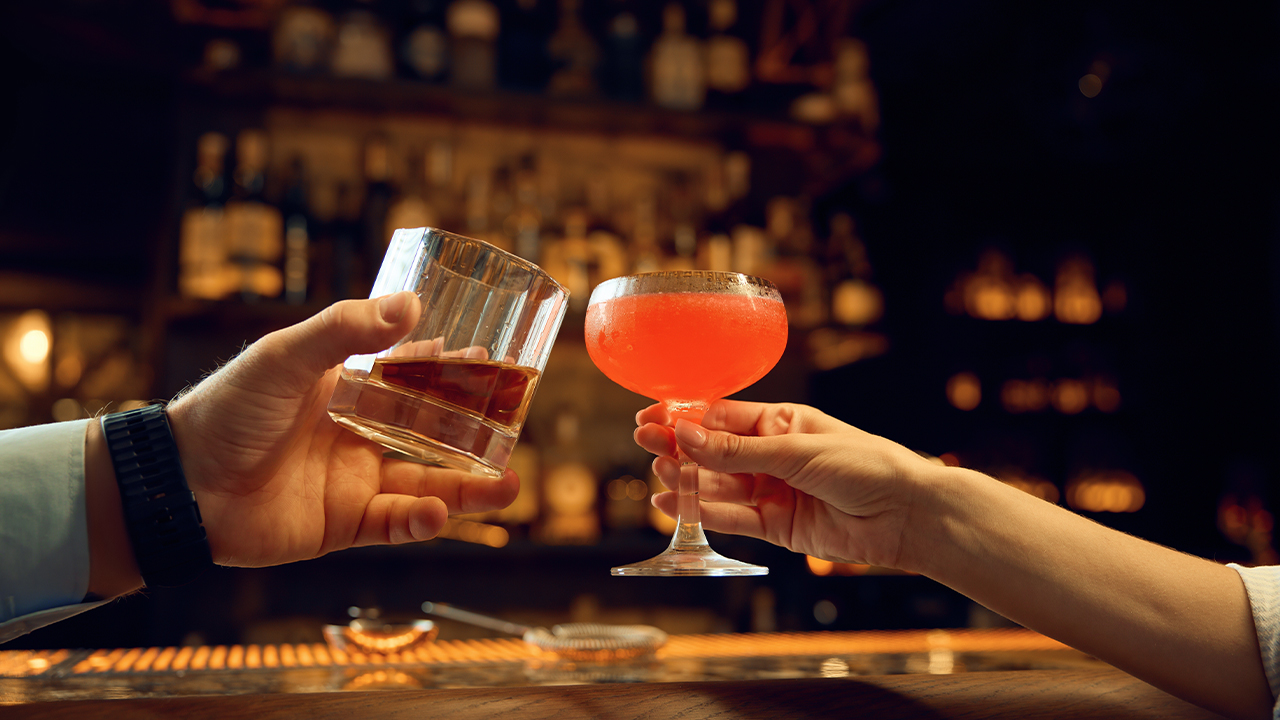
Why do I drink? “I like the taste” is a wan excuse, but I do. With my birthday filet mignon and dark chocolate cake, I want a velvety cabernet sauvignon, not chalky milk. For our ritual Friday night pepperoni pizza, I prefer cold beer to water. I love a chilled white wine with Indian curry or Chinese food, a Guinness with a burger, and champagne for any celebration. The cork’s airy pop is triumphant, and even the bubbles seem excited for you.
There is suspense in a slow corkscrew; poetry in a good wine list. God, I sound like a heroin addict rhapsodizing about the needle. But I do love all the accoutrements and arguments: how much foam should top a pilsner, is it better to age in a bourbon or sherry cask, and should that martini be shaken or stirred, dirty or pure? Over the centuries, drinking has accrued pearly layers of significance, becoming a symbolic and cultural ritual.
Also, I grew up Catholic. Instead of grape juice in little paper Dixie cups, we sipped rich, jammy red wine from a gold chalice. Alcohol was sacred; it was metaphor; it was as vital as blood. When I was in my teens, my mom and I got stranded at midnight Mass on vacation in Florida. While we waited for a locksmith to get the broken key out of our rented purple Gremlin, the Irish pastor poured us a wee dram of Irish whiskey—and transformed something scary and frustrating into conspiratorial laughter.
I felt so grown-up in that rectory, lifting a glass with the old priest and my mother. In high school, I barely drank; I was the one who wound up surreptitiously holding a paper bag during Mass for a friend dry-heaving sloe gin fizzes. College was no better: the stuff streaming from frat-party kegs looked and smelled like piss. During grad school, though, I discovered dark imported beers in glass bottles, drunk in front of a fireplace at a Welsh pub. And when I took a job at my alma mater, I went to lunch regularly with one of the Jesuits, a man of exquisitely refined taste who introduced me to pinot grigio, a name that rolled soft and merry off the tongue.
Drinking had ushered me into adulthood. So many of those threshold rites are passé: Kids do not count the days until they get their driver’s license; nor are they thrilled to vote. Buying a house is off the table. Sex is too complicated. Workplaces are one’s own bedroom. Smoking has cooled into vaping. Drinking is now uncool, unwise, a little ragged around the edges.
Yet—a bitter burst of nostalgia—drinking marked my milestones. Champagne uncorked for my twenty-first birthday. More at our wedding. My first tequila shots, thrown back beneath the obligatory sombrero at a cheap Mexican restaurant when I turned forty-five. Maybe if a nonalcoholic beverage had been somehow special—a rare, fermented tea drunk only on certain occasions, or a nectar slowly infused with artisanal figs—it could have served the same purpose. But there is something about feeling a drink tingle on your lips and fizz in your bloodstream. You feel it change you, just as the birthday or wedding will.
• • •
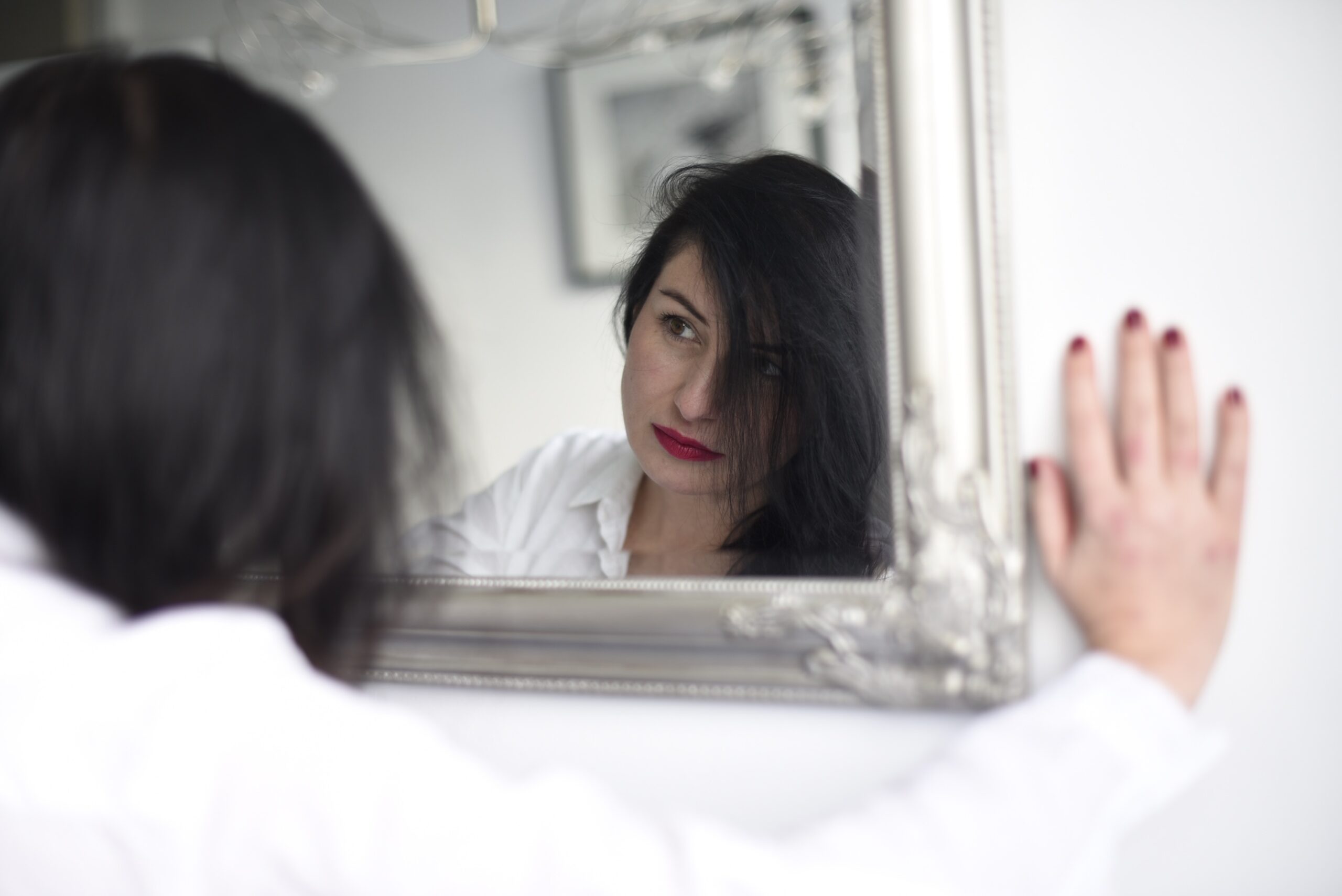
Why else do I drink? I grew up shy and bookish, anchored inside my own head and not so safe anywhere else. The shyness evaporated, but I still need a crowbar to pry me out of my head. Thoughts spiral, and the inner monologue drones on—until a glass of wine shushes all that, sets it aside. Is it any wonder so many writers drink? It is lonely in there, jostling around in the cranium until you are bruised and tired and sick of your own opinions. Sometimes, when I am well and truly overwhelmed by all my notes and terrified to begin writing, I open a bottle of wine and carry a glass upstairs to my desk. The ritual is enough; one sip and I start writing and forget it is there. Its promise of relaxation has released me from fear.
At dinnertime, I carry the nearly full glass downstairs and think of Joan Didion and her husband reuniting after a day’s work in their separate offices. They always had a cocktail together before dinner, a deliberate pause that feels utterly civilized. What do I do instead? I race downstairs to start dinner and am in the middle of prep when my husband surfaces, so I just go ahead and finish cooking, because if I sit down and relax into conversation, half my mind will be dancing over to the stove….
As I fight my way through the thicket of contradictions, a fresh thought hits me: What if there is a huge variable that has not been factored in? What if the reason one drinks, and the state of both mind and body at that moment, affects the outcome?
It is this kind of low-level anxiety, this compulsion to do what is expected of me, that makes me welcome that leftover glass of wine. My work is done, the dinner is cooked, and the wine is like the sunset glowing through the window: a promise that my brain can now idle. The last few hours of the evening are my own. The ethanol in those fermented grapes flipped a switch that would otherwise require hard exercise or vigorous sex, neither of which is always convenient. Because of this chemical shorthand, then, I have learned to associate peace of mind with Merlot. Could I not teach myself to use chamomile tea as my off switch?
I could, if it did not taste like grass. The human mind can be trained in all sorts of directions. Until now, I have felt no need to try. But here I am, drinking what I thought was a moderate amount, a glass of wine with dinner if a bottle is open; a beer once or twice a week. According to the latest public health news, I am killing myself.
• • •
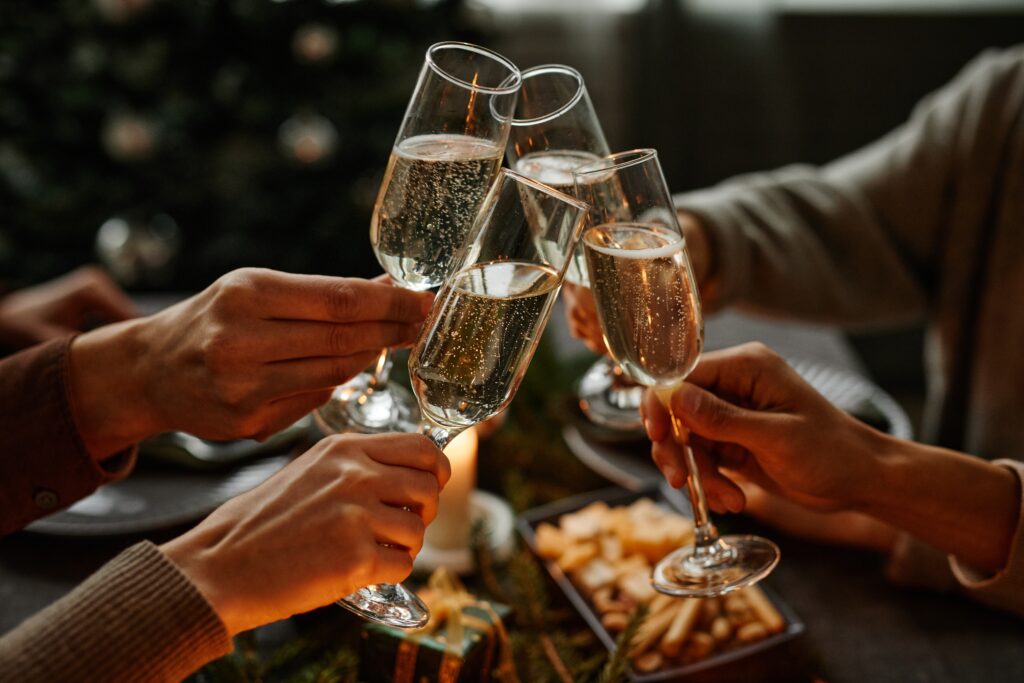
Booze bonds us, socially and professionally. We know it is harder to lie or fake it when drinking. We trust what we deem authentic and spontaneous, and whiskey and wine are truth serums. In vino veritas. But this defense of drinking is a lonely one. Gradually my friends have stopped drinking (tummy issues, prescription drugs, diets) just as companies have stopped encouraging the wining and dining of clients, the sodden conferences famous for extramarital liaisons, the extra-festive holiday parties. The whole country is cutting back: in 1830, the average American drank the equivalent of four shots of 80-proof whiskey every day. Today, only 54 percent admit to any amount of drinking, a lower figure than in any previous Gallup poll. The glass of wine I might have ordered to mark the rare occasion of lunch at a four-star restaurant is now mocked as “day drinking” and considered a diagnostic criterion.
Granted, I drink less often lately, because it is fattening and expensive. And because seeing alcohol on the International Agency for Research on Cancer’s list of substances known to be carcinogenic to humans—alongside uranium, formaldehyde, sulfur mustard, processed meat, and arsenic—is sobering.
The cancers linked to alcohol are the ickiest sort: cancers of the mouth, larynx, esophagus, breast, colon, and rectum. Gingerly, I probe the reasons. As alcohol swishes through the mouth and warms the throat, its ethanol is damaging DNA in the cells that line its passage. This also makes them more permeable and vulnerable to other carcinogens, such as tobacco smoke. Alcohol also harms myelin, the insulating sheath around nerve fibers. It is risky as it leaves the body, too, inflaming and punching holes in the mucosa that lines the intestines and rectum.
There is suspense in a slow corkscrew; poetry in a good wine list.
Every drink we take metabolizes into acetaldehyde, a temporary toxin that can burn any human tissue it touches. The body then repairs itself, but if the burn-repair cycle is relentless, the DNA stops replicating. That damaged tissue will welcome a tumor.
Worse yet, there is shrinkage in the white and gray matter of the brain with even one drink a day. Happily, it is not permanent: the brain starts returning to its former glory within two to four weeks of abstinence. Disrupted neurotransmitters and mild cognitive deficits can also be markedly improved by sobriety, and ammonia buildup in the liver is fully reversible, as are inflammation and oxidative stress.
But just thinking about the damage trembles the fingers wrapped around my Manhattan.
• • •
When people my age reminisce about cocktails at lunch or the parties that ended with a trash can full of empty wine bottles, we sound like old lushes. “Lush”: a heavy drinker. Alternate definition: “richly abundant.”
Booze used to be that abundant, present everywhere you looked. Inescapable, if you were trying to dodge it. Alcohol was the sanctioned way to loosen up, open up, let go, savor. “Shortcut” being a nicer word than “crutch.” Without a fizzy pink drink or a swirling amber one, I would need to learn how to shut my brain down all by myself. I would need to throw out more energy to make myself and the occasion fun. I would have to disinhibit myself. And I would have to learn to feel proud and satisfied without the cue of giddy, expansive joy. Or rather, by cultivating giddy, expansive joy without a chemical experiment going on in my brain.
Shortcuts let you slide. Norms can be traps. The old sense of drinking being obligatory, or abstainers being tepid and uptight, or a guy not being a real man unless he could “hold his liquor”—all that had to go. But I do miss the easy laughter of those abundant days; the sense of shared fun; the knowledge that everybody else was losing their inhibitions too, so you could relax. We are so controlled now. Nobody flirts; it could mean a lawsuit. Nobody plays pranks at work; they might not be seen as sufficiently ambitious, and AI is waiting to replace them.
“Lusch,” in Middle English: “soft, loose, or slack.” It is that ease I miss.
A drink makes an ordinary day festive, an awkward social occasion palatable. On a bad day, it promises numbing—which is dangerous with chronic despair but incredibly useful after shock or heartbreak. Police shows where they fetch someone a glass of water after telling her that her husband has been murdered? Brandy works better for shock.
I write all this with trepidation. So many people have suffered in alcohol’s throes that I am not sure how I dare sing its praises. For them, pleasure—or more likely, solace—turned to poison, desire to stranglehold. If they escaped, they knew eyebrows would be arched every time they ordered a club soda with lime.
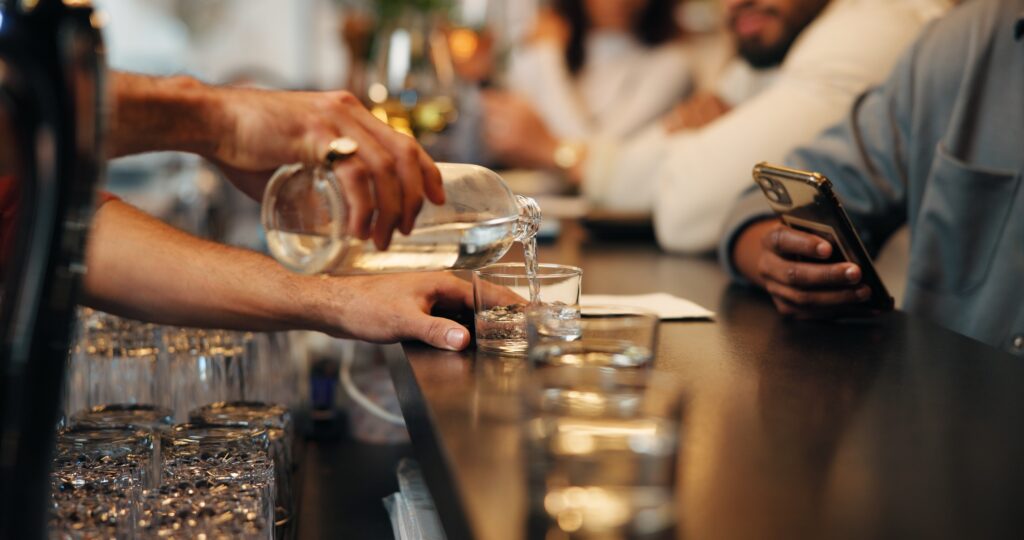
We are wiser now, more honest about the vulnerability of being human. Plus, there are finally other options. Nonalcoholic beer startled me by capturing the toasty malt, bitter flower yeastiness of beer. Mocktails are so artful, I have copied the ingredient lists.
The whole country is cutting back: in 1830, the average American drank the equivalent of four shots of 80-proof whiskey every day. Today, only 54 percent admit to any amount of drinking, a lower figure than in any previous Gallup poll.
What is a cocktail at a party, anyway? An excuse for any blunder I might make later? A prop I can clutch, lift in a toast, name if someone starts a chat by asking what I am drinking. A way to stop feeling nervous, let the sweat on the glass cool my damp palms, flirt or goof around with impunity. A reliable pleasure, even if the party bores me.
The reflex is habit, the way saying “God, I need a drink” after a hard day is a way to say you also need some listening. If I am honest, I do not need that cocktail. My palms might stay damp a little longer, but if I find someone comfortable to talk to, I will be bubbling away long before someone hands me a drink. As for others’ opinions, I have reached the age of indifference. What remains is only the reliable pleasure. That slight haze of goodwill toward all, the edges rubbed off any private worries or obligations, the warmth traveling down my throat and spreading. A soda is just a little fizz on the tongue; a boozy cocktail is a whole-body experience.
Ah, we get stuck on our pleasures, and habits are insidious. As I make my way through life, I drag my comforts along with me, draped heavy, like a woolen scarf I am afraid I might need on a cold spring day. In warm sunshine, it gets in the way. Should I leave it behind?
• • •
When I first read the warnings, I wondered: is this the sort of drinking that conceals itself in brown paper bags and rattles in the Dumpster, or the sort that frosts a Paper Plane cocktail in a coupe? What snobbish phrasing, and how accurate. The rich get away with far more vice. If you binge on cheap booze every time you cash your paycheck—unlike the folks sipping a rich burgundy, loaded with antioxidants, with their roast duck a l’orange—you will suffer far more as a result.
Even without bingeing, and at the exact same consumption level, people with low income experience more harm from alcohol. This phenomenon has only emerged since 1980, but there is a name for it: the alcohol-harm paradox. In the U.K., people in the highest socioeconomic group drink almost twice as much as those in the lowest socioeconomic group—yet for those in the lowest group, the alcohol-specific death rate is 5.5 times higher. The same ratio shows up in high-income countries all over the world: people without socioeconomic resources have a two- to five-fold higher risk of dying from causes linked to alcohol.
Why? Because there is more background vulnerability. Higher rates of other chronic illnesses and chronic stress, unsafe work and living environments, rough experiences early in life, more exposure to pollution; wear and tear that make organs more susceptible to alcohol’s toxic effects, and a lack of regular and thorough health care. People are more likely to smoke, to be dangerously overweight or have a lousy diet, to collapse on the couch in front of the TV instead of staying briskly active, and to experience what is politely called chronic stress but might mean losing somebody you love to gang crossfire, getting evicted, living in fear and worry. All those risks swirl into alcohol’s risks, making for a far more dangerous potion.
So does gender: in North America, men account for roughly three-fourths of deaths linked to alcohol. Globally, about 6.2 percent of all male deaths can be attributed to alcohol, compared with 1.1 percent of female deaths—though that gap is beginning to narrow.
What makes alcohol aversive, toxic, or addictive to some and only pleasant to others? Two of my aunts drank quite a lot, but my mother got a migraine if she took more than a sip. My grandpa spent evenings sodden with cheap beer; my grandmother sipped a glass of that godawful cheap-sweet Cold Duck at Christmas dinner but nothing more. At least, not until she hit her nineties, at which point she started smoking and drinking whiskey. Her sister, two years older, frowned at her over gold-rimmed specs. I can still see them, seated across from each other at the kitchen table, knee-high stockings puddled around swollen ankles. My grandmother lifted her tumbler in a liver-spotted, slightly unsteady hand, surveyed her older sister, and pointed out dryly, “You might as well be drunk as the way you are.”
She was in good company: Britain’s queen mum drank a Dubonnet and gin before lunch, wine with lunch, a martini (or two) before dinner, and Veuve Clicquot at dinner. She lived to be 101. People of East Asian descent can have a genetic variation that prevents them from flushing acetaldehyde from their system, which gives one drink the potency of five, but other genetic differences seem to give those of European descent a higher tolerance. Which would help explain the other paradox: how the French drink more wine and cognac than most of the world, yet live longer. Public health stats warn of “years of life lost to alcohol,” implying that the French would live even longer if they stopped drinking. But they already reach an average age of 82, six more years of joie de vivre than we can expect in the United States.
Every drink we take metabolizes into acetaldehyde, a temporary toxin that can burn any human tissue it touches.
On a recent trip to Spain, watching all the elderly couples strolling and chatting, sipping wine with lunch and dinner as the French do, smoking and eating rich Cabrales cheese and Iberian ham, and tons of white bread, pastry, and fried donuts, I was confounded. Once home, I checked the stats. Spain’s average life expectancy is 84, even higher than France’s. Its alcohol consumption is nearly as high. But stress is low (especially compared to the U.S.), families are strong, people walk a lot and play a lot, food is fresher and cleaner, and healthcare is excellent for all.
Do we take the hint? Hell, no. We chew stress for breakfast and lace our produce with pesticides and our cookies with chemicals. Our health care system is inefficient, inhuman, and unaffordable. Our answer is to shift the burden, demonizing specific foods or practices by fad or hysteria.
Dr. Vinay Prasad, the contrarian who was until recently the chief medical and scientific officer for the FDA, took apart the latest studies of alcohol use and found the same problems that existed in the earlier studies: “Old data. Shitty data. Confounded data. Weak definitions. Measurement error. Multiplicity. Time zero problems. And illogical results.” Alcohol’s effect on health is too complex, he says, with too many social, nutritional, and behavioral variables, to be answered with the stats of reductive science. “It is profoundly American to ask should I drink a glass of red wine a night to maximize my lifespan. You would be much better off going to Italy for 6 months, shutting the fuck up, and doing what they do.”
• • •
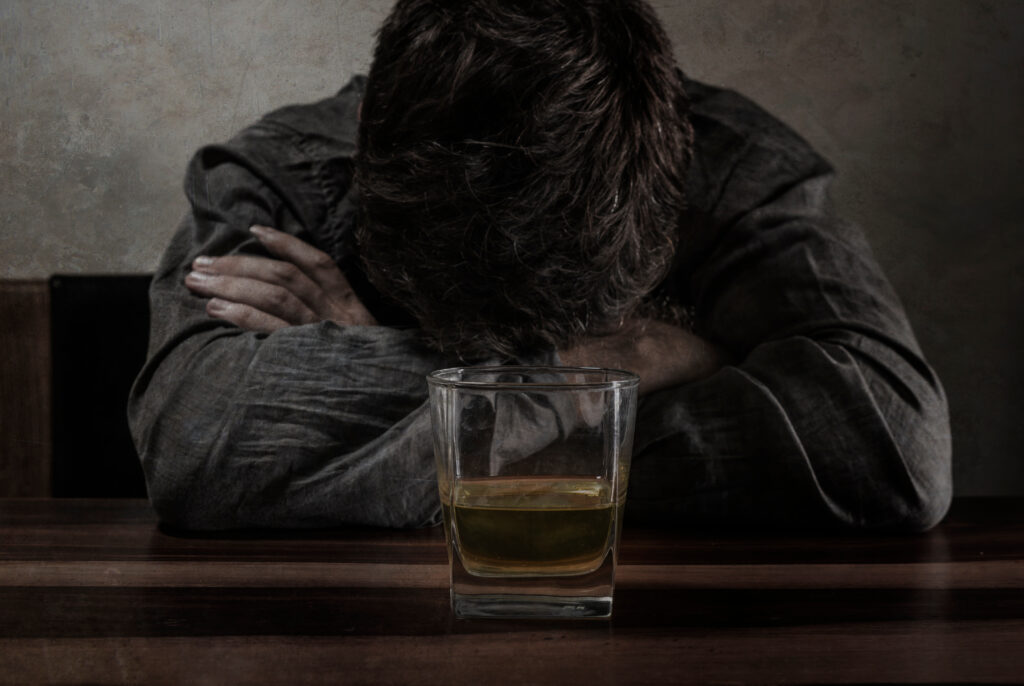
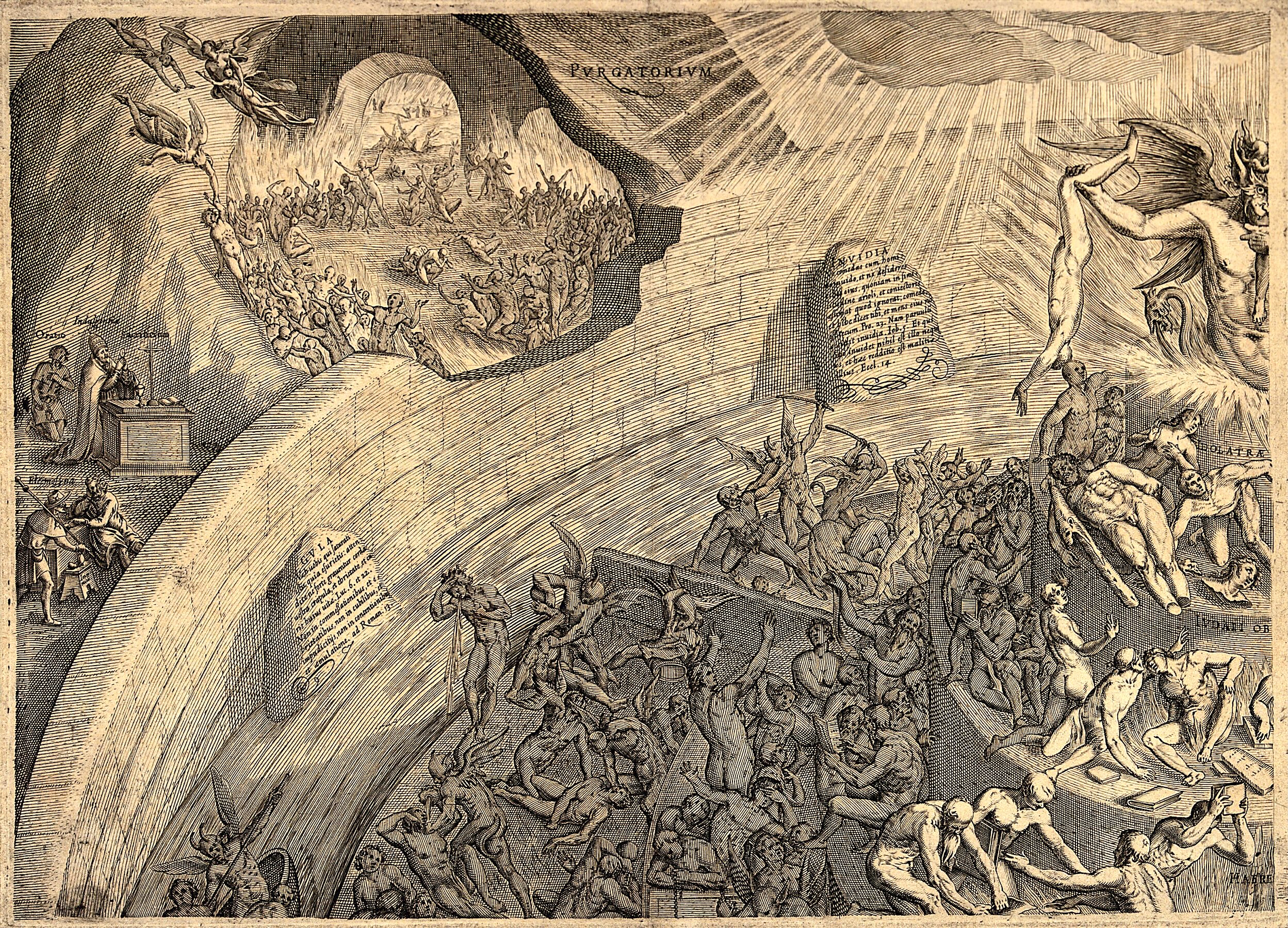
In the Gilded Age, wading through the wreckage of poverty turned the prosperous judgmental and self-righteous. Then came Prohibition, when it looked like the only folks having any fun were the scofflaws with their hip flasks and the flappers kicking up their heels in the speakeasies. After World War II, prosperity brought us the cocky, self-congratulatory three-martini lunch. The Sixties loosened up all mores.
Today, the chasm between the rich and poor stretches even wider than it did in the Gilded Age. And what do you know, once again, the prevailing sentiments are anti-immigrant, and policing public health is a signal of virtue. Alcohol is on the downswing, another cycle in this country’s long, fractious relationship with the stuff. Could the ups and downs be part of our long, fractious relationship with control and productivity, our horror of the relaxed “laziness” that disinhibition breeds?
Longevity is our new god. Toxins have sprung up around us, choking off life, and we hack away with machetes. No more gluten, no more processed meat, no more sugar or smoke or fructose or trans fats or pesticides or forever chemicals or VOCs or phthalates or alcohol. And if it turns out that the new obesity drugs damage the body, or cellular rejuvenation and precision biohacking bruise our integrity…we will start a new list.
I write all this with trepidation. So many people have suffered in alcohol’s throes that I am not sure how I dare sing its praises. For them, pleasure—or more likely, solace—turned to poison, desire to stranglehold. If they escaped, they knew eyebrows would be arched every time they ordered a club soda with lime.
But with each sacrifice, we make a substitution.
When the revised public health findings were published, I expected more of an outcry, but no. We already had our gummies. Besides, the tax revenues from cannabis swung a heavy counterweight against the power of the alcohol lobby.
Gummies do not make me sociable. They ooze me into placidity, and instead of inviting every stranger I see to the party, I curl up on the couch alone. Booze used to ease me into a cocktail party, and it loosened and warmed everybody else, too. Pubs used to be where you solved the world’s problems; I guess we have given up trying. And the young no longer need to make sociability easier; they are seldom sociable.
We still need to relax, but now people vape, or they jack up on energy drinks and slide down on CBD. It all feels more…engineered, the vapor more abstract, the effects less convivial. There is no romance to the new vices, no sensory pleasure. So much is solitary these days: online gambling, gaming, porn, DoorDash. Before, even if you only sobbed out your troubles to a bartender, the talk and laughter of strangers cushioned your misery.
I glance up and see that an email has arrived. A sweet, sweet man, Jerry Garrett, whose endless curiosity and kindness and mirth lifted my heart every time we talked, is no longer with us. He died after a mercifully brief illness; I had no idea he was anything but hale. A mutual friend is writing to let me know; she suggests that we meet soon and raise a glass to his memory.
What is in that glass will not matter. Cultural rites can be reinvented. But there is another bit of slang we use for liquor: “the strong stuff.” Traditionally, certain occasions call for it.
I might take the risk.