The Dark Side of Gold
May 1, 2026
I have begun what the Swedes call death cleaning. Well in advance, one hopes. But we have a big old house chock full of stuff, and I feel the need to lighten; besides, it is fun now, and will be less so if I wait until death is closer at hand.
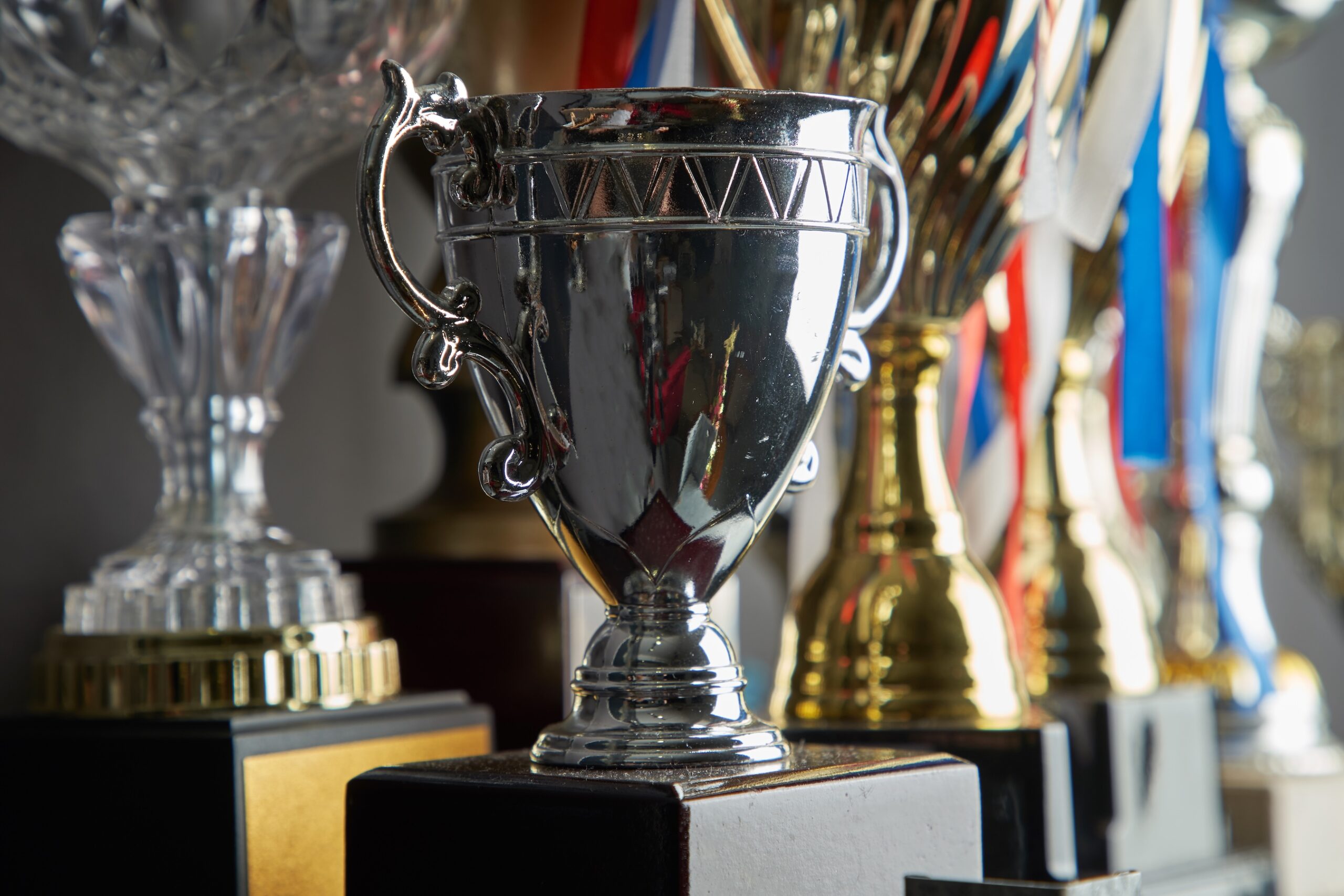
An easy target: the cardboard box of dusty awards and plaques shoved in the back of my closet. Will it be hard to pitch them? They are at least proof that I existed. But once I no longer exist, who needs that? I slide out the box, sneezing, and lug it out to the trash. After whacking the glass off a piece of pink granite that I can use in the garden.
That sounds ungrateful. Disrespectful, even. But what matters so much at one time in your life becomes an excess weight later. And it is not as though these can be recycled or given away. They clunk to the bottom of the Dumpster, glass shattering, wood hitting hard.
The violence of it is pleasing.
I had thought I might shed a sad little tear over lost glory. Instead, I feel lighter, almost euphoric. Relieved, I think is the word. Awards do a job on your head. The first one is thrilling: for me, it was a tiny brass trophy of a female figure about to dive. Utterly unathletic, devoid of competitive drive and incapable of the speed that won trophies for the other kids in that preschool swimming class, I was astounded to hear my name called, and my chubby little legs took me across the gritty pool surround as fast as they could, so I could claim my first prize. Later, its arm fell off, and seeing the tears well, my mom taped it back on. The sight of that little swimmer carried me through years of humiliation—last picked for the softball team, incapable of a cartwheel….
Then, when I should have been old enough not to care, my mom smiled fondly and murmured, “They wanted to make sure all the kids got one.”
Wait—what? Everybody got one? I did not win…anything?
I tried to be mature; I was old enough to know it was a lovely gesture, and the trophy had, after all, instilled a little desperately needed confidence. But if I am honest, the news stung.
And I felt the same way when I began to see patterns in the reporting and writing awards years later.
I wrote in an era when alt newsweeklies and magazines had enough spare cash to pay the entry fees for all sorts of contests, which is the only reason that box was full. At first, winning even an honorable mention was as thrilling as the little swimmer. It chipped away at the imposter syndrome, told me at least somebody thought something I had slaved over had merit. Then came a few I was really proud of—and that struck the devil’s bargain.
Suddenly I found myself looking for story ideas that might yield enough substance to impress a committee. Now the awards from smaller organizations or associations desperate for any journalistic ink began to feel unimportant. An award made it depressing to write the next piece, because I figured I could not match what someone else thought good. Writing was now more fraught. The audience in my head was no longer friendly; instead, it had a checklist. A green slime of craven ambition leaked onto my keyboard.
I tried to mop it up. By then, the publishers I was working for, New Times, were desperate for awards, and I respected them so little, I had no desire to aid their scheme. Nor did I want to become sniffy and snobbish about the sweet local awards New Times disdained.
By the time I switched to a city magazine, the patterns were clear: every once in a while, a new or little magazine was encouraged with a magnanimous award; mainly, though, the sexy big publications with massive budgets cleaned up year after year, because it was almost inconceivable to all of us that a little magazine could match their blazing success. Topic mattered, too: the stories that won either tapped into the zeitgeist or involved risky travel or first-person agony. My new cynicism tarnished all that gleaming metal.
When somebody asked me to judge undergrad journalism submissions, I fought my own biases, but they coiled around me like a sea serpent. It is extraordinarily hard to assess a piece of writing without weighing your own biases; the point is for those words to resonate with your own experience of the world. But that makes awards so subjective, it is dangerous to put much weight in them. Are you picking only the most sensational because that is the only one you can remember? Are you giving extra weight to people who are not White or not male?
On a committee to judge professional work, I listened to the others insist that color and gender had to matter more than talent alone, and while I understood and agreed with the need for redress, the instruction gnawed at me. Why not add tiers and expand the awards, so work that held promise but was not the absolute best could be honored as “best upcoming” or “best new”? For that matter, why not loosen up all categories? “Best” is a ridiculous word. Best for whom? I have worked on dozens of “Best of” guides, and the choices were either highly subjective or so obvious they were boring. For journalism, why not have categories for “bravest,” “most thought provoking,” “so beautiful you cannot stop reading”…? The award would mean a little more, feel a little more honest in its specificity.
All this is probably infuriating for a young writer to read. At first, you are so eager. I had a colleague who paid extra entry fees with his own cash, throwing as much of his work before the judges as possible. But by then I had realized that the pieces I was proudest of were the ones that touched a reader or changed a policy or dug up something new or delved into a misunderstood personality. Those were rarely the pieces that won wider notice.
Still, I am a hypocrite. Ask me for a bio, and I will rush to list awards. To the world, they prove something, even when you know the randomness and politics and subjectivity behind them. Tell me right now that I have won something, anything, and I will be thrilled all over again—though I already know that the rush is as temporary as an orgasm and will leave me a little too anxious to feel it again. If I were part of some organization that needed public attention, or one that wanted to inspire better work (and not just survival) within the industry, I might still suggest an awards contest, albeit with carefully delineated categories.
But there is a necessary disillusionment to these things, a detachment that felt complete when I heard the plaques and bookends hit the Dumpster’s floor. It is freeing to do work for its own sake, to try because you want to, to write what feels like it needs to be written, without a second’s worry about how it will be received, except to make sure it is as clear and vivid as you can make it. Recognition instantly becomes a worry, the way quantities of likes or hearts become a compulsive check.
How complicated this is, finding a way to appreciate someone’s words, thought, work, without making them crazy.