Giant City and the Emotions Attached to a Home Biome
How a hike in a national park taught me what is west and what is not.
October 31, 2025
“The Saigon River slides past the Old Market,
its broad waters thick with silt. There,
the rice shoots gather a fragrance,
the fragrance of my country home,
recalling my mother home, arousing deep love.”
—From Ca Dao Viêt Nam: Vietnamese Folk Poetry
Translated by John Balaban
The old ones in St. Louis liked to drink the Mississippi River straight, and they missed its taste, smell, and texture when they went away. At home, Twain says, “When they find an inch of mud in the bottom of a glass, they stir it up, and then take the draught as they would gruel. It is difficult for a stranger to get used to this batter, but once used to it he will prefer it to water.”
The silt came from the Missouri River, The Big Muddy, which drains the upper-western U.S., encircles St. Louis, and empties into the Mississippi on the north side of the city. Now, of course, the water is filtered and sterilized and tastes as it does in most cities. That is an improvement, even if something was lost, but many drink corporate water shipped in plastic from elsewhere in the world and eat food that is mum to its origins. Many spend their lives on devices. Does the body get anxious when it does not feel rooted in the landscape?
My home biome is Southern Illinois, where I grew up running through the woods, caves, and ditches like the godless heathen I was. People argue the boundaries of the region, which is also a plea for rootedness. Usually they mean the bottom part of Illinois that was not scraped flat by glaciers, plus a little more that includes my hometown. Another definition might be the region in Illinois between the two great American confluences—one bringing the west to the heartland; the other, at Cairo, Illinois, bringing the east with the Ohio River.
I told a friend recently that the epicenter of my biome was Giant City State Park, in the Shawnee National Forest, south of Carbondale, Illinois. Giant City, I said, had always been a second home to me. Something about it felt like the start of the west, while another state park I frequented as a kid, Ferne Clyffe, felt more eastern. I am prideful in my belief I can detect subtle qualities of micro-geographies.
My home biome is Southern Illinois, where I grew up running through the woods, caves, and ditches like the godless heathen I was. People argue the boundaries of the region, which is also a plea for rootedness.
She asked the proper question and waited for an answer: “Why does Giant City feel like the west?”
I hesitated. “It’s closer to the Mississippi River, and Ferne Clyffe is closer to the Ohio,” I said, intending something about watersheds, but in reality the parks are 20 miles apart. My mind sat and spun on qualities of light and rain, the smell of earth, wind through the bluffs in winter, the amount of water in streambeds, how much shale there is among the sandstone. Do eastern ferns turn into western lichens from one park to the next? Not really.
There was only one thing for it then: a road trip, to collect the proof.
• • •
It is two hours from St. Louis to Giant City, down Interstate 64 to Route 127, through pleasant farmland and small towns. I always feel more relaxed when the hills begin to roll. South of Carbondale and Southern Illinois University, which I have a history with, Giant City Road gets curvy and steeper.
Giant City State Park is a National Natural Landmark and has been in existence for nearly a century. Now encompassing 4,000 acres it has, as the state says, “massive [natural] sandstone structures and a landscape like none other, with lush garments of fern, moss, flowering mints, hundreds of species of wild flowers and more than 75 varieties of towering trees.”
Past the park stables I turned into the site of the former interpretive center to show my friend where I worked, as a teen, as a snake handler and feeder, ice cream churner on bluegrass Fridays, and puppeteer in the conservation-themed puppet theater.
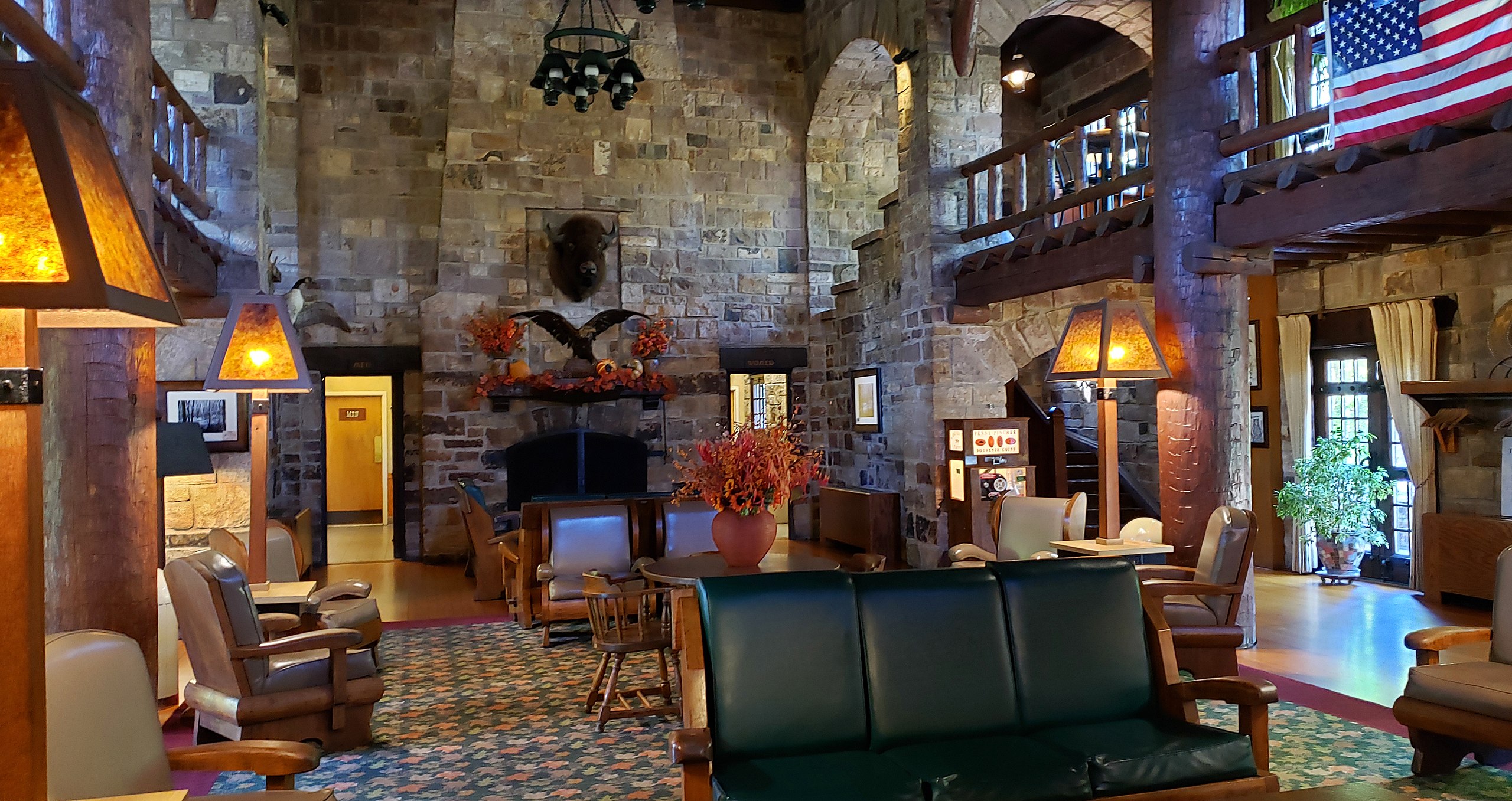
The park lodge on the loop road is one of several such lodges in Illinois built by the Civilian Conservation Corps, at the height of the Depression, from locally sourced sandstone, oak, and pecan. A blacksmith hammered the fittings on site, and the CCC made all the furniture. The pillars holding up the roof are tree trunks, six-and-a-quarter feet in circumference and nearly 30 feet high. They still show the adze marks of the laborers, and the quarried stone is freshly marked by chisel tips.
My mind sat and spun on qualities of light and rain, the smell of earth, wind through the bluffs in winter, the amount of water in streambeds, how much shale there is among the sandstone. Do eastern ferns turn into western lichens from one park to the next?
As a kid, I thought the lodge looked like a cathedral of the woods—ceiling several stories overhead, massive sandstone fireplace like a sanctuary, taxidermized bison head as reredos, arched stone chancels hiding spiral stairs that lead to galleries over side aisles. It also stood for America to me, not uncomplicated even at that age, my region having been home to Paleo-Indians and Native Americans, the explorers of French Illinois Country, the settlers of the old Northwest Territory, the soldiers of both sides in the Land of Lincoln. The gift shop sold patches that let you prove you had been there, toy muskets made of wood and metal, and real coonskin caps.
It was sunny and the first really cool day of autumn, so there were lots of people in the park. I thought I had better reserve us a table for the fried chicken dinner, served family style, in the lodge. The family who runs the lodge is only its sixth concessionaire, and they took over the year I graduated high school. When I asked for a reservation, the manager told me all the people were there for Vulture Fest, in the adjacent village of Makanda.
“The festival should just be called Hippie Fest, let’s get real,” he said twice, because it was so good.
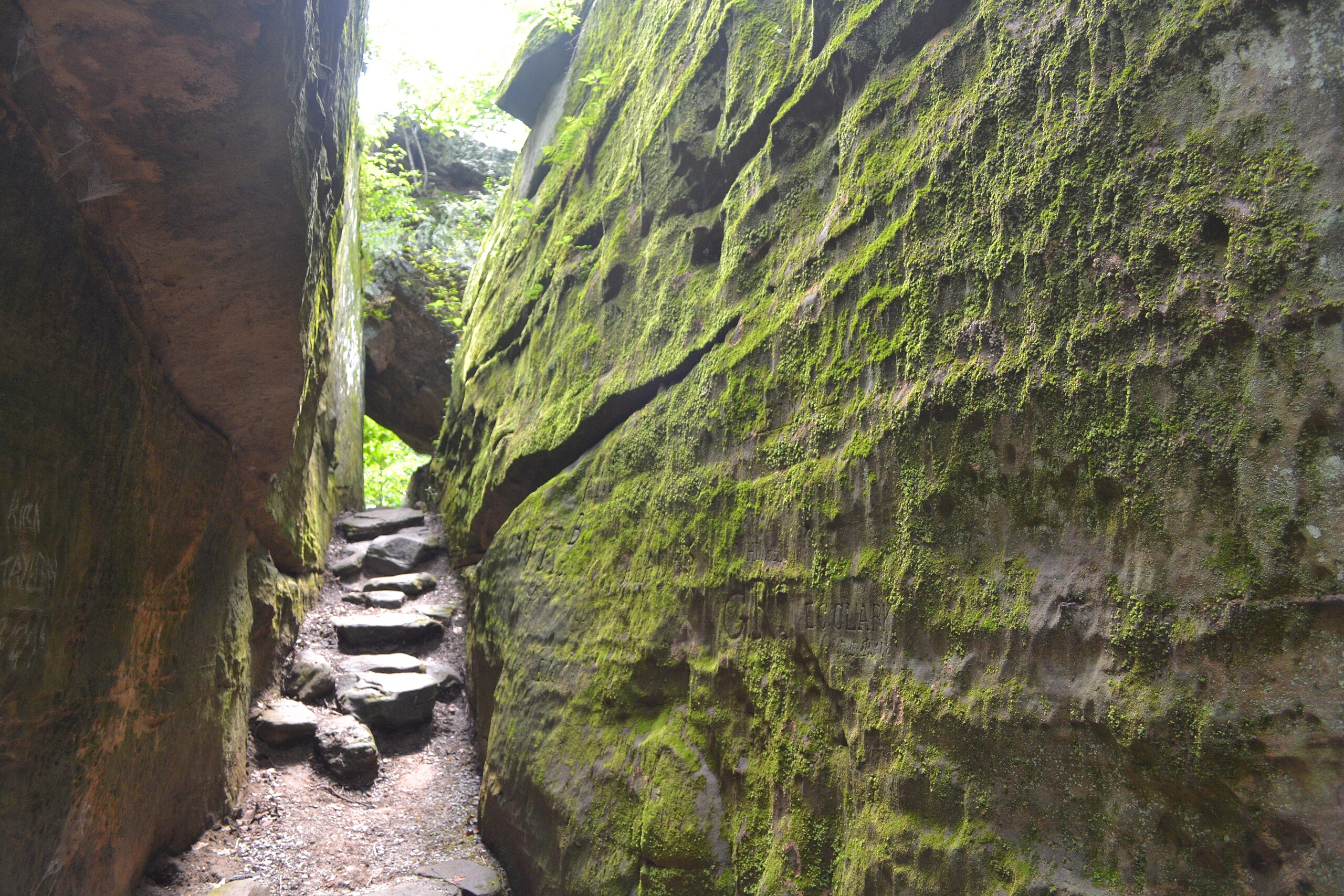
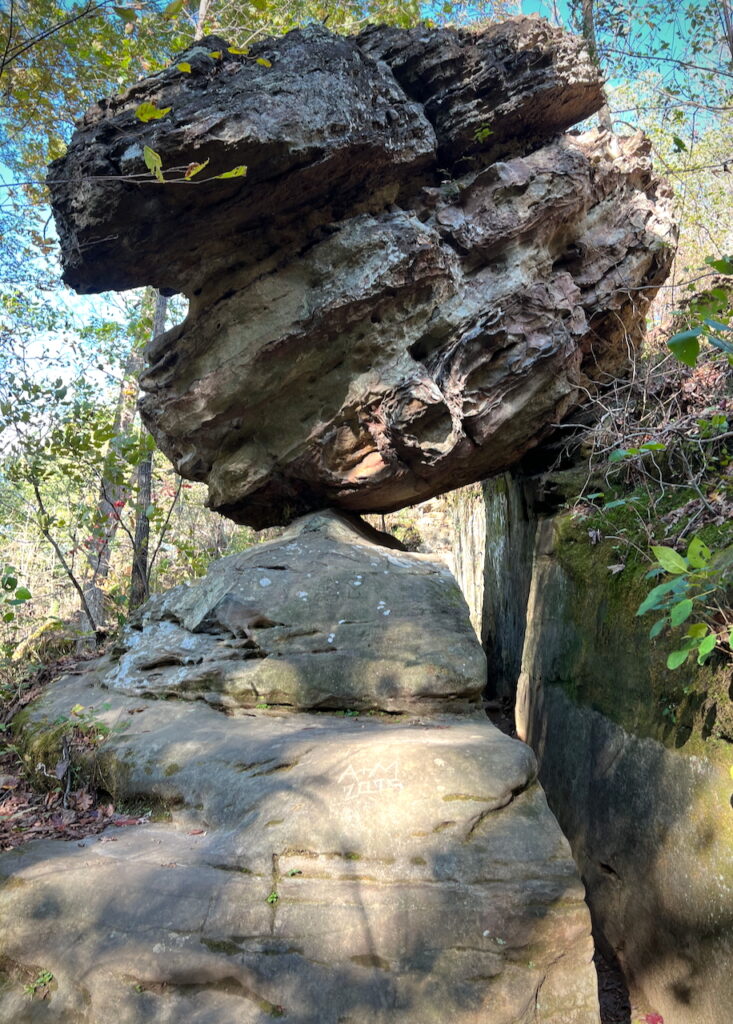
I had to ask him to remind me which hiking trail, with its apartment-building-sized rock formations, gave the park its name. He said the Giant City Nature Trail and gave me a map like I was some newb.
“My biome is covered in poison ivy,” I told my friend and laughed, pointing out its lush garments that started at trailside and spread into the trees. As we hiked I told her about growing up in the Land Between the Rivers, and how my mom used to put me in the car at night and drive around with the windows open. My first residential air-conditioning was in the army. None of it had to do with the west. She thought the park looked like Ohio.
I told her about excellent times at Giant City: birthday parties with friends and family at picnic tables by the streams, where my friends and I ate Pepperidge Farm cakes and waded after water striders; a picnic with my older sister and her college friends, which led to attempts at bouldering and a food fight; a wedding reception in the lodge, and the jazz band I put together to play it. We were kids and had only a few songs, so we just played them again and again. When our contracted time was up, my friend Gordon, the only one of us with real talent or business sense, put a hat out for tips, and we kept playing as the money flew in, dollar by dollar, and the attendees gave us illicit drinks, and some woman gave me a wet kiss for no reason I can remember.
As a kid, I thought the lodge looked like a cathedral of the woods—ceiling several stories overhead, massive sandstone fireplace like a sanctuary, taxidermized bison head as reredos, arched stone chancels hiding spiral stairs that lead to galleries over side aisles.
My friends and I hiked the Red Cedar backpacking trail in those years, often in the heat of highest summer, once running out of water midway, always laughing ourselves stupid around a campfire.
I introduced the park to my sons when they were little.
How do we get a home biome? By breathing the petrichor, I suppose, breaking out from poison ivy year after year, tasting the dirt and water on our lips, scraping our skin on scrambles, getting local minerals and bacteria in our bloodstream, leaving our sweat on the rocks. Maybe the cells we leave, and what we take with us, give us quantum pairing with these places.
• • •
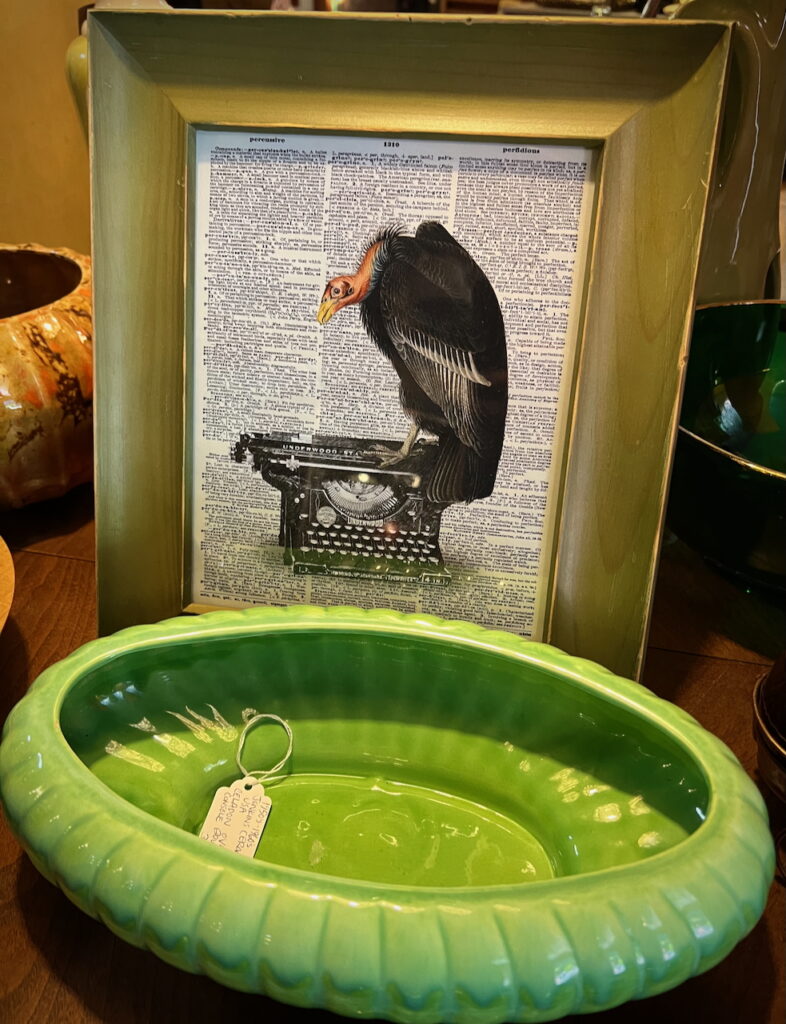
My friend and I had been talking about luck—good or bad but always indeterminate, complicated, capricious—right before we discovered Vulture Fest was in full swing. I had wanted to go to Vulture Fest for years, and now here it was, its last day. Black vultures and turkey vultures orbited overhead like the Southern Illinois air force.
Downtown Makanda, population 547, has a few artisan shops open year-round, but bands were playing in two locations for the festival, and young kids played and sang Americana music in the street. I knew somebody who played in the band on one kid’s T-shirt and felt that connection. Vendors sold tie-dye shirts and souvenirs to aging hippies, many of whom had been at SIUC in the ’60s, when it was known for its lifestyle and activism. The Funky Monkey sold antiques.
One guy still had the jewelry shop he had been running since my mom took me to Makanda in the ’60s. The jewelry he made was mostly silver rings with little three-dimensional silver figures fucking on them. The proprietor had a funky back garden built on several levels and filled with his outsider art.
The crowd was enormous for Makanda, which was a busy, nineteenth-century railroad terminal and the hometown of U.S. Senator Paul Simon but had been pretty quiet since then. A man pointed me up the ridge toward an unseen cemetery where the senator was buried. They had painted his bowtie on the water tower.
My mother had not taught for seven or eight years by the time I had memories of Giant City. We were another half-dozen years from going down hard. The park was one of the last beautiful things in her life from when she had some money, freedom, ambition, and hope.
The man’s friend had bought the historic, wood-frame Methodist church in downtown Makanda a few years earlier and let us in to see the space. Good luck. It was desacralized. He wanted to make it a music venue, but the village had said no, intent on keeping the village small and quiet, and put concrete bollards along the road to block parking there. He had had the steeple rebuilt, as it was in danger of collapse, and put a vulture sculpture on top where the cross had been.
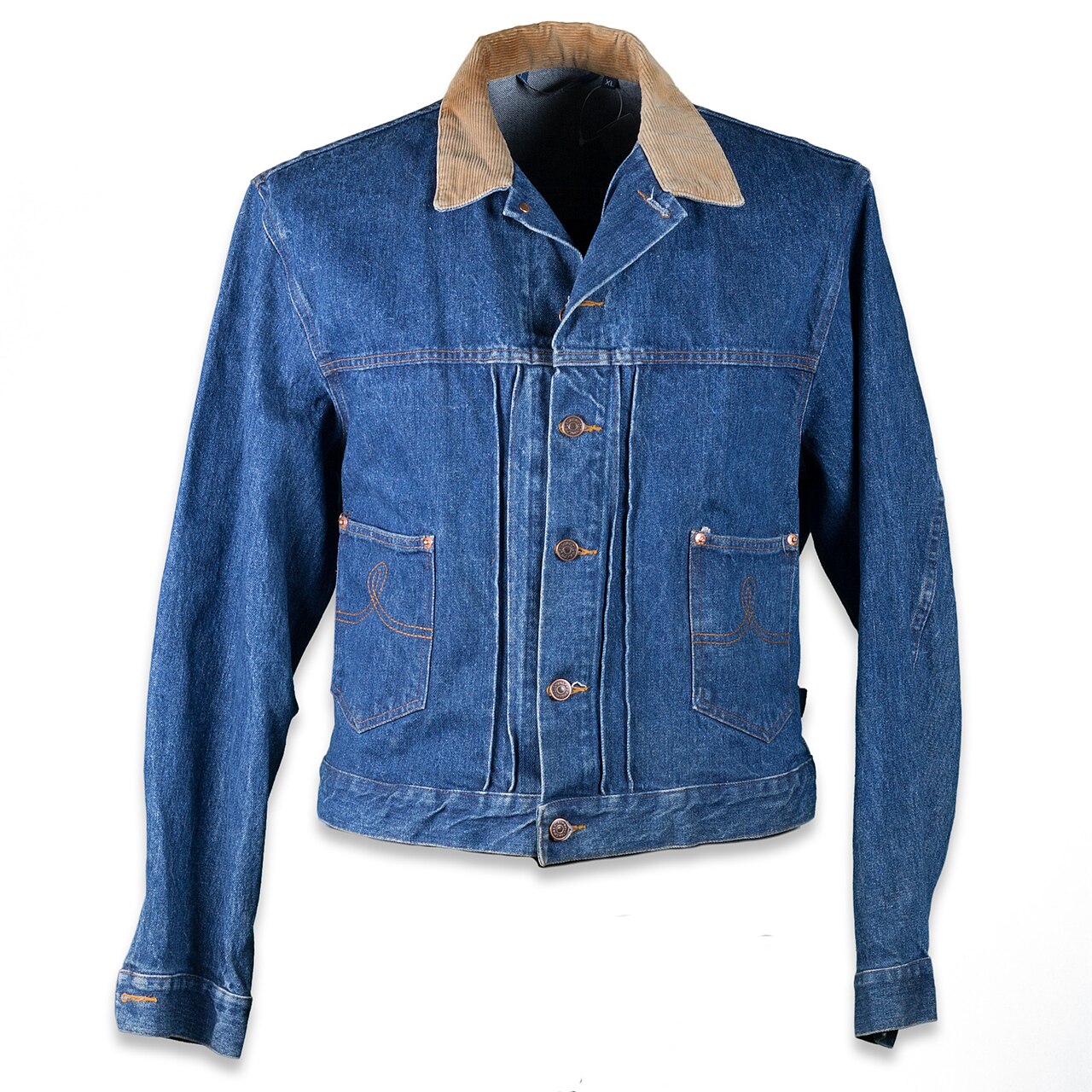
To get back for dinner we had to drive at a crawl through heavy foot traffic and up a steep hill to the park road. A dude purposely walked in front of my car, wearing an army jacket from my era. Life had burnt him up, and he looked at me through the windshield as if his one job that day was to find a challenge. I considered whether he might be me, from an alternate reality. I gave him a two-fingered wave from the steering wheel, and he waved back, his face transformed with happiness.
• • •
Giant City began as an attempt by both state and federal governments to better the lives of its people during catastrophe. “By 1933 [the year Giant City Lodge was begun]…around 9,000 banks had failed [in the United States], nearly 25 percent of the total labor force was unemployed, and nearly a million farmers had lost their land when banks foreclosed,” the Illinois Department of Resources says.
FDR’s New Deal created, among other programs, the benevolent “forest army,” as the locals called the CCC at first, which put their labor and skills toward good works that would last generations: reforestation, new roads, dams, bridges, parks, trails, lodges and other buildings, campsites, flood control structures, fountains, hydrants, septic systems, fences, ditches, levee work, parking areas, archaeological surveys, and much more. The young men were educated and received pay that kept many families, perhaps including my own, from starving to death.
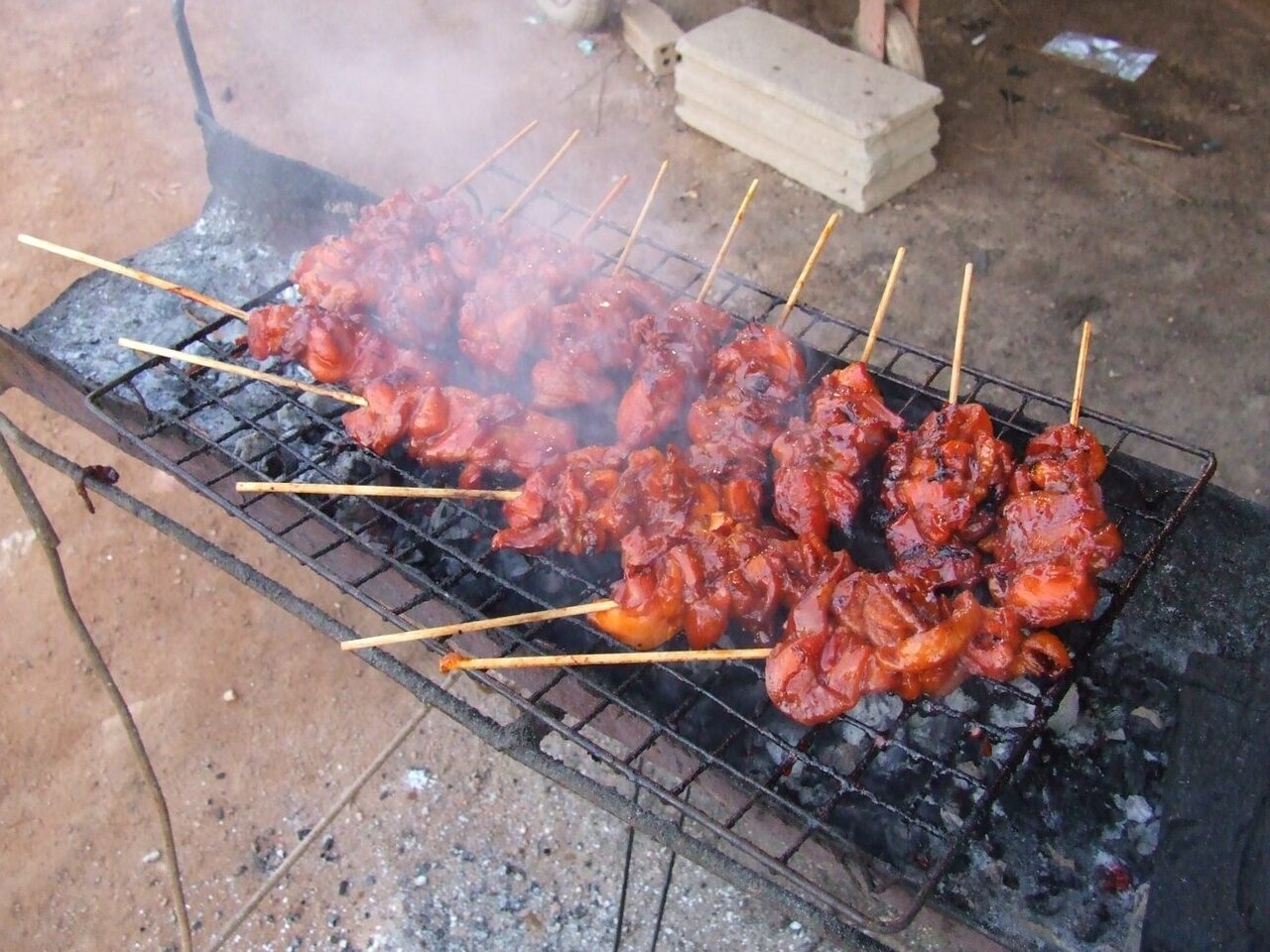
This day, my friend and I sat down to a full spread in a crowded dining room addition to the CCC lodge: coleslaw, dumplings, corn, green beans, mashed potatoes, gravy, biscuits with apple butter, and tender, well-seasoned fried chicken, not to mention sweet tea and peach cobbler for dessert.
• • •
My mother had not taught for seven or eight years by the time I had memories of Giant City. We were another half-dozen years from going down hard. The park was one of the last beautiful things in her life from when she had some money, freedom, ambition, and hope.
In taking me to Giant City State Park, she was also taking me to see her beloved daddy, as she called him all her life—orphaned child miner, UMWA officer and international organizer (“one of John L. Lewis’s chief troubleshooters,” says the Times obit, which she may have written), state senator—whom she claimed had helped create the park in the ’20s.
Places like Giant City stand as monuments to the old ones having not missed the point that we belong to one another. Its name helps that along.
Her father had been gone 20 years by the time she and I hiked the trails and sat reading in the lodge, but it still had no plastic crap, as my mother called it, no pinball machines, no blaring TVs. The chandeliers were converted oil lamps. No ersatz food was served, the sort of stuff with ingredients your grandmother would not recognize, let alone the Tang and Space Food Sticks I wanted so badly and never got. The lodge had old-school, masculine charm through the hippie and then the disco eras.
She may not have known she was taking me to see my own father too, in a sense, who had left us or been forced out after we returned from a USAID mission to Vietnam. He had served, as a teenager, in a different CCC camp than the one that built Giant City, but about the same time and not so far away, on the eastern edge of Southern Illinois, before he went off to defeat the Japanese in the Pacific. He made it back. We both lived long enough for me to meet him. Good luck for some.
The lodge, as public building and tourist site, was the opposite of a home, but it was an emotional shelter for my mother and an expression for her of what was best and most hopeful in all of us in dark times. It will always be heroic when someone saves land from developers, loggers, and gravel companies to create more community and a place for recreation in nature. Places like Giant City stand as monuments to the old ones having not missed the point that we belong to one another.
Its name helps that along.
• • •
As my friend and I walked around the lodge after dinner, I had to laugh at how easily my idea of the park as a place of the west fell apart. Its rocks, flora, and fauna are of the general region. Bison once roamed everywhere east of the Mississippi but were hunted out 200 years ago, so the one above the mantelpiece, maybe there since the ’30s, probably came from the west or a farm.
The rustic lodge with its mica lamps and Mission furniture with Native American fabrics remind me now of photos from both the Grand Canyon Lodge and lodges in the Adirondacks. As a kid I probably confused the CCC with westward expansion or with western Forest Service fire crews. (Smokey Bear was from New Mexico, and I loved Smokey Bear.)
The water tower by the lodge has an observation deck. It, at least, looks west, toward sunsets and the 111-foot Bald Knob Cross looming over the local wine trail through Alto Pass. People love it. The Mississippi is 25 miles away but cannot be seen, any more than you can see the Ozark Plateau beyond it, the Great Plains, the sharpened Rockies, or the world’s biggest ocean lapping at LA, but they are out there, like other good things of the mind we make together.