Following the Trails of Fortune and Glory
How being a fan can give you a community, a cause, and the chant of hero worship.
November 16, 2026
Boundless enthusiasms swirled around my childhood—and left me cold. Girls were groupies, swooning over rock stars; boys could quote obscure baseball stats but forgot their own mother’s birthday. In adulthood, the enthusiasms became odder, more specific and surprising. Now there were “cons” and “vids” and “merch” feeding the various obsessions. I thought it all a bit childish—maybe because it made me feel lonely and lacking. My emotions balked, refusing to latch onto any one thing with such fervor. The girls squealing and jumping up and down made me embarrassed for my gender. And the grown men cast into the depths of despair because their team had lost? A dangerous loss of perspective. Fans could go dark, stalking their idol, or just stay silly, their life consumed by their devotion. Either way, they were trading significant chunks of their life for virtual scraps of someone famous.
There is a new pop-psych label, “otrovert,” for perennial outsiders like me. We are wistful at the group fun, yet if invited in, would probably decline, preferring a long talk with a friend. My husband is less, er, otroverted. At regular intervals, he dips into fandom’s Star Trek and Comic-Con pools to find kindred minds. I…never had a tribe. When hockey fans assured me that they “bleed blue,” or downtown St. Louis glowed Cardinal red, or friends mortgaged their soul for a Springsteen ticket, I smiled and nodded, but no words came. Rah-rah crowds made me nervous.
Then I watched the 2026 World Cup.
In love with Spain, Andrew and I knew from the start who we were rooting for. This was the perfect entry point, global enough that our ignorance and lack of past fealty could pass unremarked. I blocked out every one of Spain’s games on the calendar. Half an hour before the team streamed onto the field, we carried icy beers and a bag of chips to the sofa and settled in.
Life was simple and wonderful in those weeks. We had stepped inside what Dutch cultural historian Johan Huizinga called the “magic circle.” We ignored ringing phones, politics, muddy pawprints on the kitchen floor…because a different set of rules, customs, and values had descended. Its energy was intense, our focus absolute. Nothing outside the circle mattered.
Years of scorn fell like scales from my eyes, clattering against the hardwood. My calf muscles vibrated with each kick. I stopped breathing for every tight maneuver. And when a game ended, I read everything I could find about nineteen-year-old Lamine Yamal, already ordained by some as the next Messi. One night Andrew disappeared to his office after the game. He had tried to find me a Yamal jersey, he explained later, but not only were they $130, they were 100 percent polyester, which he knew I would hate.
Fans could go dark, stalking their idol, or just stay silly, their life consumed by their devotion. Either way, they were trading significant chunks of their life for virtual scraps of someone famous.
I would have worn one anyway. Still, much as I suddenly adored Lamine, I was glad he had no feats of brilliance in the World Cup, glad that Spain’s success was truly a team effort. The players worked together smoothly, calm as their coach, whose grave countenance only cracked—into joy—when they scored a goal. “Workmanlike” was one broadcaster’s adjective. They were not flashy, or bullies like Argentina….
Listen to me! One tournament, and I had been sucked into the rabid, polemical, insult-laced world I always despised.
Fandom is seductive.

• • •
In the novel Y/N, the title abbreviation is short for “Your Name,” a genre of fanfiction that lets people insert themselves into the story. All we know of our narrator is that she is young, female, and wary of her friend’s enthusiasm for a K-pop boy band: “performers of supernatural charisma whose concerts could leave a fan permanently destabilized, unable to return to the spiritual attenuation of her daily life.”
Finally, reluctantly, she agrees to accompany her friend to a concert. Her worst fears come true. She is sucked into the gravitational force of Moon.
“Each boy was named after a celestial body,” you see. (“It went without saying that none of them was named Earth.”) Gazing up at Moon, our narrator was flushed with an energy both sexual and spiritual. Afterward, she says that the experience “made me wonder about all the other first times out there to be had. The world suddenly proliferated with secret avenues of devotion.”
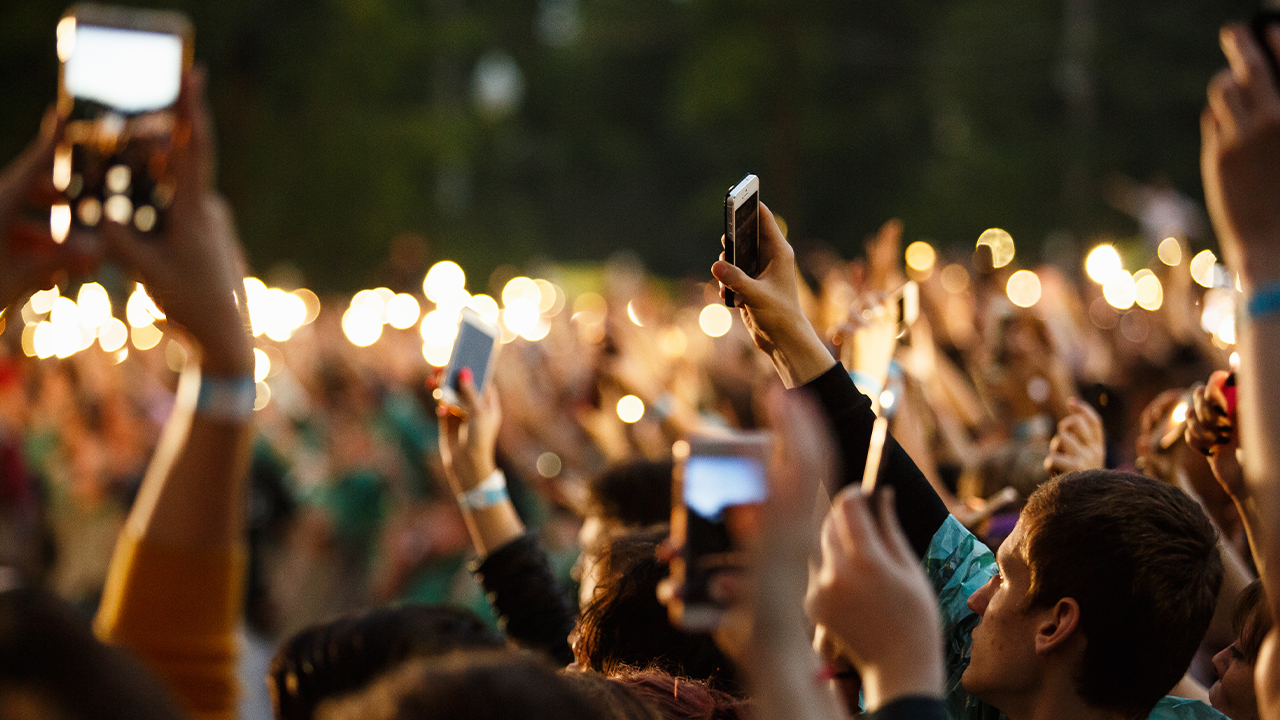
The worship is, of course, communal, which at first transports her—“Everyone in the crowd raised their phones, situating thousands of Moons before me.” But she comes to resent the others as her fan-crush turns delusionally possessive. Moon becomes a proxy lover, a life purpose, a small god come to save her.
“Every light in the arena was pointed at him. He stood still and endured it. He was a gift forever in the moment of being handed over.” Though the line has Christian overtones, it also sums up the thrill of any fandom: suddenly your life is lit up, full and rich, focused and exciting, yet you have done nothing to earn the transformation. No wonder fans feel so eager to give back—to buy the merch, pay huge sums for the tickets, devise an elaborate costume, post their praise and videos.
We are wired to belong to something, and the old forms of solidarity have shattered. We move, change jobs, avoid our neighbors, spurn clubs, pull back from religion, pursue solitary amusements at home.
Moon possesses the perfection that is possible only with distance. Inevitably, the narrator’s boyfriend suffers by comparison. Wise and a little bitter, he tells her, “We once turned to philosophy for an interpretation of God…. Now we know too much, especially what people want and how to give it to them…. Religion, shorn of philosophy, is now a vending machine for manifestation and fulfillment. That’s why there are so many lowercase gods in this secular, cynical era.”
Is that what troubles me? The way fandom’s trivial worship competes with deeper, more substantive beliefs? Yet my own faith wavers and wanders; I am in no position to preach. It is more that the lowercase gods never seem to deserve the hysteria.
Our narrator takes in none of this, only continues to insist that she knows Moon. “The person I don’t know is you,” she snaps at her boyfriend, her fandom slipping from reality. We gather superficial bits of knowledge about those we worship from afar, then feel sure we have fathomed them, because the picture in our head is bubble-wrapped, safe from contradiction or complication. For once, we can love with no fear of rejection.
• • •
The word derives from “fanatic,” which should worry us. “Fan” usage only dates to 1889, although boxing fans in Regency England were called “the fancy.” The phenomenon, in any case, is ancient: just watch the crowds roar at the gladiators in a toga flick. Wait, though—does that count? One of those guys will die. Fandom requires a greatness that can endure at least for a few years. Those Romans were roaring for blood, not brilliance.
Over time, gentler amusements organized themselves, and loyalty became possible. But only now is there fandom as a social force. Thanks to the powerful technology stitching together a fast-shredding world, people can find one another, pool their power, and develop a culture with its own in-jokes, rituals, lore, and social power. “Fandoms are the new tribes,” notes Michael Bond. And we crave the unity. We are wired to belong to something, and the old forms of solidarity have shattered. We move, change jobs, avoid our neighbors, spurn clubs, pull back from religion, pursue solitary amusements at home. For a while, we counted on those we loved instead, expecting them to cheer us loudly and forgive our fuckups. What is marriage but the promise to be someone’s fan forever? But now that is deemed a bar too high, and forever is increasingly rare.
So, what do we have left? Secular idols. This is another reason I have shied away; I recoil from this hierarchy, this sense that famous people are somehow better than we are, and we are blessed just to have their signature, their presence in the same room, their breath in our nose.
• • •
There is a sinister aspect, too. Any time you create separate groups, people start to favor their own. Arrogance and intolerance swell fast, because every member of the tribe has automatic support from all the rest. This sort of polarization extends far beyond sports: try criticizing Taylor Swift to a Swiftie.
Cultivated, fandom becomes deeply personal. Fan it hard, and the fantasy burns. People have been known to hack, stalk, text incessantly, steal belongings. If their idol goes on tour, they finagle the flight information and buy a seat across the aisle. A brazen few will sneak into the reserved hotel room and wait naked in the king-sized bed.
And we wonder why celebrities are neurotic?
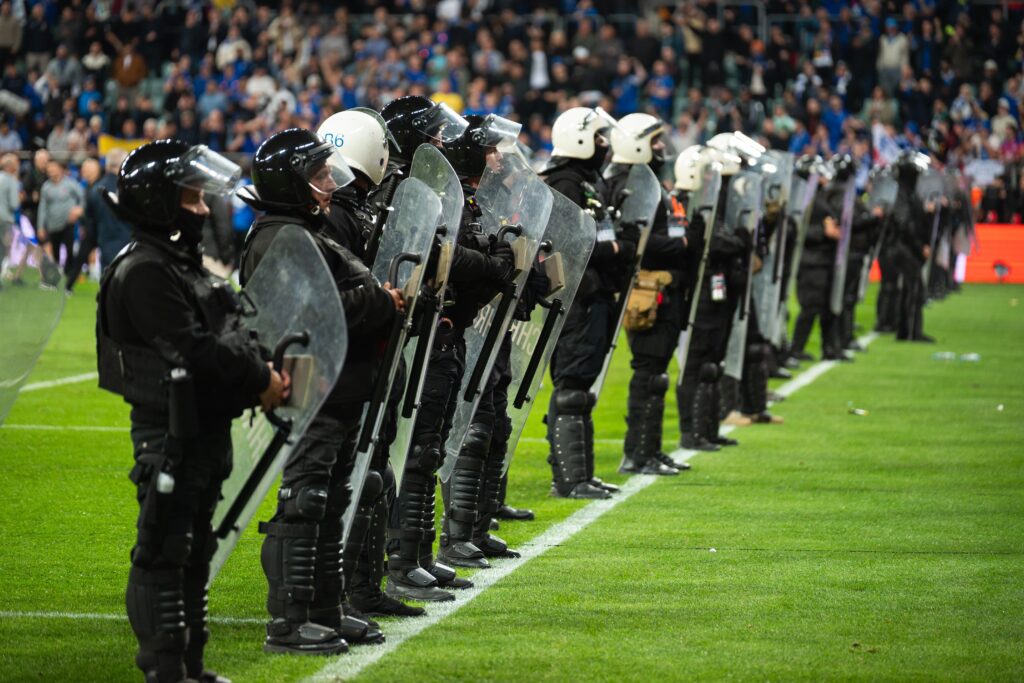
At least in sports, the demonstrations stay public. But the aggression that wins goals on the pitch also simmers in the crowd, until cheering and booing are no longer sufficient outlets and brawls bloody the streets.
We are, it seems, no better than fish.
Curious researchers set up an underwater boxing ring for Mozambique tilapia, who have two forms of male sex hormone and are so belligerent, they will attack their own reflection in a mirror. These attacks on the self’s image do not, however, increase their testosterone. It only surges when they attack another fish. Maybe when they swim to a mirror, instinct hijacks them for a second, and they come to their senses before the hormones can respond. Or maybe they are just using the mirror to practice. What the researchers wanted to know was how spectators were affected by a real fight. With the watery stage set, they drew a crowd for the fight, then measured the testosterone in the watchers’ urine. It surged, just as human testosterone does in the males of our species. Then, if the humans’ team loses, their testosterone dips low. (Women’s trickle of testosterone does not fluctuate in this way, which is why we stay in our seats and calmly eat popcorn while the guys beat each other up.)
Set aside biology for a second, though, because the human response is culturally mediated. Where football club rivalries run hot, as in the UK, Spain, and Latin America, the fights can turn violent fast, fueled by an explosive mix of identity, tribal membership, humiliation, booze, uninhibited emotion, and the collective madness of a crowd. In Japan, where fandom is a trillion-yen lifestyle more focused on individual celebrities, the norms are stylized rather than aggressive.
Fan it hard, and the fantasy burns. People have been known to hack, stalk, text incessantly, steal belongings. If their idol goes on tour, they finagle the flight information and buy a seat across the aisle.
Here in the United States, fandom seems to trend either emotional and ritualistic or casual and rowdy. Extreme sports fans can be obnoxious or obsessive, but most just want some beer, dogs, and yelling. You would think our cocky, rugged individualism would render us immune to fandom altogether, but we have never been as staunchly individual as we pretended. Lost in all this space, with custom and tradition changing every few hundred miles, we are hungrier than most for some way to belong. We join groups the way freshmen at huge universities pledge Greek, to shrink the world around us into manageability.
The problems come when the world around us remains so daunting, we prefer to be consumed by what we love and ignore the mess altogether. Reach that point, and it is a short trip from solidarity to private obsession.
• • •
In Fandoms, video blogger Dan Howell remarks, “You can like something so much that it actually destroys your life.” I used to assume this happened automatically. All parasocial relationships seemed unhealthy to me, simply because they were not real. They cut intimacy in half and put it on remote control, so a fan knew what his idol ate for breakfast and paid a huge sum for her toenail clippings at auction, but she had no idea he existed. Celebrity is tricky that way: we are fed all sorts of wild details about famous people’s lives, and if we tumble into obsession, we can manage to see and hear that celebrity more often than we see and hear our own kids or partner. Of course we think we know them. How easy, then, to dream that they know us. Surely that warm smile and wink at the end of the performance was meant as a secret signal?
An imaginary connection several layers away from reality, linking me not even with the actors but with the characters they portrayed. Why did I feel so comforted just watching oddly assembled groups of smart, funny people?
Mocking such feelings was easy for me. But recently, I found a few streaming series I fell in love with. I started to feel like I knew those people. I worried about them, laughed with them, knew when their love lives were headed for trouble, or their work was weighing too heavily. I knew more about them, in fact, than I knew about most of my real friends’ current lives. After the last show of a series, I would sit staring at the empty screen, desolate, then rush to see if another season was being filmed….
Parasocial. Asymmetrical. An imaginary connection several layers away from reality, linking me not even with the actors but with the characters they portrayed. Why did I feel so comforted just watching oddly assembled groups of smart, funny people? A clue came when I looked for “shows like this one.” Turns out I gravitate toward a category named “found family.” Which, for an only child with no kids and a dead mother, makes a lot of sense.
But is it neurotic?
The term “parasocial” goes back to 1956, and the two sociologists who coined it were writing about radio and TV. A performer who keeps showing up in your living room, they realized, can create the illusion of an interpersonal relationship. They become familiar, and you grow fond of them, and that gives you a sense of ownership that must be honored.
The two sociologists are dead now. They never had the chance to see their theory supercharged by TikTok influencers. Still, their appraisal holds true: enjoying strangers virtually need not be pathological. Maybe you want to cultivate their qualities, the way my mom sewed herself versions of Audrey Hepburn’s wardrobe. Maybe they are living your values, or teaching you about a place or time, or easing a bit of loneliness, or proving that people very unlike one another can work as a solid team.
No harm done—unless you begin, like the young woman in Y/N, to prefer that problem-free virtual relationship to those you have built in real life. Or you start to expect what was virtual to manifest in real life. Or you feel betrayed if your idol shatters what turned out to be clay feet, or they announce a truth you reject. As a teenager, I felt bereft—how could Rock Hudson, my ideal for a husband, be gay?
The chief betrayal, though, is loss. If your team’s victory is a genuine boost to your self-esteem, a crushing defeat will be a personal humiliation. Maybe you tell yourself the ref sucked or the other team cheated. Maybe you land a punch. Because if your own sense of self has a few cracks, the ritual aggression of sports—which is intended to civilize us, by providing a nonviolent outlet for our murderous impulses—can lose its boundaries.
• • •
I spat on what I assumed was pretend unity. The chants, the sea of red or blue, the Wave rippling through a landlocked stadium. Those guys joking as they passed somebody’s beer down the row would shove one another aside at the voting booth. Fan solidarity was just manufactured, I thought, like the cheap sentiments Hallmark insists we exchange on the holidays Hallmark has engineered for us.
Then I read a study that took saliva samples, heart rate measurements, and survey responses at university basketball games. Levels of oxytocin—the stuff that bonds us to one another—rose steadily during these games, and the fans’ heart rhythms fell into sync. They felt the change: they felt united. And that feeling alone made them want to come back.
This, I did understand. Feeling part of a community of strangers who are so happy to be together? Distancing yourself from others’ enthusiasms means you go through life alone. No camaraderie, no instant bond, no shared highs. You watch the joy from the doorway, and after a while you step outside, because it is so obvious that you do not belong there.
Fandom is as communal an act of worship as any religious service. You can question its gravitas or the height of its purpose, but you cannot ignore the parallels. What is a trip to see your team play, or your idol sing, but a pilgrimage? Fans chant and share rituals, carry symbols and make signs, wear the gang’s colors and paint their face for battle. The tribe has its own language, nicknames, stories, hagiography. The incoherent euphoria that sends people shrieking into one another’s arms feels as transcendent as speaking in tongues—and far more fervent than the usual clammy, limp Sign of Peace exchanged on Sundays. Joy’s electricity streaks through the stadium, binding the crowd together.
Sociologist Émile Durkheim called this phenomenon “collective effervescence.” Others link it straight to the divine. Just listen to all the God-talk before and after a game; all those invocations of faith and grace hung onto two numbers with a dash in between. Do people invoke religion because sport is meant to test goodness? Or because the results are unpredictable, thus can theoretically be swayed by divine intervention? When Knicks fans celebrated this summer, some said they had “seen God” and seemed to mean it, and a priest admitted praying for the victory. Its symbolism was too powerful to ignore: David had a killer slingshot, and the turtle had snapped the finish line ahead of the hare. The weak could be strong; the oppressed could prevail.
• • •
You watch the game riveted. Mirror neurons in your brain move what you perceive to your muscles, so the same brain cells fire whether you are acting or watching. The more familiar you are with the action, the more intense this mirroring—so when you win, it really does feel like you won. Your legs, propped on the ottoman, felt that kick, and your faith was rewarded. The ecstasy gives you license to squeal, jump up and down like a child, hug anybody within reach, and carry a piece of that trophy or ticket stub with you for the rest of your life.
But you must have been present. Fandom is participatory. It is permission to care, fervently, and scream and cry and yell and curse and sing and wear silly clothes. It unfolds in time. Maybe you were swaying, phone aloft, at the concert, or hunched forward on the edge of the sofa when that decisive ball swished through the net. Only then can you retell the moment, basking and bragging. Nothing you heard about later belongs to you in the same way.
You have to have ridden the roller coaster.
Football (the soccer sort) let me understand this, because the score changes so bloody slowly. Basketball turns your head like a Ping-Pong game, and the scoreboard flashes you a dopamine hit every few minutes. But football is extended foreplay, and the climax of a goal is an explosion of relief and excitement because you have waited so long, and that point carries so much weight. You can feel your brain responding to the uncertainty, the up-and-down hope, fear, hope, despair, wait, maybe, wait, GOOOOOOAAAL!
Distancing yourself from others’ enthusiasms means you go through life alone. No camaraderie, no instant bond, no shared highs. You watch the joy from the doorway, and after a while you step outside, because it is so obvious that you do not belong there.
Reading the score later does not give you that. The experience must be absorbed in the moment, so it can become part of you.
The studies of psychologist Daniel Wann show that fans who see their team as an extension of themselves…how would you finish that sentence? I was ready to guess they have problems with depression, a sense of inadequacy, and a deep loneliness. Dead wrong. They have higher levels of mental energy, self-esteem, and happiness. Hitch your wagon to a star.
How to choose which star? Sometimes we fall in love with celebs because they started out as underdogs, and now they are caped and flying. At other times, the energy of their talent exerts a magnetic force. Or they are from our hometown, or remind us of someone we once loved, or inspire us to try harder.
My husband and our friend Bash can quote, verbatim—I know because they do it in unison—the dialogue from every pivotal Star Trek scene ever filmed. They also happen to be two of the smartest people I have ever met. For years, I would utter a dutiful and sincere “Wow” and secretly think, This is how they use that superior brain power? If I had such a mind, I would commit Rilke or Shakespeare or Lao Tse to memory….
But knowing is a form of loving, and we love what brings us pleasure, solace, or intrigue. Over the years, I have come to realize that all knowledge is connected, and the more you learn about any one thing, the more you learn about everything. So, go where you are drawn. Bash and Andrew never tried to memorize all those scenes. The words live inside them, because Star Trek gave them a way to grow up idealistic on a broken planet.

• • •
Fandom is vicarious. People you have never met do something cool, and your mood soars. Psychologists call this BIRGing, basking in reflected glory. Sociologists point out that we are a social species, tightly bound up with one another’s fate. Neurologists talk about those mirror neurons that let you feel the thrill in your muscles without breaking a sweat. Your safe, predictable little life is carried aloft by other people’s victories.
Except, it is not as passive as it seems. In Fever Pitch, Nick Hornby calls football “a context where watching becomes doing.” Being a fan is your role in the drama, your job. Because without fans, there would be little point in continuing.
In a real-life K-pop parallel to Y/N, it took just forty seconds to sell out reserved spots for the solo debut of Jung Kook, the main vocalist of BTS. The concert was scheduled for Friday morning, and the line of lucky ticket-holders began to form that Monday. By Thursday, more than seven hundred people were standing in line—God knows how they managed their bodily functions—and at dawn on Friday, the line wound through twelve city blocks of Manhattan.
And when the concert is over? Fanfiction, zines, and videos all keep the fun alive for their idols. BTS ARMY—the K-pop phenomenon’s fan group, Adorable Representative MC for Youth—is estimated to create roughly $5.3 billion in economic activity this year alone, in forty-four cities around the world. The MC in the name is more than Master of Ceremonies; it stands for Microphone Controller, a hip-hop artist who can command the stage and speak truth.
And when the concert is over? Fanfiction, zines, and videos all keep the fun alive for their idols. BTS ARMY—the K-pop phenomenon’s fan group, Adorable Representative MC for Youth—is estimated to create roughly $5.3 billion in economic activity this year alone, in forty-four cities around the world.
In a 2023 episode of The Simpsons, Homer insults a pop idol, and her fans hurl glitter bombs and send a murder of crows to the Springfield Nuclear Power Plant. “You don’t know these fan armies. They’re all ruthless psychos,” Lenny tells him. Then he breaks the fourth wall and addresses the audience: “Except for the BTS ARMY, who are just and pure of heart.”
BTS ARMY does service work, like a fraternity, and political activism. The musicians just do what they were made to do, buoyed along by a swell of adulation. They have won the love of people all over the world without once bringing them chicken soup or being there for a 3 a.m. crisis.
It is easy to forget, if you are as cynical as I am, that the effort is mutual. On tour in Chile, Jung Kook nearly collapsed. Between songs, he inhaled canisters of oxygen and kept a gel pack on his forehead. “I was in bad condition,” he admitted later. “But I performed with only one thought in my mind: I won’t be able to see [these fans] for a long time.” He was honoring his part of the bargain.
• • •
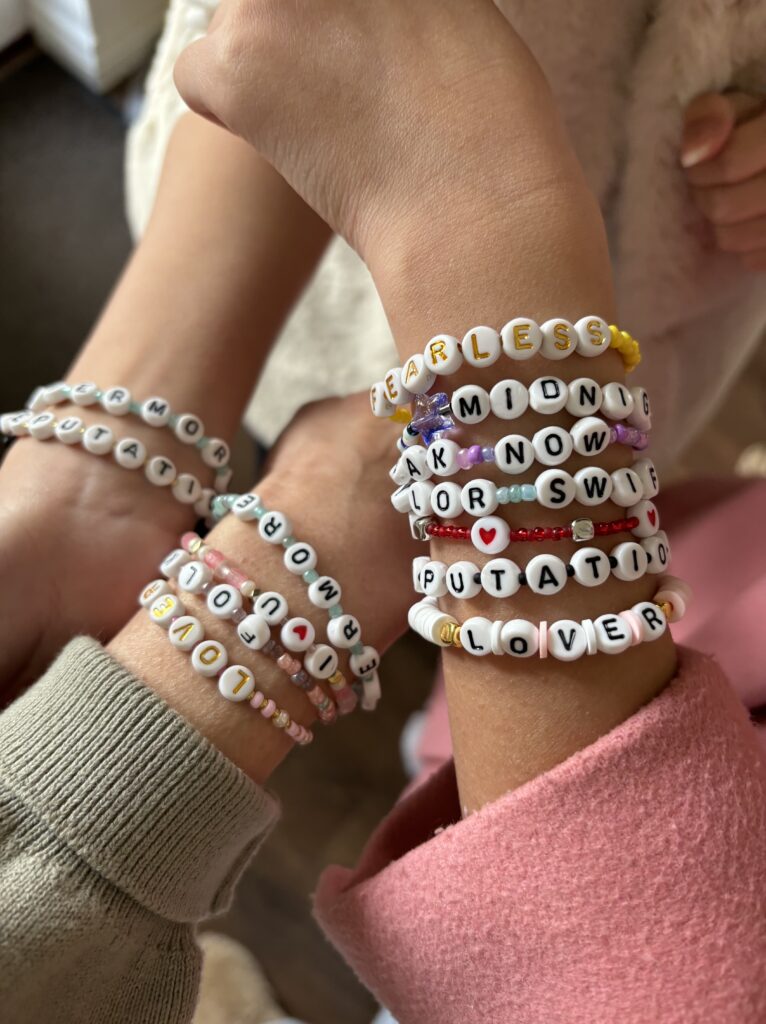
You can understand fandom better by studying its absence. Let your mind slowly fill itself, like a rowboat taking on water, with images of sequined or cottagecored Swifties trading beaded bracelets during The Eras Tour. Now shift to a jazz concert. Better yet, the real habitat: a dim-lit jazz club that, despite today’s rules, still feels smoky. Those eighty or so listeners will be every bit as passionate as the 70,000 Swifties, but they will not call themselves “fans.” Jazz is not structured for fandom.
Jazz is ensemble by design, giving each musician a turn at self-expression while the others listen hard and follow. Each player has plenty of personality—but no desire to brand it. Today’s fandom tribes have a rich digital playground in which to continually experience their idols. Jazz has its history, musician bios, and some Spotified soundtracks. Players refuse to depend on social media’s algorithms to survive; better to eke out a living in late-night clubs and find a day job someplace. Jazz just works better live, in the real world, where anything can happen, and nothing can be memorized. What you are hearing will sound different every time it is played.
Which is why you have to pay attention. This is why people who love Bach or pore over T.S. Eliot are not “fans” either. Their emotional investment is just as intense, but the pure-fun component is missing, and because of the necessary vigilance, escape is not on offer.
Nor is there much money to be made.
Sport is a dominance competition, a show of skill. Music is a communication of emotion and beauty and meaning. As spectacle, both can drive revenue. But when you strip away the corrupt businesses trying to profit from genius and the inflated prices exploiting loyalty, both sports and the arts give us more than they ask of us. Why my little workaholic soul could never celebrate that uncomplicated truth, I do not know. I was the modern Xenophanes, who complained bitterly in the sixth century BCE about Greeks preferring athletes to philosophers. Why should athletes be handed fame and money for useless skills like running or wrestling, while philosophers sat alone trying to solve the world’s problems?
Because the athletes were a joy to watch. You could feel yourself doing what they did; imagine yourself in their world. And the thrill was contagious.