Reviews

The Deliberate Knot

Shuler wrote Thirteenth Turn, he tells us, to reveal the “still underdiscussed narrative of violence in American history,” which “includes both a kind of legal ‘justice,’ the death penalty, meted out by the state—with all the biases that kind of justice entails—as well as another, extralegal ‘justice,’ the democracy of the mob.”

Farming For Flavor

Dan Barber is first and foremost a chef, and his book defines sustainability and food against their utility as vehicles for taste. This is a welcome addition to food studies.

Food For Thought

Emphasizing the need for food, the abuse of food, or the communal aspect of eating, somehow unlatches a secret, emotional spring of insecurity.

Hones of Contention

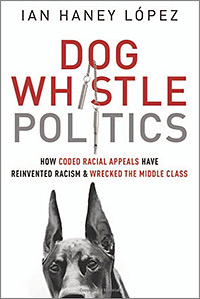
In a refreshingly humorous style, the book outlines 19 bad forms of argument, clearly and concisely, followed by a little illustration for each, featuring large-headed animals with a rather curious stare.

Youth, Subverted

There is some preaching to the choir, some inside jokes for people who know the significance of Heather having two mommies and that everyone poops (allusions to children’s book titles), but there is also a sense that the authors want to appeal to those who might have the wrong image of them as people who work in children’s literature.

Mistaken Enmity

What intrigues most about Gall’s book, however, is not the many local lessons it offers but rather how it wants to construct and control a broader narrative about the war. This impulse is smart insofar as no coherent national narrative about Afghanistan seems to circulate, and The Wrong Enemy realizes its opportunity to address the vacuum.

Jazz Man

Music lovers will appreciate the film’s soundtrack, which is made up of seminal selections by some of jazz’s greatest artists. Margot Hentoff says of her husband, who is approaching 90, “He reads and he writes. That’s all that he does.” Hentoff himself says, “I write to write.”

King Lear

Does a man ever get over his father? Born into a Jewish family in New Haven in the summer of 1922, the second child and only boy, Norman Lear developed toward H.K. a reverence that withstood a great deal before souring, which it never did completely. Like Archie, H.K. was a large personality whose faults were proportional to the rest of him.

Skip to content