The Lie I Tell Myself Daily
October 30, 2025
“What do you lie to yourself about?” my friend wanted to know.
I floundered. Tried to escape the question. Then took a minute to realize I knew the answer.
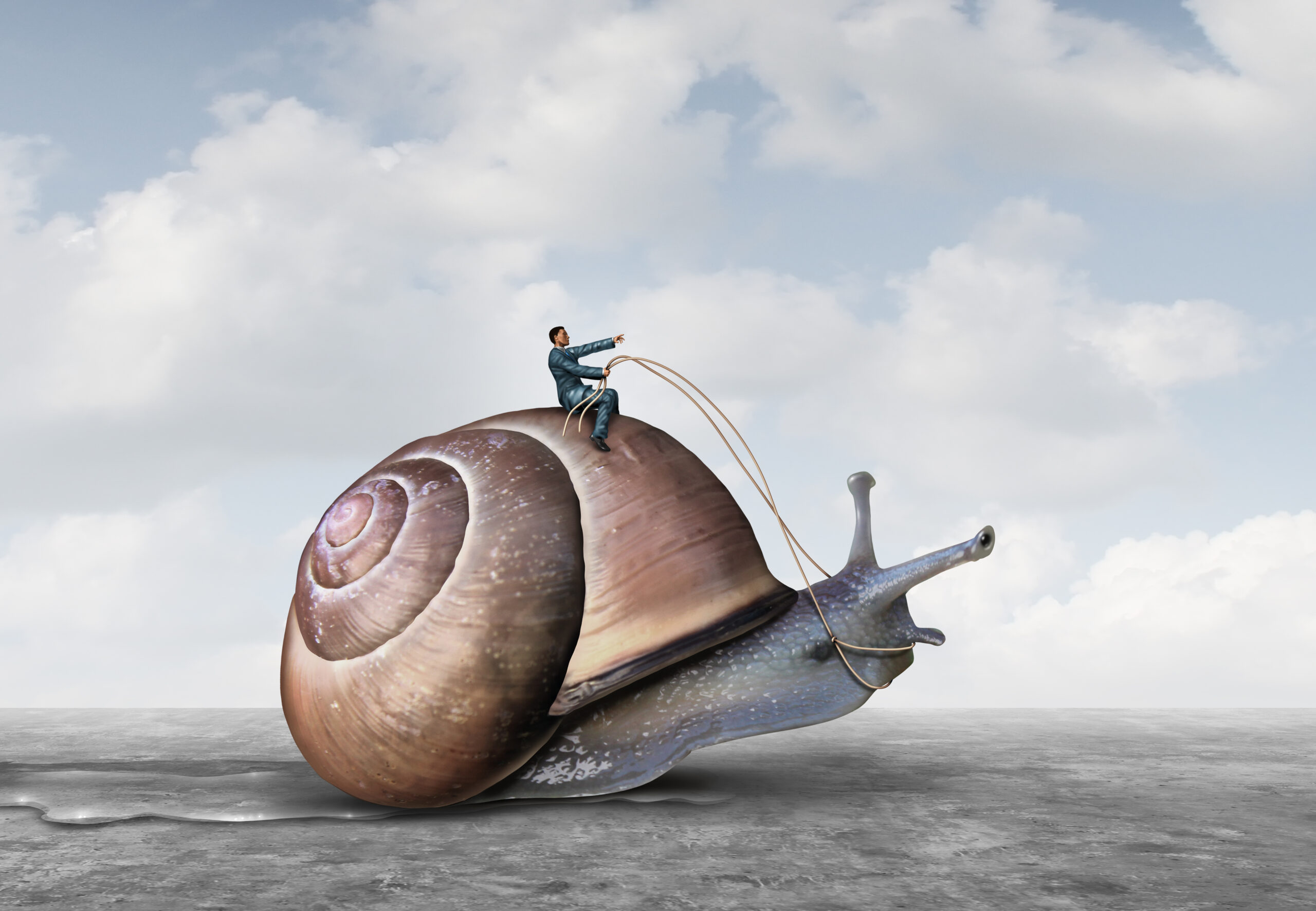
“I think I’m patient,” I blurted. And as I said the word, the full truth of it sank in. The only reason I am able to delude myself that I am patient is that I am so impatient, I am proud whenever I bite my tongue and wait.
I write ad infinitum (even boring myself) about our “fast-paced culture,” how our tech has “outstripped our ability to respond.” I rhapsodize about slow food, the slow-motion meditation of t’ai chi, serene tea-brewing rituals. I believe deeply in the importance of living in the present moment, and especially now, the need for everybody to just slow the hell down and take a breath, stop reacting in anger or panic.
All lovely words. But I loathe having to wait to settle some important decision. I also loathe waste of any sort—food, energy, talent—and high on that list is time. If I am driving and we are headed anywhere we have to be at a certain time, even if we have plenty of time to arrive on time (time, time, time, the medium of impatience), I tend to speed, a habit my husband punctures with regular reminders of the speed limit or the staked-out traffic cop just ahead. And how many times have I cussed and skidded into an illegal U-turn just before I would have reached the place I was supposed to turn? My anticipatory radar is always just a little too fast, my panic premature. Thank God for GPS—which means that at the point of panic I can avoid the U-turn and simply grab my phone to make sure it is still tracking the route.
All of which means I render myself incapable of living as I most want to live: in the moment.
Some of this, I can blame on the usual twins, my mother and my temperament. My mother lavished all her patience on children and saved none for adults, especially not herself. She did everything fast, and her life lessons included: send the thank-you note the minute you receive the gift; respond instantly to any request; pay your bills the minute they arrive; and if you need some dreadful medical procedure make the soonest appointment possible. I started life slow and easy, but after some years of this, I knew I had better kick it up a notch. And adulthood—plus feminism plus journalism plus American culture—made sure I worked hard to erase my natural passivity.
Dr. Sarah Schnitker, professor of psychology and neuroscience at Baylor University, notes that “people who are patient are not less assertive, they are not passive, and if anything they actually achieve their goals more successfully.” Now they tell me? As a rule, our culture confuses patience with weakness or ineptitude. Complimented that she is the world’s leading expert on patience, Schnitker jokes that this is because she is the only one.
Is patience just self-control? She says no, and draws a helpful line. Self-control lets us delay gratification—but we might fume while we wait. Patience lets us wait calmly. When Schnitker studied young people with various goals—get straight A’s, lose ten pounds, be kinder—she found that those who were patient with their goals exerted more effort toward achieving them, found more meaning in the process, and felt more satisfied with what they achieved. (Rather than ditching their goal the way I do any diet that gets hard on day three.)
Tech is easy to blame for impulsive impatience, as is the ever-faster “pace of life.” Yet there are a million ways to opt out. Do I choose options that will slow me down? Hell, no. I zap my teabag in the microwave most days, and I look for exercises vigorous enough to not require endless sets and reps. It makes me crazy to watch my husband use a dropdown menu when there is a keyboard shortcut. If I pull a muscle, I fly back into action too soon and then chafe because it will now take three times as long to heal.
This is all so ugly. I do not want to be this person. Impatience makes me rash or panicky when there is no need. And that thrum of urgency, that terror of boredom, that panic at the passage of time (the toxic mix) puts other people on edge.
One of my favorite college professors was terribly impatient, I remember. Her lively, quick mind was a delight, but in conversation, she used staccato uh-huhs to goad the other person forward—and if they did not slide into a gallop, she started finishing their sentences for them.
We owe one another better.
Always, it seems, I have had regular phone callers who deserved long attentive interest—elderly great-aunts, people stuck home with chronic illnesses, people stuck in prison. I coped by stacking small, quiet chores near the phone. But as I get older and less able to multitask, I have had to stop myself: without giving full attention, I can lose the plot too easily. My new solution is wearing down my tooth enamel.
Is it an excuse that I have worked on deadlines—the unbreakable sort—for my entire adult life? In journalism, that means bugging people repeatedly, with a choreographed acceleration of urgency, because so many wait for the third or fourth ask to respond. I grumble about this, furious that they dare take their time. Phrases like “slow and steady wins the race”—I find I no longer believe. Nothing thrills me more than a chance to collaborate with somebody who’s fast, responsive, and efficient.
Yet I refuse to think of myself as the “let’s get ’er done” sort. Or a “just do it,” “hold my beer,” impulsive sort. Oh, no. Not me. I am reflective, thoughtful, serene.
My husband snorts. When we talk about retiring, “slowing down,” he shoots me a look. “I am not sure you can,” he says gently. My entire body clenches in protest. Of course I can. I have worked hard for many years. I am dying to slow down. I want a more spiritual life, one more attuned to nature’s rhythms and the subtle nuances of human nature. I want to extinguish that inner pacemaker that urges me forward.