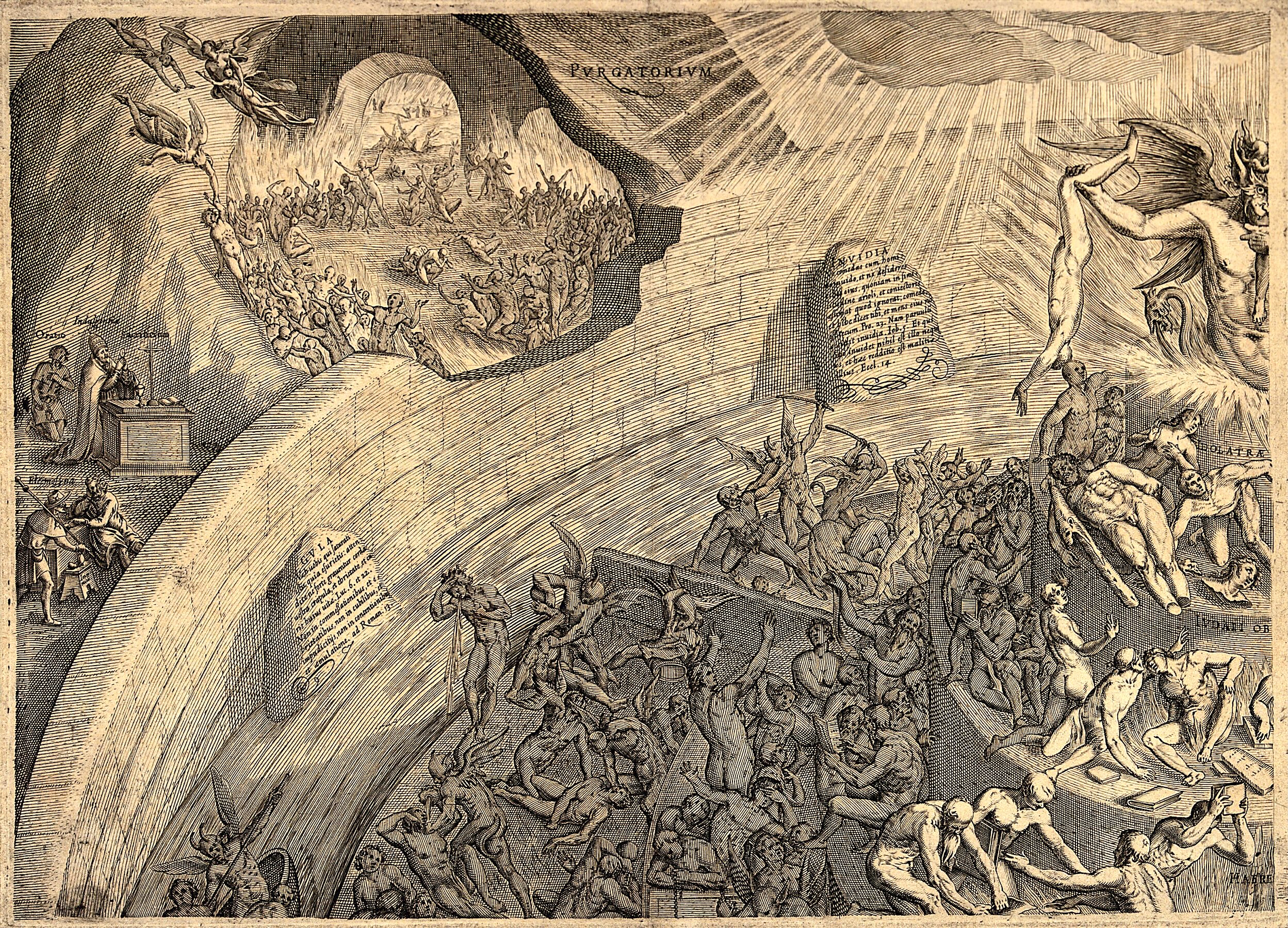
A Coign of Vantage
October 7, 2026

A long, long time ago, when feminine décor was still unproblematic and the romance of the past was untainted by cynicism…I bought a poster. No idea where I found it. I trimmed off the weird title (A Coign of Vantage) and the author’s name, Lawrence Alma-Tadema, then had it mounted on foamcore.
That giant, unwieldy piece of foamcore came with me to my first apartment. It followed me to my marriage and first house. It even made it across the river to the second house. Because it matched the 1960s robin’s-egg-blue fixtures, so I leaned it against the bathroom wall until it started to seem too tattered and silly to stay.
Along the way, I had happened upon the title again and looked it up. A “coign” is a jutting-out corner or high point that gives you an excellent view of whatever you are trying to see. I was trying to see…what? A different world, graceful and mysterious, exquisitely colored and lit. I loved the softly draped silk and wreaths of flowers, with even a spray of yellow across the back of the bronze lion. By then I knew enough about art to be embarrassed, but the image just made me happy. It was pretty. And it was painterly, I thought, sensuously executed back when realism could tell a story without losing its shape.
John Ruskin would have disagreed. Alma-Tadema was “the worst painter of the nineteenth century,” he declared. He disapproved of the people sprawled in Alma-Tadema’s interiors, especially the women, who lounged as indolently as courtesans bored between interludes. Art about the past should teach goodness, not license pleasure.
Henry James had no such scruples; he said Alma-Tadema’s skill made other English paintings look like “schoolboy work.” And maybe I loved that painting because it did exactly what Henry James’s novels did: stage an intimate scene, charged with a restrained and delicate eros. Domestic, everyday, yet somehow elevated by the ideas at play and their technically flawless execution. This is the sort of artifice we now sneer at—but it knows how to let you enter a story.
*
Sir Lawrence Alma-Tadema was born Lourens Tadema in a rural village in The Netherlands. He later moved to London for love and opportunity and Anglicized his Dutch name. He also hyphenated what had been merely a middle name, figuring the “A” would place him in the front of every catalog.
Canny, he had a way of getting sick to save himself. Slated to become a lawyer, he fell ill in his teens and could only nap and putter and paint, which revealed enough talent to send him to the Royal Academy of Fine Arts in Antwerp. Years later, he lost his wife and fell mysteriously ill again. Recovering at the home of his friend Ford Madox Brown, he met a young woman half his age and fell in love with her. By then, he had also fallen into his niche—recreating, and domesticating, scenes of classical antiquity—after he and his first bride wandered through the excavations at Pompeii on their honeymoon.
So much falling, yet he always stayed in control, pulling the parachute tabs at just the right time. He managed money and the business of art quite smartly. He was exacting in his work, measuring marble slabs and decorative paintwork and documenting how different kinds of fabric fell into pleats or folds.
And he also managed to challenge Victorian notions of class, gender, and race without ever confronting the issues head-on. Famous for his mischief and wit, he slyly altered the expected pale skin color, invited a shepherd in goatskin to the party, showed Sappho and her lovers coolly appraising a male poet, or snuck in a bit of vulgarity, allowing men to sleep off their wine. He messed with Victorian sensibilities even as he flattered them with their similarity to the ancients. In The Kiss, a young mother bends to kiss her daughter—but in the background, naked women play in the waves, and one stands in the shallows gazing evenly at the viewer. Are you shocked, she seems to ask, you who are so frightened of the word “leg” that you order a “limb” of roast chicken?
Romantic, sentimental, but underneath, quite daring, Alma-Tadema would have fumed to see his work fall from grace. Once firmly planted in the twentieth century, society lost all tolerance for what Whistler dismissed as “five o’clock tea antiquity.” Clearly, Alma-Tadema had superimposed Victorian ways on the past, using his own wife and daughters as models and staging scenes that could have happened centuries later. But was he just pointing out that nothing much changes, at life’s core?
In 1955, someone bought his massive, luxuriant painting, The Finding of Moses, from a London dealer—but only because they wanted the frame. As legend has it, the painting was found in the rubbish bin in the alley. In the bohemian Sixties, though, nineteenth-century art of its sort became fashionable again. By 1973, The Finding of Moses was on exhibit at the Metropolitan Museum of Art in New York. The critics savaged the show; the public loved it. Their enthusiasm was interpreted by some as the first crack in Modernism’s tyranny, proof that people still craved beauty.
At the time of the show, The Finding of Moses was owned by Allen Funt, the creative genius behind Candid Camera. He had fallen in love with Alma-Tadema’s work, which did the opposite of his own. Instead of revealing contemporary flaws, it brought a lost world to imaginative life. Inspired, Funt made it his mission to collect as much of Alma-Tadema as he could, flying to England to meet dealers only too happy to dig out dusty canvases and sell them. He amassed thirty-five Alma-Tadema paintings—then learned that his accountant had embezzled millions of dollars from him. The crowning insult? The accountant had scoffed at the art collection Funt was now forced to sell.
Mock him or not, Alma-Tadema shaped the aesthetic of Gustav Klimt, and his view of antiquity returned in the sets for Cecil B. DeMille’s The Ten Commandments. You can feel his influence again in Ben Hur and Cleopatra; in Ridley Scott’s Exodus; in The Chronicles of Narnia and the 2000 film Gladiator.
In 2010, Sotheby’s dropped the gavel on The Finding of Moses at $35.9 million.