No-Name Chorale Brings Common Touch to Singing Poetry
By Chris King
September 24, 2026
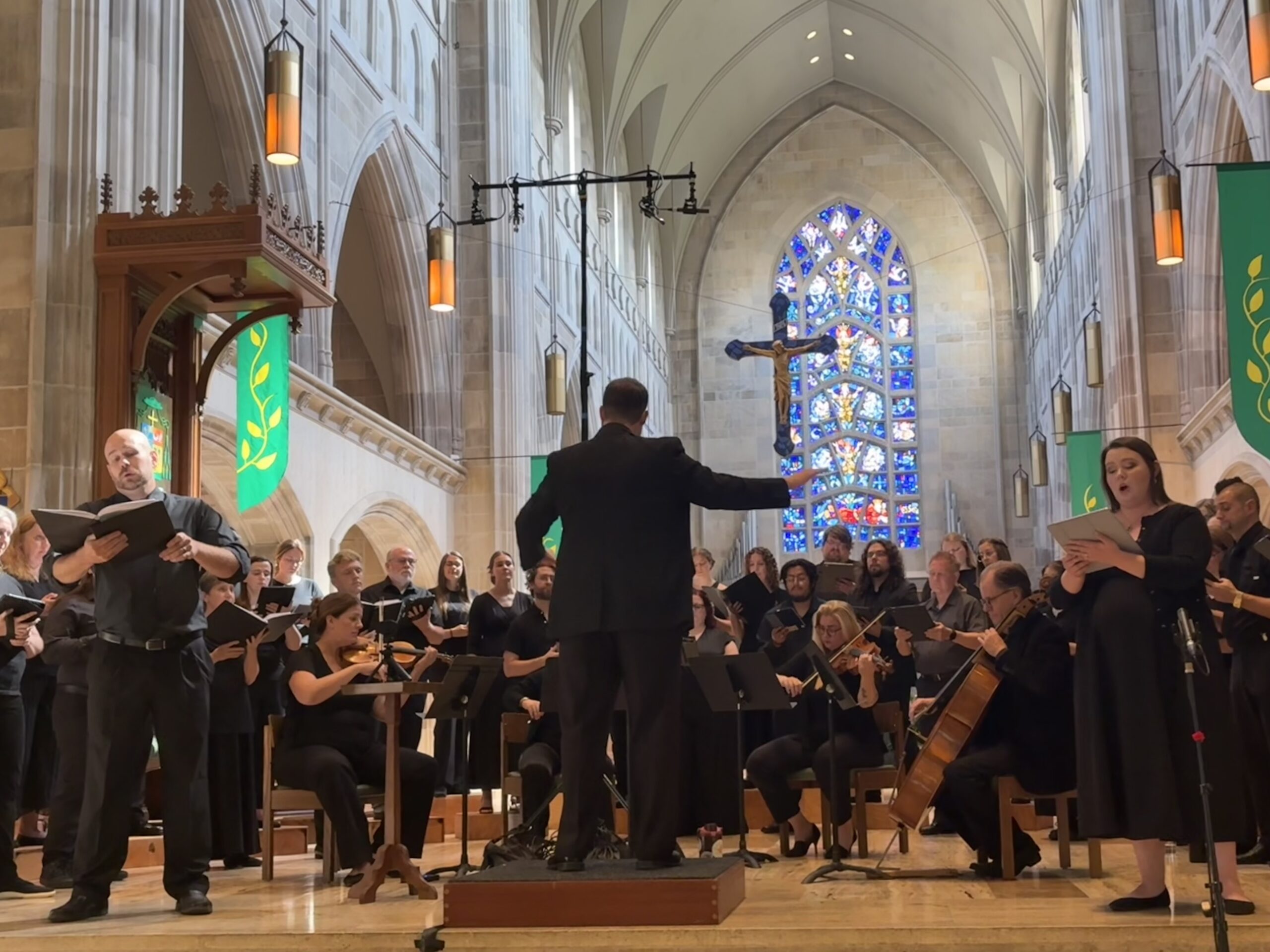
No-Name Chorale opened its 2026-2027 season on Sunday afternoon by lending voices and piano to Walt Whitman’s self-perpetuating poetry machine. Composer Jake Runestad scored for piano and chorale a poem where Whitman celebrates the inspiration to write poetry. “Proud Music of the Storm” ends with the vow “let us go forth in the bold day and write,” thus ending the poem with the promise of more poetry.
What a clever way to begin a program of poetry scored for song and instruments—and a season ahead of similar creative thrills. You have heard of a vicious circle? This was the exact opposite. Call it a virtuous circle: Good ideas evolve into each other and multiply.
Though he can sound quaint and corny nearly 150 years later, Whitman prided himself in being a vernacular poet, a poet of the people. Andy Jensen, artistic director of No-Name Chorale, takes his own down-home, vernacular approach to choral singing and repertoire. I am old friends with Adam Long, the chorale’s Grammy-nominated volunteer sound man, who hears how Jensen leads the chorale at rehearsals. He said Jensen tells them: “I want you to sound human.”
Whereas much art song exalts the human voice beyond recognizable phrasing or emotion, No-Name Chorale savors language recognizably as spoken by actual people. The composer Runestad gives Whitman the common touch, writing humming and even oooing more often heard in pop music. Runestad also left collaborative pianist Melissa Ray an at times rollicking, at times hypnotic accompanying part to play.
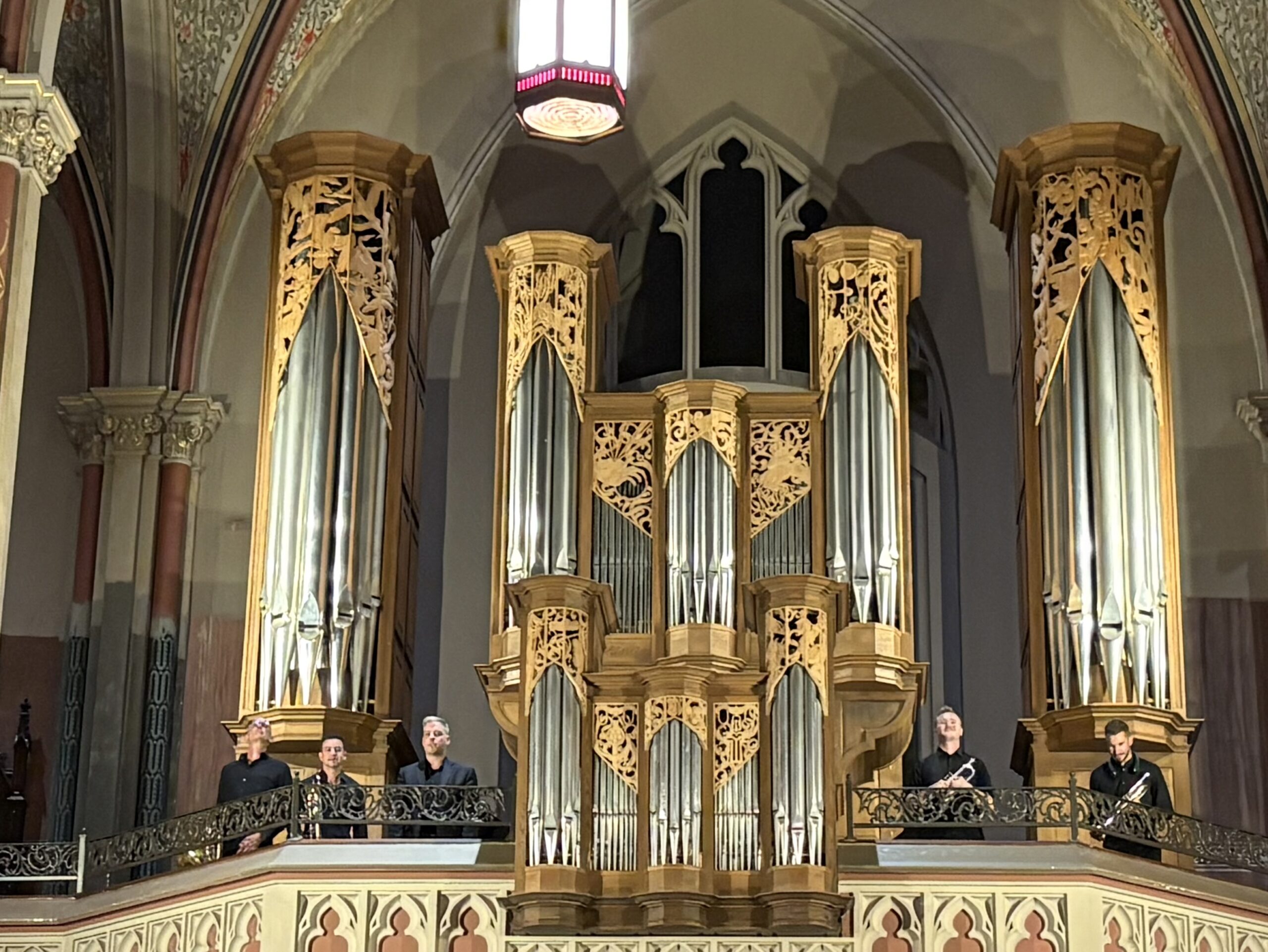
In a long program with no intermission, it made sense for the longest and most ambitious piece to follow the opener. Jensen invited the Perseid String Quartet to anchor Runestad’s six-movement setting of Sufi mystic poetry. At this point, the venue for this concert must be taken into account. No-Name Chorale is in residence at Cathedral of Saint Peter, a profoundly beautiful and reverent space in downtown Belleville. Hearing and seeing Sufi mystic poetry set to music by an ace string quartet and a chorale with the human touch in this otherworldly space was a profound experience.
My ear favors strings over even the most vernacular of chorale voices. The players in the Perseid String Quartet—Hanna Frey and Manuela Topalbegovic (violins), McKayla Talasek (viola), and Ken Kulosa (cello)—blended gracefully with one another, the chorale, a series of vocal soloists, and ultimately the vast and echoey spaces of the cathedral.
They also rocked. I am a rock musician gradually falling deeper in love with classical music traditions, always alert for precursors of punk rock in the classical canon. Runestad composed “The Hope of Loving” in 2015 with more than a half-century of rock music to draw upon. There were moments in this piece when the Perseid String Quartet could have stood up and thrown down in any rock club or dive bar.
Melissa Ray came back out to lead the chorale on piano for “El Aire Baila,” Runestad’s tuneful setting of a poem by Humberto Ak’Abal, a K’iche’ Maya poet from Guatemala. The piano slinked and writhed along the lines of what must be local folk dances known to Ak’Abal. Jensen was dancing as he conducted the chorale, escaping dull decorum without quite going native on the conductor’s stand.
For “Please Stay,” Runestad plumbed the vernacular 21st-century medium of Twitter, setting to songs hashtagged #IKeptLiving as witness to struggles against suicide. This is purely a pop song. There should be celebrity cameo vocals on a recording of “Please Stay” that raises awareness of the struggle and money for organizations trying to help people stay here. “It was hard as hell,” someone tweeted and the chorale sang to Runestad’s melody, “but I decided to keep on living.”
Runestad returned to Guatemala for “Suave,” a song by his singer-songwriter buddy Jeffrey Ortega. This poetic homage to having a soft touch – “I don’t think I need to force it”—has an accessible melody, presumably Ortega’s original, delivered in vocal tonalities closest to folk and pop music. I felt the warm welcome of a successful theme song for a pleasing mass-market television show. Not in melody, but in effortless comfort I would compare “Suave” to “Welcome Back,” John Sebastian’s lovable theme song for Welcome Back, Kotter.
The chorale closed with “Ner Ner,” a nonsense song sung in the boisterous, polyphonic styles of Zap Mama. This was art song as mouth noise. You know that unmistakable kind of snaky mouth music you make to simulate the sound of the air guitar you’re playing with your empty hands? Runestad wrote that solo mouth music for full chorus, and No-Name Chorale had a blast singing it in the inexpressibly beautiful cathedral.
Jensen thanked from the stage Cathedral of Saint Peter’s organist/choirmaster Richard W. Thompson for sharing his performance space. On the way out of the cathedral, I saw a likable photograph of its rector, Father Godfrey Mullen, a monk of Saint Meinrad Archabbey. Father Mullen hung his portrait, I would like to think proudly, beside that of Pope Leo XIV. That noble human pontiff—one of the best public reasons in this terrifying 2026 to stay here—was a welcome sight to see walking out of this sublime performance into a sunny Sunday afternoon in downtown Belleville.
No-Name Chorale posts Adam Long’s recording of their concerts on their YouTube channel. It takes couple of weeks for a new recording to appear.