Busload of Faith to Get By
June 28, 2026
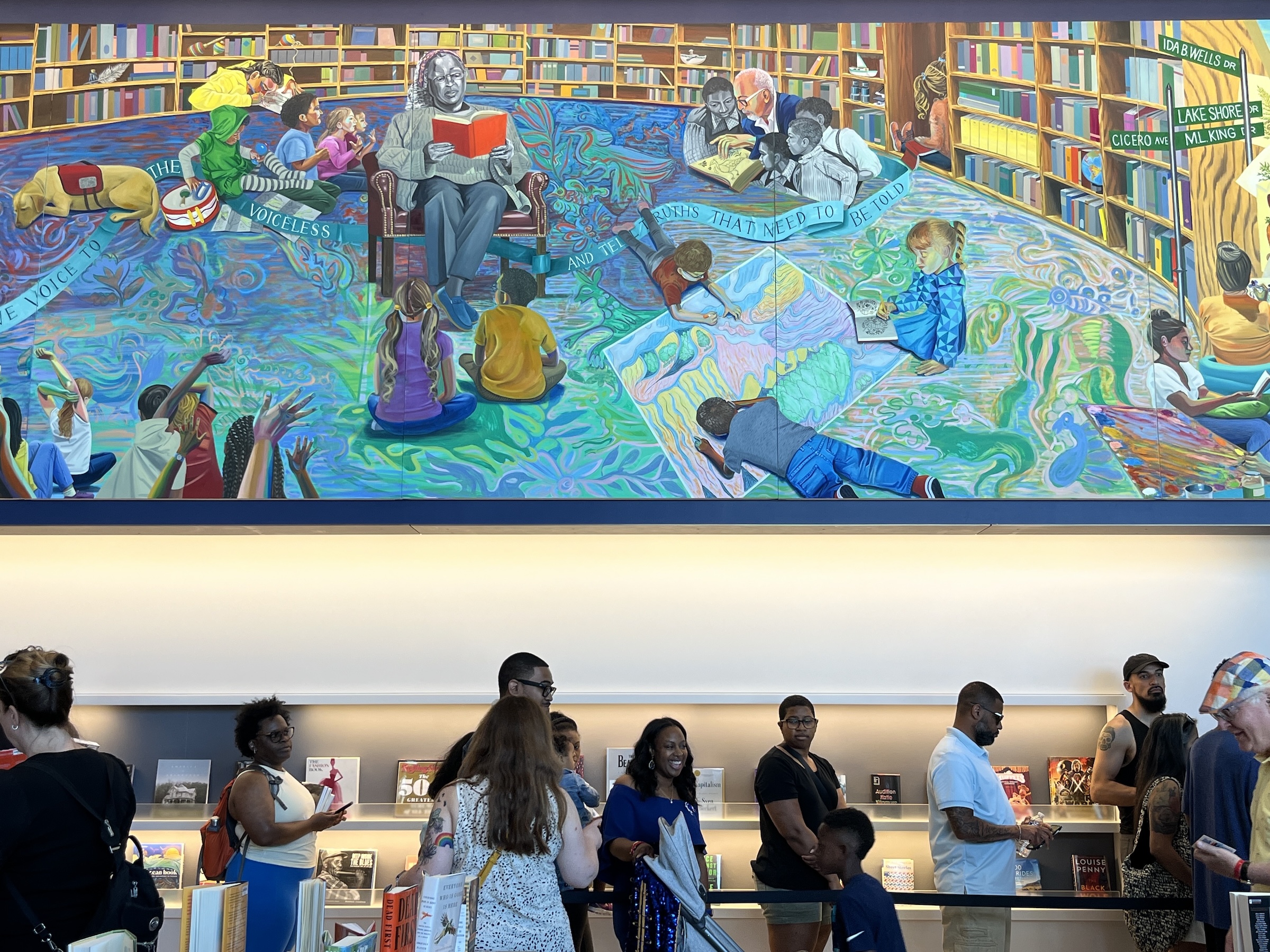
I took a Flix bus to Chicago, determined to be there for the Juneteenth opening of the Obama Presidential Center.
“You took a what?” friends said, bemused that I did not fly, drive, or even take the train. But I love buses. I love the way everybody shows up prepared, arms stuffed with their own pillows, blankets, snacks, and books. I love that there is no snobbish sorting into pricey, spacious elite seats and seats for the rest of us. That nobody scolds me if I have freed myself from my seatbelt for a time. That the journey is as collaborative as a field trip, requiring everybody to return in the appointed five-minute cigs break or fifteen-minute snack break.
Buses are democratic. They feel chummy, not sterile and airless. They require patience, promising me plenty of time to let my brain empty out and open to other people’s worlds.
So here I was, feeling expansive and fond of humanity, sharing the glory of movement across this majestic country with Americans of all kinds. My thoughts turned to Walt Whitman, to Langston Hughes.
And then I began to listen.
“There’s only one thing a snitch deserves and that’s lead between the eyeballs,” somebody behind me announced.
“I’m still fucked up on the ten,” the guy across from me said on his phone. “I ain’t even been out—I got out in ’17. Boogie was all the way in position when I got out. He pulled up on me in a truck! That right there, that ain’t regular.”
A man way in the back had the southern twang of the S-Town podcast’s subject, except he was speaking at twice the volume. At regular intervals, he offered us all helpful tips, like, “Check your quarters, some of ’em say ‘In Cod We Trust’ and they’re worth money. Don’t wash ’em though! That cuts the value in half.” I had not heard of the fishy quarters and had to google. Damned if he was not right. Another hour of quirky commentary later, I heard him say, “What’s fucked up is why I’m going back to Cleveland. My little brother—they smashed both his kneecaps and then they rolled over him with one of those trash compactors.”
I stopped breathing for a minute. Who did this? Why? Was he dead? I waited, but all that followed was a judicious brotherly conclusion: “I would get breaking his kneecaps. But breaking his kneecaps and running over him while he’s down?”
America’s small talk is spattered with violence.
Pain, too. “My mom died giving me birth,” a woman confided to the stranger seated next to her.
“Mine died on my birthday,” the other woman said, and they began to recount other deaths—brother, sister-in-law, cousin—almost with relish. Because they had survived the grief? Because they were connected by proxy to whatever afterlife they envisioned? Or because they were so used to loss, it had become a litany.
We pulled into the downtown terminal. The next morning, crowds poured into the Obama Center. “It just felt like peace was floating over the area,” a woman told me later. There were African dances, Southeast Asian dances, Native American dances, spontaneous dances in the plaza, staffers joining in as they walked by. There were gay couples, biracial kids, people using wheelchairs or sign language. Everybody was smiling, light at heart, taking selfies for the strangers in front of them in line. Native planting had the grounds already buzzing with life, dragonflies flitting through the wetland walk, baby rabbits scampering across the playground. The energy was clean, and Michelle’s vegetable garden was already lush.
People had come here to hope again. And every care-filled detail honored what was best in life: education, art, nature, the service of veterans, the wonder of children, the idealism we were afraid we had lost, and the compassion and integrity and honor.
Then I got back on the bus to come home. For twenty long minutes, a passenger screamed and cussed at the bus driver because Springfield, Illinois, was not Springfield, Missouri. The young couple behind me sniped at each other cruelly for most of the seven-hour trip. Headed all the way to Oregon, they were already tired, and they had no idea how to communicate their needs gently, so they were hissing venom over things like who had more blanket. I felt like I had dreamed up an oasis only to be thrown back into a thirsty desert.
Had I flown to Chicago first class, the trip would have been quiet. None of the rudeness, profanity, or chaos—just colder, neater horrors. Crimes and sins, just as many, and grief, and domestic warfare. But all of it would have stayed private, privileged with silence. When you have nothing to protect and no way to disguise what you regret, you blurt your thoughts and your rage. You fight hard for what you need, even if it is just your share of the blanket.
The Obamas cannot strip the cushioning from the rich of this country or dignify its poor. Common sense values and manners are falling through the gap between them. Those beautiful Grand Opening speeches hang in midair, suspended, because their inclusive welcome vanishes the minute you step off campus, and the joy dissolves. Still, Barack and Michelle Obama created a place that offers each of us respect, reprieve, and a higher purpose. They showed us how we could live. And when the contrast between what is possible and what is happening gets sharp enough, that itself can inspire change.
If it does not, we will be left with our violence.