William F. Buckley, Grand Impresario of American Conservatism
A new biography offers a balanced look at America’s most famous conservative who never held office.
June 4, 2026
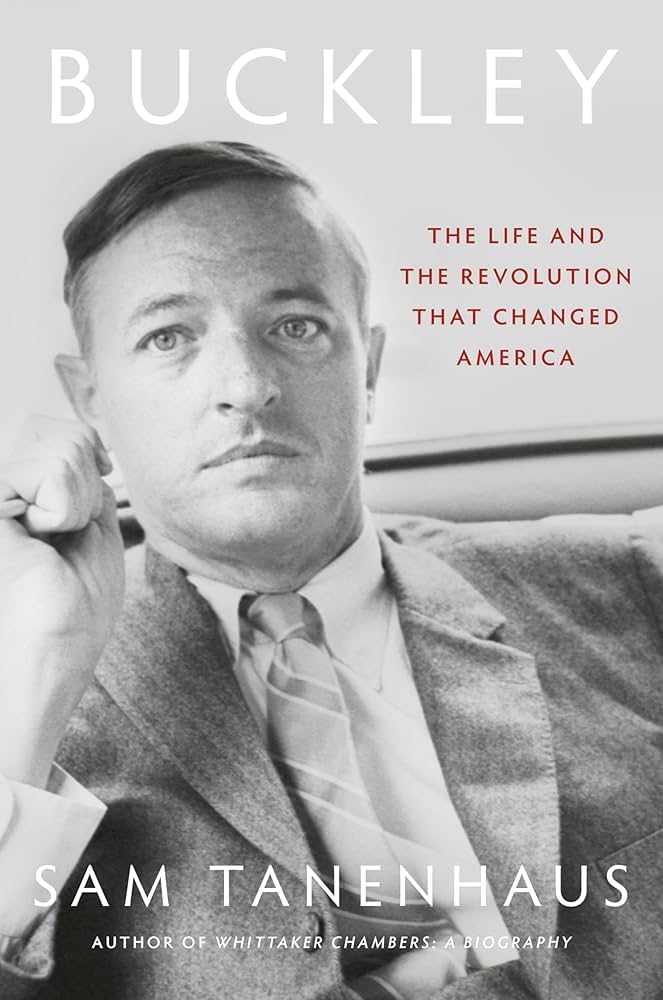
Buckley: The Life and Revolution That Changed America
Conservative critiques of President Donald Trump often center on the premise that he has coarsened the rhetoric and made the party less tolerant.
These writers often long for the days when the movement was led by more high-minded individuals who expressed their views with greater erudition and were less mean-spirited. The life and work of William F. Buckley Jr. is often cited as an example of their beau ideal.
Alas, the reality of Buckley’s life is, as is often the case, more complicated. In “Buckley: The Life and Revolution That Changed America,” journalist Sam Tanenhaus has provided a warts-and-all look at the most consequential figure of modern conservatism who never held office. Despite its doorstop-worthy length, Tanenhaus’s book offers a masterful example of how to capture a man and his era.
Through the National Review, which he founded, along with books, speeches, debates, and his long-running television show, Firing Line, Buckley provided much of the intellectual and rhetorical juice of the modern conservative movement. While he was charming, personable, and great fun to spend time with (more on that later), many of the views that the movement promoted were racist and antisemitic. Tanenhaus also shows how Buckley is wrongly given credit for excising some of the more extreme elements from conservatism.
Tanenhaus, a liberal who has written extensively about the history of conservatism, contends that because Buckley cast such a large shadow, it has been hard for the movement to anoint a new intellectual leader. Although Trump leads the party often associated with conservatism, he is really a transactional opportunist with few core beliefs.
While he was charming, personable, and great fun to spend time with (more on that later), many of the views that the movement promoted were racist and antisemitic. Tanenhaus also shows how Buckley is wrongly given credit for excising some of the more extreme elements from conservatism.
“In his time, as in our own, no one really could say what American conservatism was or ought to be. Buckley himself repeatedly tried to do it and at last gave up. But for more than half a century, millions of Americans could confidently say who had been the country’s greatest conservative, William F. Buckley, Jr. In clearing so large a place for himself, he left a vacuum no one has since been able to fill,” Tanenhaus concludes. (866)
Buckley, who died in 2008, grew up in affluence in Connecticut and abroad as the son of a successful businessman. Conservatism, both political and religious, was a central part of his childhood. He was a masterful debater, a good student, and a competent pianist. He was always capable of great friendship and empathy, but his sense of entitlement prompted his sisters to give him the nickname of “Young Mahster.”
He made his first splash with his critique of the liberal/secular bent of academia in God and Man at Yale1 which sold well, although it was criticized by the liberal establishment that dominated much of the media. Tanenhaus writes that the book was “more than an audacious performance by a very young man. It contained the seeds of a modern movement.” (224)
Never lacking self-confidence, Buckley complained to his publisher that Nobel laureate T.S. Eliot’s reaction to the book was inadequate. “I am astounded and disappointed by the superficiality of T.S. Eliot’s remarks about my book.” (223)
Buckley used the book’s success as a springboard to bigger and better things, including the founding of National Review, funded largely by his father. In fact, the family would subsidize the publication for many years, and Buckley never took a salary.
The aim of the publication was to promote conservative ideas and make them more palatable to a broader segment of the population than current leaders, such as Senate Republican Leader Robert Taft, were able to do. The magazine took a strong stance against communism and against almost all of the New Deal. It advocated individual freedom and advocated for something of a big tent for the movement. However, it looked askance at many of the leaders of libertarianism, specifically Ayn Rand. The magazine was especially critical of her dogmatic approach and her atheism.
The author writes that the magazine was “the sharp advancing edge of an avowedly radical movement.” (313)
Tanenhaus is at his best when describing the intellectual tensions among conservatives and the influence of great right-leaning thinkers such as Friedrich Hayek, Ludwig von Mises, and Milton Friedman. Readers wanting to do a deeper dive on any of these topics have an array of options, including Tanenhaus’s biography of Whittaker Chambers2 and Jennifer Burns’s biographies of Rand3 and Friedman.4
Chambers is an especially interesting and important figure. He was a rumpled, nerdy one-time communist who had a successful career as a journalist but became best known for his revelation that State Department official and establishment pillar Alger Hiss was a communist while still working for the government.
Tanenhaus, a liberal who has written extensively about the history of conservatism, contends that because Buckley cast such a large shadow, it has been hard for the movement to anoint a new intellectual leader.
Chambers and Buckley were friends and intellectual allies, and Chambers was one of the regular writers for National Review. Chambers brought a convert’s zeal both to conservatism and anti-communism that jelled with Buckley’s efforts in that area, which went beyond just being an observer.
Although never on the payroll of Senator Joseph McCarthy, the most prominent anti-communist in government, Buckley worked secretly with McCarthy and the Republican National Committee to fund and defeat opponents of McCarthy’s tactics. In addition, Buckley’s brother-in-law Brent Bozell wrote speeches for the controversial lawmaker.
Buckley and Bozell wrote a book-length defense of the Senator, “McCarthy and His Enemies.”5 It was an unabashed apologia of McCarthy and tactics, even when McCarthy painted with what many felt was too broad a brush. Buckley’s work cemented his role as a conservative leader and also helped ally U.S. Catholics with conservatives as a key part of American politics, even though many Catholics had been strong supporters of FDR and the New Deal.
Tanenhaus’s discussion of this topic is the strongest in the book. Though he occasionally goes off on tangents that bogs down the narrative, readers who stay with it will be richly rewarded. Tanenhaus met Buckley while researching the Chambers book and the two hit it off, resulting in Tanenhaus becoming Buckley’s authorized biographer.
On another key issue of the day, civil rights, Buckley and his magazine were also dogmatically conservative. In a September 1957 editorial he wrote that the White community is entitled to prevail “because for the time being it is the advanced race… National Review believes that the South’s premises are correct.”(382)
Buckley later admitted that his views were wrong, and government intervention was needed to correct past injustices, and he had many Black leaders and intellectuals on his long-running television program Firing Line, and in other venues. One of Buckley’s best-known public debates was with author James Baldwin at Cambridge University in 1965.6
Tanenhaus is a first-rate researcher and storyteller, but his book would probably have a wider audience if he had made more judicious use of the delete key. His unnecessarily detailed history of race relations in South Carolina (where Buckley’s family had a home and subsidized the operation of a newspaper that supported segregation) is only one example where this 857-page tome could have been shortened.
While conservatives made progress in the 1950s and early 1960s, it was not until Senator Barry Goldwater won the GOP presidential nomination in 1964 that the movement made a major electoral splash. Despite losing in a landslide (he carried just six states), Goldwater helped make conservatism more acceptable, helped along by Buckley, who provided advice, and Bozell, who ghostwrote the book The Conscience of A Conservative.7
As with every growing movement, there are elements of a coalition who are, to put it clinically, a bit whacky. That was the case with the John Birch Society, which had many conspiratorial views, including the crazy idea that President Eisenhower was a communist agent. Buckley is often credited with kicking Birchers out of the conservative movement.
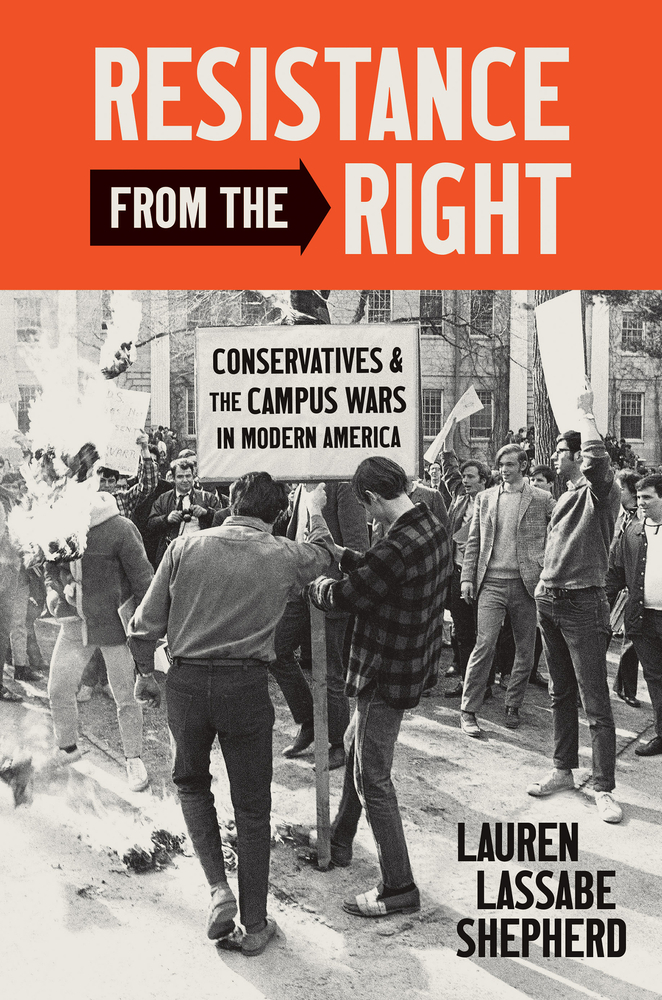
Alas, not quite. Tanenhaus builds on the research of other scholars, including John Huntington, Ted Miller, David Wash, and Lauren Lassabe Sheperd, who showed that Buckley was happy to have a big tent, even including members of fringe groups. While Buckley and others minimized the influence of the group’s founder, Robert Welch, they were happy to harbor the enthusiasm of members, many of whom became leaders of the conservative movement. One of the best-known of these former Birchers was Phyllis Schlafly, a two-time alumna of Washington University in St. Louis who helped kill the Equal Rights Amendment and was an influential voice on an array of topics.
After Goldwater’s loss, Buckley launched his one and only race for public office when he ran unsuccessfully for mayor of New York City. As the Conservative Party candidate, he finished third but had great support from working-class voters who would become a backbone of the conservative movement. Buckley took the race seriously, but not himself. At one news conference, when asked what he would do if he won, he replied: “Demand a recount.” As with many events in Buckley’s life, the event netted a book, and this one, The Unmaking of a Mayor, was among his most enjoyable and engaging.8
The book displayed Buckley’s devotion to his worldview but also demonstrated the charming and approachable persona that made it hard to dislike him.
“I suppose a controversialist reaches the point, or goes mad, where he simply ignored criticism that is genuinely unjust. I have learned, but incompletely,” he wrote in the book’s first chapter.
This writer experienced the Buckley persona during a breakfast interview in the late 1980s and found him fun and not at all full of himself. He peppered his remarks with polysyllabic words and Latin phrases but displayed none of the humorless severity commonly associated with that language. In fact, when I started the interview with the Buckley phrase: “I should like to begin by asking you….,” he smiled and furrowed his brow.
Buckley was more than just a political advocate and writer. He was also an avid sailor, piano player, and accomplished spy novelist. He wrote many of those novels in six weeks, no doubt causing massive jealousy among writers who spend years slaving over their own works.
But his greatest legacy was in politics, and the height of his influence came during the presidency of his friend Ronald Reagan.
The actor-turned-politician (and liberal-turned-conservative) bragged that he developed many of his positions both from reading National Review and from seeing the size of his ever-growing tax burden.
Buckley was more than just a political advocate and writer. He was also an avid sailor, piano player, and accomplished spy novelist. He wrote many of those novels in six weeks, no doubt causing massive jealousy among writers who spend years slaving over their own works.
Buckley was mostly supportive of Reagan’s domestic and foreign policies, and many of his friends wound up in important posts, including CIA Director William Casey and Ambassador to France Evan Galbraith.
Reagan’s inauguration made Buckley even more influential, though he was at times eclipsed by other conservative writers, including his protégé George Will and Nixon speechwriter William Safire. Both men won Pulitzer Prizes, a recognition that eluded Buckley.
“He had become the Upper East Side poster version of Reagan’s America and seemed to be living not so much in a bubble as in a luxuriously appointed helium balloon,” Tanenhaus writes. (839)
Were Buckley alive to read this book, he would no doubt admire the author’s felicity of expression and penchant to leave no stone unturned, even if he did not agree with all of Tanenhaus’s conclusions.
1 God and Man At Yale, by William F. Buckley Jr., (Chicago: Henry Regnery Company, 1951)
2 Whittaker Chambers: A Biography by Sam Tanenhaus,(New York: Penguin Random House, 1998)
3 Goddess of the Market: Ayn Rand and the American Right by Jennifer Burns (New York: Oxford University Press, 2009)
4 Milton Friedman: The Last Conservative by Jennifer Burns (New York: Macmillan, 2023)
5 McCarthy and His Enemies: The Record and Its Meaning, by L. Brent Bozell Jr. and William F. Buckley Jr. (Chicago: Henry Regnery Company, 1954)
6 https://www.youtube.com/watch?v=dTEr7Cwc4cE
7 The Conscience of a Conservative, By Barry Goldwater (Chicago: Henry Regnery Company, 1960)
8 The Unmaking of a Mayor, by William F. Buckley Jr. (New York: The Viking Press, 1966)