How Vines and Stories Intertwine
The Literary Garden exhibit at the Missouri Botanical Garden
May 15, 2026
“If you have a garden and a library, you have everything you need.”
~attributed to Cicero
I was a shy little bookworm, and my grandmother regularly shooed me outside for fresh air. I snuck my book out with me and read under the snowball tree. Viburnum? Hydrangea? I had no idea. Nor did I dream there was so much overlap between books and plants, reading and gardening. Slow attention must be paid to both; you cannot rush a seedling or speedread Henry James. You must be willing to take time, observe the nuances and quirks and hidden causes, let the plot unfold. Over the years, your sense of time will expand, as books move you through the centuries and plants cycle through the seasons. The necessary patience calms your spirit.
Nezka Pfeifer, curator of the Sachs Museum at the Missouri Botanical Garden, has long marveled at this intertwining. We know the obvious: Shakespeare gave cameos to more than 175 herbs and flowers, and Agatha Christie wielded strychnine. But there are also plants in science fiction and horror, comics and manga and magical realism, Madagascar’s folk tales and Octavia Butler’s Afrofuturism….
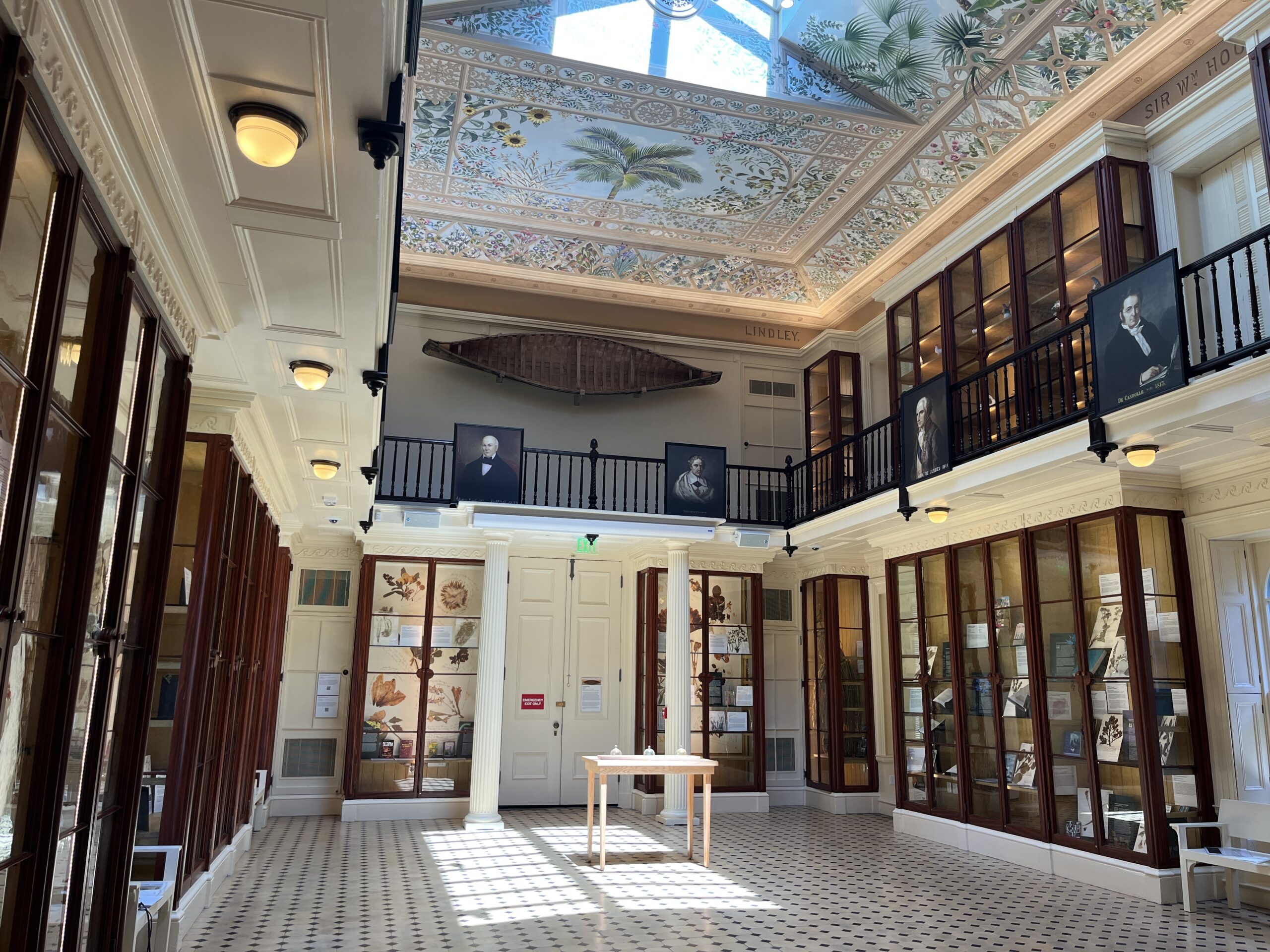
All these examples are part of MoBot’s new exhibit, The Literary Garden. It lives at the Sachs Museum, which was the Garden’s museum and library in Henry Shaw’s time and remains its scientific heart. Almost one hundred plant species are delicately painted on the main room’s ceiling. Below, glass-fronted bookcases shelter the oldest surviving Roman cookbook, authored by Apicius, a first-century gourmand. Dried camassia fromT.S. Eliot’s The Waste Land. Tolkien’s mosses. Edith Wharton’s Italian Villas and Their Gardens, illustrated by Maxwell Parrish no less. An Australian children’s book about Prince Dande Lion, in which his queen suffers a serious attack of wisteria. A cover motif for Dracula that uses garlic flower blossoms, placed next to a bit of the ash used in Romania to carve stakes. A new edition of Irma Rombauer’s The Joy of Cooking, its cover—St. Martha slaying the dragon of drudgery—designed by her daughter. (You knew Irma lived in St. Louis, but did you know her family lived in the Shaw neighborhood a stone’s throw from the Garden?)
In a display case are botanical notebooks, used when people taught themselves botany by observing and collecting. No apps, just the soft antique brown of pressed leaves on aged paper, one with poetic descriptions carefully inked in a circle around a blossom.
In the next room, Dail Chambers, a St. Louis-based visual artist, appraiser, and land steward, blends storytelling with social environmental art and ethnobotany.
“I grew up reading books in my family’s garden and dreaming of the future,” she tells me. “Now I’m living my fourth-grade dream.” Raised by two women, she remembers Sunday mornings, dressed in her best for church, “trailing out of our home past the rose bushes and a beautiful line of purple and red phlox. I felt like a young queen.” That year she read four hundred books, helped in the garden, and drew pictures. She never knew, with all the push toward the corporate world, that it would be possible for her to continue those pursuits, sustain herself with them, find a larger home for her passion.
Now she has roses in her front yard, and she grows the persimmons her great-grandfather grew. “I live in the Greater Ville, and I’ve reforested with native fruit trees,” she says. “I steward an educational site that grows seasonal produce. And I love flowers—I love to grow bachelor’s buttons and brown-eyed Susans and coreopsis and coleus. I cannot imagine a life without being close to the land.”
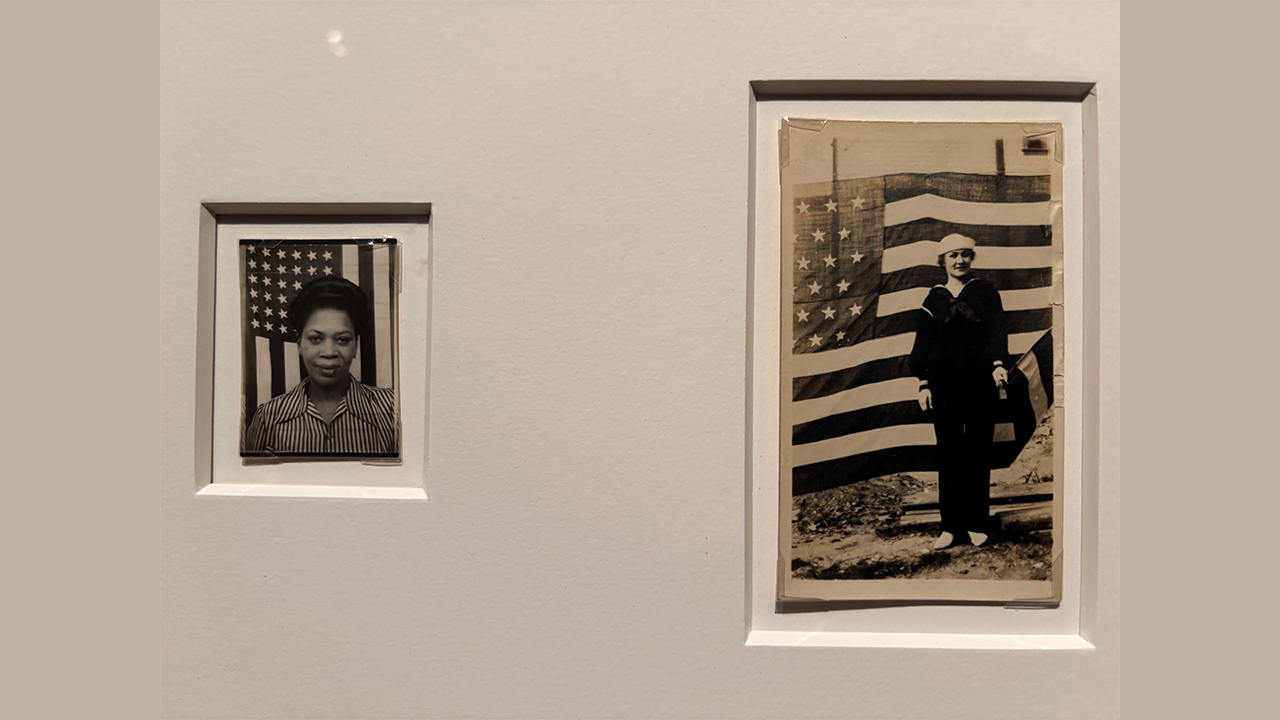
Chambers’ photographs are printed huge, on fabric, and her North St. Louis artist’s field guide is here, and an exhibit inspired by her family’s history in Mississippi. A vinyl record holds their voices, chatting about food and kitchens. There is a fluffy cotton boll—“My great-aunt picked cotton as a sharecropper”—and a sunflower seed, and the red beans, purple hull peas, black-eyed peas that were “important to not only for my family but the entire nation.” She pauses. “All that we do has to do with land and plants, no matter how much as we homogenize and AI everything.”
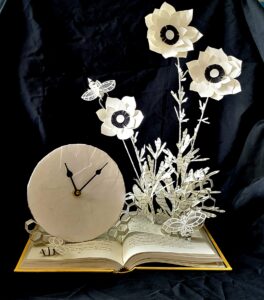
Downstairs, a large room bursts with the colorful work of Jessica Palmer, a British collage artist. For one wall, she painted white paper—the swirls and variations look like sunlight’s dappling—then cut out each Missouri native wildflower with a scalpel knife. Covering the room’s far end is a tapestry on book cloth, The Glory of the Garden. Palmer inked the paper a rich black and spent four months cutting out the intricate shapes of people working in a vast, lush garden with, overhead, a topiary fantasy. Four poems inspired her, including the Mary Oliver that ends with those beloved lines, “Tell me, what is it you plan to do / with your one wild and precious life?”
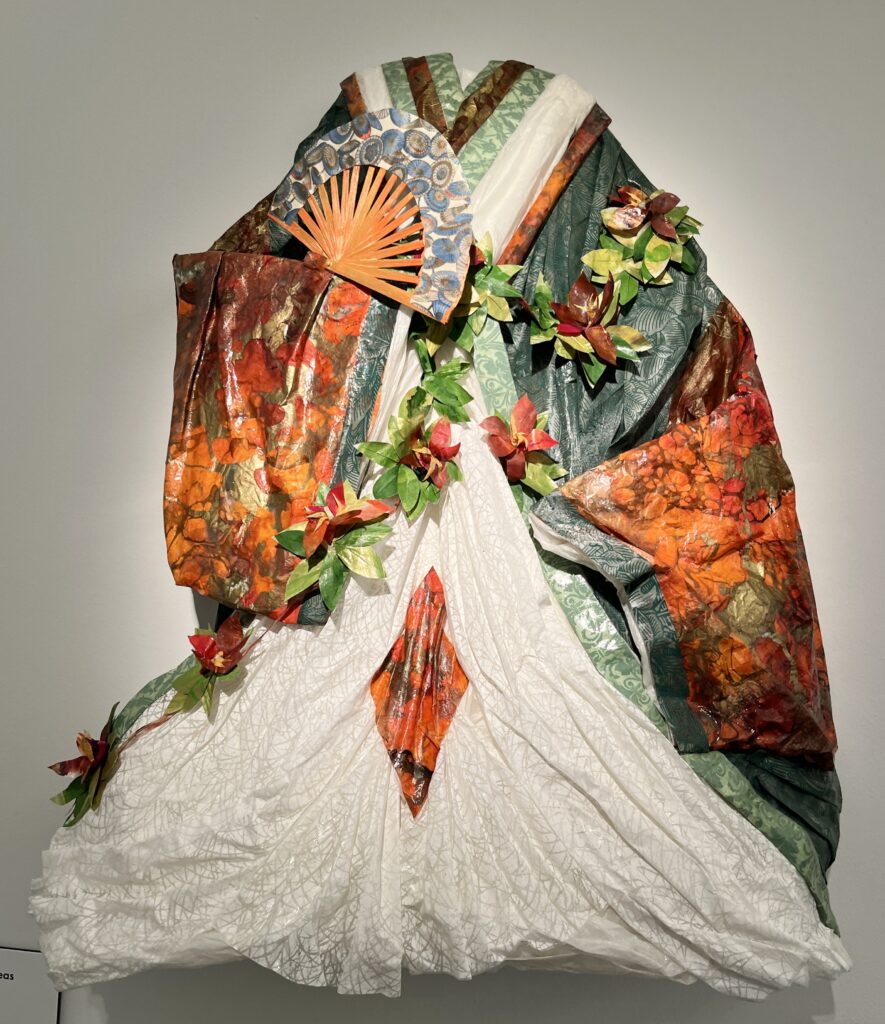
What Palmer did, in her forties, was leave a coveted journalism job at the BBC to become an artist. She has never regretted it. When she began work for this exhibit, she made a timeline of garden illustration, then sculpted costumes accordingly. We move from an eighth-century kimono with a banner of azaleas, symbols of hidden love and patience, to a thirteenth-century English queen holding peach and quince because Eleanor of Castile has brought her Spanish gardeners to court. The Elizabethan costume reminds us of the tulip mania that fevered brains and bankrupt bidders. A 1700s English ballgown has Wordsworth’s daffodils; one from America has the geraniums that Thomas Jefferson brought back from Paris. The 1800s costume is Victorian, with the orchids Darwin used to study evolution; the 1920s flapper holds a brazen Georgia O’Keefe poppy.
This is not a static exhibit. Concerts are planned, and The Mourning Society of St. Louis will lead a literary learning day June 27, focusing on death, murder, and grief in Victorian books and gardens. The Enchanted April will be screened July 16, after a talk about gardens and healing in the novel that inspired the movie. Dail Chambers will lead A Creative Field Study and Natural Gesture Community Day on September 19. A week later, perfumer Rubia Chaudri flies in from Canada to teach us about vampire scents. I had to look them up. Notes of blood accord, wine-red berries, black musk, incense, velvet florals, and cold earth. Botanicals, like books, hold our secrets.