The Re-Possessed
Ursula K. Le Guin storms the Library of America.
April 30, 2021

Ursula K. Le Guin storms the Library of America.
April 30, 2021

The online haters celebrating what they gleefully consider its downfall simplify the matter in the way such misogynists always do: “Supergirl” 2026, in their view, is simply a bad film. The problem with this perspective is that “Supergirl” 2026 is not a bad film.
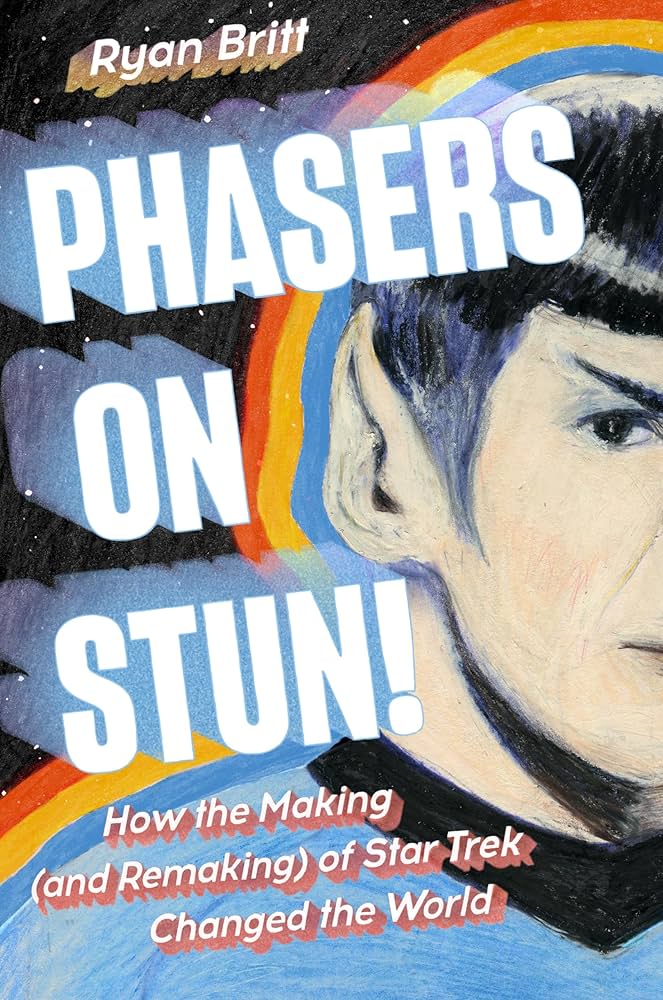
‘Phasers on Stun!’ may not make future efforts at assembling a franchise-spanning overview of Star Trek obsolete, but Britt’s comprehensive approach makes such labor redundant, at least for now. He analyzes, anatomizes, celebrates, and criticizes every extant Trek television series and film in sometimes granular detail, making ‘Phasers on Stun!,’ despite its sloganeering subtitle, too accomplished to ignore.

James Gunn’s Superman gives his film’s Man of Tomorrow three notable speeches—one about kindness, one about respect, and one about honor—that, in any normal year, would make every eyeball in the theatre roll back into its socket.

When hockey fans assured me that they “bleed blue,” or downtown St. Louis glowed Cardinal red, or friends mortgaged their soul for a Springsteen ticket, I smiled and nodded, but no words came. Rah-rah crowds made me nervous. Then I watched the 2026 World Cup.

Aspects of narrative that strongly call attention to themselves by not fitting in with the ambient tone, action, or characters are a kind of linguistic or dramatic violence that often leans to comedy. Sometimes these are writerly tics, bad impulses, or ignorance; sometimes they are used purposefully for effect (“Exit, pursued by a bear”). Writer-director Quentin Tarantino has made them a living.

Surely, it is context and intention that count. As I say to my discourse studies students: if the precise word you need is a complex one, and the situation demands it, then go ahead. Sometimes only “semantic field” will do. Sometimes only “interdiscursivity” cuts it.