Thin-Skinned
April 29, 2026
“Ach! Don’t do that!” The dog dropped his paw, dismayed by my sharp tone. For years he has swiped my arm to get my attention, wangle a treat, stop me from overwork. Now—seemingly overnight, right after my sixty-fifth birthday—my skin has thinned to tissue paper, and his toenails cause blotches of blood to form beneath the surface.
In my yelp, I hear my mother. She was appalled by the same bloodpuddles; she moaned in frustration whenever a new one appeared just as the others were fading. A Sisyphean goal; there will now always be some sort of blood pooling on my forearms, and I refuse to watch like a hawk for each one to evaporate.
So I say. Yet I keep checking their progress. And I have begun hunting for thin, cool long-sleeved shirts at thrift shops.
This development should not surprise me; not only was it prophesied by my genes, but I have always been thin-skinned, quick to feel hurt by unintended slights. Now, the metaphor has become concrete, making itself visible with each ruptured capillary. Just when I thought life had toughened me up.
Blood is always scary. Visceral, too, fascinating in the way fire is. In my fertile years, drenched in blood and pain, I felt a weird satisfaction when I saw the gushes and clots my body could produce. Blood was life-giving: it flowed through our bodies, sustaining us, just as it protected the first months of becoming….
But when all that stopped, my blood became remote, a dot on a vaccination bandage or a clawed scab. Now it is important again, spilling beneath my skin. This time, the reminder is of death.
When I was young, I wore my scrapes and bruises proudly. They told the world I had tackled some big DIY project or hiked through brambles or roughhoused with a pup. Why people were so weird about injuries, hiding them under discreet Band-Aids and apologizing if you noticed, I never understood. Now, I feel a hint of that shame. These marks indicate nothing more than advanced age; they are boring in that way, and…hopeless. The opposite of resilient.
What causes them, anyway? Do I blame my Irish freckles, the years of heedless sunburn, or simple chronology? This feels too early; I thought I had longer before the signs of senescence would begin. Pissed, I demand an explanation from AI.
“With age (and years of sun), the dermis thins and the tiny blood vessels on the forearms get fragile,” Perplexity explains, “so even small bumps cause those purple ‘puddles’ (actinic or senile purpura).”
I could have done without “senile.” The LLM could also have refrained from the smartass reminder that “We can’t turn the skin back to 30.” I sigh heavily. I am not asking for rejuvenation. Nor am I rushing to buy the “arm chaps” they suggest for housework; I simply will stop doing it.
Age simplifies.
My mother-in-law never quite grasped that; at eighty, she decided to shave her legs. For old times’ sake? Because a gentleman had moved into the room next door? We were never quite sure. Anyway, I took the call from the assisted-living residence, and they gently warned me that there was “quite a lot of blood.” Which was an understatement: her room looked like a homicide scene. A long plane of tissue had slid right off the length of her calf, and because she took blood thinners, every vessel gushed.
Protective, I was furious with her. A stroke had already stolen her voice; if someone had not found her, she could have lost too much blood…. She gave me a tight little smile, a cavalier shrug. I think she just wanted to feel young again.
Age, after all, is hell. Its effects seem composed of a series of losses and frailties. Not because this is their sum total, but because the disintegration captures our attention in ways the new freedom, wisdom, and savoring do not. Our culture does not celebrate the freedoms of age; perhaps our willingness to speak our minds is disconcerting? In the U.S., youth and energy and movement will trump wisdom every time.
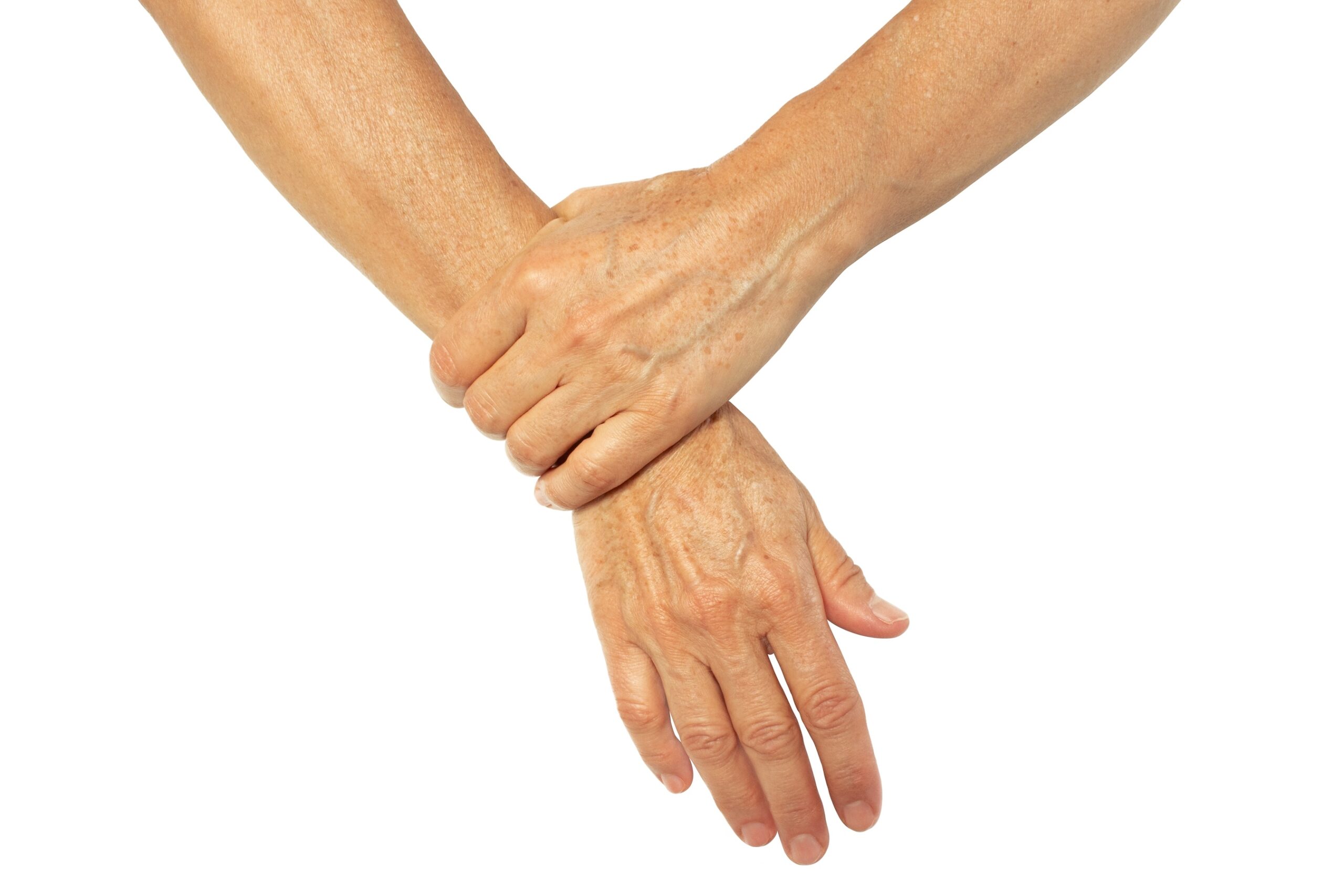
And so, feeling suddenly fragile, we over sixty-five face the world with fear. Yelling, as I did at our dog, to make sure it does not hurt us. We are vulnerable all over again, which feels anything but fair. The keywords for the Shutterstock photo above, which did not even show bloodpuddles, because who would? “Age spots on the hands of an elderly woman, flabby senile skin. Dark brown pigment spots, lentigo. Wrist sprain and joint pain, arthritis.”
When I catch myself whining, though, I force myself to step back, pan the landscape until I see a fuller picture. We over sixty-five are strong, too, in ways too deep to show. We know ourselves better; we have learned how to love; we have begun to grasp the ridiculousness of human nature and the inherent injustice of life and the need to celebrate it all anyway.
The longer I think about this, the gladder I am that my blood is close to the surface. Proof of life, a hot red circle that shows I am still bumping around in the world. Thin-skinned and sensitive, but now to the pain of others. Aware of so much more than I knew in my opaque youth. Translucent, letting the light through. Permeable, letting other people’s joys and sorrows enter me.
My mother was so horrified to grow old, so embarrassed by the changes in her face and body. At the time, I thought this shallow, ungrateful even; two of my friends died in their twenties. But as the signs of age come faster and faster, I understand that cold shock: can this really be my body? We used to be such partners; why would it betray me?
Or maybe it is just telling the truth. Forcing a reckoning.
I need to use these puddles as memento mori, reminders to live fully and get banged up and bloody and treasure every crepey wrinkle. Why should I be ashamed simply because I have been around quite a while, and my carapace shows the effects? Were I a car or a painting, age would increase my asking price and prompt knowing conversations about preservation.
When you are the wrong age for your culture, not to mention a different age inside than outside, you have to make your own bloody-armed valuation.