How to Meet the Girl with Kaleidoscope Eyes
An exploration into the use of psychedelic drugs as a cure for what ails us
September 30, 2025
“Normal waking consciousness, rational consciousness as we call it, is but one special type of consciousness, whilst all about it, parted from it by the filmiest of screens, there lie potential forms of consciousness entirely different.”
—William James
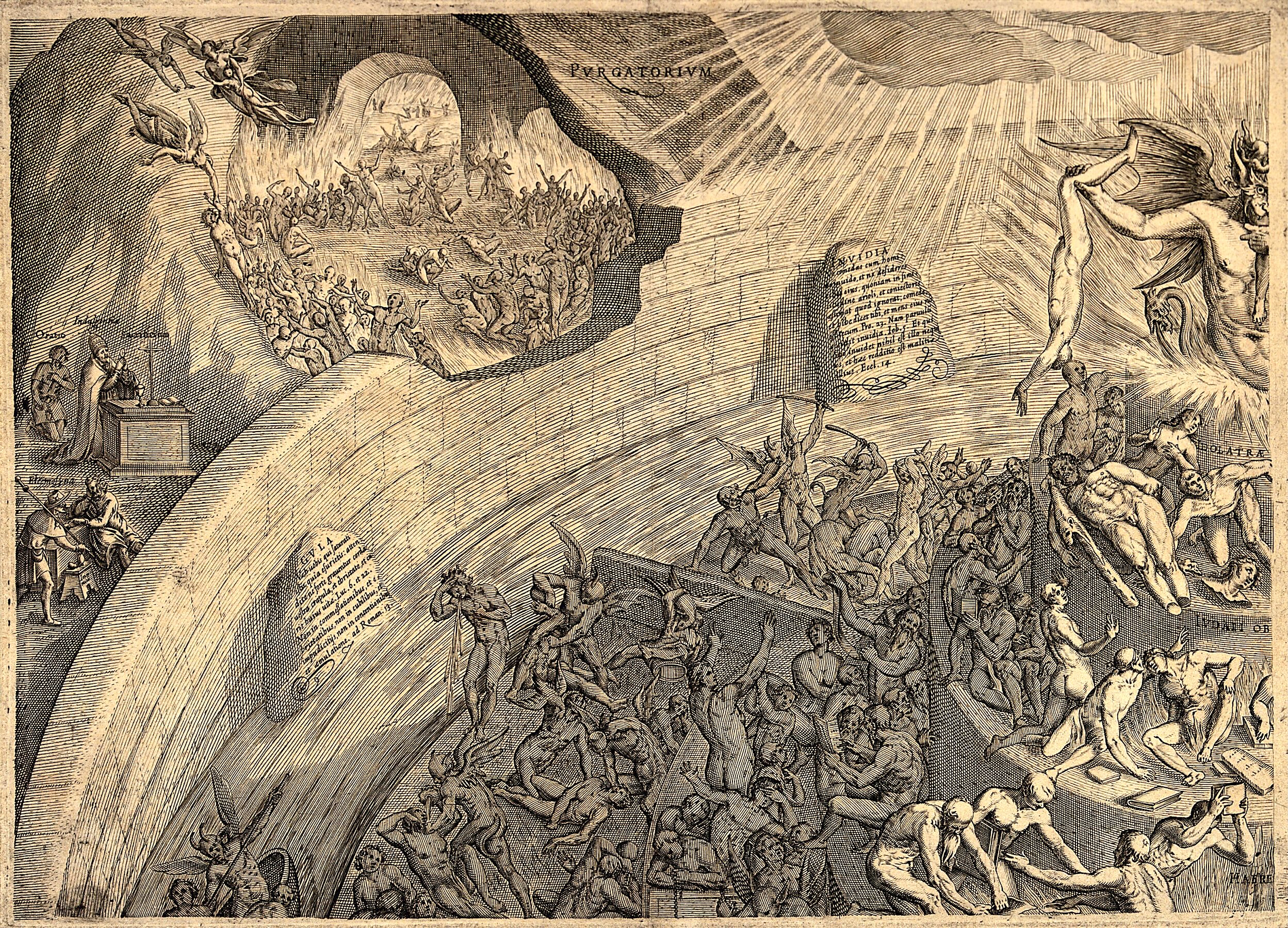
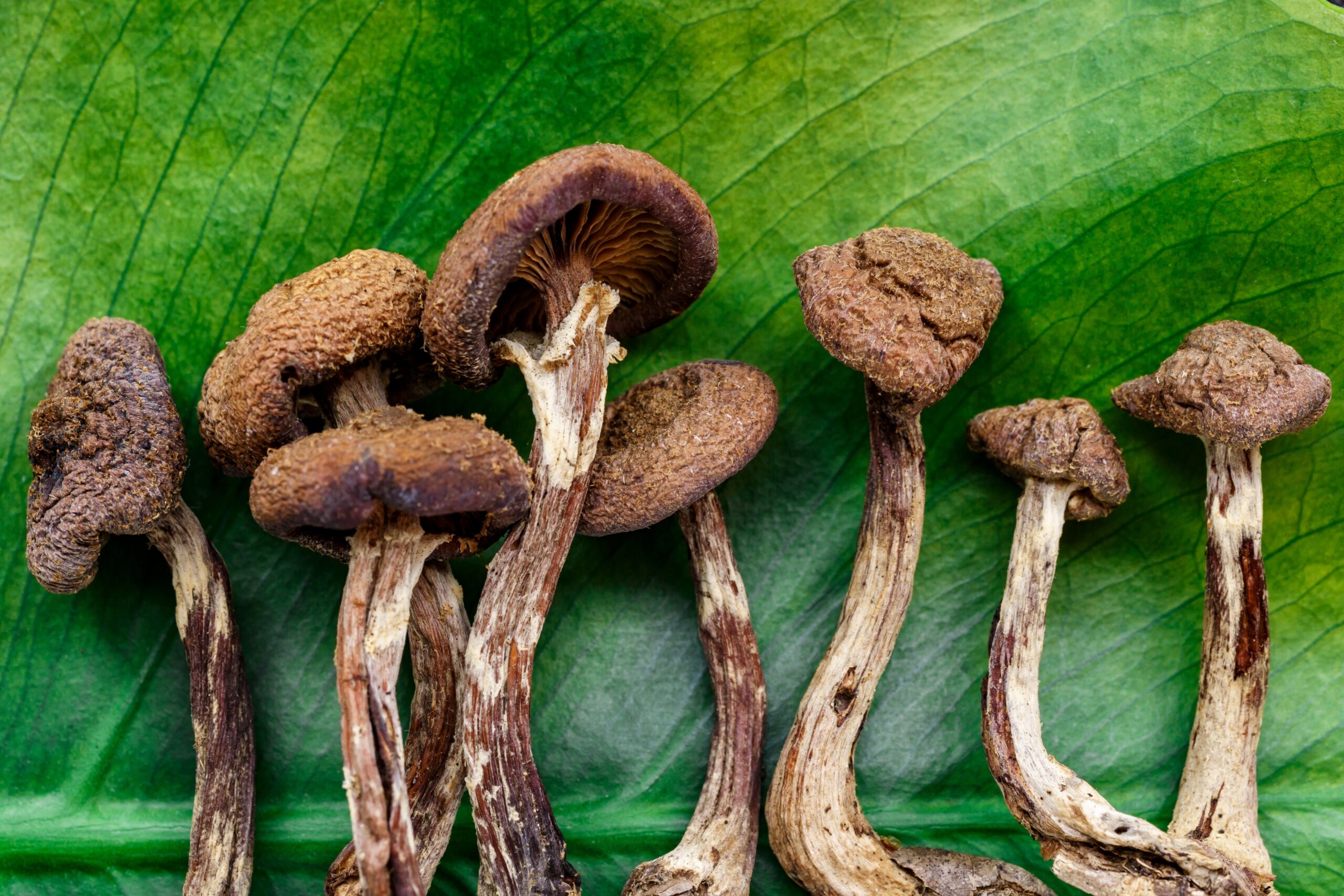
Little brown mushrooms, growing plump on a mossy forest floor. What could be more innocuous? Magic mushrooms, though, capable of inducing a temporary state that resembles psychosis. Also capable of healing mental torment, they have been harvested by curanderas for thousands of years to carry people to God.
The Catholic Church stopped that cold, insisting that what the Aztecs called “the flesh of God” was in fact the flesh of the devil (and therefore its rival for Aztec souls).
When psilocybin mushrooms popped back into the spotlight, this time in 1960s America, their psychedelic trips, like LSD’s, were embraced as mind-expanding.
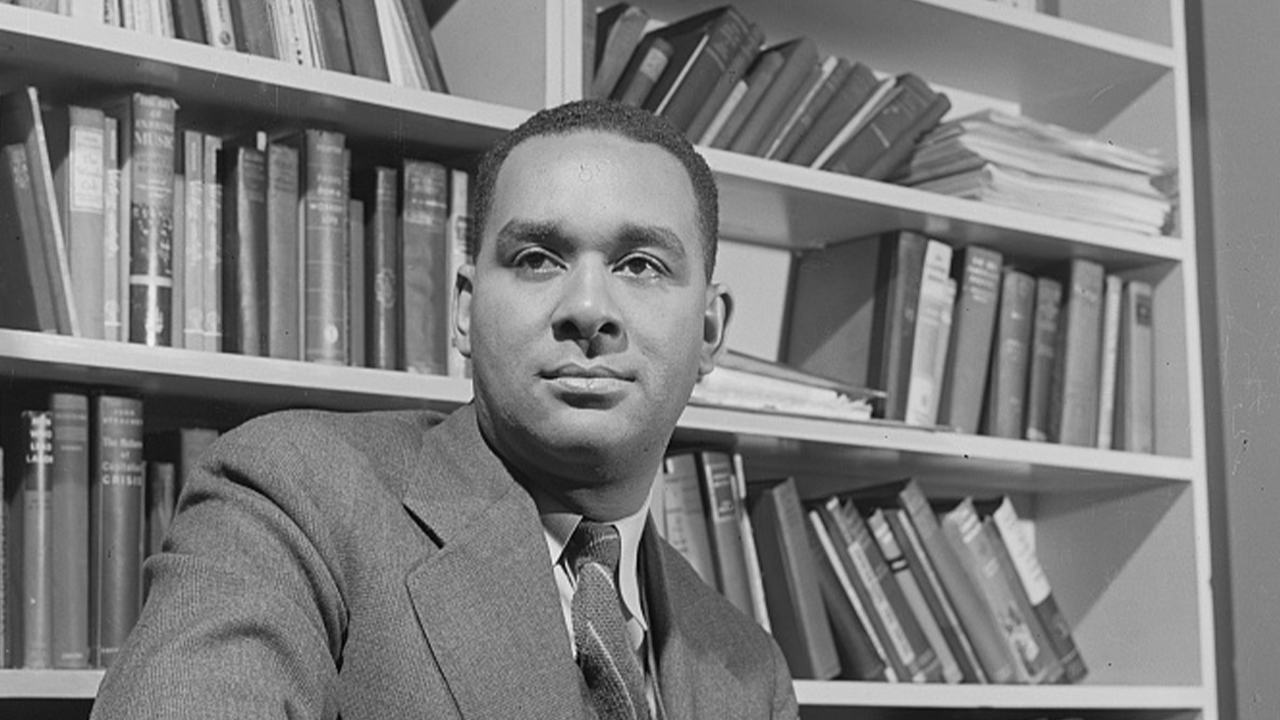
President Richard M. Nixon stopped that cold, as stories of dark, wild hallucinations triggered moral panic. Psychedelic culture was simply not conducive to capitalism. Young people eager to “tune in, turn on, and drop out” were removing themselves from the system, and that made them hard to protect (or control).
In 2012, a study showed that psilocybin disrupts the network that lights up when we are daydreaming, woolgathering, pondering our past or future, creating a continuous sense of self.
Psychedelics were demonized, research was shut down, and mushrooms went underground. Their appeal lingered. I came of age at the end of the next decade, and while other drugs scared me, psilocybin always seemed like something that, someday, I might try. The prospect of a mystical state softened the sense of scary transgression, the warnings about nightmarish trips. Nibbling a magic mushroom sounded far more appealing than swallowing blotter paper soaked in acid.
Though I fancied myself Alice, no one appeared with a silver tray of ’shrooms. Years passed. Then I read about research at my own university and sat bolt upright. Emailed the principal researchers. Begged for interviews and dropped heavy hints about volunteering for their next study.
Meanwhile, maybe I could figure out the magic.
• • •
Joshua Siegel tried mushrooms as a teenager, and the trip felt…spiritual. It also awoke a deep interest in the workings of the brain. At WashU, he grew up, became a psychiatrist and added a doctorate in neuroscience. One day he was chatting with Dr. Ginger Nicol, a professor of psychiatry. “How great would it be,” he remarked, “if you could take a snapshot of what’s happening in somebody’s brain during a psychedelic experience.”
They looked at each other. Nobody had yet done this—but they could. With WashU’s state-of-the-art brain imaging technology, it was now possible to see a living person’s brain in action. They could slide someone on psilocybin into an MRI scanner and watch the brain change.
The drug would affect the default mode network, that much they knew. In 2012, a study showed that psilocybin disrupts the network that lights up when we are daydreaming, woolgathering, pondering our past or future, creating a continuous sense of self. The name “default mode network” (DMN) had been coined by WashU neurologist Marcus Raichle years earlier, when he showed just how active the brain remains when it seems to be at rest. We are always thinking about ourselves, always guarding our ego’s borders. Except when a psychedelic trip dissolves our sense of self altogether.
“A lot of psychiatric illnesses are pathologies of the sense of self,” Siegel points out, “and of one’s way of relating to the world.” I thought about that a minute; it was a fresh way, for me at least, of framing this sort of suffering, and it made sense. In depression or anxiety, the DMN is overactive, playing an incessant loop of worried or self-defeating thoughts. Disrupt the DMN, break those thought patterns, and habits of mind become easier to change.
The other promise psilocybin holds out is neuroplasticity. At life’s start, our brains are as flexible as our tiny bodies, but they stiffen up fast—and sometimes harden. “I’m useless,” people insist, or, “It was all my fault.” “There’s no hope.” “It won’t work.” “I can’t change.” Are these rigid, intractable beliefs depression’s cause or its consequence? “Probably both,” Siegel says. Antidepressants can restore some of the plasticity, make a little room for new ideas. But they often work slowly and subtly, without enough effect. Psychedelics, by contrast, “produce a rapid and powerful plasticity cascade that does seem to put the brain in a more adaptive state.” Psilocybin pries open that window by temporarily desynchronizing the DMN and reducing its activity. In the period of flexibility that follows, you just might be able, with the help of a good therapist, to wriggle out of trauma’s tight grip or break self-defeating emotional cycles that conventional therapy cannot seem to budge.
We are always thinking about ourselves, always guarding our ego’s borders. Except when a psychedelic trip dissolves our sense of self altogether.
And so, with Nicol and another professor as mentors, Siegel designed a study. Two people who knew them would be with the participants, as a comfort and reality check. They would be healthy, with no past psychotic experiences, and carefully prepared. They were to simply let the colors and shapes come, watch the visuals, and know that whatever happened in their minds, they were safe, and the experience would soon end. Their brains would be imaged many, many times in the weeks before the dosing, then during, immediately after, and three weeks later.
One of these participants was Nicol’s husband, Josh Rogers. On the day of his trip, she stayed coolly professional until they were driving home together, then studied his face. “When you came out of the scanner, you looked almost troubled,” she said, probing gently. He nodded, still preoccupied. Finally he blurted, “I’m not sure I’m worthy of what I’ve just experienced.”
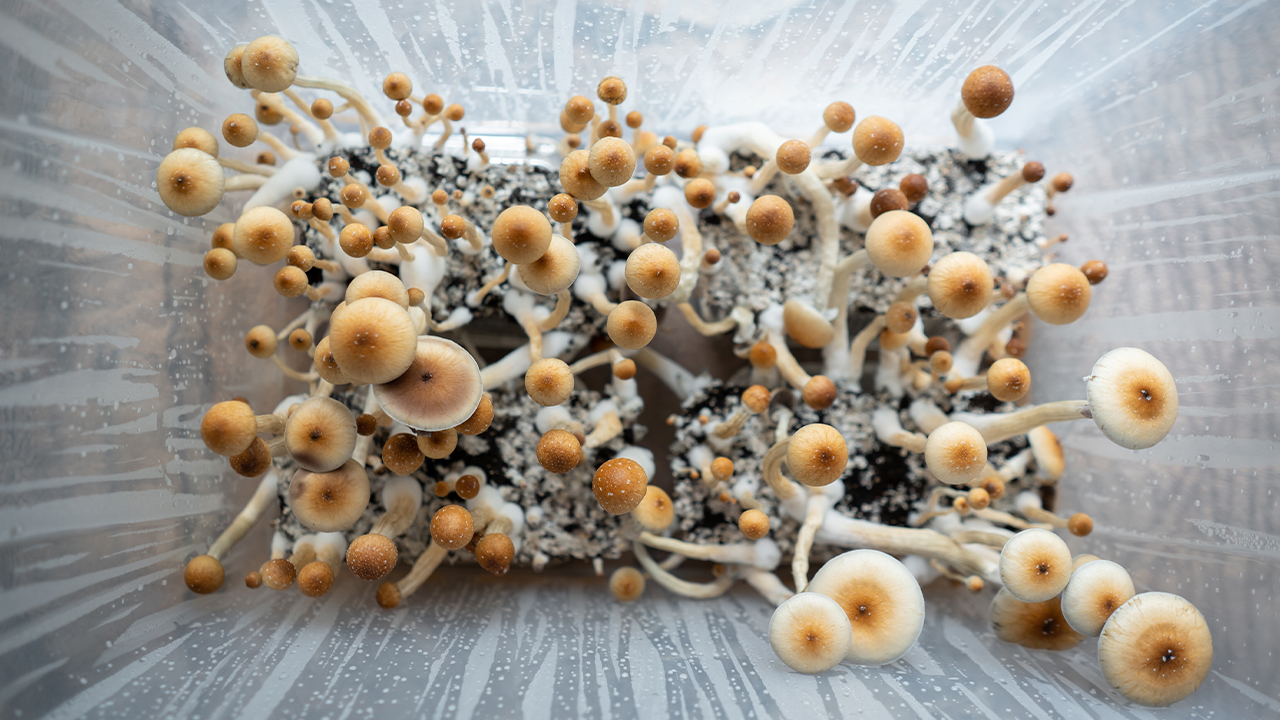
In time, he found words to describe what he saw: “Very pleasant colors—aqua, white, gold—and fractal patterns. Then, pretty quickly, something happened. I was lying on my back, but I had a sensation of being upright, and I started to move into the most brilliant, beautiful, warm light I have ever experienced. It was like I was rotating on two perpendicular axes simultaneously. Which is impossible, right? Then I was in this massive, reverential space, so massive there weren’t any boundaries, yet I knew there were boundaries. And everything felt good and wonderful and perfect. I just had this sense that this was infinity—but encased in a special place. And I was in this mystical light of—God, is what it felt like. Light of the universe.”
Rogers grew up Catholic but had not been to church in years; he would never have described himself as religious. He assumes what he saw was simply “what my mind came up with, based on what I expected of God. But it felt real. That warm, white light. That undivided, unconditional love.”
Best of all, from his wife’s perspective, he already knew, after eighteen advance trips through the MRI machine, the exact sounds the magnet made as it cycled, and he could pinpoint the timing of his vision for them. “So we were able to go back,” she says happily, “and see a snapshot of what is happening when a person experiences God!”
Preliminary results of the study were published last year, “but we are still analyzing and recording the data,” Nicol continues. “In all cases, what we saw was a global disruption of the brain’s connectivity. Each brain is networked in a unique way—that’s why we did all those scans. But on psilocybin, the brains looked more like one another than like their individual scans.” The uniqueness of the separate self dropped away. What endured was closer to a shared reality.
Psychedelics “produce a rapid and powerful plasticity cascade that does seem to put the brain in a more adaptive state.” Psilocybin pries open that window by temporarily desynchronizing the DMN and reducing its activity.
That makes sense, with the self-creating DMN quieted. But while some connections were reduced, turning the world strange, new connections were being made, and other networks were being activated. All of which is fascinating, but I am stuck on a single question: Why is it a good idea for the DMN to become disorganized and chaotic? That sounds like a terrible idea.
Until I remember how stuck we can get in negative thought patterns, false and painful ideas about ourselves, spirals of anxiety or depression, or uncontrollable appetite. The self is not always the safe place it seems to be.
“You become so sensitive: fearing a shadow would damage the paper on which it is falling.”
—Walter Benjamin, after a psychedelic trip
A medicine that can end fear, break miserable cycles, and change our sense of self and our relationship to the world? No wonder psychedelics are exploding, with cheerleaders on the political right and the left. People with late-stage cancer have used psilocybin and lost their fear of death. People who struggle with addictions have regained control. People who have suffered trauma or illness say they no longer feel overwhelmed. Patients report relief from pain, treatment-resistant depression, severe anxiety, impulsivity, or obsessive repetitive behavior. Scientists have been able to brainstorm new solutions because their minds were sprung free. Artists have recovered creativity because their perceptions are no longer dulled by habit. Doctors are learning how to alter crystallized neurological pathways in Alzheimer’s and Parkinson’s. There is even a chance, Nicol says, “that psychedelics, with their powerful anti-inflammatory effects, could be getting at processes of aging and degeneration at the cellular level.”
In How to Change Your Mind, Michael Pollan famously writes about his own psilocybin experience, and how he felt “calm, unburdened, content.” His ego dissolved, and he was profoundly grateful to realize he could live without it. “Even better was the discovery that there might be another vantage—one less neurotic and more generous—from which to take in reality.”
The uniqueness of the separate self dropped away. What endured was closer to a shared reality.
Such a paradox: we spend our whole lives shoring up a separate self, yet feel profound relief when we surrender it. The weight of past trauma lifts; anxiety about the future dissolves. A friend of mine, call her Sara Thompson, tried psilocybin several times, outside any clinical study. On her second trip, she warned her guide that she was not ready to deal with her sexual abuse, but “he dove right into it,” she says. “I was furious. But it was amazing. He invited all the sex offenders into the room, and I realized it had nothing to do with me—except that I had tried so hard to stay invisible and accommodate everybody else’s needs. That early childhood trauma kept me in a chronic freeze, flight, fight mode in everyday life. Mushrooms helped me be back in my body and feel safe there.”
Another paradox, because during the trips, Thompson was out of her body completely. “I became the music,” she says, laughing at how “trippy” she sounds. “I was flowing—it looks like smoke curling. And I didn’t have diabetes anymore.” This momentary disconnection from the body is what makes accounts of trips sound so floaty and ethereal. When Plato, eager to be counted among the true mystics, drank ceremonial potions with psychedelic effects, he described “perfect and simple and calm and happy apparitions, which we saw in the pure light, being ourselves pure and not entombed in this which we carry about with us and call the body.”
Imagine, if pain has come through your body, what a relief it would be to feel released from its scars. Even without such history, I would love to see where my consciousness landed. Do I keep waiting for a legit chance or go underground? A retired judge offers to hook me up. So does an old friend. But I, prim and stuffy, worry about quality and contamination. And nausea—I am phobic about vomiting. And what if my dream of mystical experience resembles a crush, with the fantasy of what might happen far sweeter than the reality?
Besides, I feel a need for expert guidance, and a curandera is nowhere in sight. Scientists are still not sure what causes one trip to be ethereal and blissful and another to be grotesque, but having a seasoned guide is crucial. So are “setting”—it should feel safe, tranquil, and reassuring—and “set,” which can span one’s entire personal history, mental state, mood, conditioning, beliefs, worries and hopes.
I want wisdom handed to me by the universe, but the truth is, psilocybin tends to “magnify whatever’s already going on both inside and outside one’s head,” as Pollan points out. He has long been fascinated by botany, and his own first trip sent him outdoors to be naked in the woods. His wife wanted to be inside on the sofa. Josh Rogers found himself inside a far more spacious version of the Christian reverence he had left long ago. Sara Thompson saw her abusers, but with the calm clarity of a scientific observer. Steve Hause, a retired history professor, was eager to experience, at 82, his first joyous psychedelic trip, but could report “no soundtrack, no voices, no Judy in the sky with diamonds.” Just two neat rows of red and yellow dots on a black background.
When Plato, eager to be counted among the true mystics, drank ceremonial potions with psychedelic effects, he described “perfect and simple and calm and happy apparitions, which we saw in the pure light, being ourselves pure and not entombed in this which we carry about with us and call the body.”
Hause left disappointed, but months later, he called Nicol early one morning. He had just seen the new images from the Webb telescope—and they looked exactly like his red and yellow dots! “I can’t believe my brain came up with the universe!” he exulted.
Later he realized that the celestial dots only looked like they were in neat rows because the astronomers had pieced six images together. “So I’m left with ‘coincidence,’” he sighs, “unless I find something more. But I still remember what I saw vividly. It just sits there in my mind, amazing me.”
Other changes wrought by psychedelics stay vivid, too. The flexibility firms up again, the ego returns, the euphoria fades, but people are left with a powerful memory—and a sense of what is possible. We build walls around our safe little patches of reality. Maybe smashing them down now and then is therapeutic in itself.

“All deities and demons, all heavens and hells are internal.”
—Timothy Leary
Again and again I ask people about the magic. Did what you saw feel like a distortion or an expansion of reality? A weird consequence of temporary molecular chaos or a lucid insight into the deepest structures in the cosmos? Were you in touch with something real and profound or just your mind’s own tricks?
Depends, they say with a shrug. Every trip is different. Those that feel profound, feel real.
The DMN is, in other words, a “reducing valve,” an efficient constraint that lets in only a trickle of all possible perceptions. With that restricted palette, the DMN creates mental constructs—chief among them, the separate self. But if we turn off the reducing valve….
One day it dawns on me that if I use psilocybin, these urgent questions might disappear. If there is no inside-outside division, if we are all connected to something far greater than our constructed little egos, then what does it matter if something happens “only” in one’s brain? So did St. John’s dark night of the soul, Hildegard von Bingen’s visions, Julian of Norwich’s revelations. Even if mystical states are just accidents of biology, they come from the core of who we are. And maybe who we are is bigger than the story we have memorized.
Clearly, something is changing in the brain to make mystical experiences possible. Maybe they are merely a protective mechanism, or a random scrambling of perception. But there is also a chance that they are widening perception. Our brains use filters constantly, hiding what is most profound so we can fry eggs, drive through traffic, pay our taxes, and tend our young. In a landmark paper in 2001, Raichle explained that the default mode network “acts as an uber-conductor,” keeping the signals from various systems from drowning each other out. The DMN organizes and controls whatever arises in our mind, and it also helps regulate what bits of the external world are admitted into consciousness. It is, in other words, a “reducing valve,” an efficient constraint that lets in only a trickle of all possible perceptions. With that restricted palette, the DMN creates mental constructs—chief among them, the separate self. But if we turn off the reducing valve….
Even in more active, alert states, our attention is gated, with “irrelevant and random activity” filtered out, notes Dr. Berit Brogaard, a philosopher and cognitive neuroscientist who studies perception and psilocybin. But what if the sensory data we instinctively filter out, or are conditioned to filter out, is not so irrelevant after all? What if we are so primed to look for danger that we are blind to the deeper structure of the universe?
We are well designed to survive, but not necessarily to understand.
• • •
Josh Rogers volunteered for a second trip in the study. Russia had just invaded Ukraine. “I was not feeling good about the state of the world,” he recalls. “I went into the first trip far more grounded. This one was, ‘Well, let’s just do it, humanity be damned.’”
This time, the colors were fiery reds and oranges, and instead of soothing fractals, he saw menacing, demonic faces and horrible sea creatures. “As I stare at the hash mark”—a practical task assigned during the MRI scan—“these angry fish are swimming up and gnashing their teeth at my face.” He emerged cheerful, glad just to have survived the experience. But afterward, he felt unchanged.
Does he think the hallucinations are windows into our own psyche, I ask, or do they symbolize parts of external reality we normally filter out?
He emerged cheerful, glad just to have survived the experience. But afterward, he felt unchanged.
“All of that.” He thinks a minute. “Before doing this, I never had any success being able to meditate. Coming out of the first scan, I could close my eyes and immediately be focused on nothing. Also, the experience left me more laidback and comfortable. It just grounded me in an awareness of this bigger existence we are part of, and that let me be less troubled or rattled by everyday stuff.”
Including sea monsters.
“With psychedelics, if you’re fortunate and break through, you understand what is truly of value in life.”
—Alan Watts
How odd, that our minds should be shaped for selfishness, blind to the way the universe is tied together, piece by piece, with careful sutures. Flashes of indiscriminate love, glimpses of selfless unity—that is all, under normal circumstances, we are allowed. But why, if the universe is a single united consciousness, are we not able to see that from the start? Why do we need these stupid little egos? To survive in a separate body, I suppose.
But what does it mean—a harder question—that we can reach this state of transcendence, this mystical sense of divinity or oneness, by gulping chemicals? Do psychedelics invalidate other spiritual experiences? What if all epiphanies, all profound realization of oneness and interconnection, are just hallucinations? Hyperexcitations of neurons, free of meaning? We have already written off many saints and mystics as mentally ill. Why should we trust a gloriously soothing worldview brought about by a fungus?
Yet people do. “Another unique characteristic of psychedelics,” Siegel says, “is that the experience feels true and meaningful. With alcohol, someone can have a powerful emotional experience, but they won’t be as prone the next day to think it was true and trust its shift in perspective.” So is the sense of truth a symptom or a validation?
We have already written off many saints and mystics as mentally ill. Why should we trust a gloriously soothing worldview brought about by a fungus?
In any mystical experience, Pollan writes, “people feel they have been let in on a deep secret of the universe, and they cannot be shaken from that conviction.” Which is impressive—but on the other hand, if our sense of a subjective “I” is gone, what is left to distinguish between private, subjective experience and objective truth? There is no separate mind left to do the doubting.
Already, I know how the shamans would respond: There is no separate mind, period.
On a psychedelic trip, the tiniest detail—a droplet of water on a leaf—can feel charged with grandeur, ripe with meaning. Reporting this, once sober, sounds absurd. Those who study psychosis call such feelings “aberrant salience”: meaning spilled across all of perception. In someone who is ill, the result can be messy or paranoid. But in a healthy mind, it feels profound: an entire cosmos revealed to be sacred. How could that feel anything but true?
I want to try this. What a cold, abstract, remote, and cowardly story this will be, if I do not. But I think I am just plain scared. Talk about a roll of the dice.
“It is as if the opposites of the world, whose contradictoriness and conflict make all our difficulties and troubles, were melted into unity.”
—William James
“Consciousness narrows as we get older,” notes Alison Gopnik, a developmental psychologist and philosopher. “If you want to understand what an expanded consciousness looks like, all you have to do is have tea with a four-year-old.” Restless curiosity, diffused attention, magical thinking, little sense of a continuous self: “Babies and children are basically tripping all the time.”
Psychedelics widen our eyes again. But they are not the only magic trick: art, nature, meditation, travel, creativity, sex, mountain climbing and other extreme sports, childbirth, awe, and deep reverence are all transcendent states. We say we are high, or in a state of flow, or having a peak experience, or overcome by God. But however we label the state, we crave its release from time and space and ego. The gods know this as heaven: nearly every religion defines its deities as existing outside the constraints of time and space. Those are human constraints, and they can be uncomfortable, trapping us in a single place and forcing us to watch our life trickle through an hourglass.
When we are no longer conscious of time passing, when we feel ourselves inside and above and able to melt into different worlds, part of everything around us—we are immortal. Dread dissolves. Space and time vanish. Now the material world is held together by spirit, and we see consciousness all around us, threading through the universe. So it is not private and temporary, whipped up by our brains, after all? Even if you take away our stubborn little egos, we can still be aware. We can still be delighted.
Recent research points to other ways psilocybin can be effective, making our brains more flexible and tweaking their connections even without that sense of oceanic oneness. The pharmacology industry is now racing to learn how the psychedelic piece can be omitted.
Those, at least, are the good trips. Can a bad trip be just as helpful? What about a trip that is not the least bit trippy, bare of any sort of mystical experience? What makes the difference, anyway: the neuroplasticity? The loss of ego? The sense of the sacred? The sense of connection? The disruption of rumination and negative thinking? The changed sense of self? The radical openness? The autobiographical insights?
For a long time, the mystical state was assumed to be the magic’s only source. Quite a few studies showed better, longer-lasting therapeutic results in participants who had more intense mystical experiences. Chris Letheby, author of Philosophy of Psychedelics, writes that “many patients given this treatment report transcendent experiences of ‘oneness,’ ‘cosmic’ consciousness, or ‘ego dissolution,’ and evidence suggests that these patients show the greatest clinical improvement.”
But more recent research points to other ways psilocybin can be effective, making our brains more flexible and tweaking their connections even without that sense of oceanic oneness. The pharmacology industry is now racing to learn how the psychedelic piece can be omitted. “This is pharma’s fantasy,” Siegel says. “Wouldn’t it be nice if you could have the clinical benefits without having to monitor people or worry about all this mystical nonsense? Big money has gone into developing nonhallucinogenic analogs, and the observation is that you can still get the plasticity effect.”
Hence, the roar of enthusiasm from the stock market, with funds like AdvisorShares Psychedelics ETF investing across this emerging sector. Until now, most prescription drugs for anxiety—which is spiking of late—have numbed us and silenced our thoughts. Psychedelics tune them in.
“These things should only be tried in small circles.”
—Ernst Jünger
For all his personal enthusiasm, Aldous Huxley never believed the masses should be encouraged to use psychedelic drugs. The laxity of his friend Timothy Leary troubled him—and helped send psychedelics underground. But today’s enthusiasts are suggesting—with varying degrees of vehemence or sarcasm—that everyone in America should be fed a few mushrooms. Maybe then we could talk. Maybe we would even stop killing one another.
Near the end of every interview, I repeat this notion. Every single person says, often in these very words, “I wouldn’t be opposed to that.” They all feel that it could ease the polarization, soften the hate, create a deeper sense of connection and compassion.
“I think there’s something to be said for people getting outside themselves and experiencing the world as something more connected than they thought it was,” remarks Dr. Rebecca Lester, co-director of the Center for Holistic Interdisciplinary Research in Psychedelics. “All the divisions would seem so arbitrary and silly.”
Today’s enthusiasts are suggesting—with varying degrees of vehemence or sarcasm—that everyone in America should be fed a few mushrooms. Maybe then we could talk. Maybe we would even stop killing one another.
As an anthropologist, Lester is fascinated “by the various ways people have learned to work with their biology to produce mystical experiences and make meaning out of them.” As a therapist, she sees psychedelic drugs’ ability “to open up new connections in the brain and allow people to experience the world from a perspective they could not have imagined.” Openness is one of the Big Five, traits often present from birth and famously tough to alter. But a 2011 study found that psilocybin increased openness significantly—and the effects remained a year later.
“I think it’s going to get approved sooner rather than later,” Lester says. “And I think it’s going to explode.”
Like Lester, Dr. Carol Dyer, a psychologist in clinical practice, worries about the risks for people with untreated borderline personality disorder, a history of psychotic episodes, a history of bad experiences with hallucinogens, or an untrained guide with the wrong motivation. Psychedelics have a strong safety profile compared to many other drugs, they are generally not addictive and have a low potential for abuse, and the states they induce are temporary—but even so, they are powerful drugs. The hallucinations can be emotionally challenging; the neurological effects can be destabilizing. If you are already taking an antidepressant, that extra burst of serotonin can be toxic. And psilocybin can make you incredibly anxious, speed your heart rate, cause a panic attack, make you paranoid, or temporarily impair judgment. Adverse effects can last, too: one humanities professor told me of extreme insomnia, anxiety, and depression that continued for months after his cautious dose of psilocybin.
Worse: “I talked with someone in jail who had shot someone while on a high dose,” Siegel tells me, “because he completely disconnected from reality.”
And with that, my fear doubles, and the mystical fantasies go cold.
My reaction is entirely irrational. That example, though disturbing, is an outlier. In a study of 480,000 U.S. adults, use of psychedelics, including psilocybin, was associated with reduced odds of violent crime, while use of other illicit drugs increased the odds.
Indigenous cultures have long known that psychedelic use can bind a community together, ease its conflicts. But is the experience less intense, I wonder, and less risky, in the context of a familiar sacred ceremony?
These cultures have already figured out the danger and developed protocols, I soon realize. Ceremonies are led by experienced shamans who understand the possible vulnerabilities. Participants prepare, undergoing days of sexual abstinence, restricted diets, quiet solitude and deep thought, cultivating a respectful and focused state of mind. Sessions incorporate prayer, singing, and storytelling to anchor the participants (Western medicine does this by assigning tasks, which figures) and guide them through challenging visions. The music is sacred, not a playlist that could double as spa music.
“The medicine itself is a small percentage of the experience,” says Dr. Pardis Mahdavi, an author and scholar with a doctorate in medical anthropology. She teaches about altered states of consciousness and has studied with shamans all over the world. “The ceremonies are beautiful. They honor tradition and ancient wisdom. There is a culture built around the medicine, so people approach it with reverence.” She pauses. “What we are actually doing right now is, we are building a culture of psychedelics here in the U.S.”
How do you come up with a meaningful ceremonial structure, not a cheesy copycat one, in a society this diverse? Do we even have enough cultural cohesion to make that work?
“Or could this be something we solidify around?” she counters.
The hallucinations can be emotionally challenging; the neurological effects can be destabilizing. If you are already taking an antidepressant, that extra burst of serotonin can be toxic.
Raised Sufi, Mahdavi speaks easily about psychedelics reaching the soul. “I think they help unblock us, open that receptor for spirituality,” she says. “People spend so much of their lives so disconnected from their souls, and their mind takes over.”
Still, she surprises me by emphasizing other ways to reach the same state, especially meditation. It softens the ego, loosening the hooks that tangle our thoughts and drag our moods down. But meditating is hard work, a slow climb up a tall mountain. Psychedelics are, one shaman told her, “a chairlift to God.”
“There are people who have suffered—veterans, first responders, opioid addicts, women who have survived domestic abuse or rape or human trafficking—who really need that chair lift,” Mahdavi says, her voice low, fierce with compassion. “How much do you have to hate people to say, ‘You can’t have that; it’s a shortcut’?”

“The soul should always stand ajar.”
—Emily Dickinson
“Magic mushrooms?” Dyer muses, hitting the first word hard. “I don’t think it’s magic. I think it’s all about what you put into it, and your ability to have insight and self-awareness, and your ability to incorporate it into your wishes to be different in the world.” The reason for hope is not a conjuring trick, but the simple amazement that psychedelics work so fast. They can cut through resistance, release a compassion for self and others that would take years to emerge in conventional therapy.
Is this our brave new world? Reverence, serenity, and compassion, courtesy of a mushroom? Well, what would be wrong with that, I snap at myself. Humans are a broken species. Negative emotions wired into us for survival have run amok in times we call civilized, and now we hunt, or at least hurt, one another. It would be lovely to think we could all meditate our way to wholeness. But why not speed the process?
Because we might be confusing an iffy, partial, temporary, risky, not-yet-well-studied remedy with a silver bullet. And because we have to make sure this stuff is used with integrity.
Dr. Tonya Edmond, a WashU professor of social work who has teamed up with the Center, talks to me from an airport gate; she is waiting to fly to San Francisco for certification in psychedelic-assisted therapy and research. “Social work is the primary provider of mental health resources in this country, by far,” she says. “If we want these therapies to be affordable and accessible to all, we need to be leaders.”
At the moment, psilocybin is pricey and not likely to be covered by insurance, yet already legally available in Colorado and Oregon. Therapists across the country are doing harm-reduction interventions, helping clients with an underground supply prepare themselves and integrate the experience afterward. “This is coming on fast,” warns Edmond. Psilocybin has been granted “breakthrough therapy” status by the FDA, which streamlines the review process. “Clinicians should be educating themselves, getting trained.” Though it will be exciting to finally have more treatment options available, “there’s a lot of hype, and overblown expectations.”
I tend to dodge silver bullets. And when I think about the suffering that can be eased by psilocybin, I find myself far less eager to play with it. I can climb that mountain another way. My husband has always teased that I have too much serotonin. I am afraid of toppling that delicate balance, disrupting a brain that so far has mainly enjoyed being alive….
At the moment, psilocybin is pricey and not likely to be covered by insurance, yet already legally available in Colorado and Oregon. Therapists across the country are doing harm-reduction interventions, helping clients with an underground supply prepare themselves and integrate the experience afterward.
At least, this is what I tell myself. Then I read Ezra Klein’s account of his own psilocybin trip, its ecstasy and beauty and fear and, yes, nausea, and how “disparate parts of my life and beliefs and personality connected, and I became more legible to myself…. That a few micrograms of chemical was all it took to upend my confident grip on reality shook me in ways I’m grateful for. I hold my judgments and worldviews more lightly, and I am friendlier to mystery and strangeness.”
Even if I never try the stuff, I want to live in a world where everybody else has.
Read more by Jeannette Cooperman here.