How Super Is “Supergirl”?
Milly Alcock makes Craig Gillespie’s film better than you have heard.
September 15, 2026

Supergirl
• Screenplay by Ana Nogueira
• Based on characters created by Otto Binder & Al Plastino
• Directed by Craig Gillespie
• Starring Milly Alcock, Eve Ridley, Emily Beecham, David Corenswet, David Krumholtz, Jason Momoa, and Mathias Schoenaerts
• DC Studios, Troll Court Entertainment, and The Safran Company
• 108 minutes
• Released 26 June 2026
1. Flying high
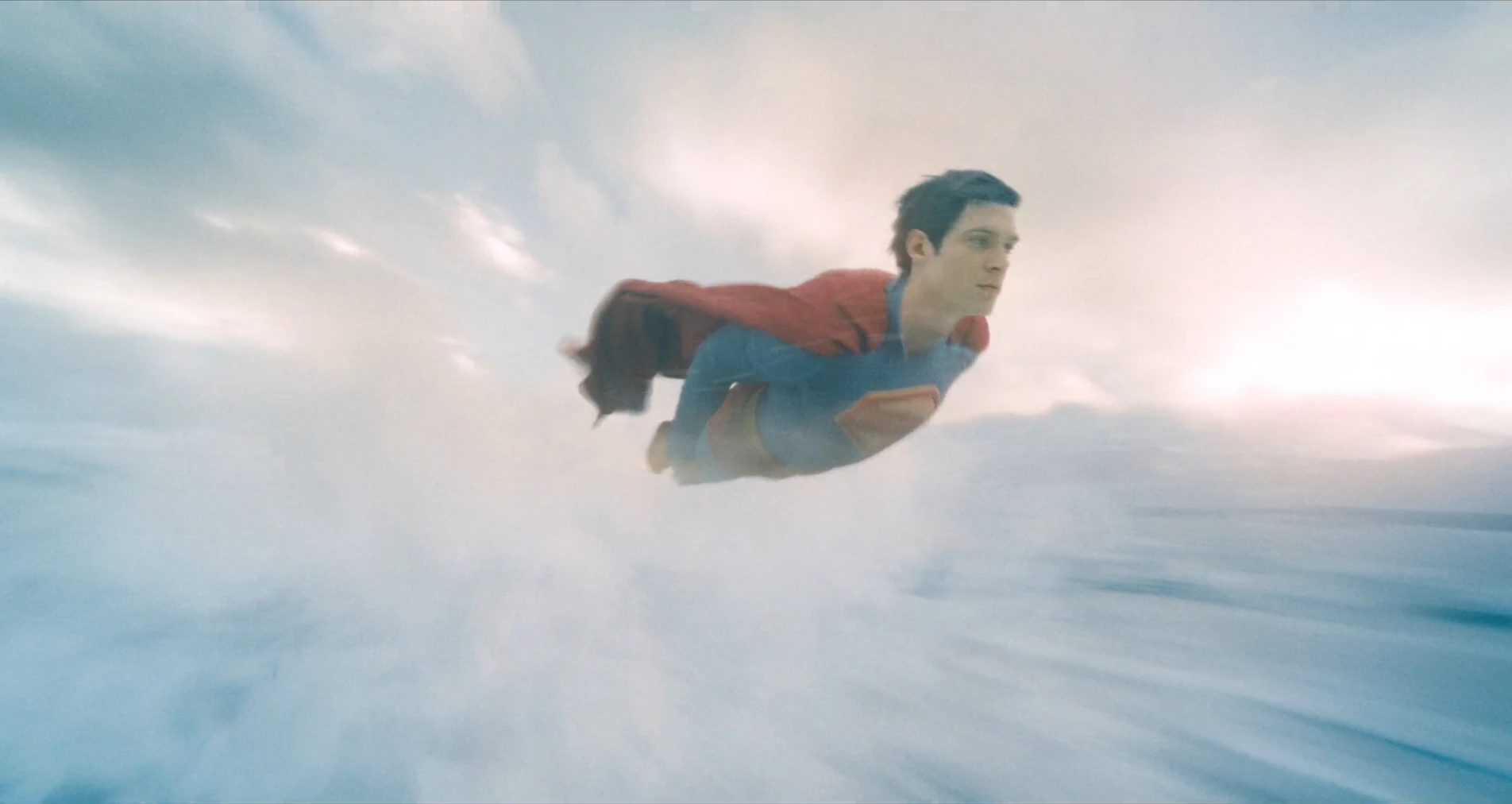
In the pantheon of onscreen Supergirls, Milly Alcock runs (or flies) with the pack as well as anybody ever has. Despite Sasha Calle’s excellent (and too-brief) turn as the Kryptonian refugee in 2023’s The Flash, James Gunn and Peter Safran booted Calle from the role after becoming DC Studios’—and the rechristened DC Universe’s (or DCU’s)—lords and masters. And considering how well Calle plays Kara Zor-El in Andy Muschietti’s overstuffed superhero movie, being one of that film’s two saving graces (the other being Michael Keaton’s return to the dual role of Bruce Wayne and Batman after a 31-year absence), this choice is a pity.
Alcock, who first appeared as Supergirl in the final scene of Gunn’s just-fine 2025 Superman, plays a much-different version of Kara than Calle; than Melissa Benoist in Avi Adler, Greg Berlanti, & Andrew Kreisberg’s commendable 2015-2021 television program Supergirl; than Laura Vandervoort in Alfred Gough & Miles Millar’s winning 2001-2011 television series Smallville; and, especially, than Helen Slater in this character’s live-action debut (the now-infamous 1984 movie Supergirl, the last superhero film produced by father-and-son duo Alexander and Ilya Salkind, which features Faye Dunaway as a modern-day witch named Selena in a performance so bizarre it must be seen to be believed).
Benoist played Supergirl longer than anyone else, making her commitment across 126 episodes this role’s definitive take so far, although Slater’s Kara so fully personifies guileless innocence that her movie emerges as a winsome example of ’80s kitsch. Benoist’s and Slater’s never-cloying earnestness may make Alcock’s drunken, gruff, and seen-it-all-before approach a jarring departure for audiences expecting more of the same, but Alcock adds so many nuances to Kara in her film’s 108 minutes that this new production is better than you have heard.
2. Flying along
When The Common Reader editor Gerald Early asked me to write this review, he requested that I comment upon Supergirl 2026’s “failure to launch.” Explaining the movie’s box-office underperformance does not seem straightforward to me, although the online haters celebrating what they gleefully consider its downfall simplify the matter in the way such misogynists always do: Supergirl 2026, in their view, is simply a bad film.
Alcock adds so many nuances to Kara in her film’s 108 minutes that this new production is better than you have heard.
The problem with this perspective is that Supergirl 2026 is not a bad film. The performances are too good and the themes too relevant to dismiss the movie as an outright failure, although this observation cannot ensure that Supergirl 2026 is, indeed, a good movie. It instead occupies that middle ground, or that artistic no-person’s-land, that so many cultural productions (be they cinematic, televisual, literary or otherwise) come to inhabit, somewhere between the poles of bad and good, dross and masterpiece, terrible and terrific (what I sometimes call the land of the Not-Great-but-Not-Awful or, in simpler terms, the territory of the Just-Okay).
This comment may seem to damn Supergirl 2026 with faint praise, yet I confess that, no matter how sophisticated are the other viewers, reviewers, critics, and castaways who have panned the film, I enjoyed watching Supergirl 2026 and have enjoyed thinking about its characters, storylines, symbols, and themes since seeing it.
Does its plot of Kara Zor-El, despite her best efforts to dodge getting roped into noble causes and to avoid caring about people like her cousin Kal-El (David Corenswet’s amiable Superman returns from Gunn’s 2025 movie to offer pep talks to his wayward cousin) remind us of the hundreds of revenge quests we have seen so many times before? Yes, but Supergirl 2026’s opening narrative gambit—with Kara assisting Eve Ridley’s teenage Ruthye Marye Knoll (screenwriter Ana Nogueira ratifies the comic books’ penchant for fanciful names) in bringing Mathias Schoenaerts’s Krem of the Yellow Hills to justice after Krem slaughters Ruthye’s family—smoothly shifts into a liberation story about several trafficked women held captive by Krem (a mad, bad, and dangerous-to-know space pirate whose scenery-chewing villainy Schoenaerts relishes). No matter how much Supergirl 2026 reminds us of George Miller’s 2015 Mad Max: Fury Road and 2024 Furiosa: A Mad Max Saga (to name only two of several recent films that tackle this issue), Gillespie’s movie still rings true, at least to me, given how Kara and Ruthye grow righteously angry in their take-no-prisoners determination to free these hostages.
3. Flying low?
As such, the low points of Supergirl 2026 have less to do with Nogueira’s screenplay than with Gillespie’s directorial choices, whether so much lens flare that I would not be surprised to learn that J.J. Abrams stumbled onto the set and wrestled control from Gillespie at critical junctures or, just as objectionable, including so many too-cool-for-school rock songs that you get the same headache listening to the soundtrack as you would from a night of indiscriminate clubbing. David Rooney usefully summarizes these objections in his Hollywood Reporter review by noting that Gillespie “barrels through a pedestrian mainframe narrative that is basically True Grit meets John Wick meets Mad Max: Fury Road with the usual random assortment of needle drops,” even if Rooney is wrong to declare that Gillespie fails “to find emotional depth in the sisterhood of Kara and Ruthye. . . .”1
Alcock and Ridley enjoy a spiky-yet-breezy chemistry that matures as Supergirl 2026 unfolds, with Ridley, who was only 13 years old when principal photography began on 13 January 2025, offering a lovely and layered performance that meets every moment. Their gender-swapped Lone Wolf and Cub act works well, especially when Kara cautions Ruthye against murdering Krem in cold-blooded revenge. Kara’s increasing desperation to prevent Ruthye from burdening herself with the guilt and regret Kara knows the girl will feel if she kills Krem does not stop Kara from doing just that to end the threat that Krem poses.
I would not be surprised to learn that J.J. Abrams stumbled onto the set and wrestled control from Gillespie at critical junctures or, just as objectionable, including so many too-cool-for-school rock songs that you get the same headache listening to the soundtrack as you would from a night of indiscriminate clubbing.
Some viewers have objected to this narrative choice, but it not only obeys one of the revenge thriller’s ironclad conventions (particularly thrillers fronted by male protagonists) but also spurs Kara to recognize that she must follow her own advice if she ever wishes to be the person that Kal-El knows she can be and that Kara fitfully recognizes she wishes to become.
This admittedly tried-and-true, Hollywoodized version of character growth may explain Supergirl 2026’s box-office woes (some reports say the film will lose DC between $85 million and $125 million).2 Kara, after all, usurps characteristics normally reserved for male heroes. She is hard-drinking, foul-mouthed, and self-destructive, yet fundamentally decent and good-hearted in the end. Milly Alcock’s troubled Kara Zor-El is a full pendulum swing away from Helen Slater’s virtuous naif, which scrambles traditional expectations of the character just enough to make this new Supergirl slightly subversive despite how predictable the rest of it is, with the movie being, for me as for David Rooney when he first watched the 1984 film, “perversely enjoyable.”3
Plus, Supergirl 2026 includes a flashback to Kara’s youth in Argo City—a metropolis housed on a giant chunk of Krypton that Kara’s father, Zor-El (David Krumholtz), salvages by activating a force field just before the doomed planet explodes—that works as wonderfully as any sequence in any live-action Superman/Supergirl movie thus far. With dialogue delivered entirely in Kryptonian, Alcock, Krumholtz, and Emily Beecham (as Kara’s mother, Alura In-Ze) create a loving family painfully sundered after Zor-El realizes that Argo City shearing away from its mother planet exposes a mineral called Kryptonite (get it?) that slowly sickens most residents. Zor-El sends Kara and her dog, Krypto, to Earth in a spacecraft that he cribs from his brother, Jor-El (played by Bradley Cooper in Superman 2025), to escape the radiation poisoning that will befall their fellow citizens.
Were the rest of the movie this good, perhaps its box-office profits would have improved, but perhaps not. The difficulties faced by some superhero films that center women—2004’s Catwoman (starring Halle Berry), 2005’s Elektra (starring Jennifer Garner), 2023’s The Marvels (starring Brie Larson), 2024’s Madame Web (starring Dakota Johnson), and, yes, 1984’s Supergirl—reveal at least as much about their mostly male creators’ difficulties in constructing satisfying narratives for their protagonists as they do about backlash from some audience members.
Call me paranoid, but Supergirl 2026 bears so many similarities to James Gunn’s Marvel Cinematic Universe (MCU) Guardians of the Galaxy trilogy—CGI spacescapes, planet-hopping jaunts across the cosmos, quippy dialogue, and, yes, relentless needle-drops—that we could easily mistake it for that series’ next volume. So striking are these parallels that Gunn may well have rewritten Ana Nogueira’s script and shouldered Craig Gillespie aside to direct some scenes himself, or, just as likely, Nogueira and Gillespie so internalized Gunn’s preferences that they gave their boss exactly what he wanted to see and hear.
The difficulties faced by some superhero films that center women reveal at least as much about their mostly male creators’ difficulties in constructing satisfying narratives for their protagonists as they do about backlash from some audience members.
If so, Gunn’s reign over the DCU has already ossified into the same narrative-by-checklist formula infesting the MCU (thanks to Kevin Feige’s storytelling predilections). Still, my thoughts about Supergirl 2026 mirror the feelings about Superman 2025 that conclude my Common Reader review of that movie.
All things considered, I liked it.
Maybe not a lot, but more than some others, meaning that I liked Supergirl 2026 just fine, yes, just fine indeed.
Notes:
1 David Rooney, “Supergirl Review: Milly Alcock Sparks Punkish Chaos and Jason Momoa Brings Bad-Boy Energy, but DC’s Latest Caped Crusader Is Stuck on Autopilot,” Hollywood Reporter, 24 June 2026, https://www.hollywoodreporter.com/movies/movie-reviews/supergirl-review-milly-alcock-jason-momoa-dcu-1236629004/
2 See Umberto Gonzalez’s 29 June 2026 The Wrap article “Supergirl to Lose $85 Million after Box-Office Blunder” and Anthony D’Alessandro’s 29 June 2026 Deadline article “How Supergirl Ran into Kryptonite at the Box Office: Superman’s Cousin to Lose $125M” for more information about the film’s financial challenges.
3 Rooney, “Supergirl Review,” https://www.hollywoodreporter.com/movies/movie-reviews/supergirl-review-milly-alcock-jason-momoa-dcu-1236629004/