Why Force a Hug?
August 20, 2026
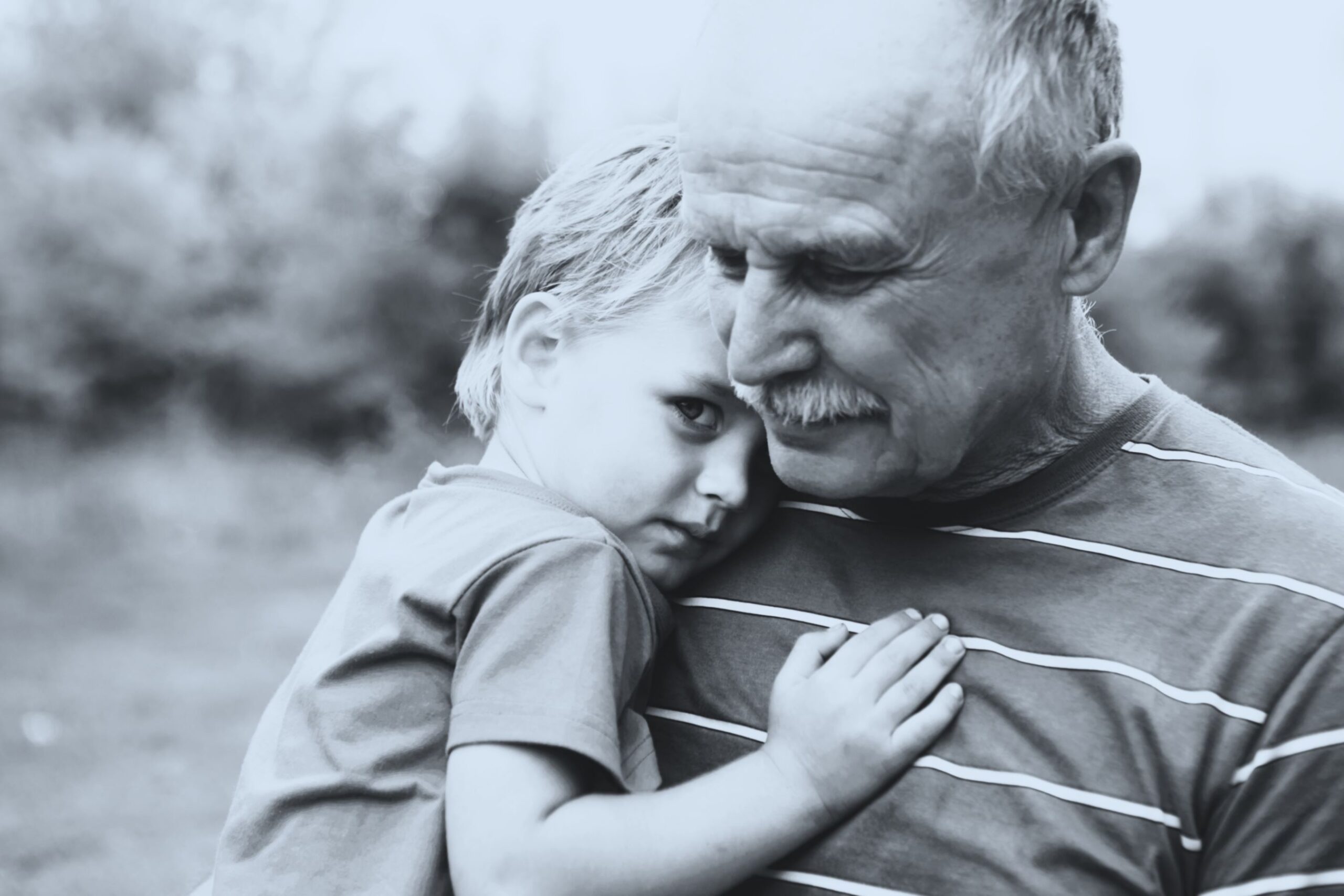
When I read that not forcing kids to hug their relatives is a new trend, I have to smile. My mother never forced a hug. When my bombastic uncle insisted on a kiss on the lips, a big ol’ smackeroo, I turned my cheek. Even at age five, and all the way up to adulthood. I think she secretly applauded.
The article focuses on grandparents, though, for whom the dilemma is heartbreaking. People live far from kin these days, and some kids seetheir grandparents hardly more than they see Santa Claus (whose lap is already scary enough). A show of affection is not likely, at least for a kid as shy and reserved as I was, to be spontaneous. Yet the grandparents feel that affection instinctively and hunger for its reciprocity. The parents, meanwhile, are still trying to please their parents—not to mention shaping small humans away from sociopathy. But the notion that affection can be summoned on command is, while an old habit, a problematic one.
I do not even force our dog to do more than “say hello.” Lingering to be petted and praised is up to him. Once I brought a previous pup, Sophie, along when I drove a little boy home. He lived in a neighborhood where nobody had money and the only dogs were chained and trained to kill. When we got out of the car, a gaggle of kids ran up, loud in their eagerness to see and pet the big poodle. Who promptly walked back to my car and sat at the curb, perfect posture, with her back to them, making no secret of her eagerness to leave.
I did lead Sophie back to the kids for a quick bit of show-and-tell, but I whispered to them first that they had to use soft voices or she would get scared. Sophie was not scared. She was perhaps overwhelmed, but she was also a diva. On our walks, strangers would come up because they had just lost their own dog, or because they were lonely and desperate to touch a warm and breathing creature. When she averted her head, I bit the inside of my cheek bloody. “It wouldn’t have killed you to let him scritch your ears,” I muttered as we walked away.
By the same token, one night a friend of ours, deeply depressed, held Soph on his lap pretty much the entire evening, hanging on to her with a grip so tight I worried she would choke. Not once did she wriggle or object; she knew and adored him, and I am sure she sensed his need. Point was, she made the call.
Think about how much touch is forced. The hearty backslapper, the fratboy hazing, the expected compliance. Early in my work life, a print salesman used to call on our editorial office regularly—and ask, teasing-serious, for a kiss every time. There were no hashtags back then, but I did manage to dodge him consistently. What good is demanded affection, I wondered. How much of a boost can it be that you have to beg for it?
We need real, trusted affection early on. Pediatrician turned psychoanalyst Donald Winnicott observed that “the basis of the capacity to be alone is the experience of being alone in the presence of someone.” Having quiet, undemanding company gives you a sense of being held. Of being safe, accepted, loved. You can relax and play and learn and explore.
Forced hugs do not make you feel held. Your mom insisting that you sit on Auntie So-and-so’s squishy polyester lap does not make you feel held. Nor does responding obediently when an adult coos “Gimme a kiss!”
The new (for some) parental trend is to let kids choose a high-five or fist bump instead, so they will know from the start that consent matters. That is an ominous but important message. But it seems to me you are also sending another important message: Any show of affection should be sincere and heartfelt. That lesson will shape the rest of their romantic, sexual, marital, and social lives. They will not feel they owe someone even a goodnight kiss, let alone a pity fuck. They will not drift into a committed relationship because it somehow feels they ought to. They will not keep friends for decades, resenting the drain on their energy and watching any chance of fondness erode, simply because they do not know how to end a mismatched relationship.
Every reform is dangerous in excess, though. As we grow more aware of every living being’s right to bodily integrity, we panic and outlaw tenderness. Now schoolteachers are scared to give kids even a hug they know would be welcome. Adults are scared to take a lost child by the hand, lest they look like a kidnapper or pedophile. Just as women fought for their rights and wound up losing the old chivalrous courtesies, leaving men terrified to pay a compliment or hold the door, kids are having their rights established at the expense of warmth. It takes a village, open-armed and loving, to engender trust. But we are scared kids will trust the wrong people, so the important message gets blasted too loud, and eventually touch causes us to cower, assuming it should be avoided at all costs. Which keeps others at bay and leaves our lives a little colder, a little lonelier, devoid of reassurance and comfort.
I both applaud and hate it when other adults ask, “Can I give you a hug?” It sounds a little Mister Rogers, for one, and I would rather the hug just happen. But then, I am—another phrase I hate—“a hugger.” People now issue that coy, cheerful descriptor in advance, making it even harder for the other person to snap, “Well, I’m not.” But do we have to label the tendency as a trait or issue it as a warning?
Hugs should feel natural and spontaneous. They should also be welcome. This is tricky. Nothing is more chilling than an upwelling of warmth that prompts a fond hug—and is met with stiff, icy resistance. Not everybody is a hugger, even in adulthood. Some just have a cooler, more deliberate temperament; others are recoiling because they were forced, and now they are grown up and by God, they will control who they touch. But rarely is the issue black-and-white: mandatory bear hugs and sloppy kisses or no touch at all. As with any exchange, needs must be balanced with boundaries; emotions must be checked and expressed. Intuition has to wave its frilly antennae in front of every interaction. All this is possible. It is the etiquette of sensitivity. You start slowly and test the response. You see what direction the other person’s body is heading and meet it with the same gesture. You stay alert and hazard your best guess and apologize or retreat if you got it wrong.
My husband is terrified to pay compliments or hold doors for women he does not know, lest they take offense. I tell him the secret is all in the execution—how respectful, how light and unforced. The clumsiest acts, done with sincere good intentions, will be forgiven, I promise. There is really only one rule: you cannot presume, demand, or insist. If we give kids respect and negotiate adult interactions with sensitivity, we will not have to maroon ourselves, untouched, on separate islands, all of us paying for the abuses of the past.