Which Animal Lives in You?
November 22, 2026
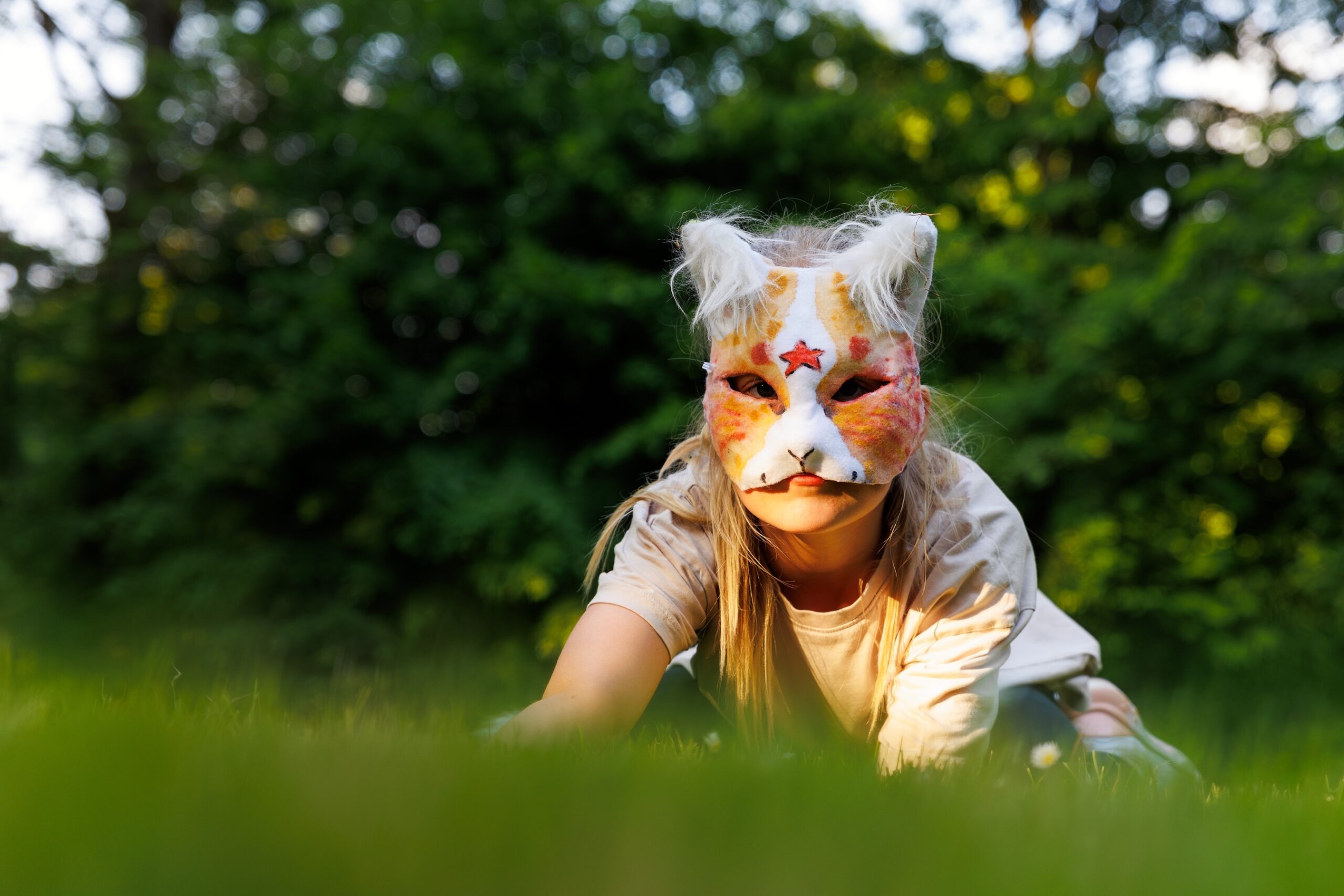
Children are sensing other animals within their psyche. Maybe they always have, but “therians” of all ages are now in the news: attending cons, worrying their loved ones, intriguing their therapists. In this sensitive piece, an eleven-year-old first feels a feline pull, prompting her to knead a blanket and move through her home on all fours. Next she senses canine instincts and chooses a golden retriever as an alternate identity. She then adds a seal and a red squirrel.
Open and confident, the girl, Sol, goes to malls in ears and tail, expresses this side of herself with friends, and takes it both seriously and lightly, with the help of an understanding mother. Fascinated, I read on. This is about identity, not cosplay or the erotic play of some furries. The behavior surfaces more easily outdoors than in the developed human hardscape. The verb Sol uses is to “shift.”
Therapists are treating therianism as a way to explore identity, moving away from parental dictates into a separate self. For many, they point out, it creates enough freedom to express LGBTQ or neurodivergent identity. Playing a part doesfree us, even as adults. I once went to a Halloween party as Eliza Dolittle and all my shyness dissolved in the fun of the Cockney accent. Three different guys asked for my number, an unprecedented and never repeated coup. There is good reason—even beyond the pragmatics of anonymity—to mask for the Mardi Gras or Carnival revelry. As for kids, they have always found their way to theater or science fiction or—the list is infinite.
But I still find this phenomenon especially interesting. Is there a sense, maybe, that humans have screwed up the natural world, and the other animals are the innocent ones? Are kids slipping into theriophilia, in other words, because they believe other animals are morally superior? Or is the appeal the simplicity of moving through the world by instinct, free of the need to decode complicated and opaque signals from other humans? Maybe a different animal feels more powerful than being a small, insignificant human in a bewildering world. Life itself becomes simpler, and you can run and chase and pounce.
My husband carries that idea further: what if this is a reaction against the technology that surrounds us, and they want connection with something more primal? Maybe this is their attempt to hold on to what is left of the natural world. Our town’s library held a contest with an array of prizes, and everybody, including the relieved parents, assumed the kids would want the tech devices. Nope. They all wanted the hamster.
But that is different from thinking you are the hamster.
I always find it a little disconcerting when other humans do not feel quite human, or at least not entirely human. This is a bit destabilizing, because how, then, will we connect? To stay comfortable, I began by being dismissive: these kids just watch the family pet and decide to mimic the behavior, or they learn about some animal and want to act out their new knowledge. Now the market is capitalizing, selling colorful animal masks, ears, and tails their friends will want, too.
But what if the experience really does just arise, coming from someplace deep inside the psyche, as Sol intimates? Do we carry other ways of life within us? Has civilization long pruned away behaviors these kids are now embracing?
In any event, once I recovered from the jolt of kids practicing quadrobics (on all fours) and sniffing and poking at the ground, I had to admit that humans probably have more in common with other animals than we do with superheroes or aliens. The tradition of linkage with the animal world is an enduring one. Cultures choose spirit animals or totems, pass down fables, don elaborate bird or wolf headdresses to repeat ancient rites, publish quizzes in glossy magazines.
In a recent Big Think newsletter, philosopher Jonny Thomson wrote about “the moral archetypes of animals.” He started by asking his late-seventies dad what kind of animal he was.
“Well, a donkey, of course,” his dad shot back, and they laughed. Then he gave the question careful consideration. “I think a crow. I like puzzles and stuff, but I also like to be alone in my nest. Also, I like to think I’m some kind of evil omen to curse you.”
Thomson nodded. His was, at the core, a serious question. Other animals, and the lore about them, make certain traits clearer. Ants are industrious. Elephants are reflective and therefore wise. Dogs are loyal. We choose our favorite because “we want to embody what the animal represents.”
Or maybe because we already do.
Watching our first standard poodle at the dog park—shy, eager, sociable but uncertain how to join the games, devoid of aggression and never sticking up for herself—I saw myself as a kid. “I’m a standard poodle,” I informed my husband. Then I thought about what breed he most resembled. Easy. German shepherd. Smart, serious, protective.
I carried the game to work, and it helped immensely when I tried to negotiate the interpersonal dynamics. The sweet, friendly, conflict-averse editor was clearly a golden retriever; the exquisitely sensitive poet an Italian greyhound; the quiet, elegant art director a Borzoi. Laugh if you will, but loving dogs as I do, the analogies let me see certain temperaments more clearly and respect that way of being in the world. Maybe even learn from it.
In the Arthurian tales, after all, Merlin used this method to teach the future king. Become a fish, he urged, and see how the weak survive by canniness and caution. Become a squirrel and learn how to look before leaping. Take wing as a hawk and see the world from above.
It is, you will realize, a giant labyrinth, with hundreds of possible paths and no way to be sure where they lead.