Who Would Want to Grow Up?
November 8, 2026
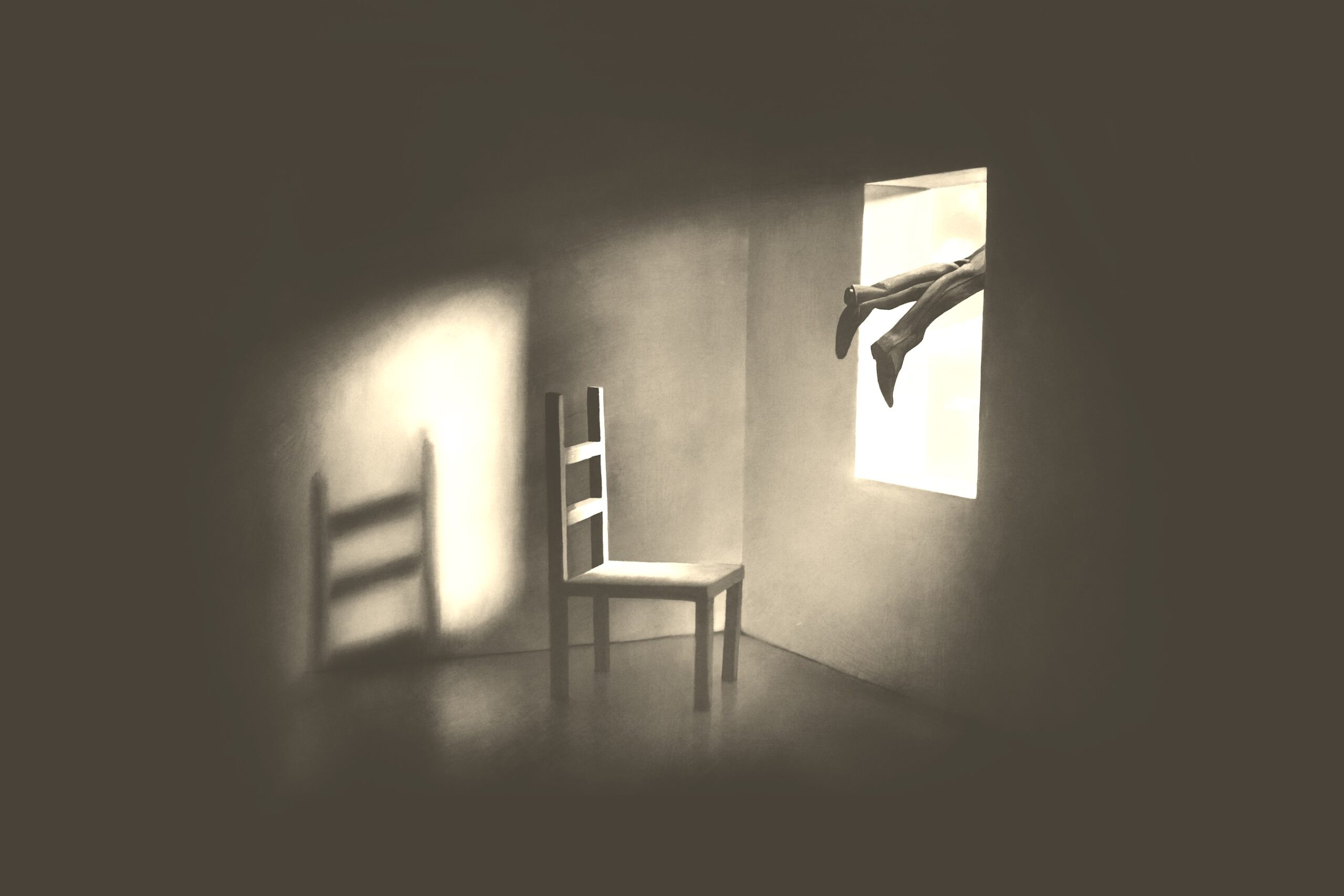
As a kid, all that ever entranced me about Peter Pan was the nanny-dog. As a young woman, I recoiled from the Peter Pan types—tan, cultured martini drinkers determined to never grow up. But now that I am almost old, I am reevaluating. Yes, Peter was imprisoned by his own immaturity. He not only would not, he could not grow up. But the guys I knew who waited until forty or fifty to marry? They had incredibly interesting lives. Traveled, experimented with different sorts of work, dove into creative projects…. Those who settled down had admirably dull, responsible, respectable lives, with partners and children and jobs and yards to mow on the weekend. And though I craved at least part of that life and have relished its peace, the idea of flying? Sailing above all that mundane crap to have real adventures? When rain makes you ache and your laptop screen has to be blown up jumbo, refusing to age starts to feel more like defiance than immaturity.
The defiance is still fantasy, of course—but the courageous sort. One would, like Captain Hook, flee the crocodile that had swallowed the clock. What better metaphor for a corporate or bureaucratic job? The kids are right. “Adulting”—though the forced verb makes me cringe—is an act. A series of time-sensitive acts, rather, and many of them not much fun. Instead of pirates to chase, there are forms to fill out, diapers to change, weeds to pull. You must settle, which means settle down.
The evolution of the Peter Pan story seems to agree with my new aversion. (As does society, with young people shunning traditional marriage, living lightly, and staying mobile.) The parents in Peter Pan, George and Mary Darling, were at first just boring Edwardian ideals: George a prideful provider, stuffy and stern, and Mary the gentle matriarch, ever proper, tidying her children’s minds as they slept. How safe, to have such reliable archetypes firmly ensconced to watch over you.
By the time Disney animated J.M. Barrie’s story in midcentury, though, George was barking loud orders at his children, and Mary was passive and obedient, worried only about making peace. Once you cross the century mark, the new films given women more scope but make adulthood’s overall toll obvious. In 2003, George is ridden with anxiety about making enough money and keeping his children’s respect. In Peter Pan & Wendy, his anxiety crests. By the time you reach Hook, he is a workaholic attorney finagling corporate mergers, glued to his phone and easily mocked by his teenage progeny. We now see grownups as burdened and neurotic; the adult world as both terrifying and boring; and society as ratcheting up the pressure until it becomes unbearable.
Surely we could improve that scenario?
“By describing life as a downhill process, we prepare young people to expect—and demand—very little from it,” remarks philosopher Susan Neiman in Why Grow Up. She points to the paternal evolution in the Peter Pan remakes as a classic example, with George first moving from bland conformity to tyranny, then simply becoming ridiculous, an object of contempt.
In some ways, the story has come full circle. Barrie’s first work was a complicated, melancholy adult novel, The Little White Bird, in which Peter was a newborn who could fly. Two years later, Barrie let Peter age at least a little, adapting the idea for a stage play called Peter Pan, or The Boy Who Wouldn’t Grow Up. The melancholy remained, but children understood the joy immediately—and tried to fly off their mattresses. To keep them safe, Barrie had to make pixie dust necessary.
The joy was rendered safe, and the melancholy—especially Peter’s trapped loneliness—was dissolved. Mary Martin made Peter’s presence exuberant. But the Broadway musical in which she flew, like the Disney film that preceded it, deliberately left out Peter’s line, “To die will be an awfully big adventure.” Producers deemed this “too dark for family audiences,” explained Sandy Duncan, who pushed to have the words restored in a 1979 revival of the musical. The line, she said, “is the heart of the play.”
And maybe the reason I have changed my mind. As death nears, immaturity looks better, as does impossible immortality. Either you think of death as one more adventure in a series, or you have to walk through the rest of your life on eggshells, waiting….
Was Barrie scared of death? Is that what adulthood meant to him? His creation was inspired by the children of Sylvia and Arthur Llewelyn Davies. He devised imaginative games for those five boys, and they played for long happy hours. When their parents died young, Barrie became their guardian. Their lives were far from fairy tales: the eldest, George, died fighting in World War I. Michael, to whom Barrie was closest, drowned in 1921. Grieving, Barrie wrote, “It is as if long after writing ‘P.Pan’ its true meaning came to me—Desperate attempt to grow up but can’t.”
Close as he was to the young poet, Michael, Barrie chose the middle son, Peter, as his character’s namesake. Maybe he saw something dark in him? Peter suffered from lifelong depression, and he loathed his fictional counterpart; no doubt the notion of flying through life rubbed salt. In 1960, he killed himself.
Gossip has swirled for decades about Barrie’s relationship with those Davies boys, but there is no evidence that he was anything except boyish, happy in their company and delighted to share imaginative play. Adult-child friendships were far more common in those days. In our context, such a friendship suggests perversion, and children are allowed no innocence at all. It comes as a relief to read what the youngest boy, Nicholas, wrote in his seventies: “I’m glad I lived with that odd little man rather than living in poverty, or, for that matter, with virtually any other person I have ever known.”
We do know Barrie never grew up sexually; his marriage remained unconsummated, and his wife eventually left him. In temperament, though, he was in many ways tooadult—even as a child. His longtime secretary and friend, Lady Cynthia Asquith, wrote, gazing at an early portrait, “Each glance at the photograph of that six-years-old boy in braided and frogged velveteens…confirmed my suspicion that the creator of Peter Pan had been a case, not of arrested, but of precipitated development.” His countenance remained grave, sensitive, and serious; as a man, he was conscientious, responsible, often called upon to care for others.
Childhood—sacred to the Edwardians, a golden time whose innocence was honored—would have been an escape for Barrie. With all his various guardianships and responsibilities, he would have hungered to feel carefree again, to have adventures that felt alive.
He gave that power, that sprinkle of pixie dust in lieu of ash, to the rest of us. And while the children run and spin and try to fly, adults just try to remember. And regress whenever possible.