Recipe Stories: Monkey Meat
August 11, 2026
There is mystery in our food, which is to say ignorance. Most of us could not explain how a meal came to be on the plate in front of us, for example. Where were its ingredients grown, processed, or manufactured? What resources did they require? Who packaged them, moved them, made decisions about their combinations, or cooked them? What alchemy made them uniquely delicious?
Sometimes we choose not to care. Back in the second half of the last century, patrons leaving the Ancon Inn, a popular bar in Panama City, Panama, would see a slight man squatting on the sidewalk in the dark, who would call out, “Hey, GI! Jimmy Dean Pork Sausage!”
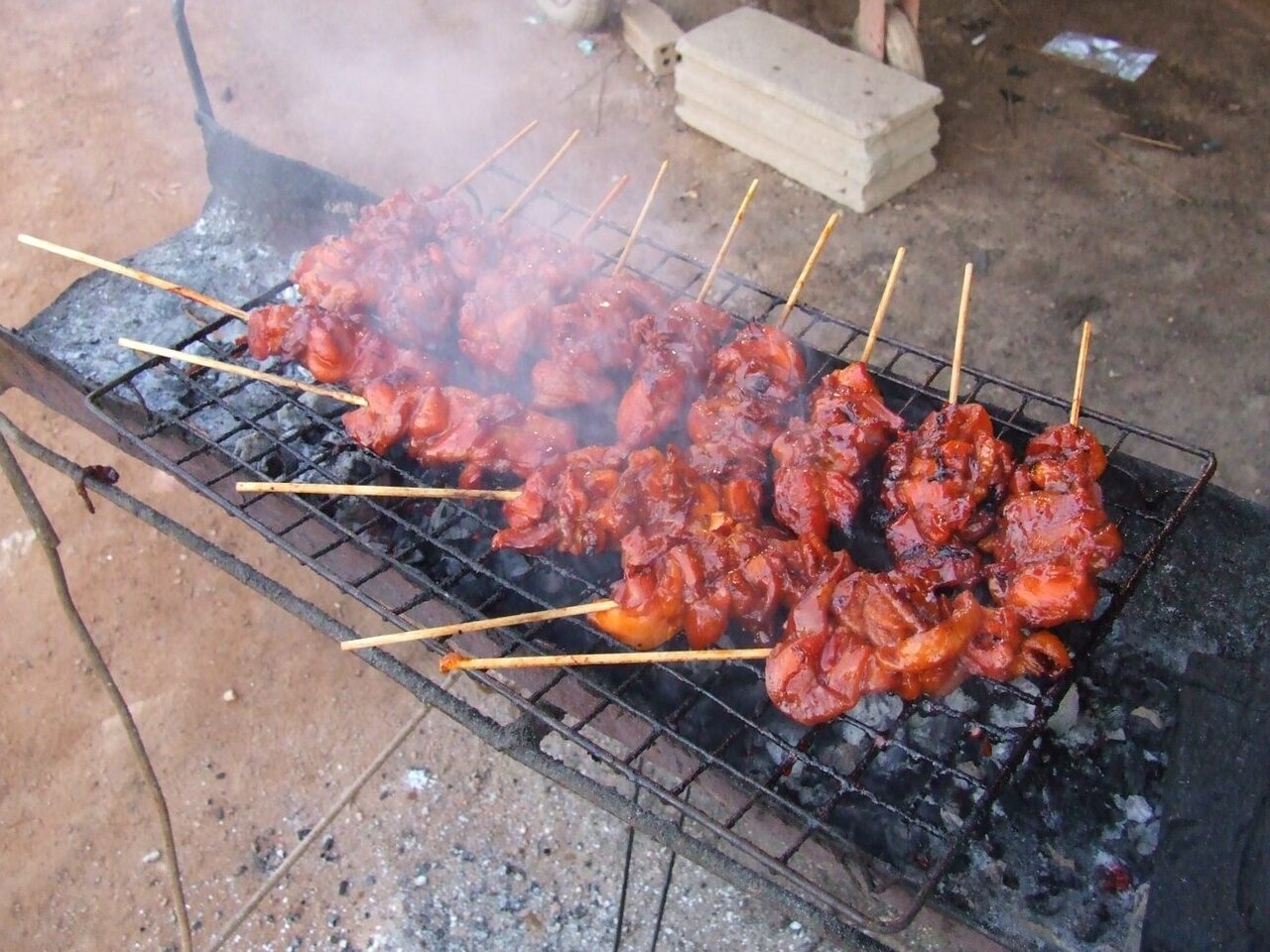
The man tended a brazier made from an old oil can, in which charcoal glowed under glistening red meat on skewers. It smelled delicious, especially after a couple of Cuba Libres or whichever local beer was not rumored to have formaldehyde in it. Bargoers said aloud by rote, cynically but accurately, “That ain’t no Jimmy Dean,” because whatever the meat was, it was not pork sausage. Everybody called it monkey meat, or mystery meat, which did not diminish patrons’ appetites and in fact sold more skewers due to its mystery.
The Ancon Inn sat on the corner of Calle J and Avenida de los Mártires, near where the Canal Zone and its middle-class pretensions ended and the Central American city began. Old photos show the establishment started as a steak house in the 1950s, but for decades after that it was perhaps the most infamous bagnio and watering hole in the Americas. After US forces deposed Manuel Noriega, the Ancon was finally put off-limits to US service members, because Calle J had become too violent, they said.
About 10,000 American soldiers, sailors, and Marines were stationed in Panama at any given time in the ’80s, when I was there, and several more thousand rotated in and out for field exercises and the Jungle Warfare School. All of it—the jungle and seas with their dangers and beauty, the people, the culture, the foreign cities, the isthmus’ long history, the Canal, the tropical weather—was new, exciting, and exotic to most young troops from places such as north Florida, the Tidewater of Virginia, and downstate Illinois.
Of course, one man’s mystery is another’s way of life. It made no sense that the brazier meat would be monkey, which was too hard to get for good business. Other guesses included iguana, domestic pets, or some sort of half-wild boar. The skewers were in fact just carne en palito, beef on a stick: skirt- or flank-steak probably bought in the Supermercado or at a wet market, which had been marinated in orange juice, oil, cumin, garlic, salt, and achiote, a tree seed that gives the meat its reddish-orange color and is used widely in the Caribbean and Latin America. The brochettes are delicious and easy to make, though not without hazards.
Recipe:
One pound of flank steak (or a small pork tenderloin, which is more tender), cut in long strips
3 Tbsp. orange juice, perhaps with lime for added acidity, or else sour orange from a bottle
4 Tbsp. neutral oil
1 Tbsp. cumin
6 cloves garlic, smashed
1 tsp. salt
3 Tbsp achiote seeds (available online if not in your local grocery)
Small bamboo skewers, soaked in water for half an hour
Heat the oil on low in a small skillet and add the achiote seeds to infuse for several minutes. Do not let fry. Strain seeds and throw them away; let oil cool. Achiote is the same as annatto, a food dye, and can permanently stain clothes and countertops, so be careful.
Marinate the meat in a zipper bag with the oil, citrus juice, cumin powder, garlic cloves, and salt for up to 24 hours in fridge.
Thread the meat strips onto skewers, taking care not to stab your own flesh. Grill the skewers heartily over charcoal for three minutes each side. You want some char, but the meat should not be overdone, nor should you.
If it is rainy season, broil the skewers instead or chop the meat and stir fry it in a cast iron skillet. I served ours with cooled Japanese udon noodles, Massachusetts lettuce, Mexican cucumbers, California carrots, and Vietnamese nước chấm sauce, which contains lots of lime.
Things are not always as advertised in this life, but there is no disappointment in mysteries with simple answers.