Why We Need the Loch Ness Monster
July 29, 2026
Surely the most delightful of our monsters is Nessie. Nothing jarring or subliminally weird in her backstory, no hopeless crushes on miniature mortals, no wreaking of harm or sucking of blood or heedless toppling of skyscrapers. Just a friendly, long necked, improbably ancient creature who surfaces now and again, teasing us gently with her presence. She lives in a wild and icy part of Scotland, under the blackest of its lochs, dwelling in the depths like a frumpy version of the Lady of the Lake.
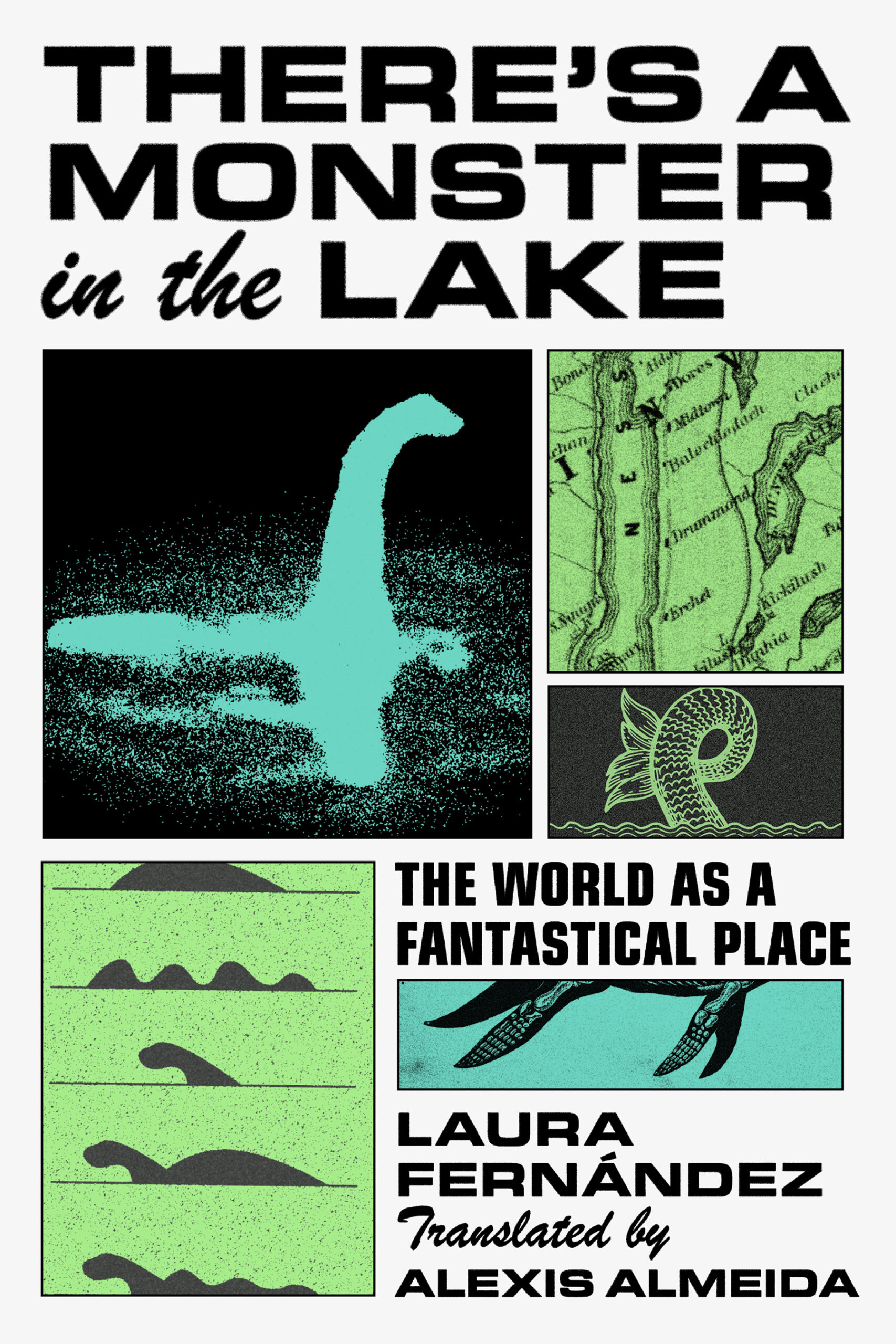
In a new, already acclaimed book, Laura Fernández investigates how we have responded to the Loch Ness Monster in different eras—a quest that tells us who we have been in different eras, and what we have needed. There’s a Monster in the Lake: The World as a Fantastical Place is about the extraordinary, the intrigue of mystery, and the power of story. It is also about fraud and silly commodification—if Nessie existed we could defend her as exploited. In the end, this is an extended essay about cynicism—the for-profit sort, not honest doubt—versus the never-quite death of wonder.
Fernández is of course writing about imagination—individual and cultural, romantic and necessary. But Nessie has accrued such lore, the tales sticking to her like scales, that there is no need to whip up anything new. You read and grin, thinking surely she has taken liberties—but nope, each wacky time, it really happened. There was a circus rumored to let its elephants bathe in the lake just when the first “photo of Nessie” was taken. There was a diver who claimed to have brushed against Nessie underwater. There was a tiny prehistoric critter of the exact shape as Nessie. A man did try to fake his own death, eaten by Nessie. Occultist Alastair Crowley did buy a house on the shore of Loch Ness in 1899, needing a remote location to perform one of his rituals, and it was indeed rumored he made a pet of Nessie and threw a sacrificial sheep into the loch every Sunday for her.
How does one handle all this? There’s a Monster in the Lake is spattered with (UPPER-CASE PARENTHETICALS) and italicized words that are at first annoying, like many literary experiments, and then charming. Fernández is having so much fun, it is impossible not to be delighted. And like any real fun, the essay layers profound truths beneath the laughter.
She unfolds the way the story of Nessie took hold, “expanding shared consciousness and pulling it away from the world, allowing it to dream of the impossible.” Sightings date back to 565 BCE, but the modern legend hit the newspaper in 1933—and spread fast. Soon letters were pouring in from respected professionals so persuaded of what they had seen, they were willing to risk their reputations in the telling. This fortified the belief of the uninitiated: “Could it be that so many people were mistaken?…. Not a day went by without a sighting.”
Ah, but then a Mr. Spicer, who had come to Inverness from London, told his story—that he had seen Nessie crawl out of the water and walk across the road—and that fast, the dream was shattered. Nessie was an underwater monster. This pedestrian tale was absurd. It was all, therefore, absurd.
“Suddenly the world was divided,” writes Fernández, “between those who wanted to believe and those who simply visited the loch to laugh at those who wanted to believe.” Yet again, a wall had dropped between the creatives and the cynics, those wide open to possibility and those who loved to scorn it. “It turns out that the one who destroys—at least in this case—doesn’t believe in anything but himself,” she continues. The cynic has no sense of belonging to the world, no sense of purpose. “And since he doesn’t know, he’s afraid, and because he’s afraid, he puts an end to any possibility that what he controls—so-called reality—might change.”
Here, Fernández sets the story aside and dives deep. Our modern world presents itself as a rational, orderly place, known and predictable, devoid of surprise. But the true world is, has always been, fantastical. The rational world is merely a concept of reality, one that renders our surroundings safe and controllable. But a breach opens every time we acknowledge “the possibility that something that has not been inventoried exists.” Could a prehistoric creature hide so close to us, for centuries? Is it still the same creature, or have there been generations of Nessies, and if so how?
The evidence is always blurred. A photo published in November of 1933 in the Daily Express/ Daily Sketch came with a certificate from Kodak stating that the negative had not been tampered with in any way. You see emerging from the lake an indeterminate shape, geometric, surrounded by foam, finlike. “As a skilled narrator, she wasn’t going to just hand over the photograph the world wanted,” Fernández points out. “She was going to be shy about it. She was going to give them something that could be anything.”
As the world found out about Nessie, the loch became a gamble, with tourists from every continent craning their own short necks to peer just below the lake’s surface, breathless to see her and win the million-pound reward. Then the lure faded, people forgot about the reward, and the loch, once a monstrance of mystery, was reduced to a backdrop for selfies. Or a place of wacky pilgrimage. Or a cruise boat offering MONSTER SNACKS and MONSTER ALCOHOLIC DRINKS.
“It was said that the writer John Barth possessed an invincible innocence, and that this innocence allowed him to create a new form of telling to destroy the world and build it anew, and that something similar happens aboard that cruise boat,” writes Fernández. Those with a lively imagination turn against the cynics, furious at their cavalier co-opting of the miracle. In the credulous early seventies, Nessie was in ascendancy. Then she slipped, falling out of fashion. Dead, many declared. Killed by our loss of innocence. We had gone helter-skelter (she deftly introduces the Manson murders), learned the truth of Viet Nam, outgrown the myths….
Still, resurrection is always possible. In 2009, a sighting by Jason Cooke was reported in The Guardian, gaining instant credibility. Cooke was a security guard, and for fun he had snooped around with the then new Google Earth—and had seen a giant tadpole shape shadowing the surface of the lake. Nessie!
We so want to believe. But now we live “in a reality made up of small, self-contained realities, in a universe of worlds that are like bubbles, each telling its own story,” Fernández writes. Any legend or lore will be kicked to the margins, where fact and fiction jumble together. Reality, “once an expert chronicler of itself, has lost control of the plot.”
And so the legend—like all the old legends—has begun to dissolve. We exist not in wonder but in artificially manipulated enclaves, and tech is the god (or monster?) we trust.
Still, we can grab souvenirs. Surely you would like a wee Brachiosaurus wearing a hat of tartan plaid? Nessie lives on because she has found a new raison d’etre: “resistance against the arrogance of contemporary know-it-all-ism.”
Besides, if she did exist among us—prehistoric and pristine—“wouldn’t that be somewhat liberating? Fernández cannot resist asking. “Wouldn’t it allow us to start from scratch?”
In 1975, Nature magazine dignified Nessie as Nessiteras rhombopterix, “inhabitant of Loch Ness with diamond-shaped fins.” The rationale was that being thus named would grant her protection under British conservation laws. Because real science keeps an open mind.
And the rest of us? “Mystery keeps people alive,” the Rev. Gregory Brusey informed the In Search of crew. “We shouldn’t destroy it.” Besides, it is far more fun to watch the story evolve.
We invent shields for ourselves, Fernández concludes. “Covering (REALITY) with another supposedly safe, not-at-all-frightening, familiar (REALITY). But is that the real (REALITY)? The real (REALITY) doesn’t exist. Here’s what (NESSIE) says about the way humans inhabit the world, the world itself as a mysteriously (FANTASTICAL) place. That everything has been possible from the beginning. Would we even be here if it weren’t?”