How We Approach Understanding Each Other When We Speak Real Words, Not Classroom Jargon
By Wen Gao
June 4, 2026
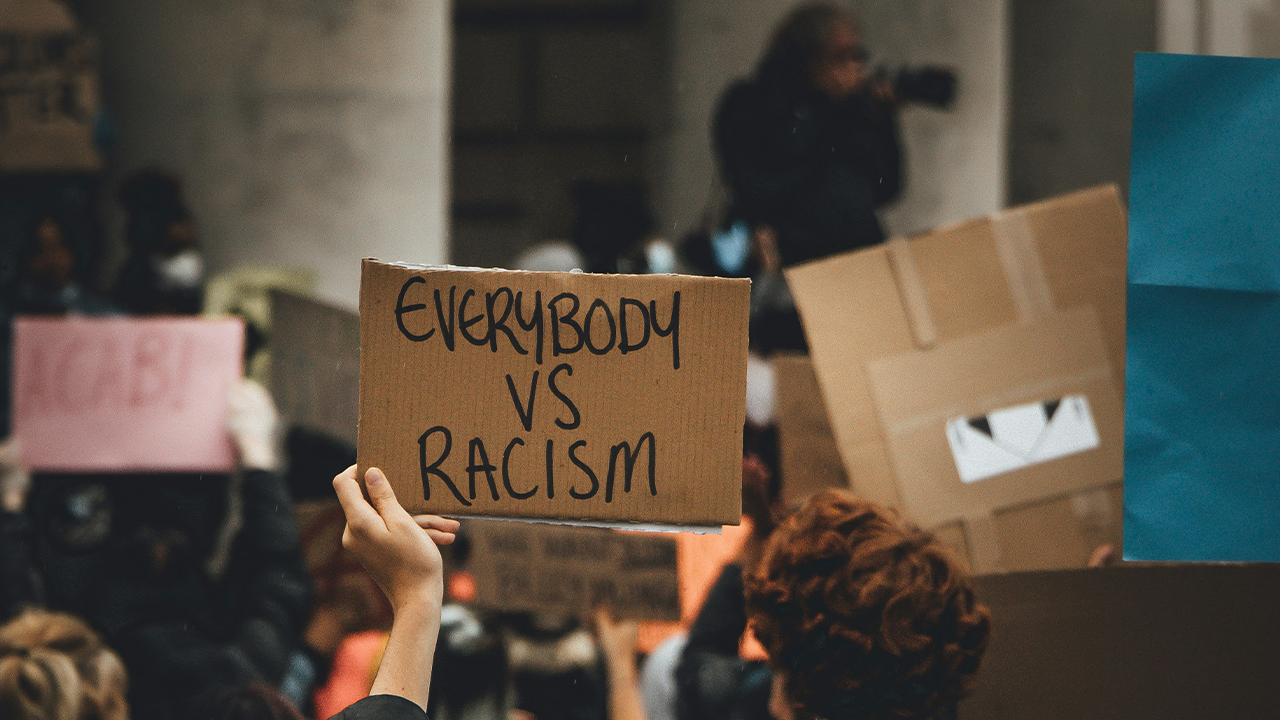
“Racism, again?”
That was my first thought after the third time the word came up in class that day. I was eager to learn about racism, but after hearing it multiple times a day, every day, something in me quietly shut down. The character on the slides became a symbol for me rather than a case discussion. I knew where it would go.
I had expected two years of social work training to make me more empathetic, more attuned to injustice, more willing to sit inside uncomfortable conversations. Instead, it made me tired sometimes, and furious with myself, and my numbness and coldness.
One day, our professor asked the class whether we still believed a pure, just, and equal society was possible. I said “no” loudly without thinking, and I meant it. It is a dangerous place to go for me. After my little speech, the other student, A, said she believed it would be, one day, eventually. She looked so genuine. I wondered why she was so “naive,” or if she saw something I missed. So, during the break, I asked her whether she had time for coffee on Saturday.
We went to a café I had never been to before. It was nice and quiet.
I told A about the exhaustion and confusion I had been carrying. The way every class discussion seemed to follow the same invisible script: whatever the question, whatever the context, the correct answer was always assembled from the same three ingredients: racism, oppression, capitalism. Say those words in the right order, and you were on the right side of history, no further thinking required.
I told her I hated that. I had come to social work because I wanted to understand people, to sit inside complexity, to ask hard questions. Instead, I found myself in classrooms where the hard questions had already been answered, and the only thing left to do was repeat the answers loudly enough. I felt our education stood in the way of any meaningful dialogue, keeping us safely on the surface of pity. Professors wanted to keep the discussion on safe ground, too. If we already have the correct answers, what are we still pretending to discuss?
A listened ardently to my emotion-dumping, without interrupting. I bet she would be a great social worker.
When I finished, she was quiet for a moment. Then she said, “I hear you.” She did not tell me I was wrong. I asked her why she still believed in pure justice and a future without oppression.
I had come to social work because I wanted to understand people, to sit inside complexity, to ask hard questions. Instead, I found myself in classrooms where the hard questions had already been answered, and the only thing left to do was repeat the answers loudly enough.
She looked at me and gently said, “Wen, do you know what my grandparents were doing when they were our age?” Her voice was so calm, disarming my defensiveness.
I kept listening, “They were not allowed to enter some restaurants and some schools.”
“Two generations,” she said. “That is all it took. Two generations, after 400 years of slavery, two generations, and I am sitting here with you, in the same classroom with White students, with a full scholarship for both my undergraduate and graduate education. My grandparents could not have imagined this, not at all. They could not have imagined me.”
I was so startled at that time, I never thought of it from this angle. For her, just two generations and life is totally different. She was not being naive. She is the evidence for a better world, so she believes in it. This is what change looks like, she was saying.
I had come into that conversation armed with cynicism, with what I thought was a more honest view of human nature. I had watched China try to build a better world and seen what it costs. I thought I knew something about the distance between ideals and reality. But something just opened up in me. I felt that I finally understood a little bit more about the words and names we talked about in the classroom.
I kept going. I was eager to make myself a better person. I do not want to be deflected by any big words, but deep in my heart, I knew I was.
I told her about my experience at the DMV, and the Black employees there who had treated me badly. I was angry, I felt powerless, and I thought they were just enjoying the power they never had before. I hated myself for thinking that way. I did not want to be that person, but in that moment of anger, that was exactly where my mind went.
I also told her about professors, too. The one who just showed us documentaries for whole class sessions, and was always late or canceled class. There were thoughts that they were hired because of diversity. Did the institution lower its standards to fill a number? I knew how that sounded. I knew it was a dangerous place to let my mind go. But it was where my mind had gone, and I had never said it to anyone before.
A asked me “Wen, that person who was rude to you at the DMV, did you see a person who was rude to you? Or did you see a Black person who was rude to you? And that professor,” she continued, “if they had been White and acted like that, would you have wondered if they were only hired because of diversity, not qualification?”
I was angry that in a system obsessed with race, I had begun to filter the world through race. I wanted to see people in their full complexity, but the “all about race” narrative was slowly poisoning my own gaze, turning me into the very thing I resisted.
“I am not defending any of them,” A continued. “The person who was rude to you was rude to you. The professor who taught badly taught badly. Those things are real. But have you considered that you might be using two people’s behavior to confirm a conclusion you had already made?”
The conversation kept going.
I still felt tired of talking about these words every day. When we say a word, we think we are seeing something. But a word is not a person.
I told A I had another nagging question I could not resolve. I understood why affirmative action existed. I understood that the door had been shut for generations. I was not arguing against that. When this system corrects one injustice, who pays the price? One of the groups most affected by affirmative action in university admissions was Asian students. (Arcidiacono et al., 2015) We too had also gone through racism and discrimination. I was not comparing suffering. I knew better than that. I was not saying the policy was wrong. But why does the cost of fixing history always seem to fall on another group of people who were never the ones who broke it?
A did not answer.
She looked at me, and I could see her thinking. But no answer came.
Walking out of that café, I felt I had a deeply human perspective, grounded by the people I interact with. They were no longer floating in me. I still felt tired of talking about these words every day. When we say a word, we think we are seeing something. But a word is not a person. I learned those words in the textbook. I tried my best to feel those words, but I cannot. I do feel the humanity of our words after talking with A.
I went home and opened the statement of purpose I had written when I applied to the School of Social Work. I found the paragraph. I had written that I was coming to social work with many questions, hoping to find answers. I thought I would get some answers after two years of social work training. The opposite has happened; I have more confusion. I guess some answers take a very long time to find. Maybe a lifetime. Maybe longer. Maybe some of them do not resolve at all; they just become questions you learn to carry more honestly.
This year, A and I both graduated.
The text is closed, but we are on our way.