Searching for Luck in Las Vegas Playing the Same Game on Two Different Floors
How life is one long gamble and the odds always favor the people who own the game
By Wen Gao
July 4, 2026
7 am.
I walked through the lobby of Caesars Palace. The cigarette smoke was suffocating. I pulled my collar up, pretending I could shield my mind from the gamblers. I felt like they were just wasting their lives on pre-programmed slot machines, blinded by their illusion of winning.
What a waste! I thought.
I was here for something real, serious. My trip to Las Vegas was for the AAPEX convention, an annual trade show for the automotive aftermarket industry, representing my Chinese company. But this year felt different. With the global economy struggling and an uncertain tariff policy, I did not have much confidence about whether we could still hold onto our American clients.
As I was walking toward my booth for the first day of the exhibition, I was praying in my heart, hoping for some luck. By evening, I found out I was right: I needed some luck. When I left the convention center, I looked at the business cards in my hand, way less than last year. Though not nothing, I comforted myself, tucked the cards away, and turned back toward the casino floor, the only way I could go back to my hotel room. As I was walking, I thought of the old Chinese saying, “东方不亮西方亮”—when one side goes dark, you find light somewhere else. Today had already gone sideways. Maybe luck owed me something. So, I stopped at the casino floor.
My first shock happened before I even touched a card or slot machine. I went to the counter to get some cash, and the teller mentioned a $16.99 service fee. I froze. Wait. What? I only wanted to withdraw $100. Before the game had even begun, I was already down by 17 percent.
You do not need a manual for a slot machine, because the entire user interface is just one giant red button. It said, “Come on, do not hurt yourself thinking, buddy. Just hit the big button. Now.”
Smart Move, I thought. If you are willing to accept such a steep cost just to enter the game, you are exactly the kind of person the casino owners want. If you cannot tolerate the fee, then you are maybe not the player they are looking for.
I sat down at the slot machine featuring the Chinese cartoon God of Wealth (财神爷) smiling from the screen at me. As I slid my $100 bill into the machine, a wave of anxiety hit me. I did not want to look like I did not know what I was doing. I was worried I could not figure out how to play this machine, but I soon realized that all my anxiety was a total waste of time. You do not need a manual for a slot machine, because the entire user interface is just one giant red button. It said, “Come on, do not hurt yourself thinking, buddy. Just hit the big button. Now.”
I obeyed.
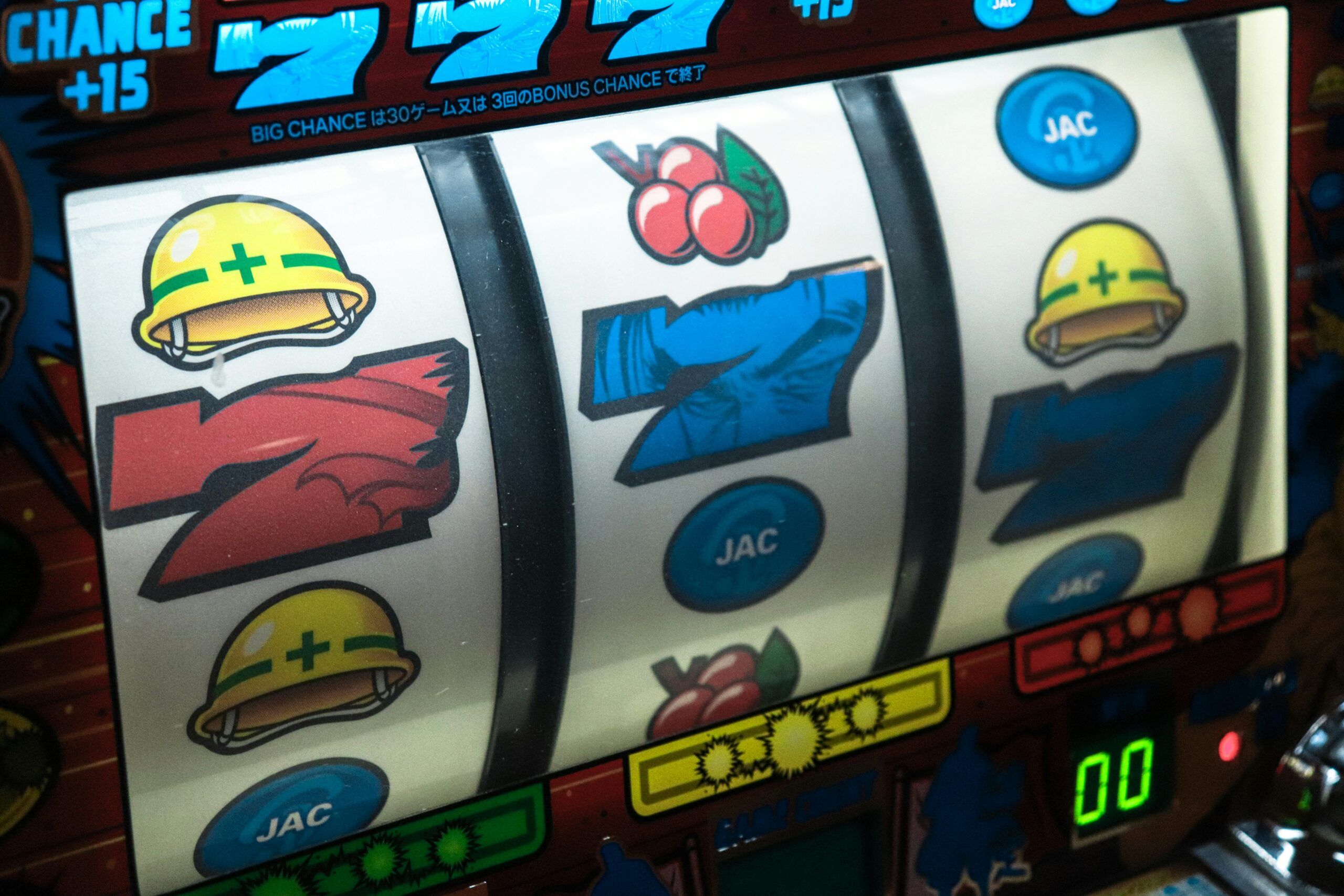
A sensory explosion of flashing lights and digital fanfares. It did not take long to master the “strategy”: you pray for the bulls, or you hunt for six “7” icon lineups. Beyond that, there is zero agency. Press the button and wait while the clinking coin sounds. The first few symbols aligned perfectly, teasing a jackpot. I was very excited, but the last symbol ruined my dream. Before my brain could even process the disappointment, my hand had already struck the button again, wishing for better luck for the next round.
In about ten minutes, my hundred dollars had effectively completed my contribution to Las Vegas’s GDP. My entire “investment” was down to a few lonely cents. The news always says gambling will leave you with absolutely nothing. But that is not true. The machine does not take your last penny; it leaves you with a few cents but not enough for another spin. Either you hit the “Cash Out” button and you get a voucher in your hands, or put more money in. Yes, I was not completely wiped out.
And that is another trick. When you decide to cut your losses and hit the “Cash Out” button, the machine does not spit out coins; it hands me a slip of paper. The casino secretly raises the cost of leaving. Now, I have to navigate the maze of lights and noise to find a redemption machine. I was too lazy to do that, so I took the voucher back to my room. The voucher still sits in my wallet with me back home. Many people may be like me and look at those few cents on the paper and think, “It is too much trouble to cash this out,” and they end up sliding it into the next machine or bringing it home as a souvenir.
I knew the math. I knew the odds were against me, but I still hoped for the magic. As my money vanished, the machine was still offering festive lights and music. Just as I was sinking into disappointment, neon lights started racing, and music blared at maximum volume. I asked the person next to me what was happening. He told me someone got a jackpot. “Man, I wish that were me. I wish I were the one winning that!” It was not just a celebration for the winner. It was a targeted advertisement aimed directly at losers like me who were just about to quit.
I went back to my room and threw myself onto the couch. It was just about morning in China; my boss called me to ask how business was that day. I felt guilty. I felt I failed him, but I also tried to justify myself, trying to prove that the lack of results was not due to my incompetence, talking about the tariffs that were not on our side. He told me it had not been a total waste. He said, “I did not expect that much to begin with. This kind of show for us, a small company, is like gambling: whether the right person walked past our table, whether they even glanced at our products, we need some luck, not a lot of things in our control. Wen, if you catch one or two big clients, and that is everything.” He understood this game better than me.
He was right. At the slot machine that night, I also had no control. I even lost my money. I did not feel so anxious. But at the trade show, I kept worrying more, trying harder, all the effort to feel in control, but did the odds change a lot? Maybe not.
Admitting that my effort might not matter means admitting that I have less control over my own life than I thought. That was a terrifying thing to sit with, especially as I really wanted to prove my value in my work. All day at the trade show, I was anxious, worrying, as if by feeling bad enough about the outcome, I could somehow influence it, feeling every outcome tells me who I am.
I looked down on those gamblers that morning because they were blinded by the illusion of winning against a pre-programmed machine. But standing on the exhibition floor, I was doing the exact same thing. The global market, rigged by tariffs and recessions, was just another giant slot machine. This government changes its policies faster than a slot machine spins. My neat suit and product catalogs were just my entry fees. I should not expect more than luck. The convention hall and the casino were separated by just one single floor. Each floor was packed with people toyed with by randomness.
I looked down on those gamblers that morning because they were blinded by the illusion of winning against a pre-programmed machine. But standing on the exhibition floor, I was doing the exact same thing. The global market, rigged by tariffs and recessions, was just another giant slot machine.
It was easier to separate myself from the game than separate my identity from my job, but the pressure in both was not helping me. This Las Vegas trip made me feel like I was just a narcissist. The players downstairs lost their money. They shrugged, cursed, and walked away. I kept telling my boss and myself: “Look how broken I am. You cannot call me irresponsible, because my pain proves that I cared.” I was using anxiety as a shield, and I justified it. There is an ancient Chinese saying: “天地不仁,以万物为刍狗”(The universe is heartless; they treat all creatures like straw dogs.) I used to think it meant the universe was so cruel. Now I have a deeper layer of understanding; it can mean the universe is just impersonal. There was no judge sitting in the clouds. I no longer needed to spend every waking hour defending myself. I did not need to justify my existence with my suffering.
This does not mean I will stop trying. I am just changing my relationship with the game.
Tomorrow the trade show opens at 8 am.
The doors will open.
Clients will walk in.
The market will keep doing what markets do.
And so will I.