How the Wreckage of Slavery Washes Upon the Shores of a Small Island
Or why I had to travel 2,180 miles to face the past.
August 31, 2025
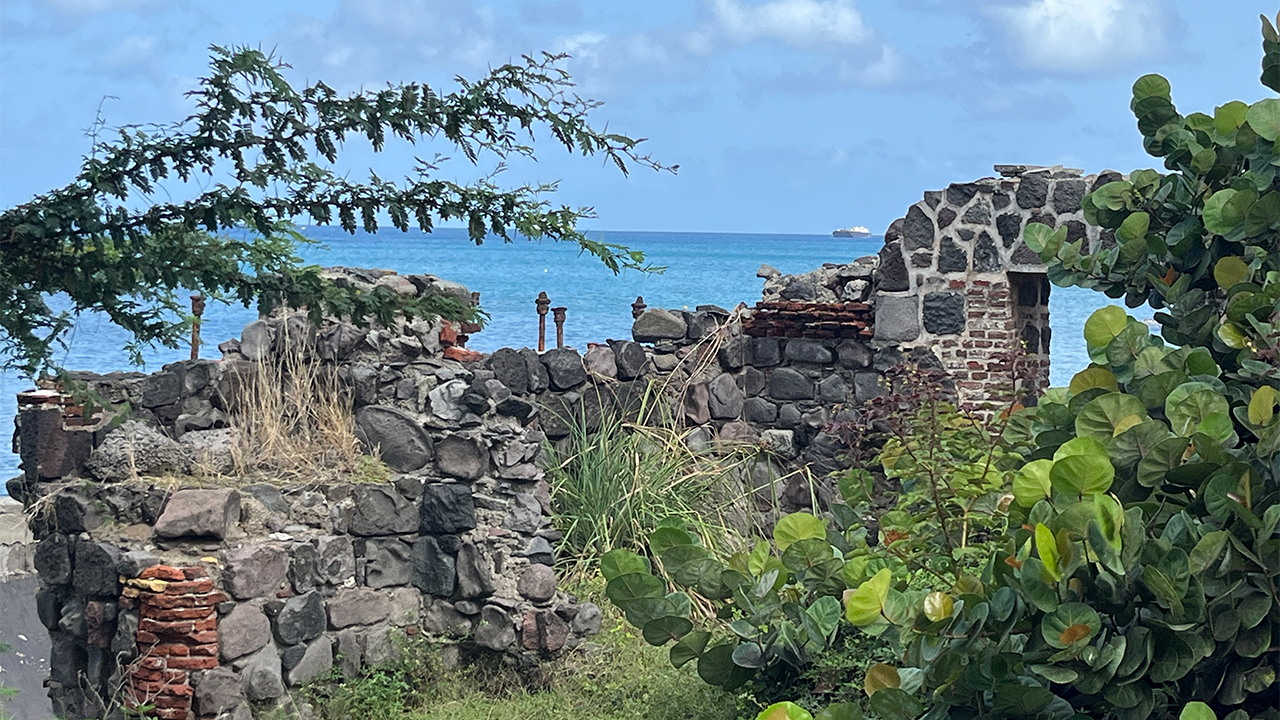
Mike Harterink leads me to a gravel parking area across from his Scubaqua dive shop. He and his partner opened it on Statia—one of the tiniest, least touristy islands in the Caribbean—years ago, drawn by its pristine reef and startling history. “This was once the biggest harbor in the world,” he says, his arm sweeping through the air.
I have read the tales. Six hundred warehouses lined the harbor in crooked rows. Inside them hung “rich embroideries, painted silks, flowered Muslins,” wrote Janet Schaw in 1775. “Here was a merchant venting his goods in Dutch, another in French, a third in Spanish.” The island was “an emporium for all the world,” Edmund Burke told the British House of Commons in 1781, “a mart, a magazine for all the nations of the earth.”
Now Harterink hangs his clients’ wetsuits in a building that is older than the United States. Above its entrance is a stone plaque inscribed with the logo of the Dutch West India Company—whose wealth in the 1700s makes Amazon look mom-and-pop. Harterink scuffs the gravel next to a well-used red truck, bends, then holds out his hand.
Dubbed “the Pompeii of the New World,” Statia has more historic ruins per square mile than any other Caribbean island—and a heritage that has become, for a handful of people, a crusade.
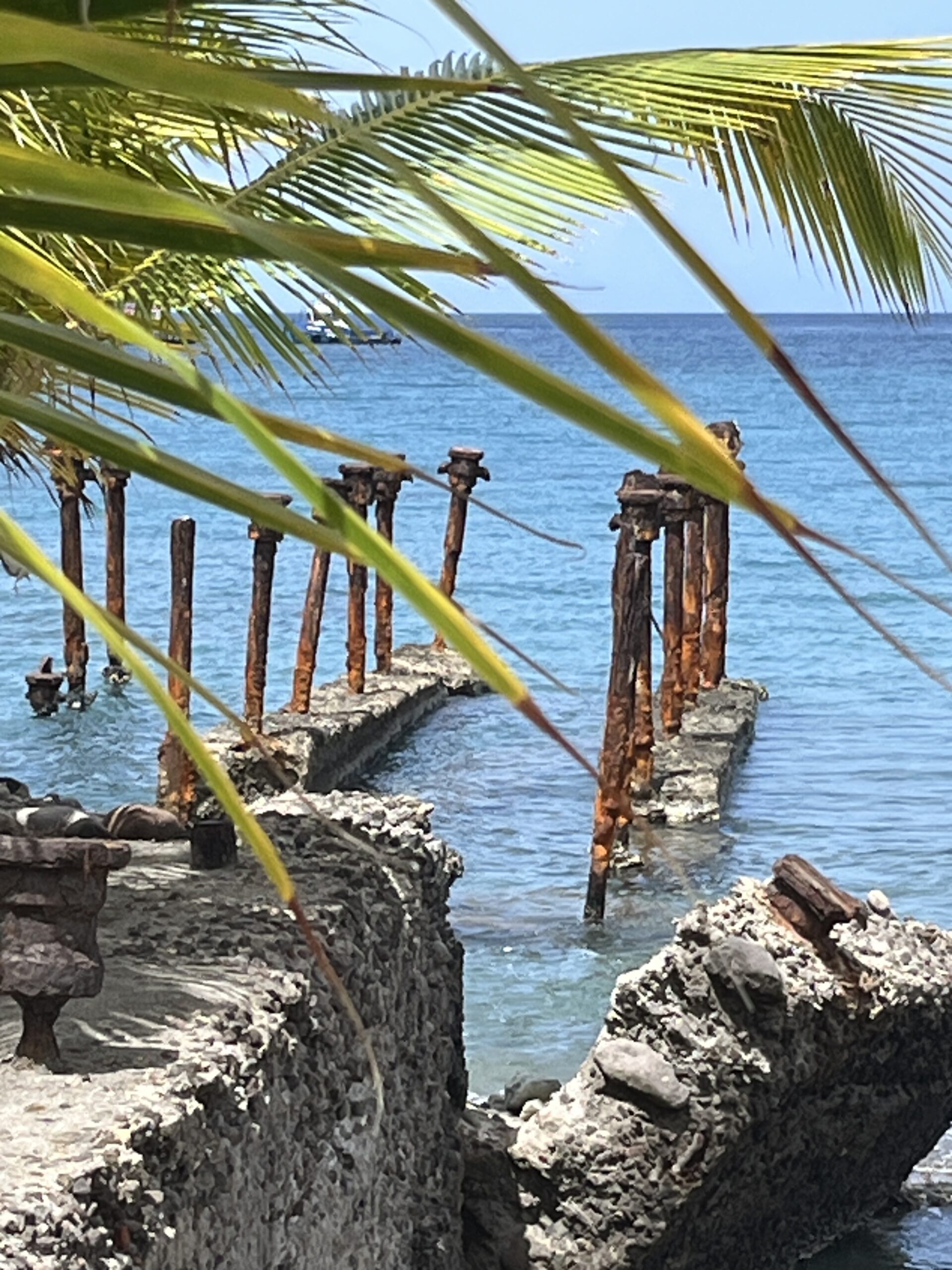
On his palm rests a piece of blue-and-white Dutch pottery glazed at least four centuries ago. He bends again, sifts through the gray rock, and comes up with the broken stem of a white clay pipe. For a cynical minute, I wonder if he has planted these artifacts just to wow me. Then I remember last night. My historian husband was thrilled to learn that the restaurant I had chosen was a 1700s barrelhouse, the luxurious dust of cane sugar and coffee beans still trapped in its wood beams. We ate on the terrace, watching the sun set gold behind a rusted pier that has held its own against the waves for four centuries. Strolling after dinner, we spotted an old cannon in somebody’s front yard; passed crumbling ruins with vines tangled in the yellow brick.; peered through an arched opening at what looked like a pirate ship out in Gallows Bay.
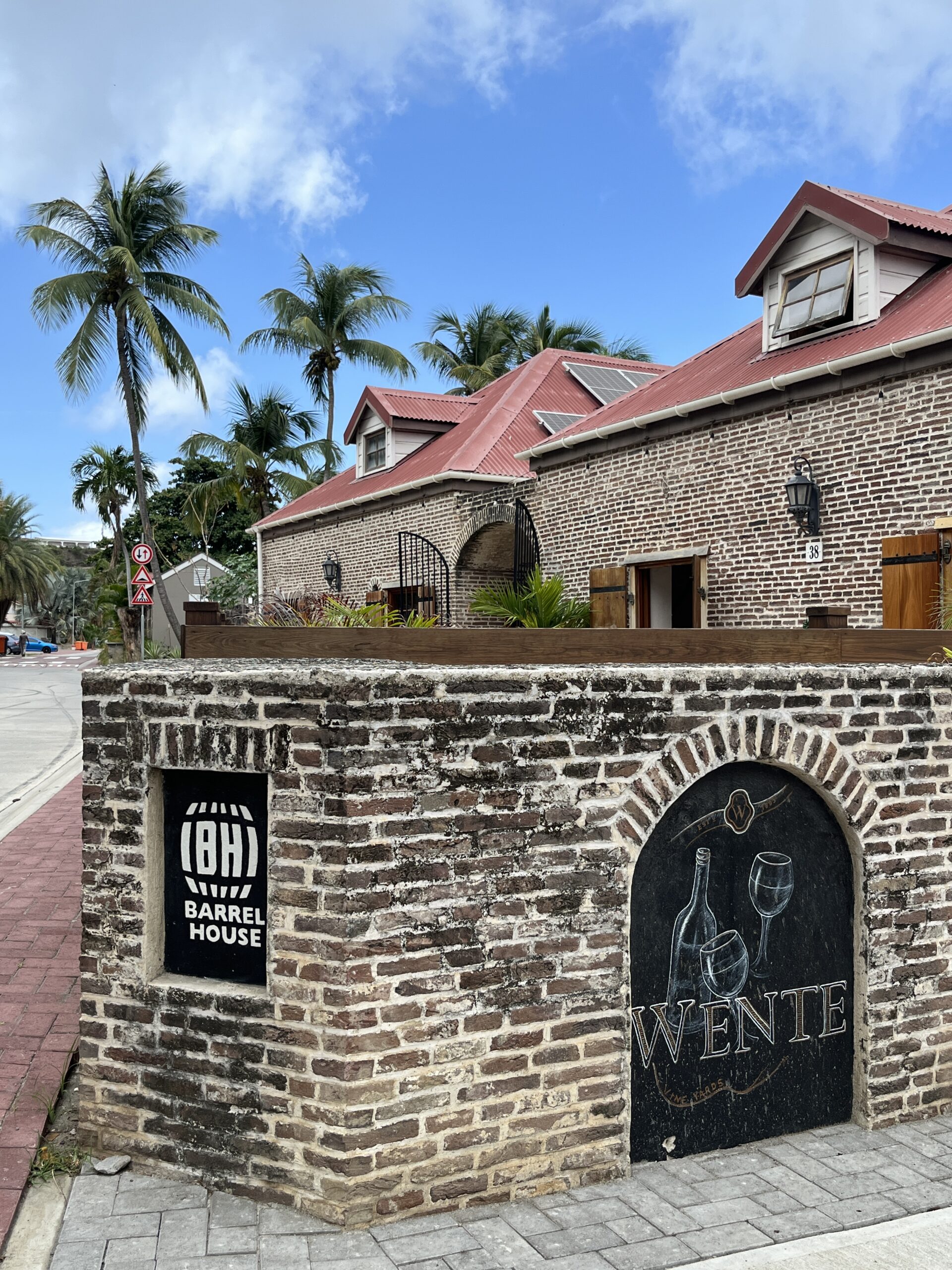
This island is extraordinary, and indifferent to that fact. The past is alive wherever you turn, though with few historic markers and little protection. Artifacts, ruins, and human remains have been tossed aside, laid claim to, or layered over, yet they refuse to be erased. Even the names pile up: The Taino called the place Aloi, or Cashew Island. The Dutch took it over and christened their colony Sint Eustatius, for an obscure Christian martyr burned alive inside a bronze bull. As fortunes grew, European and American merchants dubbed the place the Golden Rock. Today, it simply calls itself Statia.
Dubbed “the Pompeii of the New World,” Statia has more historic ruins per square mile than any other Caribbean island—and a heritage that has become, for a handful of people, a crusade.
The past is stubborn, and so are those seeking to preserve it.
• • •
The island’s centerpiece, a dormant volcano called The Quill, feels ancient, with giant ferns and elephant ears that could have tickled a dinosaur’s stubby legs. Vines twine up the trunk of a 148-foot silk cotton tree. Tucked inside the crater’s rim is a miniature rainforest, lush with wild orchids.
From The Quill, you can see the clear, protected reef that surrounds the island—and holds the wreckage of more than two hundred ships. I squint at the bay, which is not travel-brochure turquoise but a serious dark blue hemmed in smooth gray volcanic rock. So many ships once sailed in and out of this harbor that Ben Franklin sent his correspondence to Europe via Statia. Those flourishy, sepia-inked letters joined cargos of coffee, tea, cocoa, spices, silks, velvets, gold, silver, wines, rum, mahogany, porcelain….
But the main commodity? Human beings. Statia was one of the major transit points, with shiploads of men, women, and children unloaded, warehoused, then either auctioned or forced into labor here. Some like to say conditions were “better” on the island, which was so wealthy that even the enslaved had nice things. Since the only way they could escape was to sneak onto a boat or swim to St. Kitt’s, oversight was less vigilant. They were even “paid” with five-sided blue glass beads they could use as an informal currency.
Locals say that after “emancipation,” July 1, 1863, those who had been “freed” gathered on the cliffs and hurled those beads into the sea.
I use quotation marks because a man I met here, Kenneth Cuvalay, swiftly schooled me. “I take you from your house, torture and degrade you, and then a point comes when I see no more value to you, and I say, ‘You are free’? You were born free.” Instead of saying “slave trade,” which underscores the old notion of people as property, he suggests “trafficking in enslaved Afrikans,” spelling the continent’s name as they would in their own languages.
Many would dismiss such distinctions as woke, but after meeting Cuvalay, with his knowing eyes and gentle admonitions, I find it impossible to brush them aside. They are heavy. They hold truth.
• • •
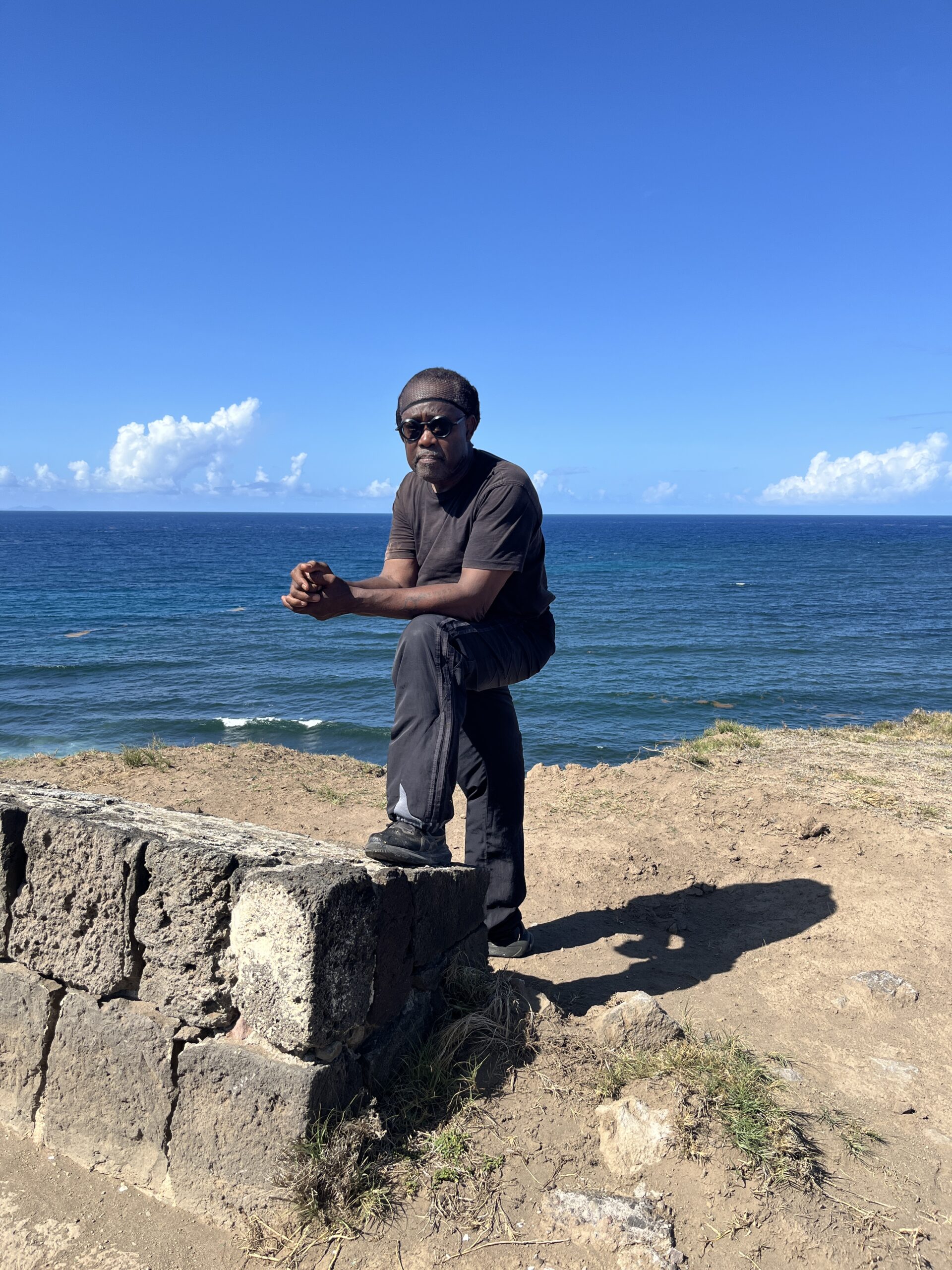
Cuvalay is president of the St. Eustatius Afrikan Burial Ground Alliance; that is how I found him. He promised to show me the burial grounds, along with other historic sites, so I would understand.
He drives casually, zooming and braking and greeting people. There are no traffic lights on Statia; people just wave, and the biggest delays come when goats are crossing the road. We loop up the long way (though nothing is long on an island of 8.1 square miles) from the harbor to Fort Oranje, strategically perched on the cliff. On foot, we could have climbed, breathless and sweaty, up the shortcut that is still called the Slave Path. Close your eyes, and you can see Dutch ladies in long skirts being carried up on cushioned sedan chairs.
Fort Oranje has a breathtaking view and cool cannons—although colonial nations often failed to send enough ammunition for the island to defend itself. It changed hands twenty-two times, always bouncing back to the Dutch. Outside the fort stands a solemn monument to the First Salute.
On November 16, 1776, the USS Andrew Doria sailed into harbor flying the new U.S. flag and fired a cocky thirteen-gun salute. Thrillingly, Fort Oranje returned that salute, offering the first official international recognition of the new nation. St. Eustatius was, on paper, an ally of the British empire, yet had been supplying arms to American revolutionaries. Livid at this latest betrayal, the Brits invaded and sacked the island.
Fort Oranje has a breathtaking view and cool cannons—although colonial nations often failed to send enough ammunition for the island to defend itself. It changed hands twenty-two times, always bouncing back to the Dutch.
The story of the First Salute is the sort kids in the U.S. beg their parents to tell again and again. Cuvalay is less charmed. “Who was saluting whom?” he asks. “Two colonial powers, both enslaving and trafficking in human persons, were saluting and praising each other.”
Nor is he impressed by plans for a blowout international celebration next year, inviting President Trump and King Willem-Alexander of the Netherlands for the 250th anniversary. First Salute 2026 will be the largest celebration in the history of the island. “What gross disrespect, to say you are going to come and have this great festivity in commemoration, praising enslavers, on an island almost entirely Afrikan,” remarks Cuvalay. For years, November 16 has been Statia Day, a celebration of Afrikan heritage. “So explain how this will work,” he demanded of the planners. “The First Salute ceremony in the morning, and the rest of the day is Statia Day? Masses of military ships in the harbor, and local people probably having to keep a distance—how does this match with Statia Day?”
What matches, and quiets protest, is the money that is tied to the commemoration. It will fund a cluster of projects, including the re-creation of two forts at the other end of the island. “They had nothing to do with the First Salute,” my husband protests. “Why throw money into sites that no longer exist, instead of clearing and protecting the burial grounds?”
Because for tourism, forts are sexier than reminders of enslavement. There are two separate pasts on this island, I decide, but Cuvalay surprises me by disagreeing: “The colonial forts are our heritage too, because it was our ancestors who had the skill to build them.” He shakes his head, rueful. “They destroy our history and reemerge with elements of our history as if it were theirs.”
• • •
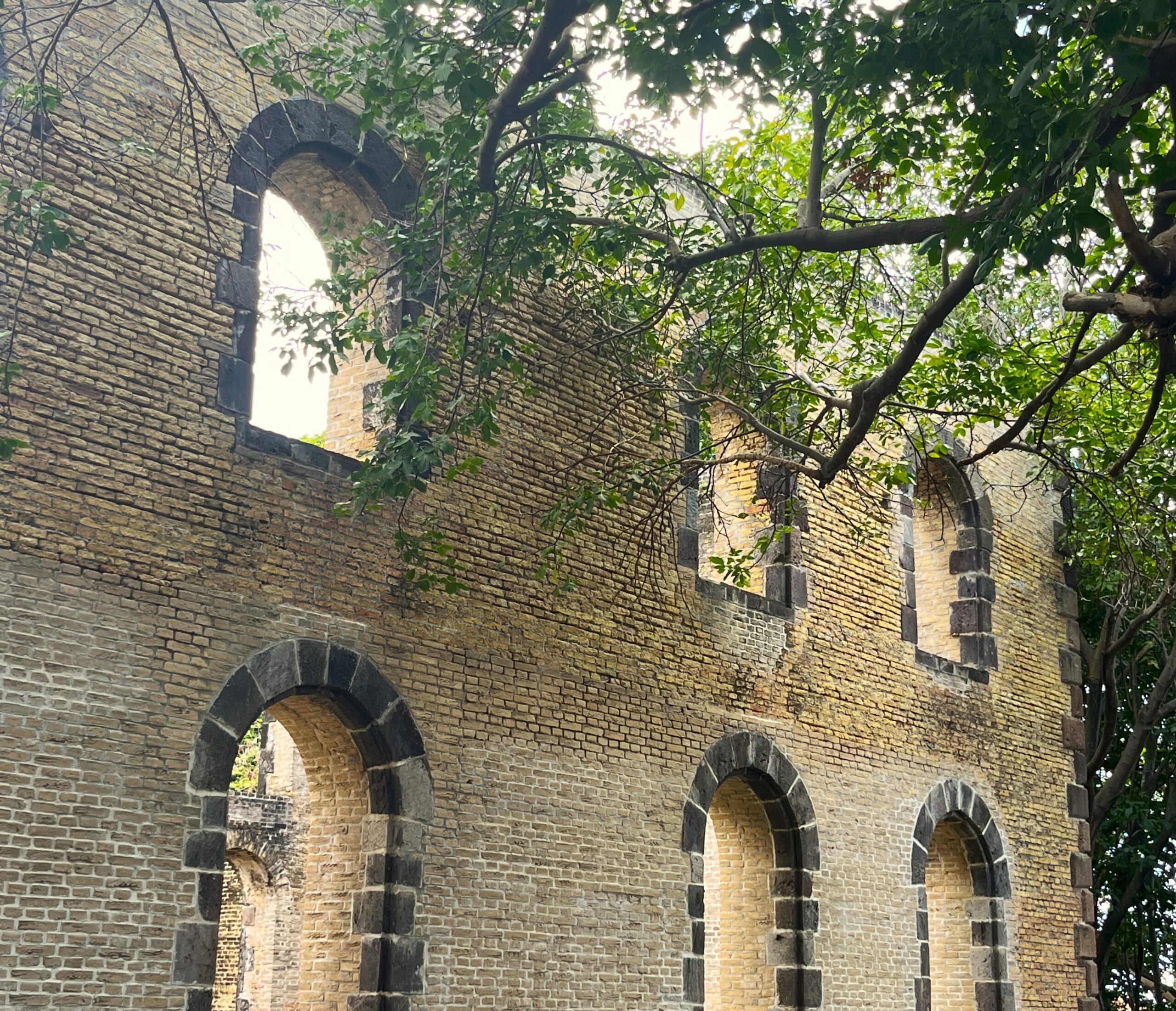
Moving away from the center of the Upper Town, we walk down a narrow alley and emerge at the ruins of Honen Dalim. The second-oldest Jewish synagogue in the Western Hemisphere, it had to be built on a site that would not confront Dutch Christians daily. Only the walls still stand, filled with air and sky.
Sephardic Jews began arriving here in the late 1600s. A Jewish woman taught the Ten Commandments to an impish young Alexander Hamilton when his family hid out on St. Eustatius for a few years. The mikvah where she would have taken ritual baths is intact, but the synagogue’s white sand floors—which softened noise and symbolized the displaced Jews’ journey through the desert—blew away long ago.
Made unwelcome by the British, Jews left the island in 1781. Today there is no resident Jewish population. Yet the Jewish cemetery is respectfully kept, the grass neatly trimmed. The cemetery at the old Dutch Reformed Church is even lovelier, shaded by old, still vigorous trees. Cuvalay reaches into a mass of thick, dark green leaves, then hands me two mangos. Sweetened, he has always believed, by the bodies who lie here at peace.
We walk amid the tombstones. “You see?” he says. “You can visit these cemeteries. You could lie down on the soft grass and take a nap here.”
Without further comment, he drives us to the other end of the island and parks alongside a scraggly hill. He goes first, holding down a torn piece of chain-link fence we have to smash underfoot to step onto the edge of a seventeenth-century cistern that blocks our way. It is so dark, it looks bottomless, and I clutch his proffered hand, mine damp, as I inch sideways along the narrow rim. Once on solid ground, we slash our way through the tall weeds of the old Godet plantation, one of many unmarked, overgrown sites where enslaved Afrikans are buried.
Cuvalay was right—the mangos from the Dutch cemetery were the sweetest I have ever tasted. Here, the ground is littered with small red fruit he warns us not to touch. “They planted these trees so, if the enslaved people tried to escape, they would be poisoned to death.”
I glance down ruefully at my sandals. Surely he is exaggerating? I am willing to chance it; few warnings in my charmed life have proved crucial. But my husband sits down on a log, removes his sneakers, and hands me his socks.
Later, I will look up the manchineel tree and learn that it is the world’s most poisonous. Every part of this tree is toxic: fruit, sap, leaves, and bark. It tastes sweet at first—especially if you are starving—then turns peppery. Your throat swells, strangling your breath. Toxins churn inside you, causing vomiting, internal bleeding, and cardiac arrest.
When you are enslaved, you learn to heed warnings.
We walk about twenty yards farther, and Cuvalay pauses. “When I enter our ancestors’ sacred places, I do a libation,” he says. “We will each make a wish.” Together, we repeat “Ashe” after each wish. Later, I will learn that this Yoruba word signifies “divine life force, power, authority, and the ability to make things happen.” For now, it is enough to feel the energy vibrating in Cuvalay’s palm, the knowledge of his ancestors’ pain and the hope that it will someday be fully acknowledged.
Here, the ground is littered with small red fruit he warns us not to touch. “They planted these trees so, if the enslaved people tried to escape, they would be poisoned to death.”
We retrace our steps. “What I would really like is to cut this barbed wire and have the police come,” he says, mischief in his eyes. Nothing could break this man’s spirit, I decide. He uses his anger as fire but never lets it rage unchecked. Instead, he remains courteous, slyly funny, and wise, able to see into—and sometimes through—whomever he encounters. At eight, he left school to work and help his mother, who was raising six of her own children plus seven of a relative’s. Visits by Kenneth’s father brought violence instead of support. Kenneth saw fat priests feasting while his family starved; he saw, hanging in his own home, White images of God and Jesus and the disciples. “How is it,” he wondered, “that we are existing on this planet and I am not seeing one image of us?”
He has been fighting for justice ever since.
We make our way down to the coast. Soldiers at Fort Amsterdam once welcomed ships here, loading their human cargo into a two-story “Slave House” crammed with as many as 450 people at once. “A lot of them died in that prestigious building,” Cuvalay says. Those who lived were moved to plantations or “sold” and shipped off again as chattel.
My chest tightens. There is no way to know who lies beneath our feet, no way to focus the sadness or reconcile the contrasts. The coastline is especially beautiful here, a foamy S-curve, and the sun lulls you into Statia’s peace. There is no rushing here, no stress, no crime. But there are ghosts of the bloodiest possible crimes.
It would better fit my mood if a harsh wind blew; if the day were gray and bleak and Cuvalay were not, despite the gravity of our talk, such fun to be with.
But his outrage was not born to fit my mood.
• • •
For almost a decade, students and professors from Texas State University and other institutions, trained in the field school run by The Sint Eustatius Center for Archaeological Research (SECAR), excavated graves of enslaved Afrikans at Godet. Holes were gouged in the earth, and the gravesites were left half covered in plastic tarps and stones, loose edges flapping in the breeze. A sacred resting place, exposed to the world. Did none of those visitors want to honor the lives they were studying? Or were the remains so old that imagination balked, and the work became transactional, its only goals knowledge and publication?
The descendants of those buried here were not consulted. Academic papers were later published about the diet (plants and seafood) of the enslaved and the enamel and abrasions on their teeth. Other projects sampled DNA, again without permission, “comparing patterns of pathology.” Claiming rights over these bodies is, to Cuvalay, “a structural continuation of enslavement. They want to know what kind of diseases we had? The disease was enslavement.”
Last year, the St. Eustatius Afrikan Burial Ground Alliance won UNESCO standing for both the Godet and the Golden Rock burial grounds in its Routes of Enslaved Peoples program. The day after a ceremonial visit from UNESCO representatives, the local government shored up the eroding Godet site with a wall of small boulders.
There is no way to know who lies beneath our feet, no way to focus the sadness or reconcile the contrasts. The coastline is especially beautiful here, a foamy S-curve, and the sun lulls you into Statia’s peace. There is no rushing here, no stress, no crime. But there are ghosts of the bloodiest possible crimes.
“For more than six decades, human remains were sticking out of the ground, erosion was going on, and nobody gives a damn,” Cuvalay says. Now, he is afraid the hasty effort will do more harm than good: “When it rains hard, it will go down and through the rocks and suck out the soil, and the earth will sink, exposing more remains.”
The biggest controversy erupted at Golden Rock, a massive archaeological site that extends along and beneath the island’s airport. The local government wanted to mine sand from the site for road construction, but archaeologists predicted the presence of important structures there. In 2021, an international team of archaeologists flew in and began to dig.
Sixty-nine burials were uncovered, the second-largest burial ground of enslaved Afrikans in the Caribbean, as well as remnants of the village where they lived. Again, there was no consultation with their descendants. “The oppressed often did not have a voice in history,” the international team would later write in their report. Yet they had continued the silence.
Protest exploded. Residents poured into a town hall meeting loud with outrage. The St. Eustatius Afrikan Burial Ground Alliance was born. And the excavation was halted.
SECAR director Ruud Stelten, the lead archaeologist, left the island, and SECAR hired Nicholas Budsberg as director. When he arrived, artifacts were being stored in rusted-out shipping containers, or in buckets of water exposed to the weather. Human remains were kept in an air-conditioned, locked room—but with layers of bat guano caked on the boxes. Statians had ceased to trust SECAR, whose attempts to involve them amounted to little more than field trips for schoolchildren “with White foreign experts showing them their dead in a fascinated, scientific manner,” Budsberg says. He found himself at odds with his board and unable to make the changes he felt necessary.
Meanwhile, he had reported signs of an Afrikan village on the Golden Rock site, but when he was out of town helping a sick family member, Statia Roads & Construction went ahead and started its own digging. By his estimate, they destroyed more than one-third of the Afrikan village.
By then, a Statia Heritage Research Commission had been formed to investigate the original excavation. Why had no Caribbean-based specialists been involved? “One potential clue,” the commissioners reported, “may relate to the fact that in the Caribbean region there are very few large enslaved African burial grounds that have been professionally researched, and with 70+ burials, the Golden Rock site was primed to become one of the largest ever studied in the region”—thus a career coup for those involved.
Ambitious archaeologists need not shoulder all the blame, though. They had been given carte blanche by local leaders. “Government claims no expertise thus passes responsibility,” the commissioners noted. Dutch heritage laws are fiercely protective—but do not apply on Statia. “This,” notes a Dutch archaeologist, “sends a message to the inhabitants of Sint Eustatius that their culture is deemed less worth protecting.”
It also allows scant oversight or transparency. “Indeed there are indications in the preparation documents that information about the potential of the Golden Rock site to have enslaved African burials was suggested to be withheld from the public,” the commissioners observed.
They outlined new practices. Any archaeological excavation project would receive input from the community and from scholars from the Afrikan diaspora. The same human remains must not be sampled again and again by different research groups. There must be a scientific research protocol. Ancestral remains should be reburied, if possible at the original site of rediscovery, and a monument erected to their memory.
Human remains were kept in an air-conditioned, locked room—but with layers of bat guano caked on the boxes. Statians had ceased to trust SECAR, whose attempts to involve them amounted to little more than field trips for schoolchildren “with White foreign experts showing them their dead in a fascinated, scientific manner,” Budsberg says.
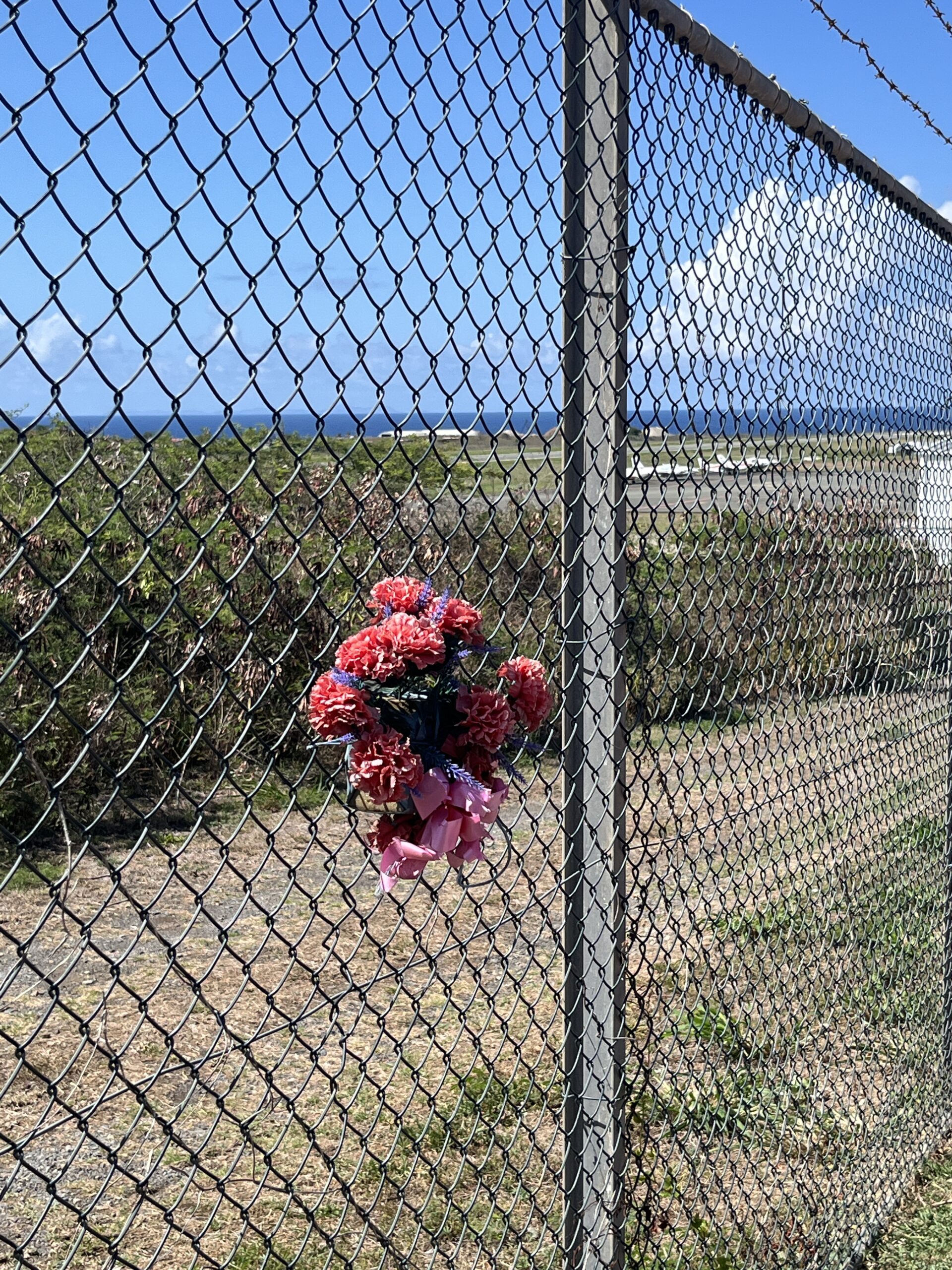
I am thinking about the new practices, which hardly seem extreme, as I stare at a funeral wreath stuck into the cyclone fence around the airport site. A similar wreath was left during the UNESCO visit; Cuvalay found it trashed the next day. Nothing is visible behind the airport fence to indicate the presence of graves or historic villages. In the skinny grass strip between the sidewalk and the road, there is a squat, unmarked red post about the height of a fire hydrant. “There used to be a QR code on it,” Cuvalay says dryly. He points to a small gray concrete cube, also unmarked, behind the fence. “That’s the marker for the Pre-Columbian site.”
Adjacent to the Afrikan burials was a fifth-century Saladoid village first excavated in the 1980s: the only complete village plan from that era ever documented in the Caribbean. The Saladoid Amerindians built clever homes, some shaped like sea turtles, and round communal houses. Archaeologists had found an observation post; a midden; classic Saladoid white-on-red painted pottery; and nine skeletons, one of a fourteen-year-old, buried with grave gifts.
Those human remains were boxed up and returned in 2023—after being held for three decades in the Netherlands. “Artifacts are still at William and Mary,” SECAR president Gay Soudekouw tells me. “We may have some at University College of London…and possibly at East Carolina University and Texas State, and there are some at Williamsburg from earlier digs.” The island does not have the proper facilities, she says, so “bringing them back would be irresponsible.”
And the human remains of the sixty-nine enslaved men, women, and children who were once so respectfully laid to rest, in coffins, by their loved ones? They have yet to be reburied. They are stored in a depot named Heritage House and “can be made available to students, scholars, and the general public,” a show-and-tell that would have horrified them. Many of those enslaved on Statia came from what was then called the Kingdom of Kongo, in western Afrika, where burial customs were deeply spiritual. The living were responsible for bringing the body to a state of ritual purity and guiding their loved one’s spirit to the realm of the dead. Gravesites then became places the living could go to commune with their ancestors.
Does that sound like an anthropologist’s description of a remote culture? I think of my Irish grandmother tenderly washing her mother’s body, praying over it, weeping over the coffin, then visiting the neatly inscribed gravestone, flowers in hand, to pour out her latest woes for love’s silent advice. What if she had shown up to find her mother gone, the skeleton shipped off by strangers to, say, Nigeria? How does any culture respond when bodies of the beloved are yanked without warning from purity and protection and shipped to another land to be sampled?
Reburial, everyone agreed, was paramount. The first offer was to rebury the remains where they were dug up, at Golden Rock. But the government was planning a roundabout there—“which is totally ridiculous,” says Derrick Simmons, a member of the Island Council who is also part of the Alliance. “There is no traffic! So why are you building a roundabout on sacred ground?” Next, an area behind the Dutch Reformed cemetery was suggested, “but it already had bodies buried there that had sickness,” soldiers who died in a yellow fever epidemic.
The latest proposed site is above the Old Church burial ground, and a study is under way to see if there are already any remains there.
How does any culture respond when bodies of the beloved are yanked without warning from purity and protection and shipped to another land to be sampled?
As for the existing burial grounds, many are privately owned—even the Godet site, which contains Fort Amsterdam. Cuvalay looks upward in exasperation. “How can an individual own a fort?” he asks the air. “And how can a government designate land not knowing it is owned by a third party?”
Back in the Upper Town, he calls that question to a young Black civil servant who is passing.
“Those are the right questions,” the man calls back, “but you are asking the wrong person.”
Godet “is another fiasco,” Simmons explains. “The property belonged to the government and was leased, and the family put in a claim to own the property. That should never have been possible. So now there is a dispute.”
The Alliance is not looking for elaborate solutions. “First we need ownership of the property,” Simmons says, “so it can be recognized as a burial ground, protected and secured, and you can go and visit. And then it should be kept well, so it does not look like the bush. Great effort has been made to erase history in these areas. Private owners could build on the property and bulldoze everything, and we would have nothing. There are similar stories throughout the Caribbean”—historic areas that have been destroyed in order to destroy the past.
Meanwhile, the remains wait at Heritage House, which in Cuvalay’s opinion is “undignified.” The adjective sounds like an understatement unless you hear his tone of voice. “Anyone can ask to see them; our ancestors are looked at as a commodity again,” he says. “This, for us, is humiliation. As long as the remains remain above earth, the degradation will continue.”
• • •
“People see the White people who come as coming to save them,” Cuvalay tells me. “When I introduce you, you will always be ‘Miss’—and Mr. Cuvalay will be the troublemaker.” Whenever he reminds other islanders that nearly everyone here is of Afrikan descent, they correct him: “We are Dutch.” Or they say hastily, “No, my grandfather was from Scotland, we are mixed.” He sighs. “Our people start to think that they are having no value, and what has been upheld as White supremacy is the truth.”
In consequence? It will be a struggle even to rebury the ancestors according to their customs. The spiritual practices of voodoom, rooted in West Afrika, now strike the devout Christian descendants as ignorant, superstitious, even satanic. The fear is so sharp that some have said, “Just send the remains back to Afrika and let the libations be done there.” The commissioner of culture, Rechelline Leerdam, agrees with Cuvalay that to bury according to current custom would be disrespectful. But she has heard the terror in people’s voices, their insistence that if there are libations and Afrikan rites, they will leave the island that day! “Sometimes I feel like we are ashamed,” she says. “As though those practices are ‘wrong.’ Why are they wrong?”
“Great effort has been made to erase history in these areas. Private owners could build on the property and bulldoze everything, and we would have nothing. There are similar stories throughout the Caribbean”—historic areas that have been destroyed in order to destroy the past.
When Cuvalay hands me demographic information about enslaved ancestors, he warns me not to pay much attention to their listed religions—which were supplied by their enslavers. “Our people had their own beliefs. They were portrayed as barbaric and primitive, their traditional philosophies about the cosmos were disregarded, and their spiritual rituals were branded sorcery, black magic, or witchcraft.” This is how you destroy a culture: make it seem dangerous or ignorant, and if necessary, criminalize it.
He remembers “a gentleman from the Dutch Ministry of Interior Affairs sitting here, in a predominantly Afrikan community, and saying that the eighteenth century was a period of prosperity. For whom? The insensitivity of these people!” Oil, cocoa, diamonds, and gold stolen from Afrika—and those in the Afrikan diaspora still marginalized? He remembers a White woman announcing that people in Statia knew nothing of their own history, and SECAR needed to teach it to them, to help them understand who they are. He pulls up the video on his phone and repeats that line as she says it, the words bitter on his tongue.
Johannes de Graaff, governor of Statia in its golden years and the richest man on the island, owed his coffers to the three hundred enslaved Afrikans who worked his ten plantations. “He would buy the weakest, almost dead kidnapped Afrikans from the ships, then fatten them up and sell them with high profit,” says Cuvalay. “He was a murderer. But we fail to use the word because we think it is too confrontational.” Perhaps also, too dissonant. Little kids on Statia learn to read at Governor de Graaff School. They play at Wilhelmina Park, which was once a gathering place for those who were enslaved—though that history is now overlaid by the late Dutch queen’s name. Once, when a proposal was submitted to the Dutch national central bank to fund reburial of the enslaved ancestors and a memorial to them, “they wanted the trafficking of human beings taken out of the documents,” Cuvalay says.
The narrow, stone-walled road built by the enslaved ancestors is slated to be replaced, so guests can be whisked to the remote location of Statia’s only luxe resort on a highway. Concrete gets dumped at historic sites. Dirt from past excavations has been dumped over a cliff or used in other projects, so that people later find transplanted bits of the past. But Statia’s young people are growing protective of their history. They see how the handful of commercial projects have torn into the past, ripping it apart, draining what was unique, extracting profit. Above the Godet site where enslaved people were once imported, imprisoned, and exported, Prostar Capital, a global investment company, now imports, stores, and exports oil….
I am slow to detect such patterns. Working at a university, I had become weary of rants about postcolonialism: all that was so long ago, I thought. Why not focus on the urgent civil rights issues of today?
Because it is all connected.
Back home, I open the latest Hyperallergic art newsletter and see a blond White woman in midair and indigenous Americans very tiny, fleeing in the distance.
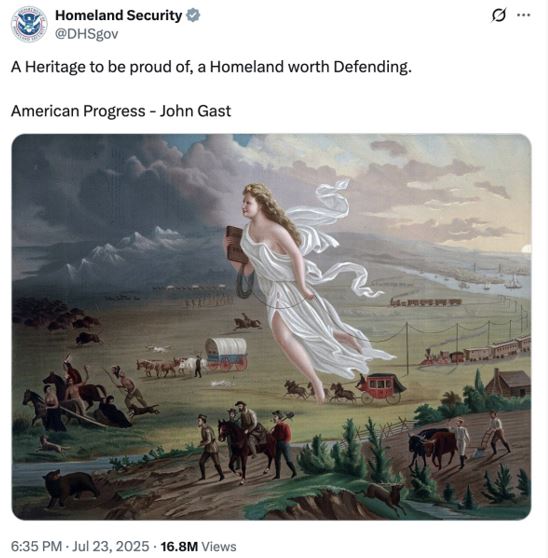
The year Gast painted American Progress, the writer notes, “a contingent of 130 soldiers of the 5th Calvary Regiment arrived at Skeleton Cave in Arizona’s Salt River Canyon, where a group of Yavapai people had been sheltering. In under an hour, the army slaughtered almost a hundred of the Yavapai, including many women and children.”
That heritage, too, lives on.
So why did I have to cross an ocean to feel the injustice this sharply? I have read about, even reported on, similar issues in the United States. Neglected Black cemeteries; a sacred Osage burial site destroyed to build a Walmart; a cave lined with sacred prehistoric paintings put up for auction. Here, though, the wrongness slithers deep inside me. Maybe because the place is so small that it is possible to grasp the enormity? Back home, urged to see some piece of cast-off, painful history, I might well ignore the invitation, either numb to the facts, weary of the repeated outrage, tired of feeling helpless, or reluctant to feel complicit. In Statia, I cannot be blamed—for the original sins or their current omission. Here, I can see, learn—and leave. Fly home and forget.
Except, the place haunts me.
Maybe everything is more compelling somewhere else, colored by another culture, a lilting accent, an ocean, a volcano. Maybe beauty makes pain easier to swallow, and that is why we try so hard to pretty up the past.
Three weeks after we leave Statia, the government announces a $5.35 million grant from the Kingdom of the Netherlands. Its list of projects includes a multimillion-dollar heritage center and monument markers to acknowledge the routes of enslaved people on the island. “Activities will be guided,” noted the press release, “by inclusive consultation with elders, educators, youth, cultural practitioners, and descendants of enslaved communities.” This sounds like progress. What about the First Salute, I wonder, with a president invited who, as I write this, has just announced that the Smithsonian Institution focuses too much on “how bad slavery was”?
“The First Salute is part of Statia Day, it is not Statia Day itself,” Leerdam, the commissioner of culture, assures me. “It will just be amplified within the program.” No one even knows the role Statia played at the start of the United States, she adds, and that does need to change. “But I was very clear that we are not going to change what we know as Statia Day just because we have certain dignitaries on the island. The Dutch have reasons they want stronger ties with the United States, but we also have something we want to get out of it as well. We weren’t doing any saluting. It’s time for us to connect with our ancestors’ descendants and not only Europe and America.” Besides, she adds, look what followed for Statia: “The First Salute was the beginning of one nation and the demolition of another.”
In Statia, I cannot be blamed—for the original sins or their current omission. Here, I can see, learn—and leave. Fly home and forget. Except, the place haunts me.
Leerdam sees restoring the burial sites as an important part of a huge slate of Region Deal projects, which also include a new museum for Fort Oranje, a healthcare center, and several projects geared toward tourism. “We want to launch Statia as a destination of cultural heritage and ecotourism so we can showcase to the world our rich history. Even though it’s a painful history, it’s still rich.”
Simmons remains wary. “I am not against opening this Heritage Center,” he says. “You need to protect our history. But tell the whole story, so it’s not just window dressing.” As for ancestral burial grounds, he suspects “the Godet site will fall down on the list. The one with the most priority is Fort Oranje, and those projects are going to suck up all the money, and what is most important for us, our ancestry, will be put on the back burner.”
If Leerdam can build more cultural understanding, that will not happen. “Of course we are creating projects for tourism,” she says, “but also for us, to really understand where we came from and embrace our past. There’s so much pain and hurt that people would rather not even discuss it. It ignites something inside them that they’d rather just block out. They are not curious to know. But if we can realize the courage and resilience of our ancestors, see all they endured in order for us to succeed—if we can turn the pain into healing—then we can build character and confidence. Our ancestors were kings and queens and doctors and lawyers. They were not ‘slaves.’ Our history started in Afrika, not on a ship.”
Read more by Jeannette Cooperman here