Decoding—and Recovering?—the Veil
August 5, 2025
The hat’s charm lay in its veil. Black netting, swooping down to soften the face, flirt with a stranger, hide either funeral tears or their absence. Hats were big for a minute in the eighties, and I loved wearing this one, kept it all these years.
How is it, I wonder, that a veil can be both erotic and modest? Or devoted, as when nuns “take the veil”? Or complicated, as in various African cultures, where the veil can protect from dust, sun, or evil spirits; symbolize cultural heritage and status; disguise refugees; respect religion. Some Muslim women use the veil to thwart the male gaze that could objectify them. Others use it as ancient Greek and Roman women did, either by choice or coercion, to insist on virtue. And American brides use it to pretend they are virgins.
A veil can hide red eyes, shyness, fear—but it can also be used to slowly, tantalizingly, reveal. In some cultures, a funeral veil shields you from the spirit of the departed. In Oscar Wilde’s Salomé, The Dance of the Seven Veils is a sexy and powerful striptease, reminiscent of the Mesopotamian goddess Inanna removing jewelry and garments one by one as she descended to the underworld. Again, the paradox: this slow stripping signaling power and vulnerability at once.
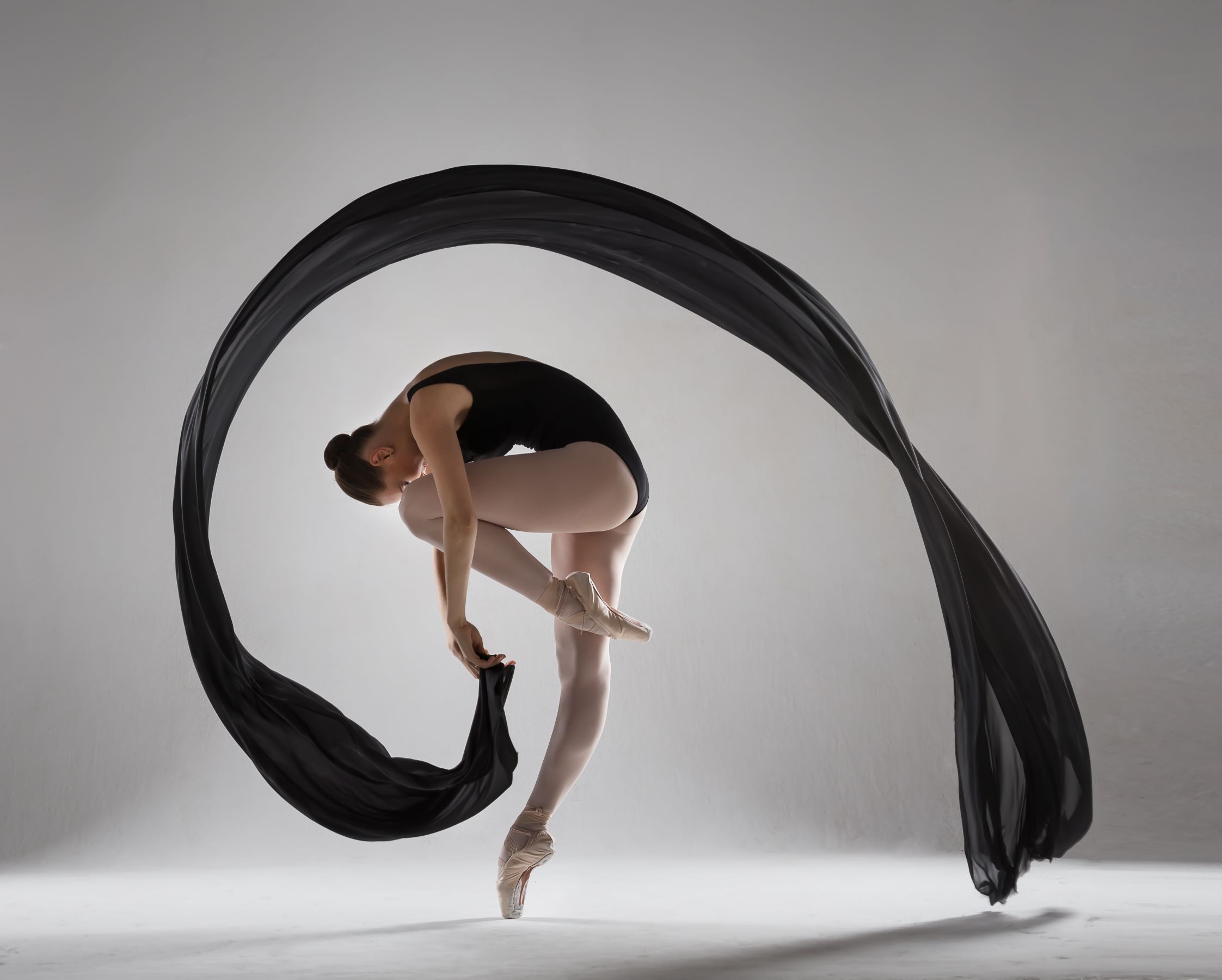
Middle Eastern and Asian dance traditions often use veils in this way, allowing them to suggest, conceal, and gradually reveal the body. Mata Hari picked up on the seductive potential, and twentieth-century Western fashion reached backward to recapture that sense of mystery, elegance, and allure. Now contemporary dance is taking the game somewhere new. Themes of transformation and spiritual revelation emerge as veils are lifted, but the point is not so much seduction as self-discovery—a parallel to female emancipation. In 1 Corinthians, Paul described the veil as a visible sign that a woman was under the authority of a man. But for these dancers, the veil no longer represents subservience—or even seduction as the only path to power.
Veils remain a complex metaphor. An individual’s carefully constructed persona acts as a veil, as Marilyn Monroe well knew: “Marilyn’s like a veil I wear over Norma Jeane,” she confided. But there is also a larger sense of the word. In Eastern thought, the veil of maya is the delusion of duality. Commonplace, materialistic, unthinking, it keeps us from seeing the truth: that each self is not cut off but part of the whole, and in the end, all is one. Similarly, in Christianity, the veil is the blindness or disbelief that separates people from spiritual truth. It is also the boundary between Earth and heaven. It is also the heavy curtain in the temple at Jerusalem, ripped asunder when Jesus died.
And it is the scrap of “sweat-cloth” that Veronica was believed to offer to Jesus as he trudged toward Calvary, forced to bear his own heavy cross. Gently, she wiped the hateful spit and the sweat and mud from his face. The legend—which was not elaborated until the eleventh century and only connected with the crucifixion around 1380—insisted that when he returned her veil to her, it bore the imprint of his beautiful face. A romantic child, I promptly took “Veronica” as my confirmation name, ignoring the stupid comic strip. In adulthood, I was crushed to learn the shaky origins of my heroine’s story—but tickled that she remains the patron saint of photographers and laundry workers!
Maybe, it occurs to me now, the point of that apocryphal story is not the miraculous powers the veil took on, but the idea that Veronica dared to remove it in the first place. A brazen act, in that time, inspired by care for the suffering she was witnessing. Did the crowd tsk and shame her? Did they bother to peer at the emblazoned image and realize there were virtues higher than modesty?
My hat has faded, and mice have nibbled at the veil. It must be relegated, as most veils have been, to the past. But in Saving Beauty, Byung-Chul Han wants the mystery of veiling restored. Capitalism has made beauty commercial and superficial, he says. We want whatever we engage with to be smoothed of friction, easy, transparent, inviting “likes” rather than provoking thought. Yet genuine beauty resists; it unsettles; it cannot be easily possessed. Concealment and mystery, veiling, are essential. Otherwise, we end up with a kind of “pornography” of beauty, ubiquitous, but stripped of transcendence and meaning.
A little more veiling, mystery, and challenge might return images far more beautiful than those our tech and commerce spew at us. Images that cannot be commodified or auto-eroticized; that free rather than subjugating; that exist independent of greed and profit; and that reveal themselves slowly, creating space for desire, interpretation, imagination.
Read more by Jeannette Cooperman here.