Poor Things, Us
With “Poor Things,” Yorgos Lanthimos has given us a film that is funny, sharp, poignant, imaginative, and visually stunning. I wonder if he knew his baby-woman would also summon a New Year’s resolution for the other end of life.
With “Poor Things,” Yorgos Lanthimos has given us a film that is funny, sharp, poignant, imaginative, and visually stunning. I wonder if he knew his baby-woman would also summon a New Year’s resolution for the other end of life.
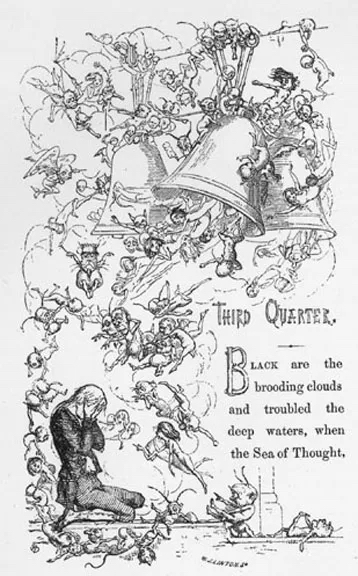
“The Chimes” is not likely to be adapted for the screen any time soon, uneven as it is when stacked against “A Christmas Carol.” But Toby Veck can be counted among Dickens’s great, undiscovered characters. And the story’s warning, amidst our own ongoing sour times, rings as true as its namesake.
As a child of an ironic, counter-cultural age I had to find my way through comic appearances to serious intent and personal bravery. Tommy Smothers was maybe the first entertainer I understood in this respect.
If you wish more records sounded like the Moody Blues, Jefferson Starship or John Cale of the early 1970s, you should be listening to Harry Arader. The grooves, chord progressions, harmonic intervals, and guitar licks all would sound at home on album-oriented rock.
“White Man’s Burden” is the belated lesson of empathy taught by a substitute teacher with one message and 90 minutes of time to fill. Its most valuable lesson is that, having watched it, we are reminded that millions of people endure not just 90 minutes of condescension, oppression, and racism projected on a movie screen, but a lifetime of all three.
A real tree is a sacrifice, a once-living being nailed to its stand, bleeding sap, a star on its crown. The artificial tree has no smell, no bark, no particularity. It never faced a north wind or nurtured a cardinal.
The fact that a place like Greenwood had to exist in the first place reveals much about the profound implications of racial dynamics at the time. The history of its desecration and neglect, followed by the necessity of its revival, poignantly illustrates the enduring struggle and resilience of African Americans in our pursuit of equality and acknowledgment.
Reflection is the opposite of distraction. The opposite of impulsivity. The opposite of blind, atavistic selfishness. Done right, it stops us from lying to ourselves.
What first moved Antonio Douthit-Boyd to dance was a drumbeat strong enough to rattle the air. It was coming from a studio on Washington Avenue. He and his friends, all early teens, crashed the dance class for the hell of it.
There is no reason to suffer through another holiday of musical clichés and battle-ax standards better heard by children. All it takes is a few clicks, and a few risks, to find yourself a new set of Christmas music standards.