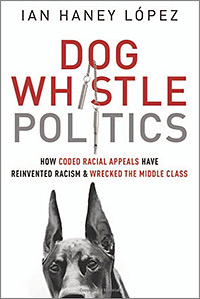
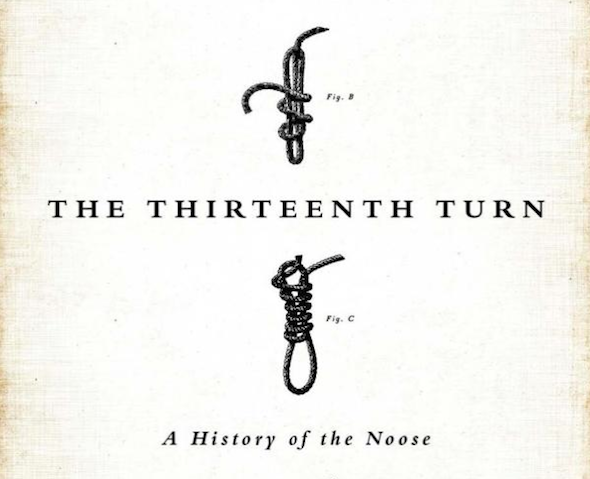
Building For Race

Hayward recommends shifting political authority away from local communities where powerful private interests exert control over zoning decisions to regional or metropolitan levels of governance, which could facilitate coalition-building and more inclusive urban planning initiatives.

Basebrawl

"Rosengren constantly nudges readers to realize both men do not exist in a vaccum—void of any connection to other people, traditions, or social factors. Thus, chapter five is titled “Summer of Fury” to make the reader privy to the Watts Riots that erupted a few weeks earlier and to serve as a reminder that the 1960s was an intense, unique decade in American history, fraught with declarations of redefinition that created social turbulence that forged dramatic social reforms in the United States. This is a story of heroism, cowardice, miscommunication, racism, the 1960s, and reconciliation. It is about much more than a fight."

Sixth Sense

"Kaplan weaves Adams’ personal life and public career into an interrelated portrait of the man and his times. His singular appreciation of the importance of literature, especially Shakespeare, the theatre and poetry (including that composed by Adams himself) to his subject’s intellect, psyche and convictions about politics, religion, philosophy, love and nature, provides readers with a transparent and penetrating portrayal and assessment of Adams. This exceptional approach modifies conventional depictions of Adams solely as a man of “cold austere and forbidding manners, a gloomy misanthropist,” a description Adams once even applied to himself."

Capital Concerns

"If we thought that the distribution of income among individuals in an economy is determined in a similar manner to the distribution of income across countries in the world, we would then look primarily for explanations which attach importance to knowledge, education, and skills. But Piketty’s theory of income and wealth distribution, contrary to what we might anticipate, is startlingly simple, and can be boiled down to a couple of ’laws.’ Piketty first argues, by appealing to the data, that capital income is more important than labor income in concentrating income and wealth at the top of the distribution."

Trial of the (Mid) Century

"The Twelfth Victim arises out of a 1950s Crime of the Century known as the Starkweather Rampage. Its namesake, Charles Starkweather, was hardly a poster boy for, well, a Most Wanted poster. He was a short, red-headed, bow-legged, nineteen-year-old from Lincoln, Nebraska. Nevertheless, during the space of two months he murdered eleven people in Nebraska and Wyoming, terrified the citizens of those states, and horrified the nation."

Say It Ain’t So, Bill

To say that the good Cosby has done outweighs the bad is, at best, to oversimplify matters and, at worst, to make a morally dubious statement. (Try saying that about a philanthropist who raped your sister, daughter, or wife.) It is of limited use, too, to say that we must always separate the artist from the art if we are to enjoy art at all. That is because, in this case, the person we took to be Cosby is—was?—his art. Maybe, maybe, it is possible to hang onto that persona, a positive force in the world, even as we know that it is the creation of that other Cosby; but between the two of them, they have broken my heart.

Prince and Promise

A lifelong devotee of Antoine de Saint-Exupéry's famous book believes it was written as a means of catharsis, a format for working through the author’s angst and examining repressed memories. But perhaps it was also simply a means of escaping the horrors of man and instead immersing himself in the gentler, more innocent, world of children.

Adventures In Growing Pains

Two new children's books show us what most adults already know: that kids handle adolescence differently, and that growing up is by turns confusing, hilarious, and yes, sometimes scary. But in just the right light, and often only in retrospect, it is nothing short of an adventure.

Founding Ailments

Revolutionary Medicine offers a history of the lives of the rich and powerful, but also a window into how health and disease were experienced by ordinary folk in Revolutionary-era United States.

Nobel, Not Nobility

Respect science and the Nobel Prize. But we shouldn't lose our heads over it when past winners have clearly lost theirs.

Skip to content