A Star Friendship, a Story of the Depth Divers Dive
What is left to know after four decades in mutual orbit.
September 15, 2026

This guy—Leon—started letting himself in before dawn to the room I shared with Mattingly at Fort Campbell, Kentucky. I would wake up to an institutional key turning the heavy lock and the solid wood door squealing on its hinges. Light flooded the room from the hall, the door shut loudly, and this guy dropped his gear and settled onto our floor, where he ate snacks and read with a flashlight I could see through my eyelids. It was my first Permanent Duty Station after basic and advanced combat engineer training. The world was new but already tired.
Mattingly was a small guy who would have liked to be a bully but lacked ambition, so he got by on snide remarks, bossiness, and flipping people the bird. He was older than me, but I noted he deferred to Leon, who was somewhere between our ages. Leon was tall and lean and had a Germanic skull with big cheekbones, like a boxer’s, and ears pinned to his head. He walked on the balls of his feet, and when he performed the role of soldier he thrust out his chest so artificially it looked like mockery of the ceremony. I did not like having to sleep in a confined space with either of them.
But Leon was in no better physical shape than I was, and he could be quiet, even reflective. We started talking. He hung out in our room because he drove in from married housing and did not want to wait in his car for morning PT. He and his wife, a Jersey girl with a big personality and great laugh, had a toddler and soon another baby on the way. He grew up a skater and used to hang out on the boardwalk at Seaside Heights on the Jersey shore. He knew something about books and a lot about music, and before the army he worked in a record shop and had seen Springsteen sitting around at the Stone Pony. To me, a kid in from the lower Midwest, this all seemed impossibly worldly. He turned me on to Rimbaud and Jim Carroll (“Those are people who died, died / They were all my friends and they died,” he loved to sing along), to the Ramones, Lou Reed, Elvis Costello, Talking Heads, and Blondie. It made him oddly happy to sing lines from Warren Zevon songs: “Well, he went down to dinner in his Sunday best / ‘Excitable boy,’ they all said / And he rubbed the pot roast all over his chest / ‘Excitable boy,’ they all said.”
Leon introduced me around, an act of generosity and emotional maturity, and explained what I was seeing in our battalion. He spoke directly, with a wry knowingness and pleasure in weird details. Mattingly, he explained, was not so bad. He should have been at least a buck sergeant by now but had gotten busted down when the military developed its first effective piss-test for weed. Before being forcibly reclassified and sent to our unit, Mattingly had been a man-portable, tactical nuclear weapon carrier. In the final European war that President Reagan had us training for, Mattingly would have humped to a target with his one-kiloton backpack, set the timer, and started running in hopes of clearing the blast radius. Maybe this concept of what duty meant had given him his permanently bad attitude and hatred of authority. Leon and I laughed at the idea of Mattingly flipping off Soviet T-72s rumbling up the Fulda Gap, pursing his lips and making slits of his eyes, which seemed to signify derision wherever he was from.
He grew up a skater and used to hang out on the boardwalk at Seaside Heights on the Jersey shore. He knew something about books and a lot about music, and before the army he worked in a record shop and had seen Springsteen sitting around at the Stone Pony. To me, a kid in from the lower Midwest, this all seemed impossibly worldly.
It was not a good era for the US military, and there were many characters like that. But Leon was squared-away, smart, and personable. Our last names were close alphabetically, so we stood next to each other in formations and got conflated like twins. But he was not only two years ahead of me in age, he was the first of the two of us to get nominated for the soldier of the month board and the first to attend Air Assault School, where they taught how to rappel out of choppers. He was chosen to be the personal driver for, I think, the commanding general of the 101st Airborne Division and Fort Campbell. Higher-ups must have known he was of use and that his intelligence could be a problem if not challenged.
Our lieutenant, himself a hard-charging graduate of the Virginia Military Institute and Ranger School, started giving the two of us late night, off-duty “missions” to keep us busy, such as a recon of a civilian rail bridge outside a nearby town to calculate the demolitions needed to drop it in the river. Leon had to add elements: We would work our way to the bridge by topographical map and compass, climb out on it to take precise measurements, jump off into the unknown water, swim downstream, run cross-country back to the car without detection, then go to a Wendy’s drive-thru, filthy and wet, for chocolate Frostys. Our reports impressed or amused the young lieutenant, and he picked us to go to the Jungle Warfare School in Panama.
Leon believed that adding kinetic energy to any situation made things better. Once on a long field exercise he and I were told to place a few early-warning devices—booby traps fixed to trees, which “enemies” in the war game would trip over and set off warning flares—so he set perhaps hundreds of them in an unretrievable tangle. He was at it a long time. That night, the flares started a fire that spread from the woods to hundreds of acres of prairie. Panicked pilots of an aviation company bivouacking nearby ran to their Blackhawks to escape the approaching flames; choppers jumped off the ground crazily like grasshoppers, their landing lights stabbing down through the smoke. Our entire battalion had to fight the fire, all night, and woke midmorning exhausted and soaked in freezing rain. That was Leon’s idea of classic.
It was never enough to be on a winter field exercise; he and I and some guy who had been a trapper in Alaska had to sit up all night under a tree, wrapped only in Woobies, for what Leon called a “hypothermia contest.” When he drove back with me to my hometown after one such exercise, he chose not to tell his wife, as if he was on a secret mission. She discovered by accident that the company had come in from the field, but no one knew where he was. When I dropped him off at the end of our trip, she punched him in the head, and life went on.
Leon was an accumulation of anecdotes. Maybe that is one path to forging life stories. He insisted we get pilot’s licenses, so we could ditch a light plane at sea and fake our deaths to get out of the army. He drank whatever he thought made for madness: Wild Turkey, Mad Dog 20/20 or Night Train Express, multiple bottles of Boone’s Farm wine in a sitting. Forced to pull guard duty in the middle of the night in barracks he did not live in—because someone, possibly my roommate, left human feces around as commentary— Leon ripped the faucets off all the sinks in the latrine and threw them out the windows. When a kid in the company, fresh from the hills of Pennsylvania, brought out a Gideon’s Bible and pretended to proselytize during a drinking session, Leon roared like Satan stalking the Earth, ripped the book to pieces, turned over furniture, and sent the kid diving for cover in genuine horror.
It was not a good era for the US military, and there were many characters like that. But Leon was squared-away, smart, and personable. Our last names were close alphabetically, so we stood next to each other in formations and got conflated like twins.
My mother would have said, “He’s a mess,” but Leon had a punk attitude, loved performative wildness, and was hugely capable. Is it a surprise what came next?
Leon went on to serve 33 years in the army and rose to what is arguably its second-highest enlisted position, responsible for 90,000 troops and 40,000 civilian employees. He earned a chest full of medals including the Legion of Merit and served in Kuwait, Saudi Arabia, Iraq, Panama, Honduras, and elsewhere. When he retired, he moved seamlessly into the vice-presidency of a large nonprofit that employs people with disabilities. But that is more anecdote with no ending.
• • •
By the time Leon and I met at Fort Campbell, I had already turned down a path to West Point and to the army linguist program at the Presidio of San Francisco. I was a hardhead. So was he, which is one reason we recognized each other and became close friends. I doubt if either of us knew we were getting something (other than money) from the army that we wanted, or that what we wanted was different and would put us on divergent courses. I wanted to see new places and people, do interesting things, and remember it all. Leon wanted to work imaginatively for a prominent organization, move (only) forward, like a ratchet, and be rewarded in predictable ways, mostly for the well-being of his family. He was conservative in more ways than one; even his injections of wildness were forms of control.
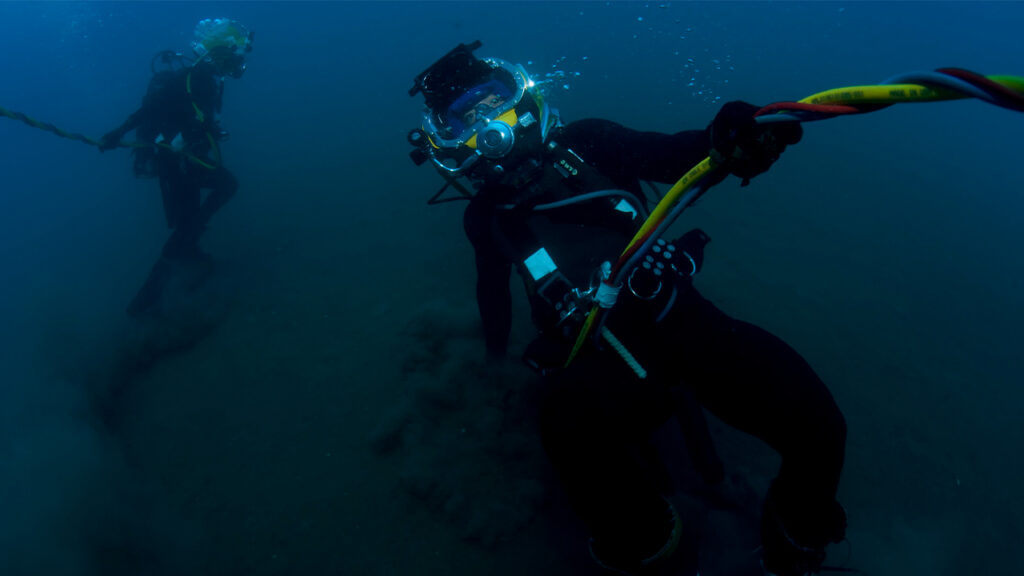
The engineer battalion was slow to promote and had problems with morale, discipline, and antiquated equipment and training. It was not just a bore; the common claim was that we would last 15 minutes in the next war. Leon heard that the US Army improbably had deep-sea and scuba divers. He already had his civilian scuba certification and thought it would be a good idea for us to change jobs and become divers. Reclassifying was not all that unusual, but there were fewer than 100 divers in the army then, and the school—actually the Naval Diving and Salvage Training Center (NDSTC), in Panama City, Florida—was known to be one of the toughest in the military services. He would have gone alone, if only to get his family back to a coast, but I was not about to be left behind and intuited the experience would be important to me.
It was. We tested (having stolen the diving field manual from the battalion library to study, when it could have been read there), submitted applications (one of us wrote a qualifying blood pressure on the other’s medical chart), and were allowed to attend the prequalification course in Virginia. Then we drove Leon’s family and household goods from Kentucky up through the Appalachians to New Jersey, which he turned into a sleep-deprivation contest. (He hallucinated a coven of witches in a field at the side of highway; I saw tractor-trailers stopped in front of me that were not there.) I got dumped on his mom, a brassy woman, and his dad, whom Leon had fist-fought on his way to the army. The plan had been for Leon to show me how to use scuba, but he was too busy, so he took me to an above-ground pool at his parents’ neighbors, who were gone, put me in the cold water with his battered scuba tank, a mask, and a weight belt to hold me down, and told me, “Breathe out when you come up, or you’ll, like, die.” He left, and I lay on the bottom of the four-foot-deep pool like some pale newt, looking around and playing with dead leaves. I had seen the ocean only once.
In Panama City we got dogged physically for months, were trained in scuba and hardhat rigs, and learned diving physics and medicine. We swam in the blue NDSTC pool, St. Andrews Bay, and the Gulf, ran the roads and beaches of the Emerald Coast, met colorful people, and had a big time at the bars. I fell in love three times. Leon’s inclusion of me in his plan may have changed my life more consequentially than anything else but college education and fatherhood.
Leon had to add elements: We would work our way to the bridge by topographical map and compass, climb out on it to take precise measurements, jump off into the unknown water, swim downstream, run cross-country back to the car without detection, then go to a Wendy’s drive-thru, filthy and wet, for chocolate Frostys.
As graduated divers we got stationed at Fort Eustis, Virginia. There was plenty more to be learned, hard work above and below the surface, more new friends. Leon brought his intelligence and usual chaos to the dive detachment—drinking and music parties, suggestions of strip poker with his more-than-agreeable wife (one thing he backed away from, once he thought it out), oyster poaching. During a temporary job in Miami, Leon plotted for us to fly to the Bahamas to gamble all night, without permission. When he and I drove across the country to attend the Seabee Underwater Construction School in Port Hueneme, California, we stopped in a diner in Kansas, somewhere near the setting for In Cold Blood. The waitress liked us enough to tell us that the week before, two drifters had come through town and tried to dynamite a grain silo. Leon smiled and leaned in. “We’re those guys,” he said, and when she laughed uncertainly, he tried to convince her. That night we lay awake in the cheap motel in town, waiting for the locals.
After Port Hueneme I was sent to the Republic of Panama to help open the first dive detachment there, and Leon went elsewhere, maybe Korea, where army divers maintained and inspected offshore pipelines. We did not serve together again, because I got out at four years. I saw Leon in Virginia right after that, and again at Christmas, and a couple of years later in Panama City, Florida, when my college girlfriend and I drove down on spring break and stayed with another diver and his wife. Leon, who was in a more advanced program at the dive school, took us to a strip club on the beach at the request of my girlfriend, who was from a nice family on the North Shore of Chicago. When an unhappy dancer blasted Leon for not tipping her, he loudly praised the beauty of the middle-aged server and gave her a huge tip instead. Things got tense, and we had to leave. At my wedding to that girlfriend, the army guys argued with the hometown guys, and Leon said, as I was trying to concentrate on the nuptials, that if there was a fight it was going to be over in “point-two milliseconds.” To celebrate my divorce from that wife, Leon visited me in Chicago. We saw Pulp Fiction in a theater, stopped at a roadhouse, then went to my friend’s party, where Leon started smashing glasses in the sink. I went outside to talk to an older divorcee I worked with, and Leon came running out of the party and slammed garbage cans around violently at the curb—because he was happy for me.
He had recently taken a team to salvage an Army Reserve chopper that crashed in a lake. The pilot, whom local civilian divers had been unable to find, was politically connected, and Leon was told to make sure his body was never seen by the press waiting on shore. Leon rode out to the crash location with sheriff’s deputies in their little boat, dove down, found the body himself, and got it onto the boat. Problem was, it had stiffened with cold and rigor mortis in a crucifixion pose and would not go in the body bag. The deputies tried to make him take it to shore like that. “You might want to turn your heads,” he said, knelt on the corpse’s chest, and wrenched its arms down. One of the deputies bent to the water and vomited gently. Later, the army divers went to a local bar, where a woman told her cowboy boyfriend the divers looked like trouble. Leon waited until the boyfriend went to the bathroom then bought a rose from the person selling them, took it to where the woman was sitting, ate the rose, and handed her the stem just as her boyfriend returned. During the brawl, the bouncers gave up, and cops had to shut down the bar. The divers were allowed to leave town only after paying something toward damages, and a sergeant major had promised the local prosecutor that the army would punish them severely.
In the mid-’90s, Leon got stationed near St. Louis. I drove down and visited him and his wife a couple of times. He had done well in the army, advanced in rank, gone to more schools, but was at about 15 years’ time-in-service. He said he was thinking about retiring at 20, the earliest possible time, and getting a job driving a county snowplow back in Jersey or looking into high-risk, commercial dive work in narrow dam passages or at nuclear facilities.
We had some drinks and decided to call another former diver across the country, by then a pastor and soon-to-be therapist. While I was talking to him, Leon attacked me from behind and started choking me. I threw us both backward under the kitchen table. Chris hung up on the screaming and laughter, and I got up to walk to the living room but saw Leon pull a big knife from the butcher block on the counter. I took off, and he came after me with darkness on his face, knife overhead. There was nowhere to go, and when he ran at me, roaring, I felt sure he was capable of burying the knife in my chest, even as a joke. I jumped up and kicked him with both feet, and he staggered back against the wall but stabbed downward and stuck me as I fell onto the couch. The blade slipped past my tibia into what meat there is on the shin. It is funny how sober you can get in one second. His wife was aghast at what he had done; Leon was sheepish. The wound seeped blood for 24 hours, but I did not go to the ER, because it might have caused trouble for him. I did not hold it against him then; I do not now. People have done worse to me. But I think we both felt it.
After that—I am not suggesting causality—we both got busy doing what previous decades had been leading us toward. Leon made jumps in his career that few achieve and took on huge responsibilities. Someone told me he was being groomed to be the Sergeant Major of the Army, of which there is only one, but that there were whispers he and his wife were too wild for such a public-facing position. I went to grad school, started teaching, remarried, raised two sons, and worked at my writing. If there was any drag on our friendship, it was probably just from geographical distance, available time, and a mutual lack of understanding of what the other did all day, or hoped to do, or the texture of the struggles. We saw each other at a couple of reunions, where there were lively times, and heard about each other from other divers. But in terms of our friendship, time moved right along.
Leon was an accumulation of anecdotes. Maybe that is one path to forging life stories. He insisted we get pilot’s licenses, so we could ditch a light plane at sea and fake our deaths to get out of the army. He drank whatever he thought made for madness.
When Leon was about to retire from the army, in 2015, I started calling him more to catch up or get some background on things I was writing, such as the kinds of decisions made by political appointees versus military staff. He was generous with his time and stressed how good it would be to see me. After the army he moved immediately to the NGO but eventually started talking about retiring from that job, since his wife wanted to travel. He told me the NGO kept throwing more money at him to stay, it was ridiculous. Somebody else told me he had slowed down a lot, that he drank beer and watched football every weekend and did not look good. Leon told me he and his wife liked to go to some old-school bar on weekends, have brunch with Bloody Marys, listen to people’s stories, and drink until it was time for a late lunch. He said I could get a book out of the stories, come see.
I finally visited their home in Maryland in 2023, during my driving tour of the East Coast to visit other friends, who had signaled ill health. (My mother-in-law, who died of pancreatic cancer, used to tell me when I was still in my 30s, “Well, you are getting to be a certain age.”) Leon and his wife and I did not go out to the storytelling bar. He was heavy and his eyes a bit vacant. After a mostly silent lasagna dinner at their house, he settled into a recliner with a bowl of peanut M&Ms, and we all watched TV. He could not hear well. Later he showed me his trophy room from his long army career and what I think he called his whiskey library, which he seemed prouder of but never thought to offer me a sip from. Characteristically, he did offer to try to help my elder son with his search for an internship.
A few months later Leon was diagnosed with Stage III pancreatic cancer. Median survival is eight to 11 months. I stayed in better touch, which we tend to do, even when there is nothing to feel guilty about, really. My kids and I saw him and his wife several times. They told some of the old stories and a few I had never heard, such as how Leon threw his and everyone else’s mattress and bedding out of their room into the water from some GWOT floating barracks, then used a fire extinguisher in the hallway to beat in his own door to make it look like vandalism. He had the surgery to scoop out his insides, then chemo, then the pills that let him digest little bites of food. He lost 100 pounds seemingly overnight.
I hurt him once after that and instantly regretted it. He had become strident about me attending future diver reunions, with the ulterior motive to reunite me with a good friend who had become estranged. That friend did not seem to want to be reconciled, and besides I had no money and little time. Out of the blue, in one conversation, and as a sort of joke, I brought up how I had been trying to write a novel for 25 years about army divers who save a bunch of people at sea. I had intended it to be my thesis novel for the MFA degree. My girlfriend then bought me a silver ring with a wave motif to help keep my subject at hand. She had the inside of the ring engraved, and the micro-burrs scratched my finger and caused an infection that burned like fire coral, so I put the ring in a box. Anyway, I said, my plans for such a book had been around so long that the characters in it, based on all of us, were still young. I said I did not need to go to some reunion where everybody would be decrepit and have it mess with my ability to write the book. Later that day I apologized profusely for “decrepit” and said I did not mean his illness. He seemed amused and said not to worry about it. I told him that in my mind he had always been like the slim knight wielding a sword on that poster for the Stratford Shakespeare Festival that I had sent him in college because it reminded me of when he started to get crazy. He had no idea what I was talking about.
He finally retired for good in February 2026, some two years after his diagnosis. He told me they planned to buy a house near Greenville, South Carolina—the last big move, he said—and “get to the business of being retirees.” His wife still really wanted to travel abroad. A mutual friend told me, “My god, he waited too long. What’s she going to do now?”
More recently I talked to him about Panama for a piece I was writing, and he said something about how when he was stationed there, the divers trained at tactical drift diving, letting the current and tide sweep them to shore for infiltration. He said they did it at night and tied glow lights on their gear, but the chase boat could not see them in the water, and the men got spread up and down the coast. I was startled; that was not in our diving remit. “Wow, your training NCO was a lot more fun than ours,” I said then wondered if he was the training NCO. He called back to add to the story, telling me they also did helocasting—jumping from Blackhawks into Panama Bay for tactical insertion—that also was not part of our mission. They had pushed the 10/10 rule—no more than 10 feet over the water at 10 knots airspeed or less, for safety—to 30/30, he said, and someone broke his neck hitting the water badly. “A diver?” I said, shocked. Safety had always been paramount in army diving. Leon seemed perturbed at me that he could not remember the man’s name.
The waitress liked us enough to tell us that the week before, two drifters had come through town and tried to dynamite a grain silo. Leon smiled and leaned in. “We’re those guys,” he said, and when she laughed uncertainly, he tried to convince her. That night we lay awake in the cheap motel in town, waiting for the locals.
One day I texted to ask how he was doing, and he called to say they had drained four liters of fluid from his abdomen. His wife was tending him closely. “We date when we’re young for lust and friendship,” he said. “Late in life, we want people who will take care of us.”
In May I texted, “How’s retirement, Old Cock?”
“Honestly, this cancer has just been kicking my ass,” he said. “I have more medical appointments than I used to have business meetings. The constant pain is the worst part.” The day before, he said, he had been in so much pain he went to the ER for a morphine drip, and they sent him home with Dilaudid. The next day he added, “The cancer re-occurrence sucks!” He had never officially told me the cancer was back. “There’s not much that they can do now for me.”
“I’m sorry to hear that,” I replied. “Stay in touch and let me know how it’s going, old friend.” There was an echo in that of my dad, who in the last weeks of heart failure told me, “We’ll just have to see.” Leon did not like to give up either. He died in June. His last words to me had been about my younger son’s happiness.
I picked up my elder son, and we met another former diver, who lives on his yacht in the Chesapeake, for the drive to New Jersey. At the visitation, the crowd leafed through albums of photos of Leon’s life and career, many of which I had shot. There was a lot of cancer among the old divers in attendance, including two inoperable brain cancers, and bypasses, stints, hip and knee replacements, and other issues that had come early to the guys who made a career of it. I did not see any young, active-duty divers. We said hello to Leon’s wife, brother, and grown children, whom I had not seen since they were little.
At the front of the room, Leon lay in the casket like a weightless pharaoh. My god, his suffering, and strength to endure it. It also looked as if he had been spray-tanned. He loved to tan. When it was our turn to approach, the three of us stood and gazed at him in his dress uniform covered in medals. Someone had put a Special Operations Diver Badge in his hands. A hard-to-find Mark V helmet sat on a stand nearby. “You’ve gone and done it this time, Leon,” I said softly.
The funeral director asked us to sit and invited remembrances. A few people got up and told stories, how after some respectable event on post he got up on the roof of his housing unit and threw roof tiles until the MPs came, etc. There were more acknowledgements that the real stories—meaning the criminal, ethically indefensible, or plain-old upsetting things he did that many of us knew about—could not be told, because mourners in a funeral parlor do not want to hear it. The dead man in his vital days would have loved them to hear it. He had suggested the engraving I put on the pocket flasks I gave to groomsmen (including him) at my first wedding: Épater le bourgeois, to shock the complacent middle class, from Rimbaud or maybe Baudelaire. At Leon’s wife’s request, the divers in the crowd sang “The Mouse Song,” a silly ditty we used to be forced to sing while being PT’d to death by dive school cadre.
At the funeral the next morning, my son and I sat in the back row and were joined by my old friend Frenchy. I realized some kid in the second row had pinned ears like Leon’s. He wore the new army uniform fashioned on WWII uniforms, and when he turned his head, he had Leon’s cheekbones. Before the service began, the kid stood up and turned to face the back of the large room, where most of the veterans were sitting, some in casual clothes and ball caps. With little more on his uniform than a unit patch and the single ribbon given out for completing basic training, he threw his elbows back and pushed his chest out so artificially it looked as if he intended to fight somebody. I nearly laughed. This was Leon’s grandson, I realized, now a young soldier stationed in Texas.
I took off, and he came after me with darkness on his face, knife overhead. There was nowhere to go, and when he ran at me, roaring, I felt sure he was capable of burying the knife in my chest, even as a joke. I jumped up and kicked him with both feet, and he staggered back against the wall but stabbed downward and stuck me as I fell onto the couch. The blade slipped past my tibia into what meat there is on the shin. It is funny how sober you can get in one second.
The pastor, a woman from United Methodist, spoke in the generic way clergy do when they never knew the dead. She used words thematic to Leon’s life, however, such as “surfaced,” which made me think of Father Mapple in Moby-Dick. She said Leon had touched many lives and had been an excellent father. A young woman with long black hair hanging down in front of her face, whom I took for Leon’s sister-in-law, sobbed and wailed so hard, for so long, that an older woman with short dyed-blond hair seated across the room waved her hand “no” to get her attention. This had no effect, and the older woman began to hiss, “Get her out! Get her out of here! Go!” The young woman was a hardhead and stayed right where she was; no one dared intervene.
Leon’s brother and one of his childhood friends spoke and told stories: Leon in high school helping his friend train for cross-country, running him into some woods, then disappearing. Leon going camping with a group but disappearing to camp on his own. Leon’s lieutenant, a Ranger, telling him at the Jungle Warfare School that if he wanted to be a Ranger too he would eat this live frog; Leon ripped the frog in two and said it would be rude not to share. (I was there.) Leon jumping 65 feet from the Hathaway Bridge into St. Andrews Bay, in Panama City, Florida, just for the self-assigned challenge, while attending First Class dive school. Someone saw the apparent suicide and called police, who searched all night but found no body. The next day, on a hunch and possibly seeing bruises, one of the cadre at the school asked Leon if he knew anything about the incident. “You don’t want to know the answer to that, Chief,” Leon said. (That could have happened the night we got kicked out of the strip club, which makes me wonder for the first time about my influence on him….)
Now the funeral procession would drive 40 minutes to a veterans cemetery north of Fort Dix, where Leon would be buried with military honors. The funeral director stressed that the cemetery said they were very busy and required strict punctuality. We were told to keep our flashers on and drive close to the car in front of us but found there was no chance of the long cortege staying together through traffic, so we were spread out for miles. I had not driven that landscape since 1984, when Leon blew my mind with our trip to the Jersey shore. The cemetery is beautifully manicured, with a columbarium and tens of thousands of “dress right, dress” stones inlaid in the green grass. Leon loved Warren Zevon’s dark sense of humor, how he wrote about mayhem and death even after he learned he had terminal cancer, which killed Zevon at 56. Looking at the quantity of grave markers, I thought of the line from “Life’ll Kill Ya”: “Requiescat in pace / That’s all she wrote.” The line of cars drove through the cemetery and parked at a pavilion.
The pastor made more remarks in front of Leon’s casket, now closed and sitting on a church truck, with the immediate family on folding chairs to one side. We all flinched at the four-volley salute reserved for high-profile tributes. An honor guard carefully folded the American flag draped on Leon’s casket and presented it to his widow. More sobbing and choking could be heard, and someone in our group standing by the pavilion said, “I’m definitely going to hire that woman to be at my funeral.” Attendees lined up to drop individual red or white carnations on the casket and offer condolences to the family again. Some of the old divers shouted, “Hoo-yah, Leon!” or said, “Fair winds and following seas.”
At the front of the room, Leon lay in the casket like a weightless pharaoh. My god, his suffering, and strength to endure it. It also looked as if he had been spray-tanned. He loved to tan.
My son and I added our flowers and waited to get to Leon’s family. I fixed for some reason on the spent shells from the honor guard sitting on the speaker’s podium. I realized I did not know if Leon ever fired a shot in anger. Did he ever have a pet? What was his proudest moment?
I managed to hug his widow with only a single gasp of emotion. I hugged their daughter, whom I had known as a toddler, but she sobbed and held me like a child holds her father, and it did me in. I looked over at the final person in the line, the young soldier, and knew I was done. He sat, apparently unable to stand in his grief, and I stepped in front of him, bent down, and took his handshake with both hands and held it. We looked in each other’s eyes, faces hard and tight with breath-hold, and it was too much, but we held the gaze. I had wanted to say, “Son, your grandfather was my brother, and you remind me of him. Please let me know if I can ever help,” but I could only nod, once. Some writers seem to think they are salvors, that by seeing and remembering they can save what has gone missing. I walked blindly through the other mourners, my son in my wake, out to where the cars waited before the regular stones in the dirt.