The Biography of a Library
A writer talks about the joys of reading the printed word and having to give up his library.
By Dan La Botz
March 31, 2026
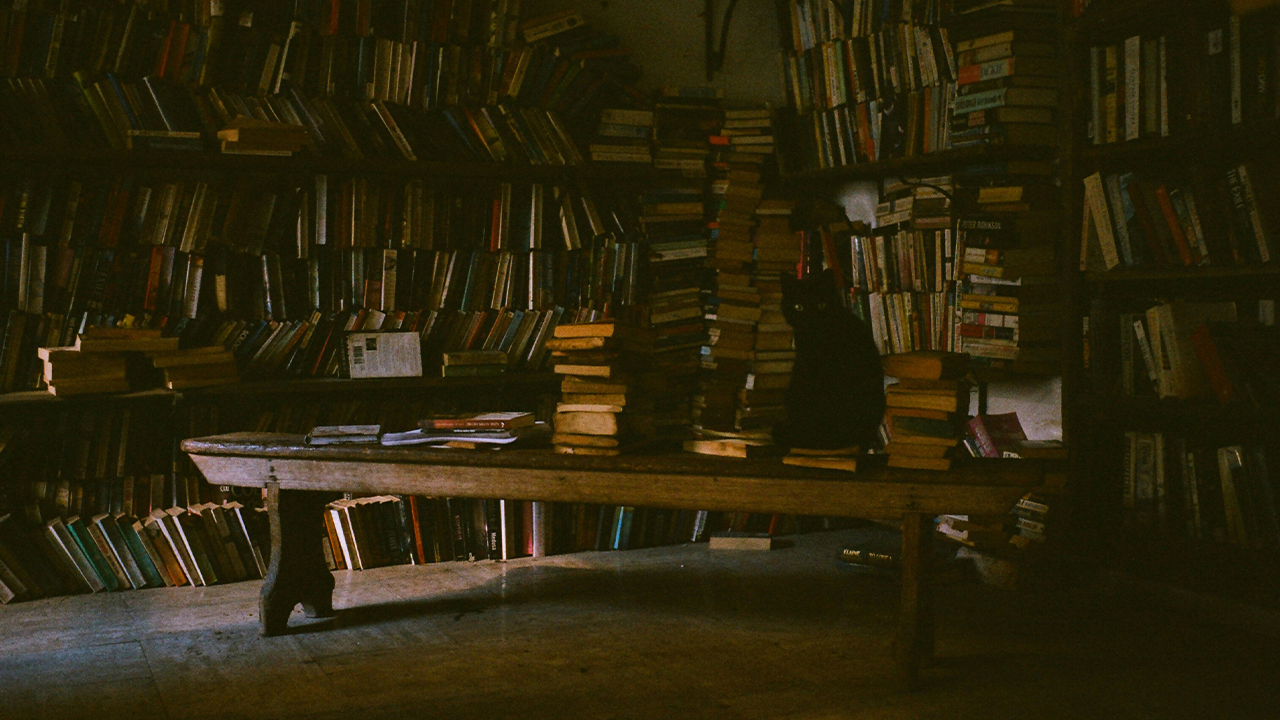
Over the years, as a reader and lover of books, as an academic, as a political activist, and later as a writer of books myself, I have collected thousands of volumes. I acquired many of these books in second-hand stores or on remainder tables. Others came to me as publishers’ review copies or sometimes as desk copies for classes I was teaching. Others I bought. For the first forty years of my life, my books were virtually my only belongings, my books and one or another used car. They were my only possessions, but my prized possessions.
My son Traven, a cabinet maker, built my beautiful bookshelves about a dozen years ago. Standing to the side of them is an old barrister bookcase, the kind with a glass cover for each shelf, that belonged to my paternal grandfather and was passed down to me by my father. No doubt that is where my love of books began, with my grandfather.
He was a Dutch immigrant, a luftmensch; a failure at everything he tried. He failed when he tried to open his own bakery, failed at becoming a Presbyterian preacher, and failed at writing the great American novel. His books included the complete works of his hero Voltaire, treatises on theology, the great European novelists: Dickens, Balzac, and Tolstoy. He became an avid socialist who owned many of the Charles H. Kerr books, including the first English edition of Capital. A few of the books in the barrister belong to my uncle Bert, a tuckpointer, that is, a repairer of brick walls and chimneys, but also a great reader in his youth. From him I have a wonderful limited edition of John Dos Passos’ brilliant, innovative classic of 1930s left literature, the three-volume U.S.A.
For the first forty years of my life, my books were virtually my only belongings, my books and one or another used car. They were my only possessions, but my prized possessions.
As a child, I walked along the shelves of my grandfather’s library. I always sat down by the bottom shelf, where there were scores of volumes of The National Geographic filled with photos of European cathedrals, of “The Holy Land,” and naked tribespeople of Africa. He had one book titled How to Save Your Hair. When you opened the cover, you discovered it was a box and in it was a lock of someone’s hair. There is no doubt that I was bequeathed my father’s family’s love of books.
I have the books on my shelves organized by type, most broadly by fiction and poetry in one section and non-fiction in another. So, Walt Whitman is there, but never shoulder to shoulder with his contemporary Karl Marx, since they inhabit different sections of the library. One can read Emily Dickinson’s poems, but Louise Michel, over in French history, cannot hear them. You could also find the Roths in my library, Joseph in European lit and Philip in American, but their covers never touch those of the books on Latin American or Asian history.
The books on history and politics that make up a very large part of my library are organized by country or region and by period. There is a section on the American left and labor movement, another on feminism, and one more on Black history. Of course, there is also a section of my library that holds the classics of the socialist tradition in which I was educated: Marx and Engels, Lenin, Luxemburg and Trotsky, Max Shachtman and Hal Draper. My attitude toward those socialists and their views has evolved over the years from being a youthful convert to a more critical reader of their work.
I have always loved my library. I have kept it with me, growing with me, since adolescence, through marriages and divorces, through changes in occupation from student to steelworker, from truck driver to college professor, and moved it from San Diego to Chicago, to Los Angeles, to Cincinnati, and finally to New York City. My books have been my consolation when my life was going badly, they have been my entertainment when I was bored, they have frequently inspired and motivated me. Even moved me to take action. But now, because I am losing my eyesight, I am giving them all away, donating many, selling some, and sending them on into the world and into the lives of others.
Scanning the shelves, I would be reminded of how those books came into my library. The poetry books I loved—especially William Blake and e.e. cummings—when I was in my teens and thought myself destined to become a poet.
For decades I viewed my books as the externalization of my mind and the record of my experience. They were the hard copy of the electrical impulses that made up the memories in my brain. Often, when someone called or wrote asking for a recommendation of books on the history of the Mexican Revolution or on the great strikes of 1930s in the United States, I would mention a couple of titles but then walk along my shelves, reading the backs of the books to remind myself of the literature and to make sure I had not omitted anything really important. And I usually had not, but I would always find something else worth mentioning.
Scanning the shelves, I would be reminded of how those books came into my library. The poetry books I loved—especially William Blake and e.e. cummings—when I was in my teens and thought myself destined to become a poet. There were the novels I read because I was studying literature in college or later because friends recommended them to me. The political volumes I read in my twenties for some study group. The books on labor I read when I was becoming a union activist, among them a bunch of books on the Teamsters union that I read when I was a truck driver and later used to write my own book on the Teamsters. There are too, the hundreds of volumes in Spanish acquired when I lived in Mexico and Nicaragua.
I grew up on the U.S.-Mexico border and looking south from our front yard I could see the hills of Tijuana. I went to junior high school in San Ysidro, where the border crossing was located. So, I became interested in Mexico. On my first trip to Mexico City in 1971, while still a graduate student, by sheer coincidence and remarkably great luck, I went into El Sótano (The Basement) bookstore, then on the Alameda Central on the very day that Adolfo Gilly’s La Revolución interrumpida first went on sale. An old leftist in a suit, who said he had known Trotsky, insisted that I buy it, and I did. I read it on the bus going back to San Diego, astonished by its brilliance. It helped guide me later in writing my own books on Mexico. In the 1980s and 1990s I worked with independent Mexican labor unions and dissident workers, and one of their labor lawyers gave me a pile of books on Mexican labor law, which also went onto my shelves. Mexican leftists recommended other books on politics and on their country’s women’s history and their feminist movement.
Later in the 1990s, my wife Sherry and I moved to Mexico City, where she worked with the Pan-American Health Organization and I, with my Fulbright Fellowship, became associated with the Centro de Investigaciones y Estudios Superiores en Antropología Social. For two years, I worked on my dissertation on the “slackers,” the draft dodgers and war resisters of World War I, who went to Mexico, where they joined the Industrial Workers of the World and helped to found the Mexican Communist Party. Of course, I bought many books and photocopied dozens of others. When I brought them back to the United States, they made up an important component of my library. With those materials, I later wrote my book Riding with the Revolution.
Sherry and I went to Nicaragua as supporters of the Sandinista Revolution in 1985, carrying medical supplies to a hospital in Estelí. Naturally, I acquired a handful of books published on newsprint by the new government. Decades later, in 2013, I led a group of students in a semester-long work-study program to Managua, and while they worked in food programs or hospitals during the day, with the temperature at 100° F +, I went every day to the air-conditioned El Literato bookstore in Managua, which served iced mochas. There I bought and read about twenty or thirty books on the Nicaraguan Revolution, memoirs, biographies, histories. When I got home, they went on to the shelves, and with those books and lots of other sources, of course, I wrote my book What Went Wrong, on how Nicaragua’s revolution degenerated into dictatorship.
Some books I acquired by hard labor. The French books in my library come from my years in graduate school at the University of California, San Diego from 1968 to 71 when I had the opportunity to study with Fred Jameson. I worked very hard at learning to read French and to read philosophy at the same time: Jean Paul Sartre’s Critique de la raison dialectique, Alexandre Kovève’s Introduction à la lecture de Hegel, and Simone de Beauvoir’s Le deuxieme sexe. And also, George Lukács’ Histoire et conscience de class (then not yet available in English). I especially treasured those books because of the effort I had put into reading them and because they represented a stage of intellectual and political awakening. It was because of Sartre and de Beauvoir that I came to think of myself as an existentialist Marxist, as I still do.
The non-fiction books in my library are stuffed with long paper strips, bookmarks, and sticky notes, the margins often filled with words and symbols: bars, stars, exclamation points, question marks.
At that same time, I had a chance to attend classes and hear lectures by Herbert Marcuse and, of course, got his books and those of other members of the Frankfurt School. I first heard him give public lectures on One Dimensional Man at UCSD and was enormously impressed. I attended his lectures on Marxism, and I convinced him to give our SDS chapter a talk on the Paris Commune. I read his Reason and Revolution: Hegel and the Rise of Social Theory, which fit in with my French reading agenda. I especially loved Eros and Civilization: A Philosophical Inquiry into Freud. So, of course, I went on to Wilhelm Reich and his sex-pol books and the books of Erich Fromm. Fromm was a friend of Marcuse who introduced him to us when, one day, Fromm came to the Marx lectures.
The non-fiction books in my library are stuffed with long paper strips, bookmarks, and sticky notes, the margins often filled with words and symbols: bars, stars, exclamation points, question marks. Some have sheets of folded paper with handwritten or typed notes on which I summarize the book’s argument. And of course, in those pages there are also plane tickets, stubs from train or bus rides in foreign countries, theater programs, dinner checks, names and phone numbers of people I met who are now utterly forgotten. There is also a letter from an old lover who told me forty-some years ago that I should not leave her, that it was not fair, because I loved easily and often, while love came to her only seldom and was always so painful. And I knew that was true. Though I loved her, we had no possible future together.
Some of the books’ pages are stained with coffee, others with wine, and perhaps some of the stains are tears. I remember reading Thomas Hardy’s Jude the Obscure and crying when, the family living in poverty and hunger, Jude’s young boy killed his two siblings and then committed suicide, leaving the note that said, “Because we were too many.” I recall sobbing when in Carlos Fuentes’ La muerte de Artemio Cruz, set in the midst of the Mexican Revolution, after a battle, Artemio returns to his village to find his beloved has been murdered. I put my head down on the table and sobbed. But perhaps some of those tears were also shed when I laughed hysterically, laughed until I cried, reading Hašek’s The Good Soldier Schweik.
There are so many other books that I feel I should mention, just because they are my favorites, such as Karel Čapek’s War with the Newts and Pramoedya Ananta Tier’s fabulous Buru Quartet. And there are so many others, but that would take days, and I know you have things to do.
While I tried to protect my books, sometimes I was outwitted. The inside covers and occasionally some of the pages of the volumes were decorated with crayons by my children and later my grandchildren. Beginners just used the crayons to make lines and squiggles. Older children drew the classic sun, tree, house, and people, stick people with large heads, big eyes, and odd numbers of long digits. Some practiced their letters or wrote their names. They shared my ambition. They too wanted to see their words in a book, between covers.
My library, my books—on their printed pages and in the notes and other things stuffed between the pages—held the story of my life, held my life itself.
Now I suffer from macular degeneration, a disease of the retina that proceeds from the center of one’s vision to the periphery, so you first lose your ability to read, then to recognize faces, then to see the things in the room, until finally one can only recognize vague shapes in the field of vision. A person approaching becomes just a dark shadow in a cloudy space. I am not there yet, but I know my future because my mother had it, and I watched her go blind. And there is still no cure, though medication can slow the process down. Millions of Americans suffer from this disease, and many like me are going blind. There are enough of us that you will run into one of us one day, and we may very well stumble upon you.
While I tried to protect my books, sometimes I was outwitted. The inside covers and occasionally some of the pages of the volumes were decorated with crayons by my children and later my grandchildren.
I can still read the titles on most of the books, because the print is large. I have been packing the Mexican history library, hoping to keep it together and give it to some cultural institution, library, or scholar. As I pack them, hoping they will go into the hands of the right person, I feel better about the whole business.
I cannot read printed books anymore, but because of the backlit screens I can still read ebooks on my computer or my Kindle, and I listen to audiobooks. There is no shortage of authors and titles. I have been reading—by listening to—classics I missed somehow, as well as rereading some old favorites. Last year I listened to Musil’s The Man without Qualities, Alfred Döblin’s Berlin Alexanderplatz, and Olga Tokarczuk’s The Books of Jacob and Drive Your Plows Over the Bones of the Dead. In Spanish, I have enjoyed, among others, Javier Marias’ Coraón tan blanco, and the detective novels of Leonardo Padura and Paco Ignacio Taibo II. I love the audiobook novels with their wonderful actor-readers who can tell a story in several voices. Right now, I am listening to Maggie O’Farrell’s Hamnet and am moved by its wonderful, sad story. Yet as nearly everyone says, wonderful as they are, Kindle and audiobooks are not the same as the printed books that began with Gutenberg: the paper, the linseed oil and lampblack of old inks, the feel and smell of the pages. I still feel nostalgia for the books I grew up with, physical books with substance, with mass, with a heft.
Few today have the love of printed books that existed in earlier generations and in my generation and among my ilk, but for us, they held a special place, and I am sorry to see them go. But I hope they will go to others who still treasure the printed word, printed words and all they tell us. If you should in a secondhand bookstore come across one of my books, I hope you will treasure it, because you will be holding the legacy of my family, my friends, and comrades, and our intellectual and, in a humanistic sense, spiritual world.
Dan La Botz is a Brooklyn-based writer. Learn more about him at: https://danlabotzwritings.com/