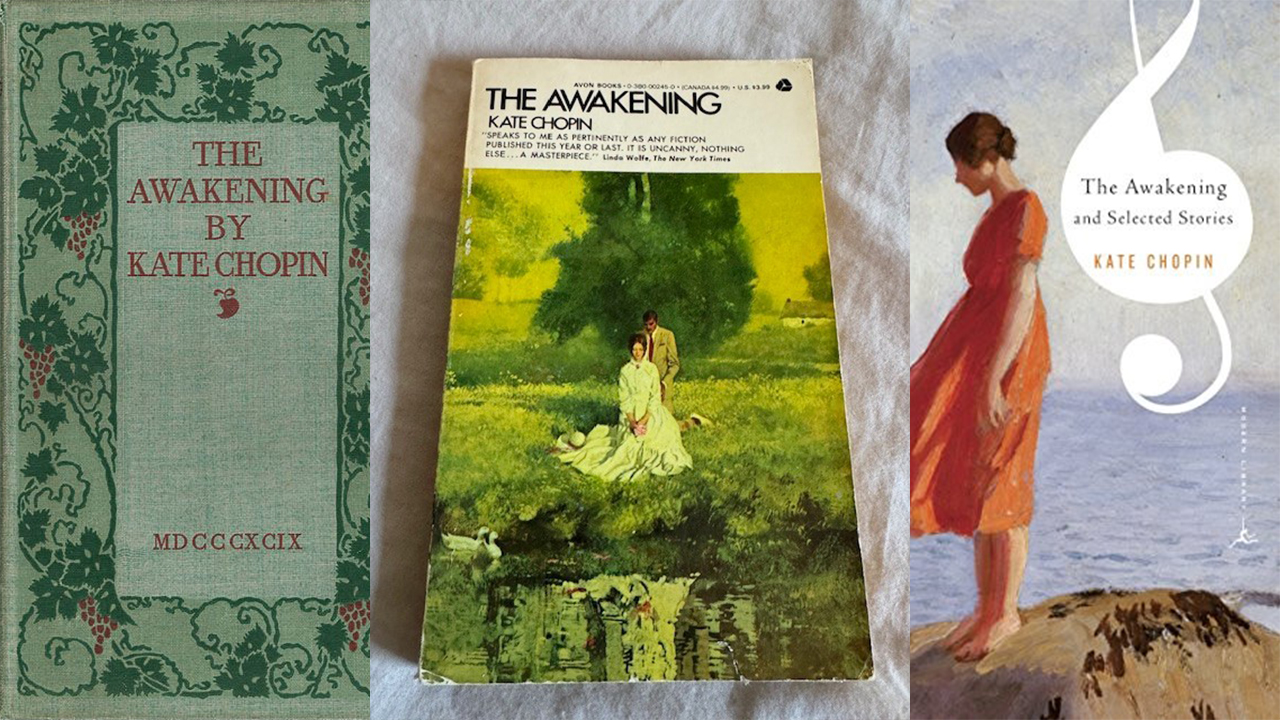
What Are You Planning to Do with That?
By Noa Ablin
January 30, 2026
“What are you planning to do with that?” It is a question I hear every single time I tell someone I am majoring in English Literature. I do have an answer, of course—but it still feels like a punch to the gut, if not soul, because most people seem to think my degree is not valuable enough to lead to a real career. In my friend group, I am almost always the exception, a lone humanities major surrounded by computer scientists, engineers, pre-med students, and business majors.
Every so often, I spot another humanities student in my circles, and it feels like finding a rare kind of kinship amid a sea of résumés and lab coats. Humanities majors are everywhere on American campuses, yet I have noticed a surprising trend: many graduates do not pursue the careers their degrees suggest. I am not arguing that history majors must all become historians, but it is striking how few seek out roles as museum curators or historical interpreters. Instead, they often find themselves crunching numbers as business analysts or advising corporations like Deloitte—trading dusty archives for boardrooms and spreadsheets.
As a senior at Washington University in St. Louis, a high-ranking and prestigious university, I thought I would feel a sense of security as graduation approached. I did everything I was told to do. I chose a respected school, worked hard, and pursued what I love. Yet that confidence never showed up. Instead, it was replaced by a low, constant anxiety that follows me into almost every conversation about the future.
You are probably thinking, “Well, you chose this.” And yes, I did. I chose English Literature because I love it … But loving what you do does not erase the reality that the path after graduation is uncertain, and that uncertainty is something every humanities student has to wrestle with.
Everyone around me seems to be buzzing about what comes next. It is not just my peers, but my parents, grandparents, professors, and even the barista at my coffee shop who recognizes my order before I speak. They all ask some version of the same question. “So what are you planning on doing after college?” Or, trying to soften it, “The end of the semester is coming up. Are you excited for the real world?”
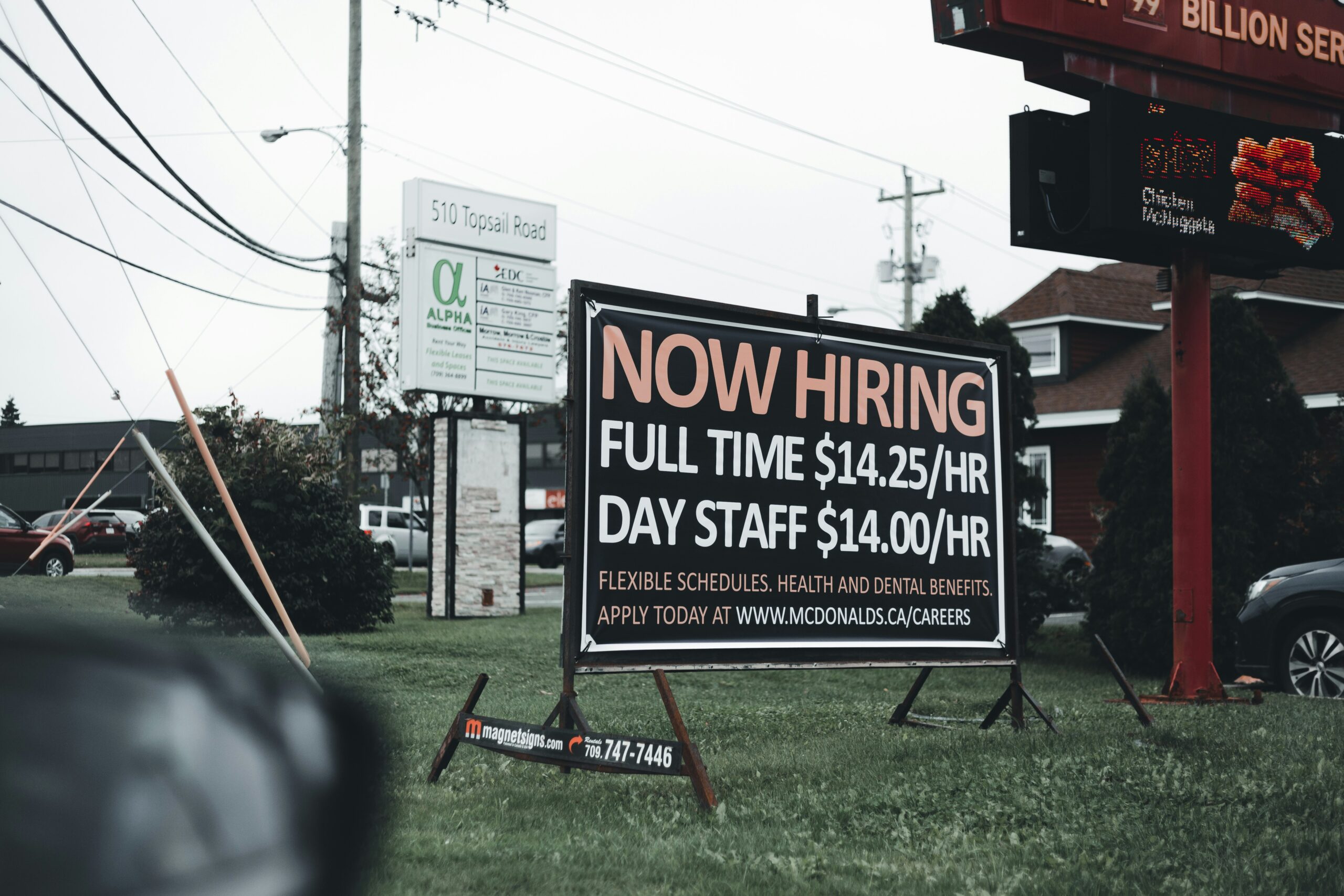
But the buzzing is not excitement. It is fear. It is the unspoken understanding that jobs feel harder to come by than they used to. Recent data show that approximately 52 percent of college graduates are underemployed one year after finishing their degrees, working in roles that do not require a college education. For many, this is not a brief phase but a long-term reality, one that turns the post-graduation job market into something that feels less like a promise and more like a gamble.
Over the years, it has become increasingly difficult to land an entry-level job straight out of college. The old idea of scraping by after graduation, working two jobs, one at a coffee shop and another at a bookstore, while interning on a political campaign in the hope that it might turn into something, no longer feels acceptable. The hustle is not admired anymore. Now, it feels like the expectation is clear and unforgiving: a high-paying white-collar job, or nothing at all.
Even more so, humanities majors have far less direction when it comes to job searching. My mechanical engineering friends might branch into a few different paths, but overall, their trajectory is straightforward. They can design planes at Boeing or even develop products at a startup. Their field is specific, and the path to enter is clear. That is not to say they are not also struggling to find jobs—many of them are—but at least they know which doors to knock on. The same goes for pre-med students or business majors aiming for investment banking. There is a clear sequence of steps to follow, almost like a road map laid out in front of you, a yellow brick road leading straight to the career they want. Humanities majors, by contrast, often have the skills and passion but no such map, leaving us to navigate an uncertain landscape largely on our own.
You are probably thinking, “Well, you chose this.” And yes, I did. I chose English Literature because I love it—the way a poem can capture a feeling too complex for speech, the way a novel can reveal entire worlds through the lens of a single character, the way language itself becomes a tool to question, to explore, and to understand human experience. I chose it because reading, analyzing, and interpreting these works challenges me in ways no other field could. I have the passion and drive for what I am studying, and I would not trade that for a “safer” degree. But loving what you do does not erase the reality that the path after graduation is uncertain, and that uncertainty is something every humanities student has to wrestle with.
Last summer, I spent months searching for a publishing internship. I knew all the rules—the connections to cultivate, the doors to knock on, the people to reach out to—but even with all that knowledge, I still applied to over fifty internships. Decades ago, that kind of volume would have been nearly impossible. Today, it has become the norm. Artificial intelligence has changed the game entirely. Why hire twenty undergraduates when two, assisted by AI, can accomplish the same amount of work? According to Derek Thompson, the real problem is not just that AI is taking over jobs, though that is a concern. It is that AI has shattered the process of looking for a job.
Twenty years ago, undergraduates rarely applied to more than a handful of positions at a time. Now, with AI making applications faster and easier, students submit dozens or even hundreds of applications just to have a chance. For those searching for jobs after graduation, the numbers go even higher. Imagine two million college graduates each sending out 50 to 100 applications. That adds up to 100 to 200 million applications for a finite number of entry-level positions. No one could read through all of that, and no one can realistically keep up. It is little wonder that employers are turning to AI to help manage the flood. The system has become overwhelming, and competition has never been fiercer.
As I rant and preach about the importance of sticking to your passions, about chasing that dream of becoming a novelist, a teacher, or a social worker, I, too, have done something that might look like betrayal.
And then there is the cost of living. Young twenty-somethings fresh out of college are expected to flock to the cities where opportunity supposedly lives, places like New York, Chicago, San Francisco, and Washington, D.C. But in those same cities, rent is through the roof. In New York City, even splitting a two-bedroom apartment with a roommate can cost around $2,500 a month. For an English major trying to break into publishing, journalism, or any related field, it becomes nearly impossible to pay rent and feed yourself at the same time. It is no wonder so many of us sprint toward the corporate world. Passion does not pay the bills, and for many of us, survival leaves little room for anything else.
So, in the name of being honest, I have to admit something. As I rant and preach about the importance of sticking to your passions, about chasing that dream of becoming a novelist, a teacher, or a social worker, I, too, have done something that might look like betrayal. As I began to map out what my post-graduation life would look like, I remembered one constant: I had always planned to move abroad. The catch? The country I am moving to does not speak English as its first language, which makes finding a job as an English Literature major… complicated, to say the least.
So, like any honest person trying to be practical, I started looking for ways my degree could be useful elsewhere. A few clicks, a few applications, and I landed at a tech startup doing content writing and marketing. I worked with them for about three weeks before the semester began, and let us just say I now understand exactly why I did not major in computer science. And now here I am, floundering again, scrambling to figure out what comes next. What can I do instead? But it is not just uncertainty that gets to me; it is the feeling of having betrayed my own values, of shipping myself off to the world of big tech when my heart is still in literature.
So what now? Do I keep walking this unclear path, chasing work I love even if it cannot fully support me, and hope that passion eventually counts for something? Or do I resign myself to becoming a slave to the corporate world, trading meaning for stability and a paycheck? That is, of course, if I can even find a job in the first place.