The Coat You Wear to Fight, Spy, or Seduce
January 22, 2026
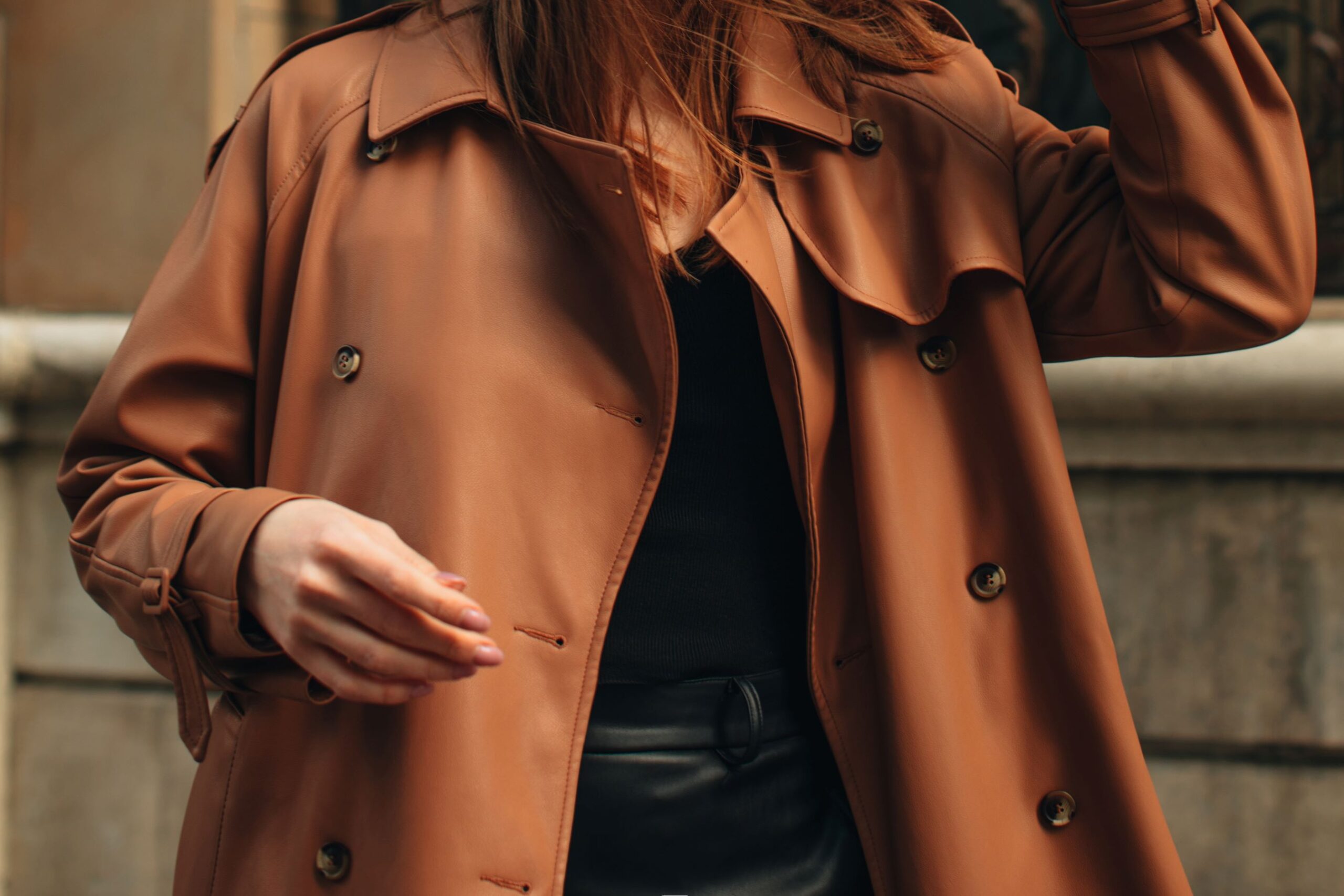
I have always wanted to be naked under a tightly cinched trench coat. Maybe the appeal is the contrast: soft, ready flesh, buttoned in and belted with military precision. I had never thought about this coat’s history until I read Trench Coat by Jane Tynan, part of Bloomsbury’s Object Lessons series. Now I can picture what a gift it was to the British and French officers waging World War I’s first battles in heavy serge greatcoats, sodden with cold rain. This new coat could carry men through storms and into the trenches. Double-breasted, with sleeve loops for extra warmth, it had flaps to shield you from the wind, a storm flap to let rainwater run away from your body, and vents to air scared sweat. Not to mention epaulettes to carry your headwear and D-rings to carry ammunition.
How did I never think of using my D-rings to carry ammunition? The trench coat crossed genders, after all, with women donning it during military service. The coat also blurred class lines—soon it was worn by officers and enlisted men alike. Like great hiking gear, a trench coat was somehow practical and adventurous at once. Democratic and elitist, plain but sexy, it certified courage. When Langston Hughes reported from 1937 Madrid, his biographer wrote, “Not to make himself out to be a hero, he allowed himself only now and then to write true trenchcoat prose.” Prose, in other words, that conveyed real danger and its excitement.
No wonder the coat was almost immediately marketed to the folks back home, whose lives were only dangerous when they trotted to the end of the driveway in their slippers, risking a bruising rock or stumble, to fetch the newspaper. Suddenly everyone could venture forth in bad weather, braving the elements as it were, with no need to rush shivering back to the fireside for a glass of port. “In these enlightened days, every man, woman and child wears or should wear a Waterproof Garment,” announced an ad in 1900 for Genuine Macintosh Waterproofs. Today, the copy sounds like a diaper ad, but it was meant to lure us into The Great Outdoors. A modern promise: the old limits were dissolving, and thanks to technology’s chemical alchemy, even hobbits could have adventures.
They could also pose as people with exciting pasts. Advising men who wished to feign a military past, Hemingway said, “A good plan is to go to one of the stores handling secondhand army goods and purchase yourself a trench coat.” This would give them “something with enough dirty material integrity that it could persuade any passer-by of war weariness,” Tynan explains. The coat was not part of the regalia of decorations and ribbons that insist one has triumphed; rather, it was “down-at-heel combat gear that quietly whispers, ‘this is a man who has seen action, but does not wish to talk about it.”
Clever, that Hemingway. He was used to manufacturing maleness.
Meanwhile, the coat itself was morphing. In Casablanca, it represented the American ideal of self-sacrifice, as Rick tightened his belt and watches his life’s true love fly away with another man. In Foreign Correspondent, an equally valiant American buttoned his trench coat against a downpour just as an assassin’s shot rang out. All this valor and patriotism fell away rather fast, though, and “the trench coat began to imply shadowy existences, insurgent behavior, and intellectual complexity.”
Gangsters took advantage of its convenience to smuggle Thompson machine guns into places where they would be used. Spies made the trench coat an anonymous uniform. (I am sure Mata Hariwas often naked beneath hers.) The black trench coats that became a disturbing meme after Columbine were not as new as the kids thought; neither were the black leather coats in The Matrix, released one month earlier. Decades before, the Red Scare had used a shadowy figure in a dark trench coat to suggest hidden threats, outsiders lurking within society. A reading that turned out to be far more accurate than the later attempts to symbolize freedom from the system.
The symbolism was quite different when Catherine Deneuve wore her trench coat (in black patent leather—or was it vinyl?) in Belle de Jour. Director Luis Buñuel was giving us a different sort of double life, though still morally ambiguous. The glossy material of the coat, the stuff of fetish, represented Severine’s hidden erotic desires, kept in check by the outwardly respectable, highly structured cut.
Was that what Peter Jennings’s ubiquitous trench coat secretly meant, too? A friend of mine was married to a photographer who moved in the same international-correspondent circles, and she has regaled me with Jennings’ romantic exploits. Here we thought that coat just signaled his “dogged determination to seek out truth.”
Every garment tells—and needs—a story. “Clothes furnish our bodies—they bring us into being—but without a narrative fastening them to the ebb and flow of lifeways, they vanish and fade,” Tynan writes. The trench coat is Scheherazade, with far too many stories to die. Periodically, it returns to the runways and presents itself as somehow new, though we all recognize fashion’s game. Personally, I find it refreshing that a coat so drab could become sexy, and that it could require so little modification over the decades. How American, that a coat with such a muddy backstory—literally at first, and then morally—could keep the world’s attention.