The Speculative Value of a Stolen Literary Bust
By Noa Ablin
March 31, 2026
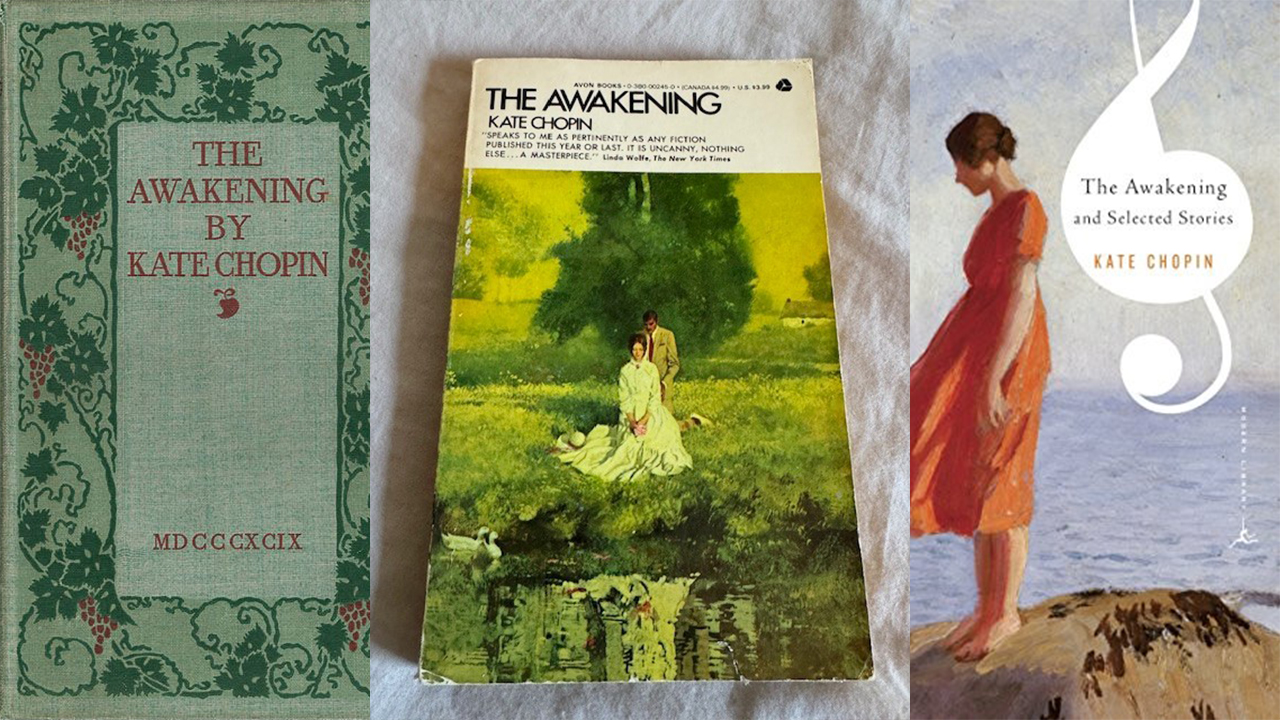
For decades, Kate Chopin’s fiction was forgotten, considered insignificant and unoriginal. It was not until the mid-twentieth century that The Awakening was reclaimed as a foundational text of feminist literature. Seventy years later, in the city where she was born, something similar happened again, though in a far more literal sense.
On February 14th, someone pried a bronze bust of Kate Chopin from its place at the Writer’s Corner, at the intersection of Euclid and McPherson. The corner is not a secluded monument but part of an ordinary city crossing, where sidewalks meet, traffic passes, and storefronts look out onto the street. At each corner, bronze busts of writers face outward, set on stone pedestals, as if keeping quiet watch over the intersection.
Chopin’s figure stood among them, one of several literary presences anchored in place. Removing it did not require entering a museum or breaking through glass, only loosening it from where it had been fixed to the corner. By the time it was gone, the change was subtle but unmistakable: one corner left without its figure, one pedestal left bare. But to understand why that absence matters, it helps to understand who Kate Chopin was and the stories she wrote.
Kate Chopin was an American writer best known for her novel The Awakening. She wrote about women who did not fit easily into the roles expected of them, women who were both constrained and quietly resistant. Born and raised in St. Louis, she remained closely tied to the city, which is why her bust stood in the Writer’s Corner. But recognition did not come easily. After her death, much of her work was dismissed and largely ignored. It was not until the 1950s that scholars began to return to her writing, identifying The Awakening as a crucial work of feminist literature and restoring Chopin to a central place in the American literary canon.
The man who took the bust was not trying to make a philosophical or literary statement. By all accounts, the motive was simple: to take something material and sell it. And yet, the act leaves behind an uneasy parallel.
The Awakening centers on Edna Pontellier, a married woman who begins to question the expectations placed on her as a wife and mother. But the novel is less about what Edna does than what she begins to see. Over the course of a summer at Grand Isle, the structures of her life start to feel unfamiliar. Marriage becomes confining. Motherhood, which is supposed to define her, feels imposed rather than chosen. Even her own desires resist the role she is expected to inhabit.
What makes Edna unsettling is not simply that she wants something different, but that she cannot return to the life she once accepted. She begins to live more independently, moving out, painting, and pursuing a sense of self that has no clear place in the world around her. By the end of the novel, her options narrow rather than expand. The same society that defines her leaves little room for her to exist outside of it. When she returns to the sea, the place where her awakening began, the act feels both deliberate and inevitable, less a sudden decision than the final consequence of a world that cannot accommodate her. At the time it was published, it was widely criticized. It was even banned in some places. Critics called it morbid, vulgar, and disagreeable. More than a century later, that instinct to dismiss feels less distant than it might seem.
The man who took the bust was not trying to make a philosophical or literary statement. By all accounts, the motive was simple: to take something material and sell it. And yet, the act leaves behind an uneasy parallel. Kate Chopin’s work was once dismissed, set aside for decades before it was read again and taken seriously. The bust, too, was reduced to something else, no longer a monument but an object to be carried off and weighed. Something meant to endure was instead made temporary, exchangeable. What remains is harder to measure. An empty pedestal. A missing figure. And the question of what we recognize as valuable, and when.