The Slow, But Powerful, Erosion of Flattery
By Ben Fulton
September 12, 2025
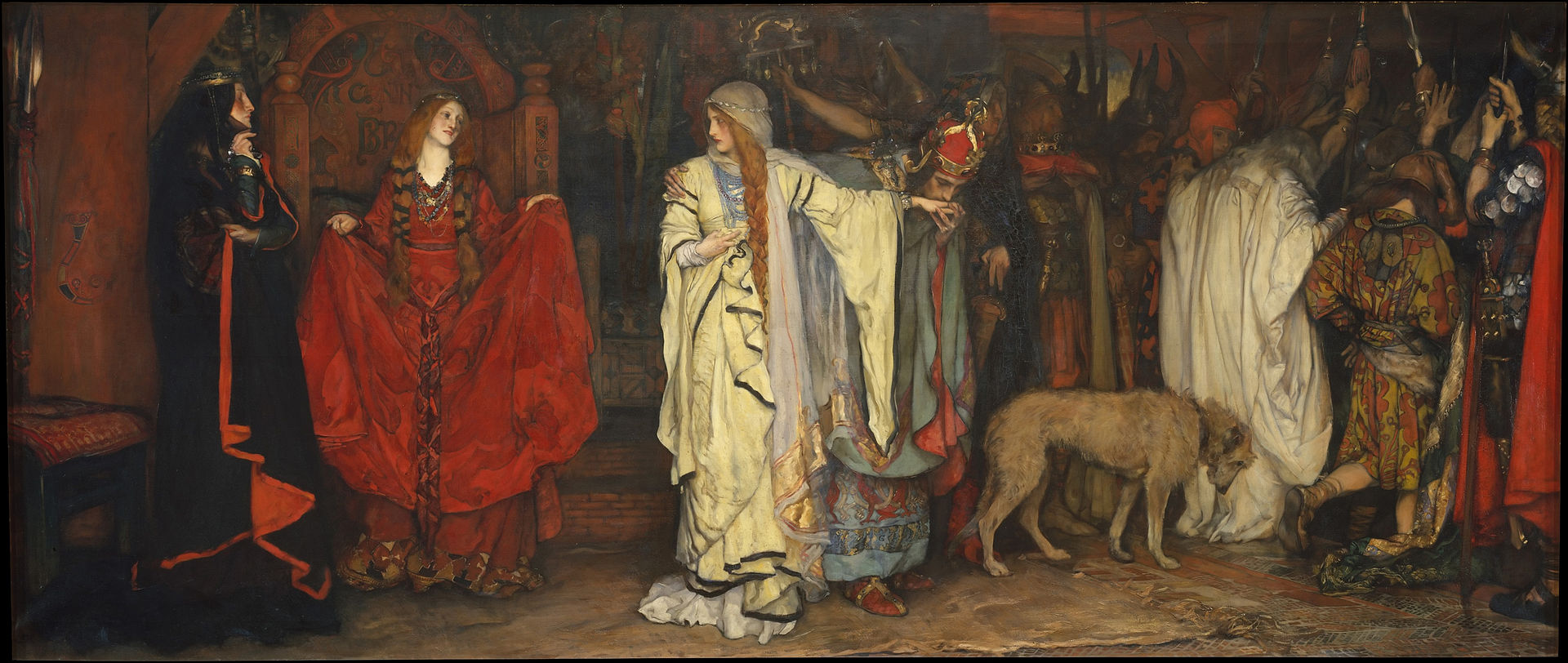
Hans Christian Andersen’s nineteenth-century fairy tale “The Emperor’s New Clothes” is celebrated for showing how easily a kingdom can be persuaded, by the power of authority, of ludicrous claims, even when there is no empirical evidence to back them. Hear something often enough, say something often enough, and falsehood becomes truth almost by accretion.
And yet Andersen’s famous fairy tale falls short. Sure, a child might one day shatter our destructive illusions through the wisdom of innocence. It could happen. But meanwhile, we had best turn to Shakespeare and our own political time to understand the destructive power of even flattery well meant.
Flattery is a curious subset of the lie. It bridges the white lie of mistruths we tolerate or manage when telling the truth would cost us more in time or trouble than telling lies. Then, as so often happens, it strains that same bridge by surprising us with how much trouble it is to manage all the subsequent lies we must tell after cumulative white lies are told. We all manage this territory as best we can. This is the landscape of compromises. Telling the truth all the time would tax everyone’s patience. Or, as director Federico Fellini put it in his 1963 film 8 ½, “Happiness consists of being able to tell the truth without hurting anyone.”
Our political era is saturated in flattery. President Trump’s appetite for praise, compliments, and even tribute and fealty is by now well-known. The media was agog in covering the president’s August 26 cabinet meeting last month, when, over the course of three hours, every cabinet member rolled out high hosannas and praise for how wonderful, wise, and special their boss is. “This has never been done before!” Trump gushed. Actually, it has been, and was done early in Trump’s first term as president. What is notable between the first instance of Trump’s flattery-on-demand and his second is that none of the cabinet members who praised him lavishly in 2017 survived to praise him again, let alone serve in his cabinet, in 2025.
That is not a partisan critique. President Biden’s staff and re-election campaign did their dishonest best to hide any sign and dispel any notion that the 81-year-old president was not up to the cognitive demands and requirements of the world’s most powerful office. In granting President Biden every benefit of the doubt, this flattery by deflection left Kamala Harris little chance to win the White House, but the small consolation of a book deal.
Our best-loved English-language poet and playwright rarely referenced flattery directly, but he knew very well the destructive nature of false praise. What Shakespeare knew for certain was the curious ratio of shame and narcissism between the person asking to be flattered and the person obliging: “He that loves to be flattered is worthy o’ the flatterer.” (Timon of Athens, Act I, Scene 1; 233)
King Lear may be Shakespeare’s ultimate statement on flattery, as it begins with the king’s public demand for his three daughters’ flattery and ends with a humble plea for truth. Much more takes place in between, of course, but the best Shakespeare scholars are drawn to explain the character flaws that set everything else—the betrayal of Goneril and Regan, the raging storm on the heath, Cordelia’s shocking death—into motion. Stephen Greenblatt, in Shakespeare’s Freedom, notes how the drama begins with Lear’s refusal to hear Cordelia’s plea for truth above flattery, a fault identical to his accepting his other two daughters’ flattering lies, before the rest of the drama “relentlessly” strips away almost every other falsehood the Lear held close. Nothing of any worth is left by the play’s end, except for the wisdom imparted by Edgar, to “Speak what we feel, not what we ought to say.” (King Lear, Act V, Scene 3; 322-23)
As Greenblatt writes, “Shakespeare’s solution was to … turn the closing words away from any assumption of authority toward the necessity, under immense pressure, of emotional honesty.” (p. 93)
As Greenblatt explores the emotional dimensions of dramatic personae who demand flattery, scholar Northrop Frye remarks, in his 1986 book Northrop Frye on Shakespeare, on those who deliver it: “ … it’s true that Goneril and Regan are being hypocrites when they patter glibly through the declarations of love they are required to make, but we shouldn’t forget that it’s a genuine humiliation, even for them, to have to make such speeches. At no time in the play does Lear ever express any real affection or tenderness for Goneril or Regan. Of course, loving Goneril and Regan would be uphill work, but Lear never really thinks in terms of love: he talks about his kindness and generosity and how much he’s given them and grateful they ought to feel.” (p. 104)
Notice how Frye’s assessment, as in Edgar’s parting words amid King Lear’s pile of corpses, also uses the word “ought” to divide true feelings from dubious speech?
If Shakespeare created a dramatic scenario built on the sands of flattery, Aleksandr Solzhenitsyn knew how political leaders could use flattery to build formidable, terrifying foundations built on whole lies. “Whether giving in to fear, or influenced by material self-interest or envy, people can’t nonetheless become stupid so swiftly,” he wrote in a section of his 1973 book, The Gulag Archipelago, titled “The Lie as a Form of Existence.” “They cannot believe that all the genius of the world has suddenly concentrated itself in one head with a flattened, low-hanging forehead.” Had Solzhenitsyn lived to see MAGA acolytes donning caps proclaiming, “Trump Was Right About Everything!” he would not have been surprised.
The England of Shakespeare, ruled by Queen Elizabeth and King James, was not forgiving of free speech, to put it mildly. What Shakespeare wanted us to “see feelingly” (to paraphrase Gloucester) throughout King Lear was the confusion that reigns when we give in to flattery, and the lies that take life when we flatter others in attempts to manipulate them. Most of us know better than to accept the compliments of friends and family at face value. Capable managers react with at least a tinge of suspicion to employees who compliment them every other workday.
It is hard enough to maintain an honest conception of ourselves. Weighing our self-worth by the words of others, especially those tied to us by expectations and rewards, is bound to end badly. Flattery may feel good. Flattering might get you what you want. But flattery also flattens, robbing us of complexity and crippling our will and ability to exchange and understand truths—even the hard ones—we might gain from others.
Soon after the flattery of Goneril and Regan crashes up against the honesty of Cordelia, not even Lear seems to know or understand who he is. “Does any here know me?” Lear shouts after playing his daughters out in his tedious test of loyalty. “Who is it that can tell me who I am?”