The Difference Between Making Promises and Keeping Them
The story of the struggle to communicate while playing a game.
By Tolu Daniel
July 4, 2026
It is the third of May, 2025, and I am sitting on my bed in a residency house in a small town in central Maine, when the Spotify app on my phone switches to a strangely beautiful gospel song. Outside, the weather is wet and slick, with a relentless rain beginning its opening rendition, a steady percussion against the window of my attic bedroom as I try to decide how I will spend my summer when I return to St. Louis. The house is old, colonial, the kind of building that makes me aware I am a guest in someone else’s country. Downstairs, the other resident is probably writing or drinking or both. I have not gone down in hours. My room up the stairs feels safer. From up here, I can hear the rain before it hits, the sound of it gathering in the trees, before thumping the roof and then falling. It is the only thing in Maine that does not seem to know I do not belong. Or maybe it knows and simply does not care, which is its own kind of mercy.
It is a strange thing, to feel out of place in a room you have been assigned to inhabit. Stranger still to know that the assignment itself is temporary, and contingent. I have been trying, all afternoon, not to think about the email. To treat this room as if it is mine, even though I know it is not. To sit still long enough for the body to forget what the mind already understands: that I am here on borrowed time. Earlier in the afternoon, I had a long conversation about craft with one of my residency cohorts, the Chicago poet and essayist Liana Fu. We agreed to do a writing exercise to help shed the weight of the expectation that accompanies being in a residency and share it with each other the next day. Even as I was agreeing to the task, I doubted my ability to execute it.
The song playing is called Promise Keeper, by a group named Sound of Salem and a pastor, Oche Ogebe. Weeks before, I had halfheartedly heard this pastor complaining about the commodification of the gospel in an interview and sniggered at his self-righteousness. So now, listening to a song he composed, I find myself willingly giving him a pass because of this incredible song he made. The song is forged in the spirit of a southwest Nigerian boys’ hostel anthem. The chorus rises in a rich tenor that only the voices of dozens of young men can produce. It pulses with juvenile, masculine energy—playful, raucous, and joyful. Listening, I am pulled back to high school evenings in Abeokuta, inside makeshift choir practice beneath trees at a secondary school in Onikolobo, drunken road trip sing-alongs, school hostel shenanigans, and university Kegite clubs gyrating at their campus shacks. My phone buzzes, interrupting the music. A message arrives with an innocuous question, but one no one has asked me in nearly six years since I moved to the United States: Are you a Christian? It feels like an uncanny coincidence, coming just a day after I received notice that my petition to adjust my residency status had been denied. I read it on my phone while lying in this same bed, the words “Decision: Denied” sitting on the screen like a piece of undigested food.
I did not know I was making a promise. In that alternate universe, I was a part of an improbable assembly of people from different continents, joined by a shared desire to build a team capable of competing with other worlds.
The rain had not started with any force yet. I reply “no” to the text, explaining that I have lost my religion. It is the easiest answer to give, and the least complete. Losing religion is not as clean as it sounds. It is less an exit than a slow erosion. The language stays. The reflexes stay. Even now, I reach for prayer the way one reaches for a light switch in a dark room. There are still moments when I expect something to catch me before I fall, though I no longer know what that something is. Or if it has a name. The man asking if I am a Christian is a Puerto Rican chef living in Dallas, someone I met in the strange expanse of the internet, specifically within a Chinese gaming platform called Age of Origins. He was asking the question after I told him about the exhausting strain of living in Donald Trump’s America. We have known each other, in a loose, online way, for over a couple of years. I fled to the comfort of the game after my father died in 2023.
Though surrounded by friends, what I wanted most was what the game offered: silence and anonymity. The anonymity was a refuge, and for a while, it was easy to disappear into it. But slowly, as grief dulled, I became seduced by the social world of the game, making friends and joining alliances. One night, someone sent me a resource gift. Grain, one of the basic currencies of the game. No message. No request. Just a gift. I stared at it for a long time. I had been playing for three months at the time, and no one had given me anything. I did not know how to respond. I sent back a prayer emoji, because it was the only thing that seemed appropriate. The next day, the same person invited me to join their alliance. I said yes. I did not know I was making a promise. In that alternate universe, I was a part of an improbable assembly of people from different continents, joined by a shared desire to build a team capable of competing with other worlds.
The game is simple to explain and impossible to master, which is how they get you. You start with a small city: a few buildings, a handful of troops, a name you choose. The goal is to grow. You upgrade your hall, your walls, train soldiers, research technologies, gather resources. Every upgrade takes time. At first, minutes. Then hours. Then days. Then weeks. You can wait, or you can pay. But the game is not played alone. You join an alliance: a group of other players who can reinforce your city when you are attacked, send you resources when you are struggling, and expect the same in return. Winning requires coordination, time, and almost always money. The servers are international. Your alliance might include a Brazilian truck driver, a Saudi student, a Filipino nurse, and you. You communicate through a built-in translator that turns every conversation into a gamble. You learn to read tone through emojis. You learn who will show up when you call for reinforcements and who will let you burn. Over time, the game becomes less about the city and more about the people. That is when it gets dangerous. In the time I have been on the game, I might have spent roughly around $3,000. In the initial months when I did not know what I was doing, I believed that I could play the game without paying. Until the growth of my city stalled at level 33. Today, I am at level 38, and I am stuck again. Years ago, I bought a city at level 36 for $800. I grew my old city to level 35 and sold it for $200.
For a while I committed about $100 monthly to growing the city. The more I spent, the less return I got in terms of aesthetics and strength. Yet as much or as little as I was investing in my city, I knew several people who eclipsed me in the way they spent on the game. For instance, there was a Portuguese dude who leveled up his city in three days for what should have taken him about four years. When asked why, he claimed that it was so he could ensure his alliance remained the superior alliance on our server. So it did not come as much of a surprise that a few weeks after he leveled up the alliance he belonged to, declared a war on the rest of the server and bullied everyone into submission. In a boast to some of the members of his team, he admitted that he had spent about fifty thousand dollars on the endeavor. He was a restaurant owner in Porto, he told his team members once. Two kids. A wife he called “the real boss.” I tried to imagine him at home, kissing his children goodnight, then logging on to burn someone’s city to the ground (I have been at the receiving end of his fire a couple of times). Maybe that was the point. Maybe the game was where he put the violence he could not use anywhere else. Or maybe he just liked winning. I never asked. I was afraid of him too. Over time, I came to understand that the logic of the game also insisted on continued spending for the events. Every two weeks, we would compete with teams from other servers for superiority. Meanwhile, on our own server, the competition evolved into battles for superiority. Over the course of my time on the game, I saw language evolve as well. Words like Whale, Suicide, Civil War all took meanings of their own in the world of the game. Age of Origins became a strange, digital refuge: Google Translate debates, Arabic curses, homophobic and transphobic arguments augmented with racist discourses rarely called out. In this tangled world, the chef was my ally, until his politics collided with my reality.
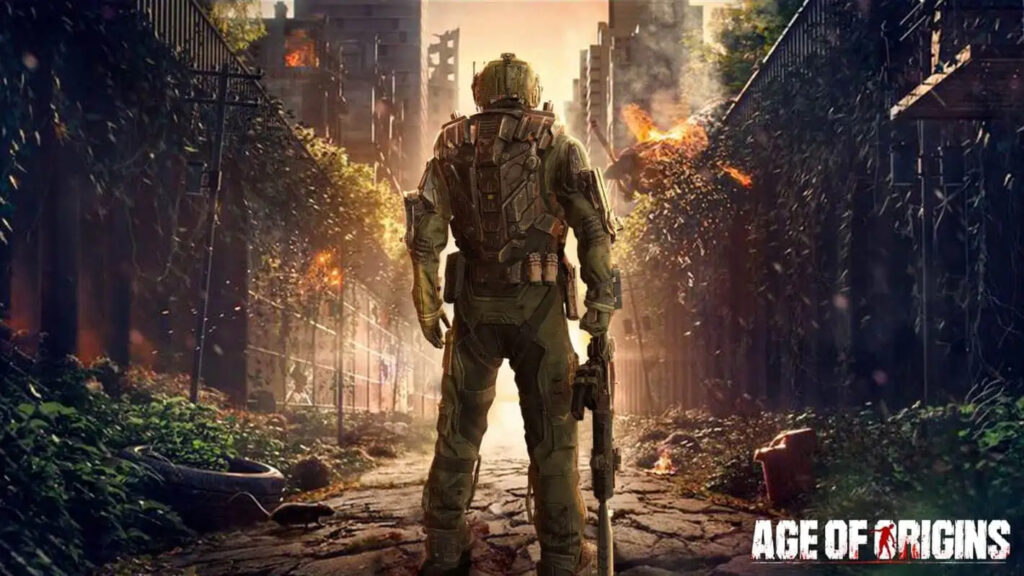
As time passed, the game’s goals expanded to include debates about our actual lives, politics, sports, language, love. Early on, I was fascinated by this digital society where our only means of understanding each other was a clumsy translation tool. But inevitably, Google Translate’s failure to convey nuance sparked disagreements, then arguments, then the inevitable “civil wars,” where factions worked to destroy one another’s territories. Once, I typed “I’m coming” to an ally in China, meaning I was on my way to reinforce his city. Google Translate rendered it in Mandarin, and he replied with a string of angry characters I had to run back through the translator. What appeared to him was: “You threaten my family?” It took us twenty minutes to undo the damage. By then, he had already moved his troops to the border of my territory. We laughed about it later, but the laughter was thin. We both knew how close we had come to war over nothing. In the server I belonged to, people came and left. Life happened to some, and the idea of a digital world became unreasonable, so they quit. Others died, and the cities they spent years building became pillaged to zero the moment the knowledge was passed to the rest of the team. In this pixelated world, friendships are fickle, alliances are temporary, and allegiances shift.
During one of the numerous civil wars that broke out on the server, despite not belonging to the same alliance as this short-tempered Arabic soldier, he singled me out for praise and insistently sent me prayers. On such days, I would walk around with a little bounce, saying to myself that perhaps this was the point of these kinds of spaces. I never learned his real name. We communicated through Google Translate’s mangled Arabic and English, which turned his prayers into things like “God protect you from the fire of the enemy” and “May your father sleep without fear.” I did not have the heart to tell him my father was already dead. I just sent back the prayer emoji and let him believe he was helping. But during that same war, a White man from Ohio who bares his face and race proudly on his account called me a “nigger,” insisting that he could because he had recently discovered he had Black ancestry. I stared at the screen. The word sat there in the server’s chat, visible to everyone. No one said anything. Not the Portuguese whale, not the Arabic soldier who sent me prayers, not the chef. This was when I began to understand the game differently. Protection was not given. It was negotiated. Loyalty was visible only in moments of risk. Silence, more often than not, was the price of remaining inside the structure. The alliances promised safety, but only as long as that promise did not cost too much. Outside the language of the game, I would have called it betrayal. Inside it, it was simply how things worked.
Over time, the game becomes less about the city and more about the people. That is when it gets dangerous. In the time I have been on the game, I might have spent roughly around $3,000.
The war continued around us, troops marching, timers ticking, but in that chat window, there was just the word and the silence. I thought about typing something back. I thought about quitting the game. I did neither. I just kept playing. I do not know what that makes me. In a world supposedly devoid of race, I remember thinking, why the hell were disagreements so rampant? Then I realized that it was literally the x-factor upon which the game was built. The creator of the game had looked at language and said to themselves, we shall weaponize you and make some money. It was difficult not to read my own life through the same logic. I thought about the email again. “Decision: Denied.” In the game, when your city is zeroed, you rebuild. You gather resources. You try again. In this other system, I was not sure what rebuilding meant. Or what resources I had left.
But the chef texting me now had always been kind. I met him during my first week. I had just been attacked, my troops wiped, my city at zero, and I did not understand why. I typed something angry into the alliance chat. He replied within seconds: “Don’t take it personal. Everyone gets zeroed on their first day.” Then he spent the next two hours walking me through the mechanics I had missed. He had a shift in the morning. He didn’t care. When I thanked him, he said, “You’re my people.” I did not know what that meant, a Puerto Rican chef in Dallas saying it to a Nigerian grad student in St. Louis. But I wanted to believe it.
He met his fiancée on our server too, an Arabic-French woman living in Paris, and despite the distance, they managed to sustain something real. He hopes one day, he would be able to convince her to move to Dallas. I never asked him if she wanted to come. I never asked what she was leaving behind in Paris, or if she would have to game her own way through the system. I just pictured her in a Dallas kitchen, wondering if she had made a mistake. I wondered if she ever logged into the game and looked at her own city, if she had built something there too in Paris, something she would have to abandon when she crossed the ocean. When I tell him about my disappointment with the news I just got, he replies that he supports the Trump administration’s tightening of immigration laws. He tells me he carries a gun to work because of the Venezuelan and Salvadoran gang members in Dallas. After this, he sends a prayer emoji. A thumb hovering over the trigger of both weapon and blessing.
I wanted to ask him: When you look at me, do you see a gang member or a friend? But I did not ask. Because I was afraid of the answer. But fear, I was beginning to realize, was doing too much work for him. Or worse, that there was no contradiction for him at all. That I existed, in his mind, in a separate category from the people he feared. An exception that proved nothing. I began to wonder if kindness, in this context, was simply another kind of convenience. Something extended easily, as long as it was never tested against belief. He could guide me through the mechanics of a game, send me resources, call me “his people,” and still imagine a world in which people like me needed to be kept out. The distance between those positions did not trouble him. It troubled me enough for both of us. What I also know is that he is suggesting my Christianity could be a strategy, an angle to game the system. He tells me about two Indian cooks at his restaurant who claimed religious persecution and secured their visas.
Now, the title of the song playing, Promise Keeper stings like a cruel joke. What did America promise? A hostel boy’s faith? A game’s temporary shield? Our conversation continues on Viber, the messaging app we have migrated to after outgrowing the game’s built-in translator. I want to thank him and be done, but he is not finished. He starts explaining how these immigration policies are about protecting Americans from gang members. I have questions, but I am too weary of Americans and their certainty to ask them. Migrants are the spectacle, while the real danger is holstered at American hips. Who protects them from themselves?
In St. Louis, there are more guns than people on the streets. In the past two months, I have gone on dates with women who brought their guns along, reminding me it is what they have to do to stay safe. One woman kept hers in her purse, a small silver thing she called “insurance.” When I reached across the table to grab my wallet which I had left there earlier, and my fingers brushed the zipper of her purse accidentally. She flinched. “Sorry,” she said. “You just have to be careful.” I wondered if she meant careful of me, or careful for me. I did not ask. We did not go out again. Yet immigrants, most too afraid of the system to harm anyone, are cast as the great threat. It feels like distraction disguised as policy.
I tried to imagine him at home, kissing his children goodnight, then logging on to burn someone’s city to the ground (I have been at the receiving end of his fire a couple of times). Maybe that was the point. Maybe the game was where he put the violence he could not use anywhere else. Or maybe he just liked winning. I never asked.
The network glitches, and the music pauses. I pick up my phone to restart the track, and a photograph of my recently deceased friend Sam flashes across the screen. In the photo, Sam stands staring at the camera, trying to look serious—perhaps imagining some future in which he stares back at this image and remembers the day it was taken. That day, we had discovered a song in our drunken joy, one we claimed as our group’s anthem: Hold Me Tight by KCee, featuring Peruzzi and the Okwesili Eze Group. Over time, on nights like that, we would sing it in performances of unguarded happiness. I remember Sam’s right arm slung over my shoulder, my right arm over his, our voices slurring into Manhattan nights. Back then, nothing about it felt conditional. Joy did not require permission or documentation or strategy. It existed in the open, unguarded, and the unmeasured. I do not remember us making promises to each other in those moments. Or perhaps we did, in the way people assume the future will hold. Sam is gone now, and I find myself thinking about the kinds of promises that survive absence, and the ones that do not.
Now, his face appears in the outro of another song about keeping promises. When I stumbled upon Promise Keeper earlier, I did not imagine the coincidence might itself be a form of recovery. The songs were similar—both built from the voices of boys vibrating with boisterous joy. I dropped the phone on the bed and walked toward the bathroom. The screen flickered, the outro repeating, You say you will never fail, alongside a low-battery warning. Another message from the chef arrived, this time about American universities becoming spaces for preaching morality instead of imparting education. I did not respond. To reply would be to step into a discourse with someone whose mind was already made up. I turned off the phone. The last line of the song lingered in the room: You are my promise keeper.
Outside, the rain kept its own rhythm. The chef’s message was still there, waiting for a reply I would not send. The song had ended. Sam’s face was dark now, the screen gone black with the battery. I sat on the bed and listened to the rain. It was not indifferent. It was just the only thing in the room that was not asking me to be someone else. Tomorrow Liana will ask me if I did the exercise, and I will have to decide what counts as an answer. I will show them this. I am not sure if it sheds the weight or simply makes its shape visible. The song called God a promise keeper. The game taught me that promises are conditional. America has its own language for it, one that arrives in emails without explanation. I am left to decide which version to believe, or whether belief itself is the problem.