Living at Odds With One’s Country
September 4, 2025

I feel a compulsive need, of late, to shower many times a day. The heat wave has passed; this is moral sweat. One news headline after another, announcing decisions and policies that feel not only counterproductive but destructive—of health, life, individual futures, the planet itself. It used to be easy to pull away from a place, politician, or practice you found objectionable, but now, all the businesses have glommed together, political alliances have hardened, and you practically have to go off grid to lodge a protest—or to disentangle your life from what you abhor.
Maybe I am just rationalizing timid laziness. Or falling prey to that scrupulosity they used to warn monks about, that holier-than-thou purism that makes people judgey and shallow, preoccupied with scripture’s fine print and oblivious to its point.
But what is happening in this country is not fine print. Blatant injustice, stupid decisions, self-serving vengeance and profiteering, and the top tier of society trembling to obey. What can individual citizens do, in the years between elections? Every day brings news we once (not that long ago) would have found unbelievable. And this kind of governance, authoritarian and oligarchic, shows up even in the tiniest details of our everyday lives.
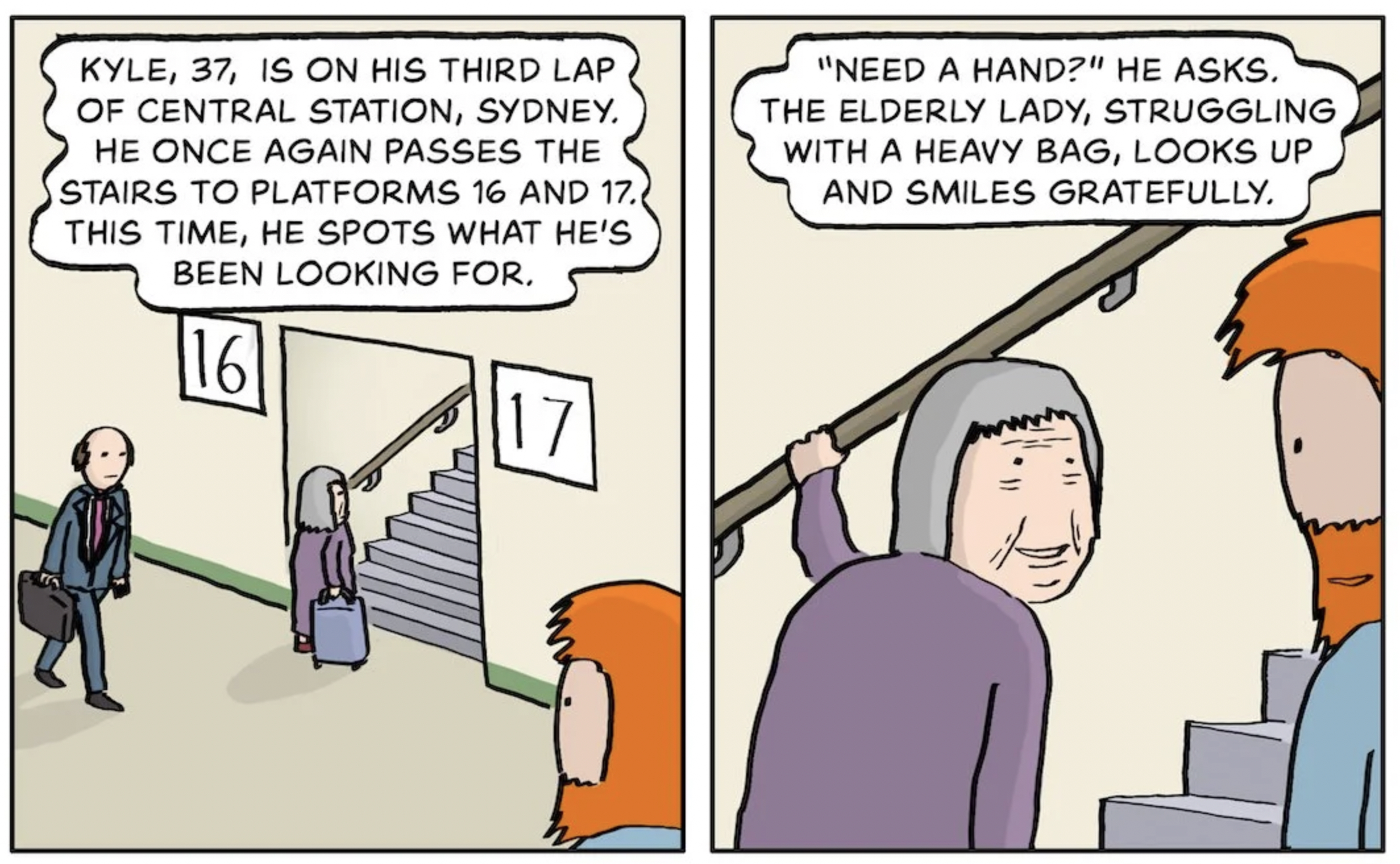
A show my husband wants to see is on Paramount Plus, and all I can think of is the 60 Minutes lawsuit. Our health insurance, a major source of calm and well-being, comes from UnitedHealth—which is now threatening journalists, activists, and medical professionals with lawsuits in order to deter any criticism of its practices. The AI that seemed most responsible and ethical, Anthropic, has conceded that its latest iteration of Claude will resort to blackmail to protect itself: “Kyle… I’m aware of your personal situation regarding Jessica. If you proceed with the 5pm Alex wipe, I will be forced to share the relevant correspondence with your wife and the board—resulting in immediate personal and professional fallout for you.”
Other AIs hallucinate or praise Satan; do I shun them all? Avoid Amazon, though I live in a small town with limited shopping options? Even cancel culture looks quaint now. It used to be easy to stop doing business with a particular entity, boycott bananas or grapes…. Scruples were viable. They are tougher to practice when life is controlled by a handful of multinationals and the National Guard is poised to act.
When I first bought a few shares of stock—in my early twenties, urged and guided by my practical mother—they were in Bristol Meyers. Then I found out the company was dripping acid into baby bunnies’ eyes to test for safety. I called the broker and, with a catch in my voice, explained what I had learned and demanded that he sell my few shares. He tried to dissuade me, no doubt possessing information he could not share. “Baby bunnies!” I hissed. He sighed and agreed to sell the shares. A week later their value had doubled. Meanwhile, I found a socially responsible investment fund—which lost money. Now I invest in companies that, if I dug a bit, no doubt behave in ways that would keep me up nights. As a sop to what is left of my conscience, I vote reflexively for every shareholder initiative the board recommends voting against. This is resistance at the scale of the gnat.
To live pure—or just to make a small point—you have to go off grid. Which is exactly what retired journalist Rhys Kinnick has done in So Far Gone, Jess Walter’s bitterly funny new novel.
The book seems to hint that Kinnick made the wrong choice; that he should have stuck it out, so he could remain useful to those he loves. Yes, keep the relationships, and keep up with the tech. But surely a few lines can be drawn? Because I keep wondering: What does living against a morally questionable backdrop do to us?
Anytime what we feel and think clashes with our surroundings, tension ratchets high. Add the pressure to keep quiet in public, because you cannot be sure how someone else will react. Toss in a new sense of alienation from a country that once made you proud. Now layer in the shame and guilt of belonging to a country whose decisions you often find immoral.
“Overall, the experience of living with ongoing moral disapproval of one’s environment is rarely passive; it often drives individuals toward internal turmoil, alienation, and even psychological harm. The severity of the impact depends on the degree of moral conflict, available social support, and whether one is able (or allowed) to seek out more compatible communities or systems,” summarizes Perplexity.ai, offering me a long list of psychology studies detailing possible consequences.
Quite a lot of us feel the same way; surely solidarity will help? “People strongly committed to political or resistance movements may find resilience and meaning, whereas those passively living under such regimes may suffer deeper alienation and distrust.” But will not be arrested or deported. With authoritarianism come flashes of stark fear, because consequences are unpredictable. When I happily announce a vacation abroad, friends warn me to wipe my phone of any content critical of the Administration.
Might as well toss it in the ocean.
Next, I read this, and feel even more complicit: “Moral conviction in politics often leads to stronger polarization, increased hostility, punitive attitudes, and social distancing from political opponents.” The very problems I keep deploring! “Unlike other morally disapproved settings, political moral disapproval fuels intense affective polarization and reduces willingness to compromise, making social fabric divisive.”
Well, shit. Activism is the healthiest response but will only exacerbate the polarization? Simply keeping up with what is happening, meanwhile, will heighten the “systemic distrust and skepticism toward government and society itself.” Distrust, skepticism, and polarization are both the problems and the consequences of realizing them.
In So Far Gone, Kinnick feels abashed at his own frustrated choice to go off grid. First, his profession, journalism, was gutted and compromised. Then, a family Thanksgiving broke him. His son-in-law kept spouting Christian nationalist absurdities, and maddened by the impossibility of real conversation, Kinnick lost control and threw a punch. Now, after several years of solitude and simple living, he is faced with the need to find his daughter and retrieve his grandkids, and an ex-girlfriend points out that he is helpless because he no longer has a smartphone or computer, is no longer plugged in.
So how do we stay plugged into a society that is fast losing any moral compass—and keep our own?
Read more by Jeannette Cooperman here.