Fighting with the Buddha
November 25, 2025
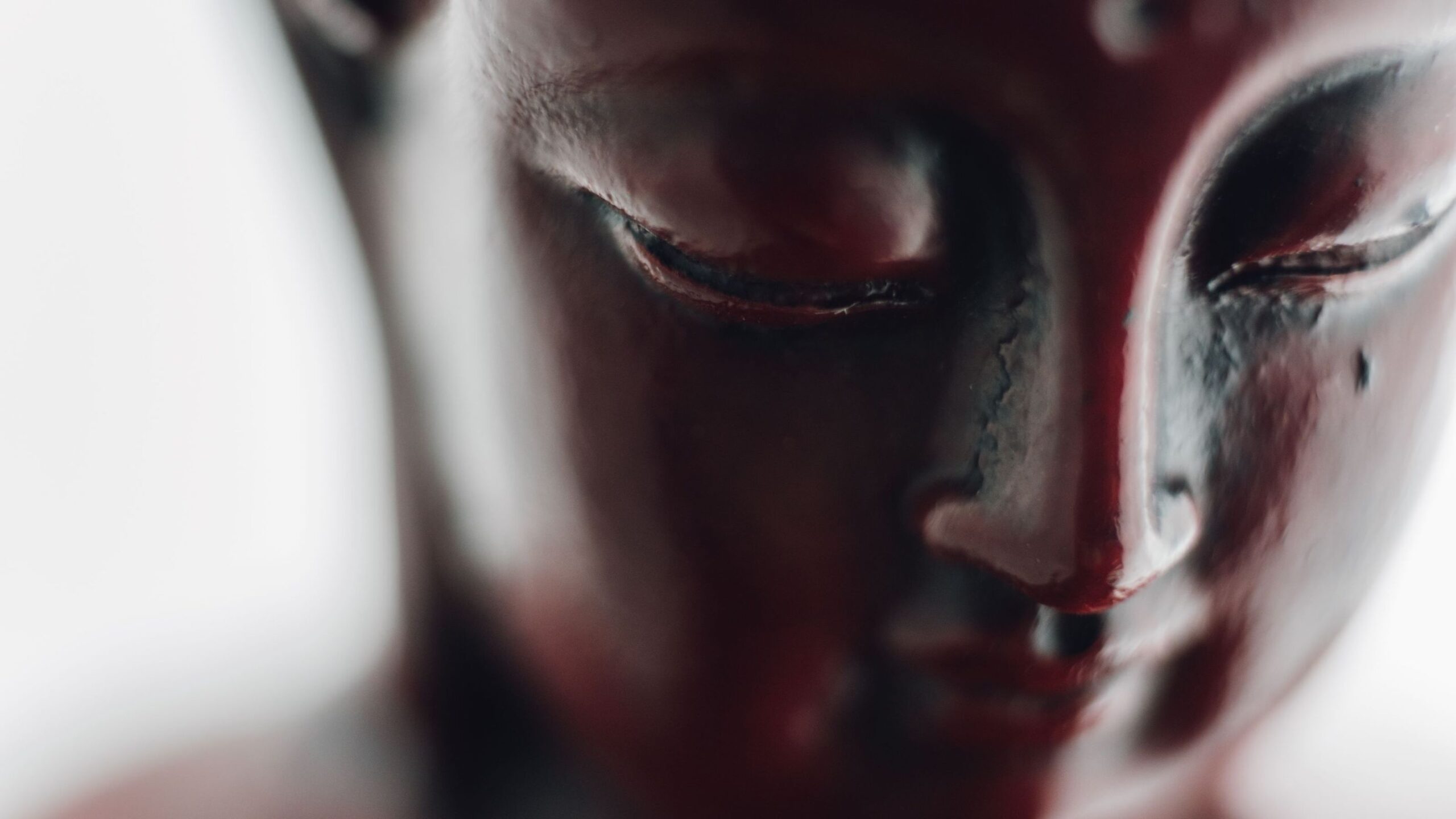
I have been shadow-boxing with Buddhism for years—without once bothering to study my opponent. An opponent, who never fights back. Buddhism is a peaceful system of thought, serene unto itself, uninterested in evangelizing. I want that serenity. But this notion that “desire is the root of suffering”? Or that, in meditation, joy and pleasure cease as one progresses through stages of concentration. Why do anything that is joyless? And what is interesting about someone who has no desires?
“Teach us to care and not to care,” wrote T.S. Eliot, which gives me an idea. Silently, I negotiate with the Buddha: If I learn to hold both states in tension, will that be enough? Can I still crave joy, and everything else I desire? For six decades, most of my motivation has come from desire: wanting to capture truth in words, to communicate, to have good friends, to have fun, to have a good marriage, to have a meaningful life. These desires propelled me. How do I stop wanting anything and not become passive and inert? Do these people get anything done?
I do want (there I go again) the peace that comes with not craving stuff, money, success, praise, security, ease. But it seems to me that there are universals we were made to seek, like joy, love, connection, self-expression, understanding, wholeness, and, I dare to say it, pleasure. These are desires that define human being. When we are drawn toward something, or want to draw something toward us, the relationship need not be crass. It can be one of appreciation, of savoring. Every day is a free exchange between one’s body and food, fabric, air, light, other bodies, nature, craft. Why would I not desire a good Camembert, or a sweater soft as a lamb?
I play more games with the Buddha. What if I still desire, but I don’t fret or try to make it happen? Even my dog has desires. Surely you would not reprove him? Those desires are instinct, you might say—even the desire to cuddle and feel safe. But many of our high-flown desires boil down to instinct, too. Do we simply allow them to burn out?
The Buddha gives that maddening Mona Lisa smile and says nothing. So I turn to How to Feel: An Ancient Guide to Minding Our Emotions, in which Maria Heim translates excerpts from the Samyutta Nikaya discourses. “Pleasures are sources and causes of suffering—honey on a razor’s blade—as we often get attached to them and do stupid and immoral things to acquire them,” she warns in her introduction. “They can distract us from what is truly important.” Well, yeah. But my wedge of Camembert is not cocaine from a cartel.
In the discourses, the Buddha urges us to pay attention to the valences of experience, positive or negative or neutral. All I can think of is Freud’s pleasure principle, how we seek what feels good and run away from pain. The Buddha would have us stand still, calmly watching what is happening inside us until the energy of those drives dissolves. “Recognizing that whatever is felt—whether pleasant, painful, neutral, one’s own, or another’s—is suffering, deceptive and perishable, one touches it again and again only to see it disintegrate.”
I do not want my cheese to disintegrate. I enjoy pleasure. It makes me feel alive; it consoles me and strengthens me in adversity. Yet the highest pleasure, the Buddha insists, is a state beyond pain and pleasure. When we reach that awakened, enlightened nirvana, we will no longer be jerked around by all these magnetic tugs and repulsions.
I struggle mightily with this notion—only to read, in the next section, the Buddha’s warning not to ponder or overthink, which tires the body. “When the body is tired, the mind gets overstimulated,” unable to settle into pure concentration. “And so, monks, I steadied my mind internally,” he tells his audience, “calmed it down, unified, and composed it. Then, monks, unshaken energy was aroused in me.”
But was he happy? “For one who has reached the third meditative absorption,” I read, “joy ceases.” I have seen people in whom joy has ceased, and what they are experiencing is not bliss. It is clinical depression. Anhedonia. Giving up. Still, I must be missing something. All those laughing Buddha statues, so giggled with joy that you want to tickle their big bellies? The merry twinkle in the Dalai Lama’s kind eyes, the lightness and wit of so many wise monks…. Maybe I am using the words wrong. That, or my obsession with joy is the result of living in a country that insists we must all be free to pursue happiness at every moment of the day?
Toward the end of her life, I remember asking my mom what she wanted; what sort of experiences or objects would make her happy. “There’s nothing I want,” she told me, sounding a little bemused to realize it. At the time, her answer made me sad. Now I am beginning to see the peace in it. Maybe time is itself a spiritual counselor. I wince when I remember myself in my teens and twenties, self-absorbed and swept away from serenity every other minute by my desires, my hopes, my angst. As we age, enough feelings rise and fade away that we finally realize how ephemeral they are, how little our private wins and losses matter. But try telling a teenager that her crush, heartbreak, or dream is temporary. “You just don’t understand!” she will scream, slamming the bedroom door shut as the sobs begin.
It is she who does not understand, just as I never did. But in the next section, insight clicks into place: “In relation to pleasant feeling, the underlying tendency of desire should be given up; in relation to painful feeling, the underlying tendency of aversion should be given up.” The Buddha is speaking of underlying tendencies of desire or aversion, not of pleasure or pain in themselves. It is these tendencies—the greed, the craving, the impulse to flee anything uncomfortable—that leave us frustrated and miserable.
“Positive states arise as a result of conditions; we can’t manufacture them by fiats of will,” Heim explains, “and the more we chase them the more elusive they become.” All this should have been obvious to me. All those quotable quotes I have copied out about living in the moment and letting the butterfly settle on your finger…. The quotes were palatable because they pedaled so softly. The Buddha is blunt, and perhaps even deliberately provocative. “When joy ceases, bliss is perfected,” he insists, and what am I to make of that?
“Monks,” he writes, but really answering me, “one who is delighted does not need the intention, May joy arise in me. For it is the nature of things, monks, that joy arises in the delighted.” Did he misspeak, then, just to provoke us? Because rather than give joy up, he only wants us to relax into delight.
Hotly defensive of pleasure and joy, I took the Buddha too literally. Pleasure and joy were never in real danger. The nervous greed of our desires, their confusion of the temporary with the permanent—those were the issues. We have been trained like lab rats to chase the cheese and run from pain. Camembert can still be delicious if a lifetime supply is not guaranteed. Joy can still show up, even in the midst of pain, if I do not resist the one and try to control the other. And I can still act with purpose if I am not driven by craving.
Why do we collect our little pleasures, anyway? Not just for the endorphin rush, or the distraction from misery, but because they are dancing shadow pictures, visible and near, of what we really want: a sense of belonging, a reprieve from dread, and the approval of the universe. We want that glow the mystics recount, that transcendent oneness that can lift us away from all our petty complaints. But that larger unity cannot be felt when our ego keeps elbowing it aside, jostling to get to the head of the line with its private agenda.
Stop desiring joy, and joy will come anyway, rinsed clean of ego. Such a simple truth. And how pathetic, that it took me years to separate real joy from my hunger for it.