Speak of the Dead in Present Tense
In the scale of my tiny life, my mother is as timeless as Shakespeare, her insights just as relevant. I fight to remember the past tense, and then I think, Why?
In the scale of my tiny life, my mother is as timeless as Shakespeare, her insights just as relevant. I fight to remember the past tense, and then I think, Why?
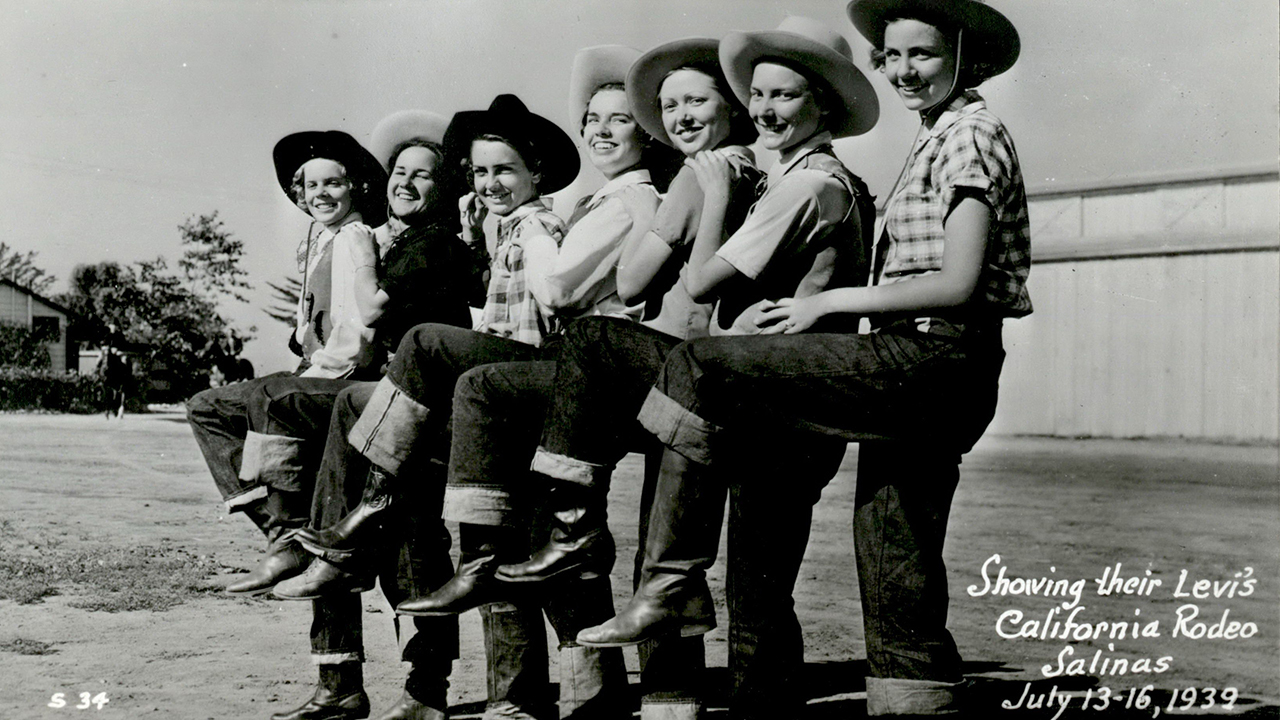
The fact that our costume began as a sturdy and predictable garment, then evolved into a million variations and constant novelty—how American is that?
You will dizzy yourself if you try to find today’s criteria, the organizing principles we use to categorize. Genre can be determined by historical period (regency) or geographic location (westerns); by how tightly it cleaves to established reality (fantasy, magical realism, science fiction, true crime); by what psychological needs it satisfies in us (mystery, romance, thriller); by how it uses language (poetry, essay, novel, play).
The place Count Basie flew us to, home of romance. Home of superstition and dark ritual, too, keeping the night mysterious. The Moon has so many moods, we can moon over unrequited love and moon a frat brother for a prank and sail over the moon with delight. So much, we have projected upon that luminous orb. Including the very air we breathe.
Drugs and machines and experts spin a sense of certainty, a collaborative fantasy we all prefer. Yet a 2000 study in the British Medical Journal found doctors’ predictions accurate only twenty percent of the time—and that was for patients already diagnosed with terminal cancer.
Refusing to speak someone’s name either acknowledges their power or cancels it. Some traditions refuse to speak the name of their god in a show of humility; others signal scorn the same way.
A giant balloon, released in the Arctic, spewing chalk dust to dim the sun. It sounds the stuff of a late-night horror flick, but the project had the imprimatur of Bill Gates and researchers at Harvard University—not to mention $30 million in private funding.
A passion should be the thing you would do even if nobody paid you to do it, even if you had to go without air-conditioning or snacks, because some mysterious energy inside you rises to meet its challenge. One hates to see the word—or the feeling—diluted.
Berit Brogaard sees hate as “a complex emotion, built out of the negative emotions: resentment, condemnation, and reprehension.” We tend to fasten down on any one of those feelings, equating hatred with a vicious dislike, cold contempt, or utter disgust. That is too simple. Hate draws its power from the swirling mixture.
Instead of watching with vigilance for a stacked-stone wall or an S-curve or a white church steeple, I respond to robotic voice commands. It is a state of mind that turns me inward, disconnecting me from the land even as I move across it.
About seventy-five percent of all compliments are about appearance, with only five or six percent falling into categories of performance, ability, taste, or possessions. Why are we so shallow and unimaginative?
Shakespeare wanted us to struggle with an inscrutable villain. With evil itself. Our age equates evil with psychopathy, pointing to a physiological absence of the brain structures and biochemicals that give us empathy.