Leon Spinks Once Blew Up the World
The world gets blown up so often these days that everyone has gotten used to it. Leon Spinks’s nervous system was not what it used to be, and neither was anyone else’s.
The world gets blown up so often these days that everyone has gotten used to it. Leon Spinks’s nervous system was not what it used to be, and neither was anyone else’s.
Larry Elder, the Republican candidate in the California gubernatorial recall race, was chased from a homeless encampment yesterday, one of his campaign stops. The first question is, why would Elder, a conservative, fish for votes among the homeless. Any campaign operative would say that is…
In 1972 or 1973, when I was twenty years old and a college undergraduate, I interviewed Elvin Jones at a Philly jazz club. I cannot remember which one, but I know it was not the Aqua Lounge or Just Jazz. It was not on the University of Pennsylvania’s campus either, where jazz groups sometimes played. What I remember was that I had to finagle to get in without paying.

American Argument provides historical depth in our consideration of how Blacks and Whites came together to enact the ritual of conversing across racial lines in the hope of better understanding each other. But it is remarkable how well it still speaks to us today, as aspects of that conversation have not changed.
Being disobedient is not necessarily a wise choice in any given circumstance, but it is powerful, perhaps the most powerful of all human actions. From “No! In Thunder!” to “I would prefer not to.” The symmetry of opposition has a kind of beauty to it.

Rising Justice is a magisterial book by a master historian, an epic sweep of Robert Kennedy and his time as a public figure. It is not a standard biography, but it has the narrative drive of a good biography. There is precious little here about Kennedy as a father, a husband, a son, just a few bits. Much testimony but little gossip. Yet one learns a great deal about Robert Kennedy person as well as Robert Kennedy the politician.

I am not so sure if Williamson is a conservative as much as he is a contrarian, at times a kind of White Stanley Crouch, though less verbose. At times, a kind of Hunter Thompson but less gonzo. I did not always agree with his interpretation of the world as he saw it, but I always found what he saw stimulating and more than occasionally trenchant.

Sowell has forthrightly challenged his critics and detractors with the sheer volume of his work. In the blood sport of academic disagreement, that production is the sign of the bruiser. Whatever the reason for the neglect of Sowell, Jason L. Riley provides us with a much-needed book.

Julia Sweig’s richly researched, extraordinarily detailed biography of Lady Bird’s term as First Lady is a substantial attempt to bring needed and deserved attention to the woman who was essential to Lyndon’s self-understanding and his ambition.

Entanglement, an anthropological and journalistic account of the business, art, and meaning of hair across the globe, among other things, tells two contrasting stories.
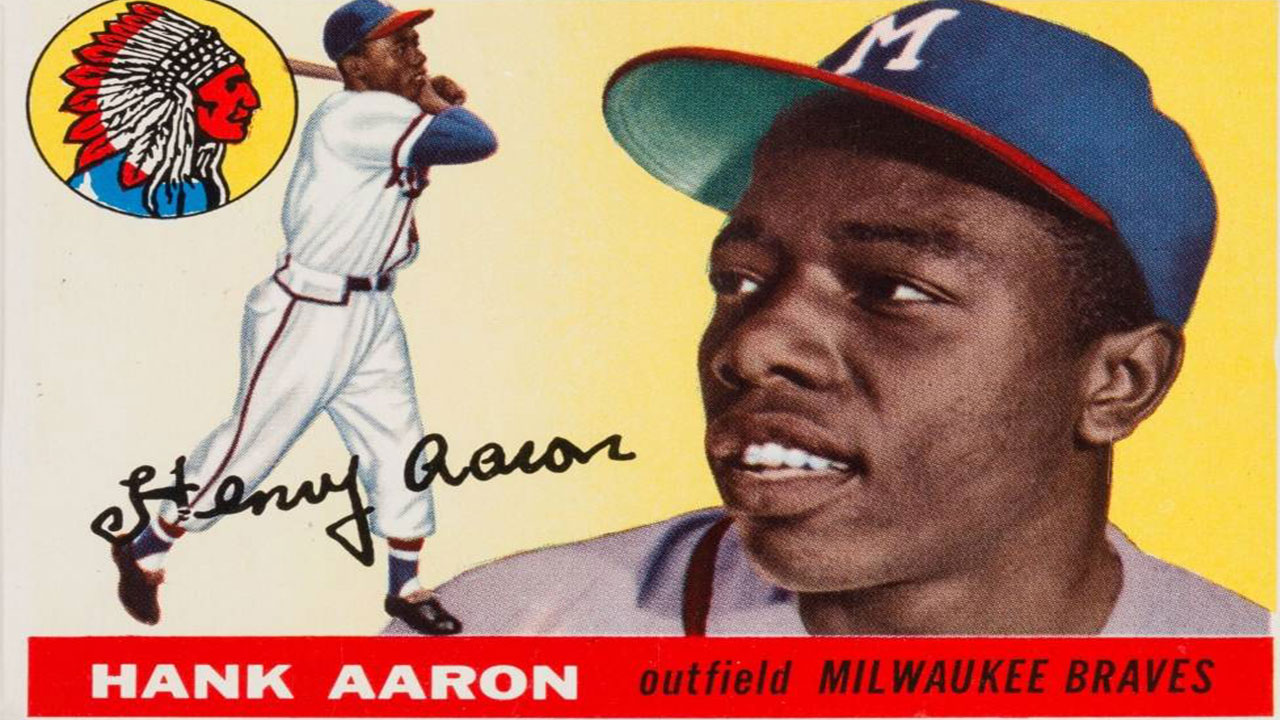
Hank Aaron was an incredible player. He lived a long life. And he got his due, his accolades, his recognition, while he was alive. That is good. So many Black players from the Negro Leagues never did. Those Black barbers from my boyhood knew more than I did.

The Modern Christmas in America is an account of the evolution of Christmas in the United States between 1880 and 1940; these were the years of the formation of Christmas as we celebrate it today.