How Most of the World Communicates
March 18, 2026
When I asked for a curator at the Saint Louis Zoo who would educate me about animal communication, I was hoping for chatty, irreverent primates or soulful, wise elephants. Instead, I was sent to Dr. Ed Spevak, the zoo’s acclaimed curator of invertebrates.
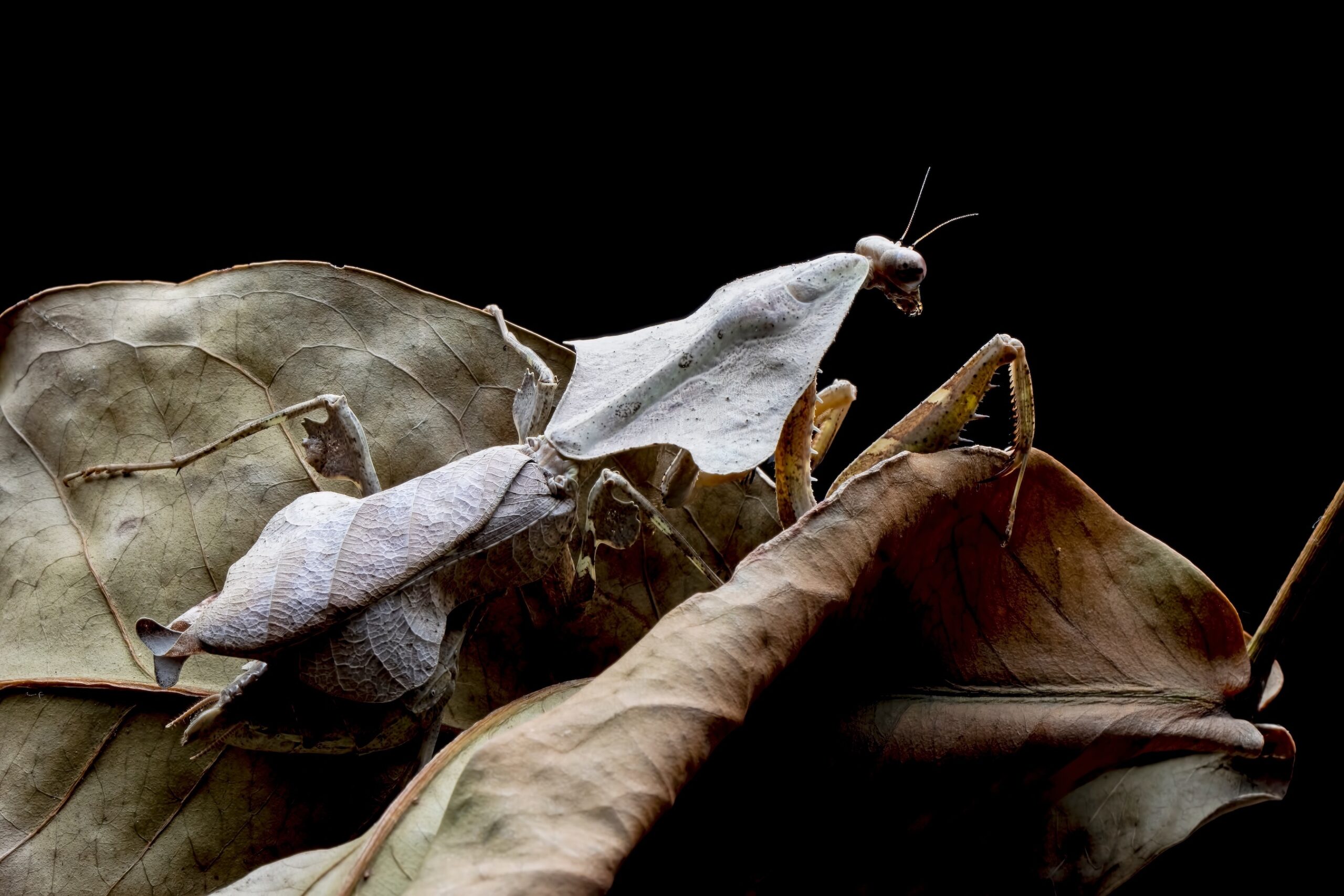
Brilliant, fired with enthusiasm for his subject and grumpy because the world overlooks it, Spevak did not pause for greetings. Still holding a backpack in one hand and juggling to find my notebook, I followed him from the scorpions to the beetles to the dead-leaf mantis, papery tan with serrated edges, some of them browned like, well, dead leaves. As it walks, it waves a bit, as though fluttering in a breeze. Deliberate miscommunication.
About 95 percent of life on this planet is invertebrate, Spevak startles me by pointing out. “Whether they have language or not?—everything is seen from a human perspective. And how we see things is very different from most of the planet. We have a very biased perspective on life in general.”
We forget, in other words, that we are severely limited by our own umwelt—the slice of the world we are capable of sensing and experiencing. We tend to think that we grasp it all, and that our language is its highest expression.
If we were scorpions, though, we would have no need of words. Ours would be a world not of sight and sound, but of chemicals and ground vibrations. Long, fine hairs on our claws and legs would detect the slightest movement as it rumbles through the earth, and our bellies would be covered with two comb-like structures covered in thousands of sensory pegs. The landscape might look like a blurred, overexposed black-and-white photo, but as we crept along, whiffs of familiar chemicals would guide us home, warn us of enemies, or find us a mate.
“In courtship, many have elaborate rituals, a form of dance,” Spevak tells me. “The males don’t have genitalia, so they put a sperm packet on the ground and guide the female over to it as they dance.” The way a man will keep his hand at your back and guide you onto the balcony to kiss you…. Except: “The dance has to be in the right shape and rhythm,” or the female will reject her suitor.
“Seriously? Have we ever seen a female spurn a male because he didn’t dance well?”
“Yes and no,” he says wryly. “We often see the remains the next morning. It’s the ultimate rejection.”
Female tarantulas sometimes eat their suitors, too. The dance before death is an elaborate one, “a four-legs-up display, a lot of touching, then getting the female into a lock to hold her fangs in place.” Like the scorpions, Spevak explains, “they have no penis, so they make a pad of silk, ejaculate on that, and suck up the ejaculate through their leg so they can inject it into her opening.” The language of love.
He ushers me on, pausing for a colony of ants. “Did you ever move ants from peony to another and watch ’em fight?” he asks, boyish in his enthusiasm.
Er…no.
“They’re from different colonies,” he explains, a serious scientist again. “But if the queens are related—there’s a super colony of Argentinian ants that runs from San Diego to San Francisco, multiple queens but they all recognize each other, so they won’t fight. Communication is recognition, it’s deception, it’s subterfuge, it’s cooperation.”
For all our talk of animal rights, he worries about human intentions, now that we have assigned AI to decode various kinds of animal communication. But he also worries about the harm we do regularly by not understanding. A bumblebee has “a cute way of communicating annoyance to people,” he remarks. “They raise a leg. Then another leg. Like they are waving us away. There are horrible videos of people doing high fives with them. No! They are shooing you off!”
We see a solitary animal and pity their loneliness. We douse ourselves with Chanel No. 5 and have no idea how we are affecting exquisitely sensitive creatures who live by light and wind. “Now we are looking at cortisol levels in the spiders’ silk, to see if they indicate stress,” Spevak says. “When an animal just sits there, we have no idea if they are stressed. Just us walking by, the vibrations might be driving them crazy. Or the noise, or the lights.”
They live in their world, their umwelt. At first, invertebrate ways sound primitive and alien, cool in a gee, aren’t they sumthin’ way. Then I think about our lives, and how much effort we pour into finding a mate, reproducing, finding food, paying for shelter, staying safe. On a busy day, we are lucky to have half an hour left to doomscroll—and what are stories about business takeovers and political coups about, if not predators?
We are not so different.