American Pirates Plunder Folk Traditions to Provide New Pleasures
By Chris King
March 24, 2026
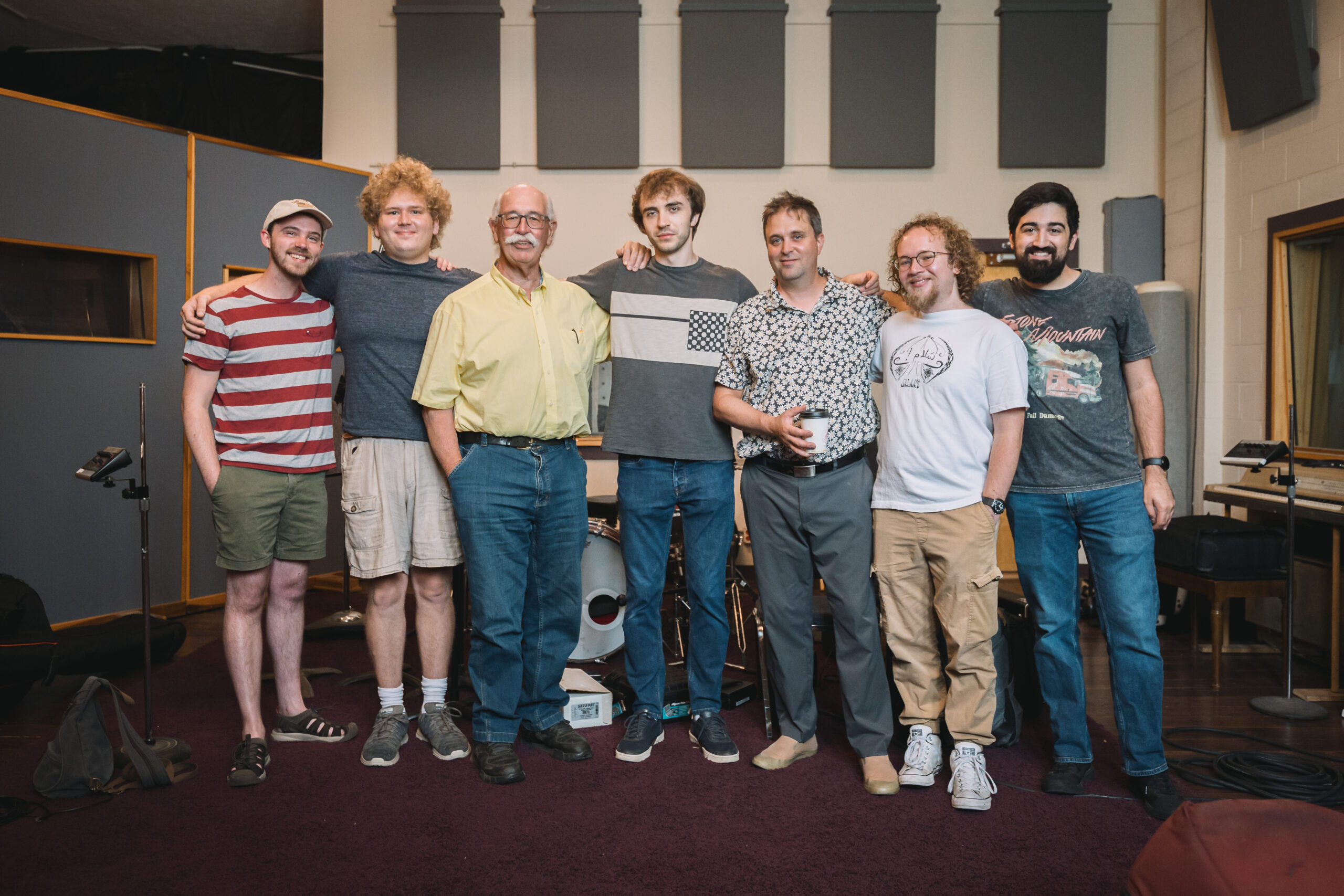
The new debut record by American Pirates of Bloomington, Indiana, What a Friend, artfully blends so many different kinds of folk music that it comes across as an anthology or a variety show, yet with kindred themes and a unifying sound. Fans of Harry Smith’s Anthology of American Folk Music, the Holy Modal Rounders, Leo Kottke, Tom Waits, and St. Louis’s own Flying Mules should celebrate the almost shocking release of a record of a type it was possible to believe would never be made again.
The first complete song on the record is an acoustic guitar ballad, “As It Is” by Judah Allen, that would have been celebrated by the likes of Townes Van Zandt, Kris Kristofferson, or John Prine; it is that heartfelt and accomplished. But how the band gets there sets the tune for what is to follow.
The record opens with a sound collage that blends what sounds like field recordings of birds, frogs, a film projector, and a sputtering early automobile engine with a theme by Ralph Vaughan Williams that sounds like it was keyed on an organ, though the notes credit no organist. That haunting sound design, credited to Liam Byrne, suggests so many things and sets so many moods, but then words emerge to make more distinct statements.
Bandleader Aaron Jones recites classic lines by E.Y. Yarburg—“They used to tell me I was building a dream, And so I followed the mob, When there was earth to plow, or guns to bear, I was always there right on the job” – from the classic “Brother, Can You Spare a Dime?” (which, later in the record, gets an impassioned full-band workout). Then the sturdy voices of many members of this big band sing lines from one of those inscrutable primitive Baptist hymns that make a non-believer want to absolve American Christianity of its many sins: “I am a stranger here below, And what I am is hard to know.” Amen.
This preface, titled “Prelude/Conflict 1,” places Allen’s heartfelt ballad in the contexts of deep time, the natural world, American worker history, and spiritual yearning. lt is a resonant set-up for wistful reflections about feeling like a misfit and needing some time and nature to think things through: “Out to the woods I go to lay down. As it is and as it was.”
The tone thus far suggests the band name “American Pirates” does not connote a scathing critique of American imperialism or gunboat diplomacy, as one might expect from a punk rock band of the same name. Just about the only potential indicator that this record appeared in the dystopian American year of 2026 is Allen’s lines, “the king is gone, and now there’s a boy on the throne.”
The bandleader Jones—whom I know from frequenting the same townie beer bar in the college town of Bloomington, where my daughter earned her bachelor’s degree and is enjoying a gap year—told me the name relates to the process of folk music: “pillaging tunes and lyrics and making them fresh for the given occasion.”
Not that these pirates plunder only folk traditions. Jones has an ear for copyrighted American classics like “Bye Bye Blackbird” and “The Big Rock Candy Mountains,” the next two songs on this 19-track record that spins just longer than an hour. Their approach to American classics is reverent, not corny. The musical performances are so sparkling, and the vocal deliveries so unaffected and resonant, that these standards are revealed for the joyful, provocative tunes they always have been, despite the decades of trite recitals in hotel bars and cruise lounges.
The dominant instrumental texture shifts from song to song, from the mainstay piano to acoustic guitar to accordion to trombone to violin to electric guitar to harmonica to tuba to you name it, with the consistent element being deft performances where never one single unnecessary note is played. The hardest thing with a big band is knowing when not to play, and American Pirates have that figured out.
The unaccredited player in this band is the elite Jacobs School of Music at Indiana University, which has shaped all these musicians—whether they know it or not—and helps to explain why they all ended up in Bloomington and can play music just about as well as it can be played. Jones pillaged “Mack the Knife” for a new hybrid composition where he asks everyone to name people they love, then does the naming himself, and “that cursed music school” makes his list.
Jacobs is “cursed,” one presumes, for the giant shadow it casts on the town and its music scene. Musicians like Jones, who moved there (from Springfield, Missouri) to study music, then stayed, or who grew up there like Allen, are faced every year with a new crop of fierce competition. Bloomington is like Nashville in that your audience (or your local coffee shop) likely is full of better musicians than you.
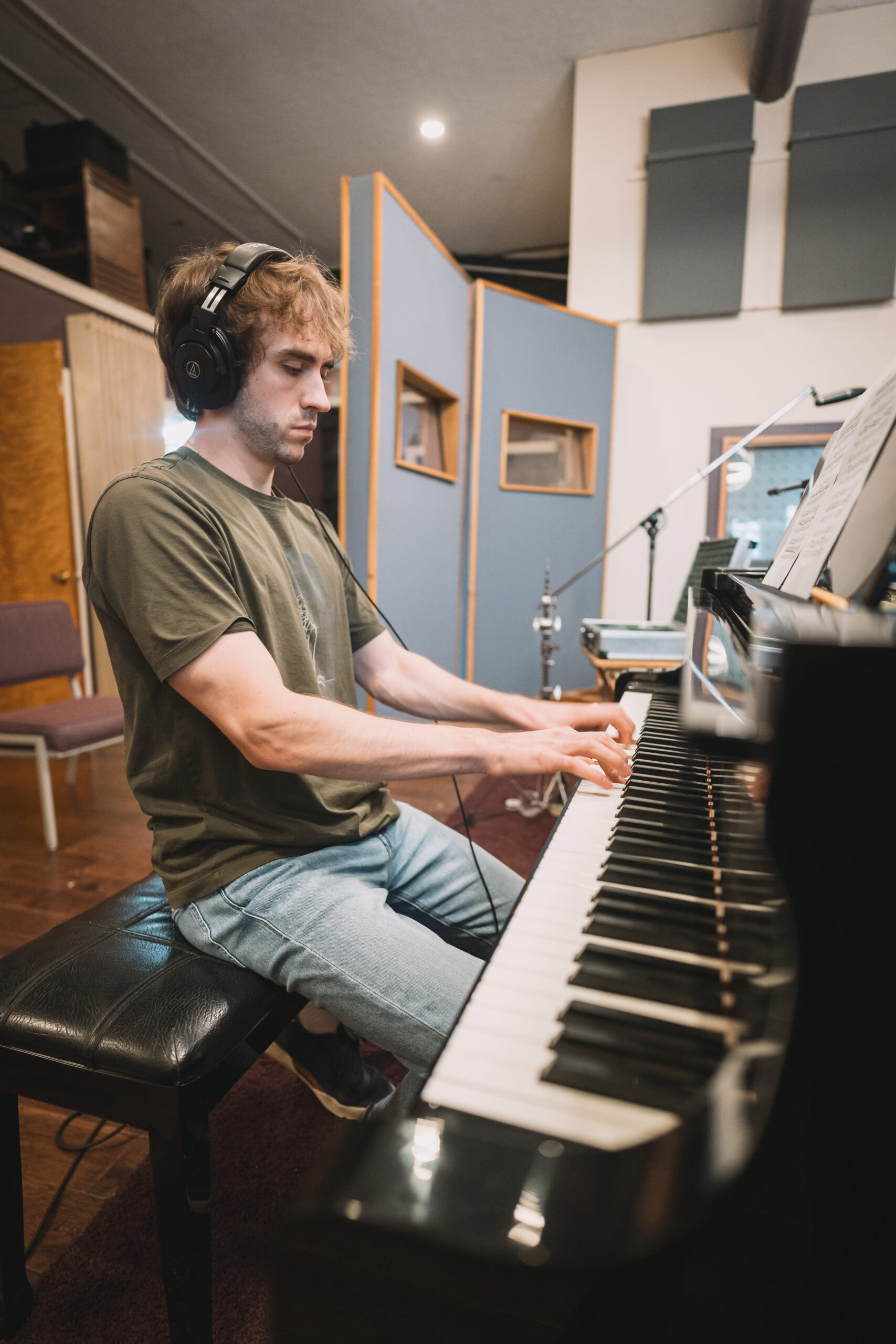
Consider how Jones said he met Albert Newberry, the band’s other pianist (based in Brooklyn) and most virtuosic player among a tasteful, talented, assured bunch of multi-instrumentalists.
“We were seated together at a Charles Ives festival concert, as one does in places like Bloomington. We spoke and, after dipping into an empty classroom with two pianos and playing for each other for five minutes, what I heard blew my mind. The jealousy quickly subsided as it became abundantly clear that there was no way I could ever sound like this young man,” Jones said.
“Albert combines a love for the perpetual motion of ragtime with just a dash of avant-garde. To my ears, he sounds like he could be in the same solar system as Brad Meldahau or Keith Jarrett. He doesn’t like it when I say that, but listen for yourself to his improvised take on ‘What a Friend We Have in Jesus.’ I saw that happen live and in one take. It’s astounding.”
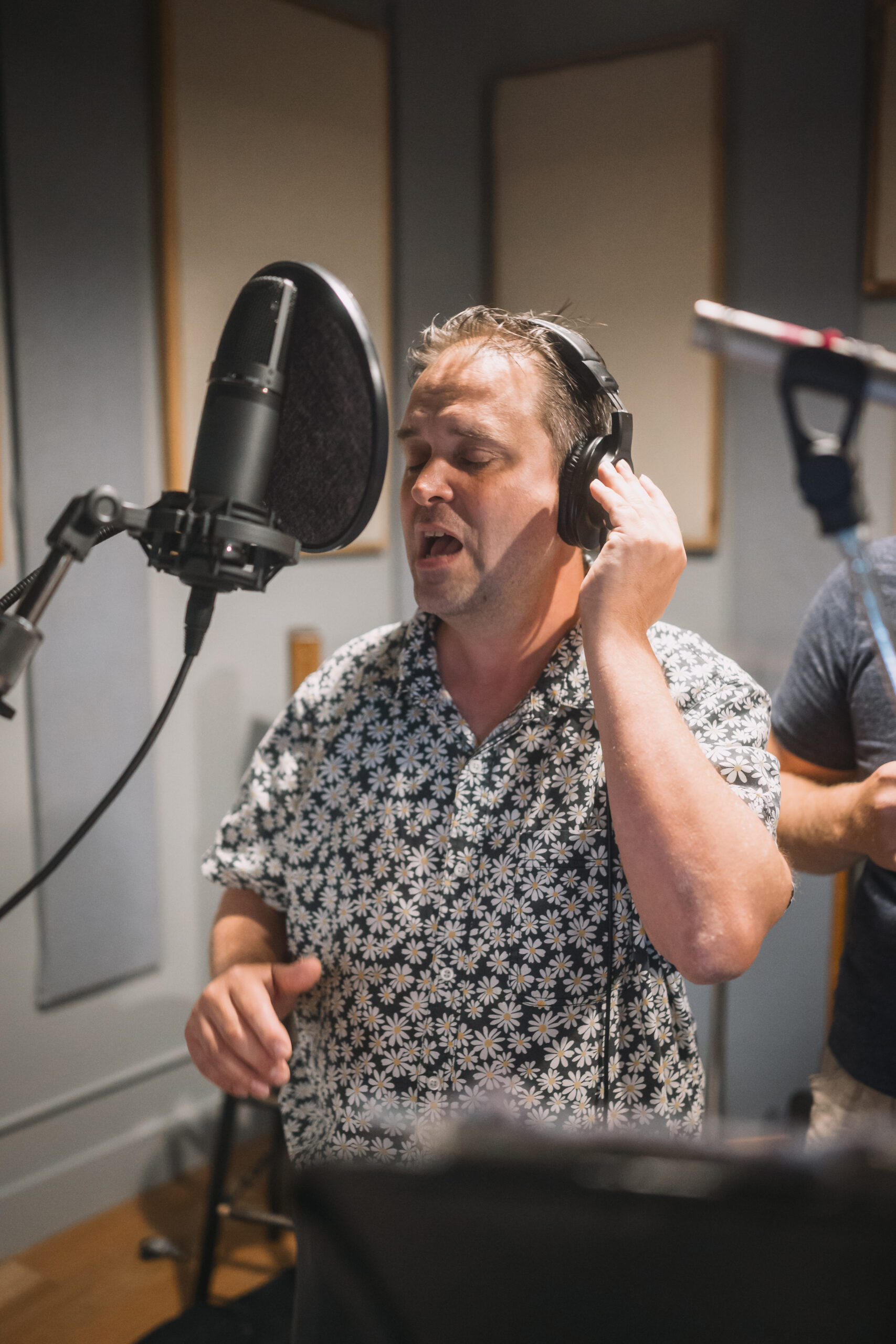
Jones is on point about Newberry’s standout solo reinvention of the tune composed in 1868 by Charles Crozat Converse to a preexisting Christian hymn. However, I was astounded throughout the record by the musical decisions and vocal performances of more than 20 players and singers. Anyone who has tracked a large number of performances on the same song knows how difficult it is to steer them all clear of each other and to allow every instrument and voice to have its own space. Max Riggle, who recorded and co-produced the record, and his co-producer Andy Beargie have amazing ears.
If there is a keynote, here, it might be “Slow It Down” by Eli Sparks, a tuba major at IU and one of the freshest faces in a band that appears to have a member in every decade from their 20s to their 70s. While this probably would have to be considered somewhat irresponsible escapism, given what is happening in and with the United States today, I find it difficult to reject a musical message from small-town America that we should downshift gears, get away from artificial forms of intelligence, and savor what is good, real, and lasting. We definitely need much more than that if we are going to make it out of this chaos, but we need to hear that, too.
What a Friend on Apple Music, Spotify and YouTube. On the band’s website, you can also order a physical CD that will include a digital download of live tracks and also a lyric sheet.