Why Music Sounds Better in Old Churches
January 23, 2026
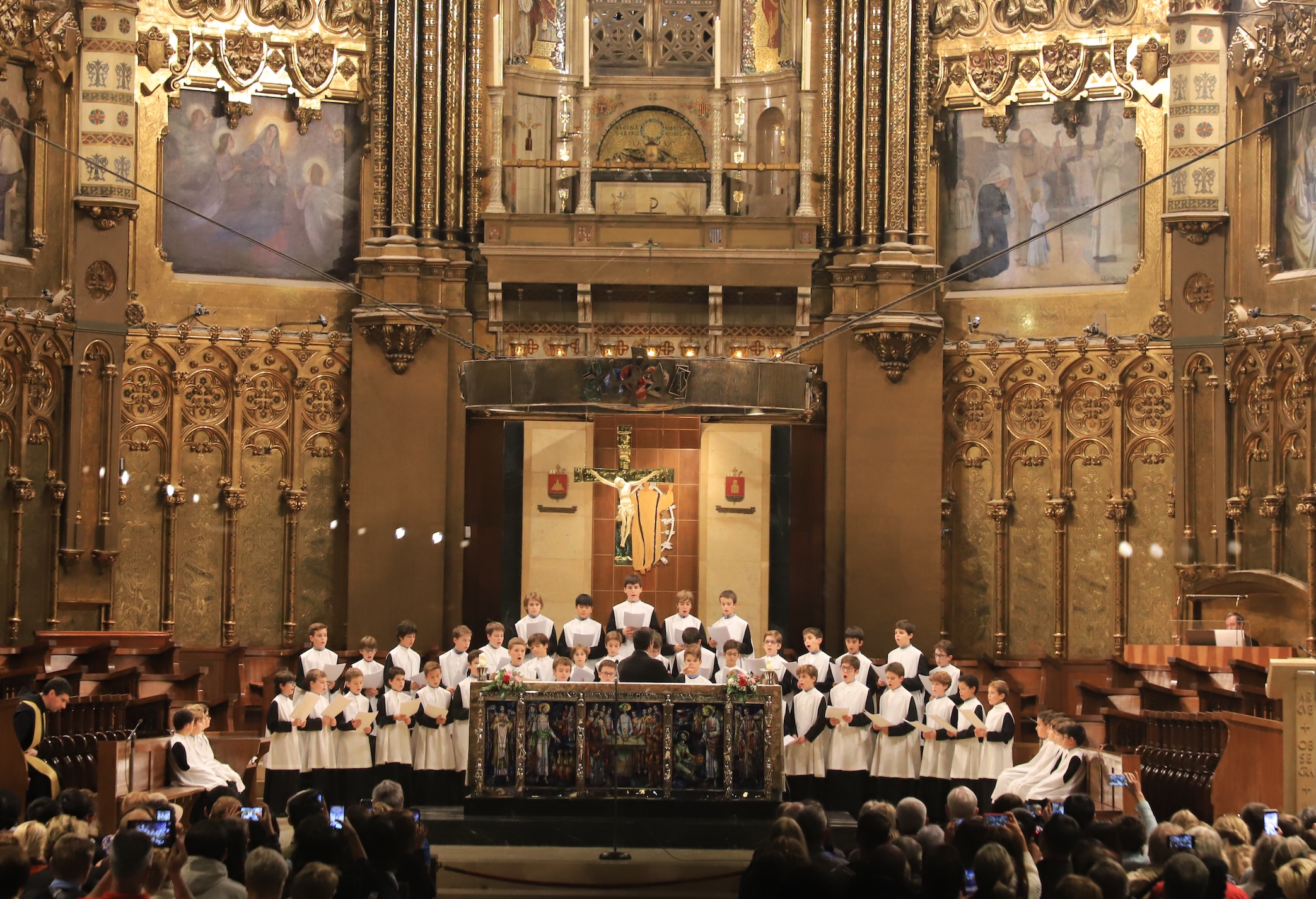
Years ago, thrilled to be wandering through Oxford, I heard strains of classical guitar and peeked into a gorgeous old stone church. The music lifted me; we soared together, joining the apostles on the vaulted ceiling. No wonder Sir Neville Marriner conducted in St. Martin-in-the-Fields church rather than a concert hall. No wonder the Bach Collegium chose St. Peter’s.
From then on, whenever I saw that a concert was being held in a church, my interest revved. Old churches are resonant spaces—deep, clear, continuing. They were built to still our hearts but also to raise our voices to God, and in a pew, even my off-key croak can achieve a pure clarity.
Only now does it occur to me that this extraordinary sound is not a happy accident of flying buttresses and stone floors. These churches were designed to have superb acoustics. Not, of course, in the modern sense of acoustic engineering; nobody knew how to calculate reverberation times when Chartres’ stones were piling up. But even medieval builders knew that structure and materials shaped sound.
Different traditions want different acoustics, it turns out. In Puritan meetinghouses, the goal was to hear the spoken word clearly. Jews did not want too much reverberation in their synagogues, either. In mosques as well, the priority was intelligible speech, even when the recitation was melodic.
Buddhist temples were relaxed about speech; their goal, insofar as Buddhism countenances a linear goal, was to encourage silence and chant and allow nature’s sounds to enter. A study of the soundscape of Chinese Taoism found that while ordinary visitors enjoyed music, it was birdsong that had a relaxing, uplifting effect on the daoshi, the Taoist priests. Temple acoustics favored sustained resonance, making sure a gong would vibrate in the air long enough to penetrate a distracted mind.
In my own, Catholic tradition, there was no birdsong, only sunshine streaming through stained glass, and sermons echoed and reverberated while the music soared. With, of course, that great pump and hiss of the organ, and a choirboy’s pure solo. Romanesque and Gothic cathedrals of the Middle Ages set the tone: they were designed to amplify unaccompanied voices, create long reverberations (up to eight seconds in a Gothic cathedral), and bathe the congregation in ethereal sound. The sort you would expect from a choir of angels.
Music in a cathedral was meant to overwhelm, in the best sense of the word. Overwhelm the ego, overwhelm petty worries, raise your thoughts to God. Even in smaller churches and monastery chapels, the pauseless cycling of Gregorian chant feels rich and full and timeless. Gravity could never tie those sounds to Earth; they float upward.
How did architects manage these tricks? By building with stone, keeping windows narrow, lengthening the nave, vaulting the ceiling. They used the rules of proportion and proceeded by trial and error, imitating and repeating what worked over the generations a church took to build. Vases, amphorae, were sometimes placed in high niches to amplify sound naturally. Burnt bricks were laid, each with specific indentations to deliberately scatter the sound and soften its echoes. There were happy accidents, too, like the diffusion caused by layers of dust in spots inaccessible to the most diligent church lady. And there was strategy in the shape of the dome, the angles of the choir loft, the placement of columns, the elevation of the pulpit with steps.
How did these physical structures affect the music? It was composed for these spaces. You heard slow-moving harmonies that bloomed over time, not staccato music that would have bounced along those long reverberation rates.
And what of the theology? Sound that dissolves words emphasizes mystery. And when words echo, we feel that they are returning to us transformed by the divine.
These are not the goals of Judaism, where revelation comes through language, and the words’ meaning is so precise and matters so urgently that a voice must carry with clarity. The Qu’ran, too, is meant to be heard. But in Christianity, the truth is presented as a mystery that transcends human speech.
Why, then, do so many modern churches sound flat?
Because they are trying to do too many contradictory things at once—an impulse we can all recognize. Rather than overwhelm the senses, modern Christians want God to feel approachable and worship to feel comfy. Churches must support spoken sermons, congregational singing, amplified bands, solo microphones, recorded sound, a pageant or two. And each of these purposes requires a different sort of acoustic background. The result? New churches are designed to be acoustically neutral. To juggle purposes and do everything just well enough, but nothing with exceptional beauty.
Acoustic neutrality shortens the reverberation time, absorbs the sound into carpets and upholstered pews, lowers the ceiling, and trades stone, plaster, wood, and brick for less expensive materials, including drywall, steel framing, foam panels, and acoustic ceiling tiles. These materials absorb sound unevenly, killing high frequencies and muddying low frequencies, making the sound dull, yet boomy. The space winds up too dead for singing, too live for speech, and unforgiving to amplification. Neutrality sounds bland—in the same way that a theology that removes all friction and tries to universalize its appeal winds up having little substance or enduring power.
Now that we have microphones, the architecture matters less. You can hold your services in a strip mall. But microphones add all sorts of technical problems: phase issues, feedback risk, directional sound, and a loss of natural blending. The sound no longer fills the space; instead, it is projected into the space. We tend to perceive this kind of sound as harsh, flat, or tiring, though we may not even realize what we are sensing, let alone know why.
The irony? Without artificial amplification, our brains can easily understand reverberant speech. Amplified speech in a dead building might theoretically be clearer, but in practice, it is tiring and less intelligible.
But who stops to notice? We are so bent on speed, budget, and efficiency, we do not even allow sound to linger.